How Thick Should Stainless Steel Cutlery Be
When developing stainless steel cutlery, buyers often focus on design and material grade.
But thickness can change the product just as much.
There is no single thickness that is “best” for every cutlery design. The correct specification depends on the utensil, shape, manufacturing process, target price and desired user experience.
Why Thickness Matters
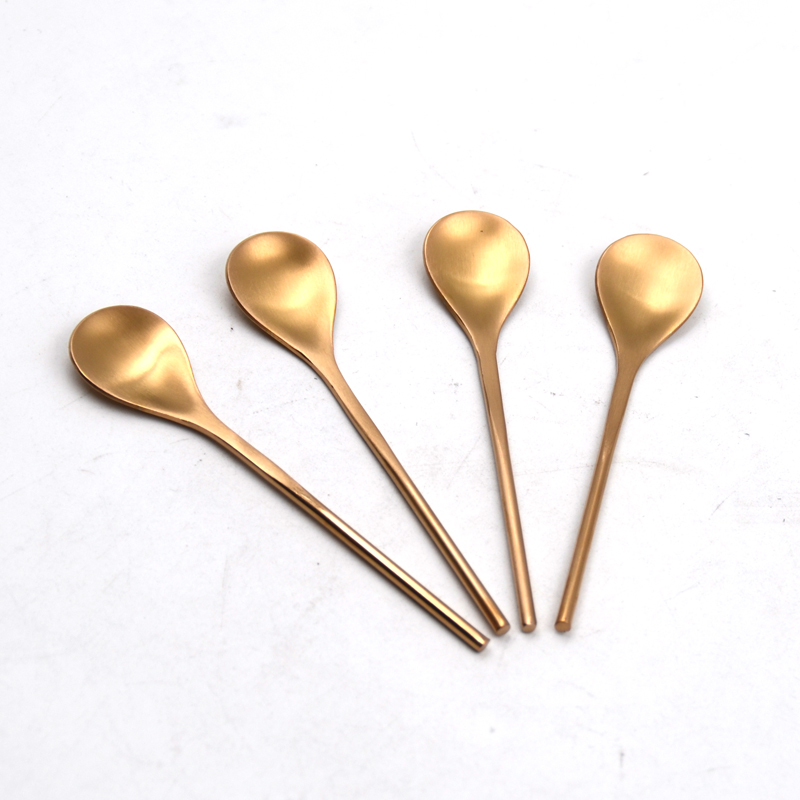
Take two spoons with exactly the same outline.
One uses thinner material. The other uses a heavier specification.
They may look almost identical in a catalogue, but when held in the hand they can feel completely different.
Thickness influences:
-
Weight
-
Rigidity
-
Balance
-
Material cost
-
Product positioning
Premium cutlery needs balance, not unnecessary weight.
Different Pieces Need Different Thinking
A teaspoon does not necessarily need the same specification as a dinner fork.
A knife has different structural requirements again.
The design itself also matters. A wide handle can feel substantial even when its material specification differs from a narrow, minimalist design.
This is why comparing quotations only by product photos can be misleading.
The prices will naturally be different.
Weight Is Also Useful
For sourcing and QC, weight can provide another practical reference alongside dimensions and material thickness.
If an approved fork has a certain specification and later production becomes noticeably lighter, something may have changed.
Expert Tip
When requesting quotations, provide your target thickness or approved sample whenever possible.
Buyer Takeaway
There is no universal “premium thickness.”
Good cutlery combines appropriate thickness, shape, weight and balance.
Kids Cutlery Set
What Is the Real Difference of 18/10 VS 18/0 Cutlery
Related Article