How to Coordinate HS Code Classification for Stainless Steel Cutlery Exports
How to Coordinate HS Code Classification for Stainless Steel Cutlery Exports
For importers, distributors, and wholesalers purchasing stainless steel spoons, forks, knives, and complete flatware sets, customs classification is an important part of international trade preparation. The Harmonized System (HS) provides a framework for classifying goods, but the correct tariff code depends on the product's characteristics and the importing country's tariff schedule.
An incorrect classification can lead to customs questions, shipment delays, unexpected duties, or requests for supporting information. Buyers and suppliers can reduce these risks by preparing accurate product descriptions, checking the relevant tariff rules, and confirming classification with a qualified customs broker or the appropriate authority.
1. Identify the Exact Product Being Shipped
The first step is to describe the actual goods clearly. A general description such as “stainless steel tableware” may not provide enough information for classification, particularly when an order contains several different product types.
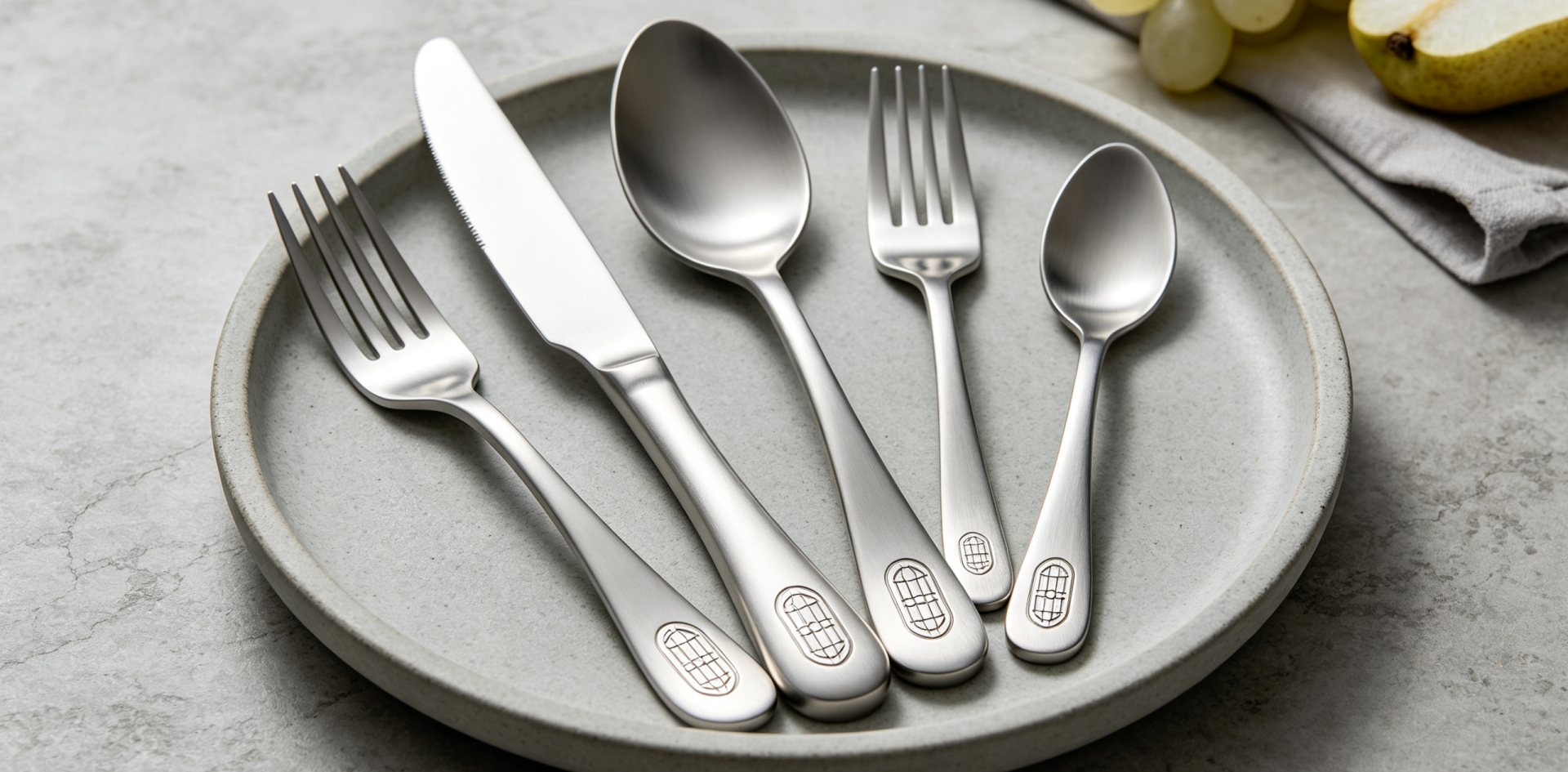
Prepare a product list that identifies each item separately, including spoons, forks, table knives, serving utensils, and complete cutlery sets. Record the principal material, function, construction, and other details that may be relevant under the applicable tariff rules.
For stainless steel cutlery, useful supporting information can include:
-
Product name and intended use
-
Material composition or specified stainless steel grade
-
Overall dimensions and basic construction
-
Whether the item is a spoon, fork, knife, or set
-
Photographs or technical drawings
-
Packaging and set composition, where relevant
-
Country of origin and manufacturing information
Different products should not automatically be assigned the same code simply because they are made from stainless steel. Their function, design, and the classification rules in the destination market may lead to different outcomes.
2. Understand the Difference Between HS Codes and Local Tariff Codes
The international Harmonized System is maintained by the World Customs Organization. Participating countries use its framework, but national tariff schedules may extend the code with additional digits for local statistical, regulatory, or duty purposes.
This means that a code used in one market may not be sufficient for an import declaration in another. Buyers should confirm the complete code required by the destination country rather than relying only on a short code shown in a supplier catalog or an older shipment record.
For example, an importer purchasing stainless steel spoons for several markets may need to check each destination's tariff schedule separately. Even when the product description is identical, the local reporting requirements or additional code digits may differ.
A supplier can provide technical product information to support classification, but the importer or its customs representative should verify the code applicable to the specific import transaction.
3. Do Not Assume Every Cutlery Item Has the Same Classification
A mixed order may contain spoons, forks, knives, serving pieces, and packaged sets. Classification should be considered at the appropriate level for each product and shipment configuration.
A complete set may require a different analysis from individual utensils, depending on its composition and the applicable rules. Knife classification can also require particular care because product design and legal tariff definitions may distinguish among different types of knives.
Buyers should provide a detailed component list when a product is sold as a set. Include the number of pieces, the type of each utensil, and any other characteristics requested by the broker or customs authority.
Do not classify a mixed shipment solely by its most common item or by the product name printed on the outer carton. A broker should assess the goods against the relevant tariff schedule and classification rules.
4. Prepare Technical Evidence for Classification Review
When a customs broker reviews a product, concise and consistent technical information can help avoid repeated questions. The supplier's product specification sheet is a useful starting point.
For a stainless steel spoon, fork, or knife, the sheet may identify the material specification, dimensions, weight, construction, and intended function. Product photographs should show the overall shape and any details relevant to identifying the item.
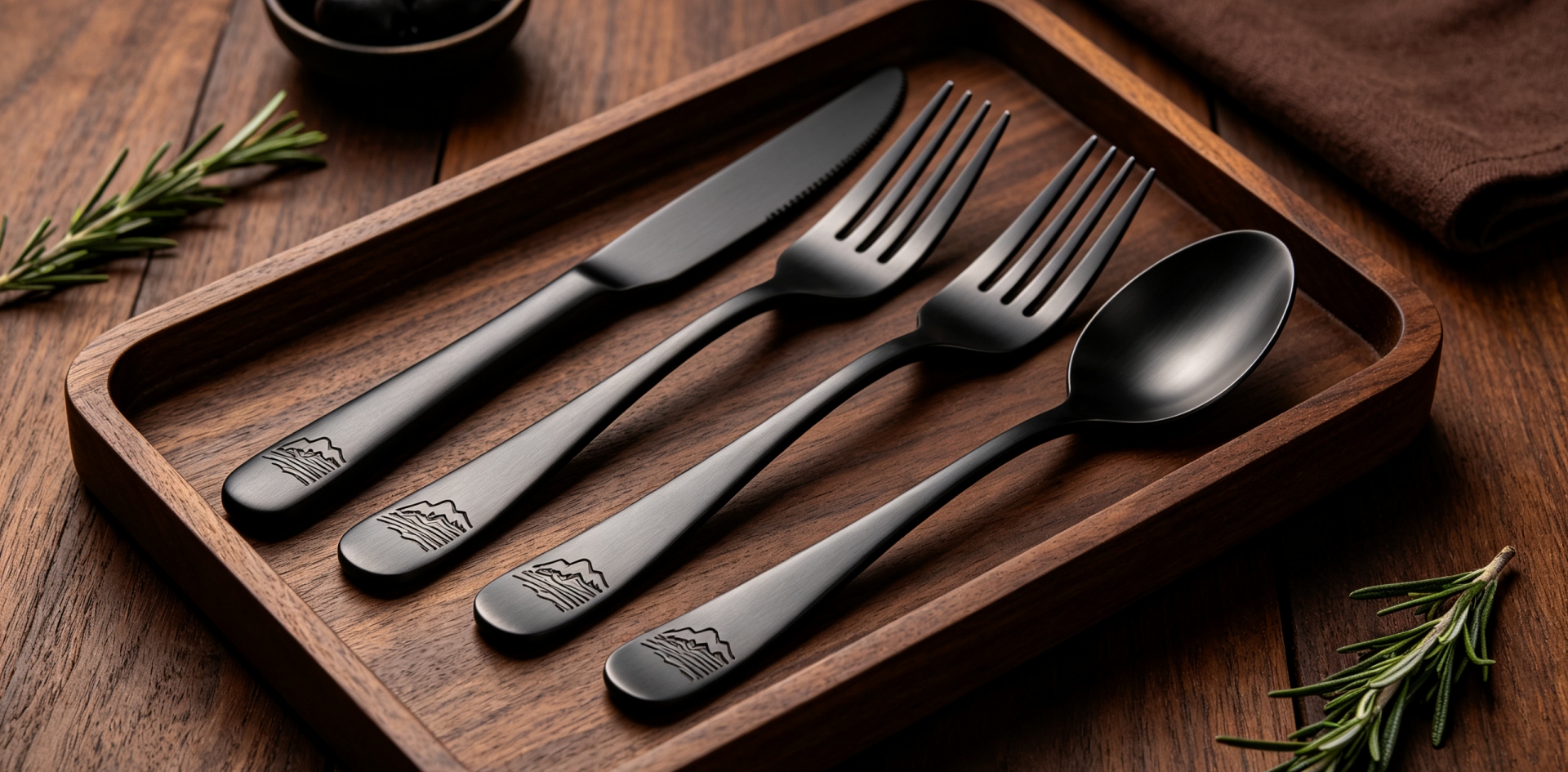
If the buyer is importing customized flatware, the documentation should describe the finished product rather than relying only on a generic model name. A logo or special finish may be commercially important, but its effect on classification should be evaluated according to the applicable rules rather than assumed.
Where uncertainty remains, the broker may request additional drawings, composition information, or other supporting documents. For complex or recurring imports, the buyer may also explore whether a formal classification ruling or binding decision is available in the relevant jurisdiction.
5. Align Commercial Documents with the Product Description
The commercial invoice, packing list, purchase order, and product specification should describe the shipment consistently. Differences between documents can trigger questions, especially when a shipment includes several cutlery models or packaging configurations.
Use descriptions that identify the actual product and material. Instead of listing every item as “tableware,” a document may distinguish stainless steel dinner spoons, dinner forks, table knives, and specified flatware sets.
Check that quantities and units are clear. The number of individual utensils should not be confused with the number of retail sets or cartons. If a set contains multiple pieces, the invoice and packing list should describe the sale unit and shipment quantity in a way that can be reconciled.
Any HS code included on commercial documents should be checked against the code confirmed for the relevant destination. A code copied from an old order may be outdated, incomplete, or unsuitable for the current product configuration.
6. Confirm Country of Origin Separately
HS classification and country of origin are related to customs procedures, but they answer different questions. Classification identifies the category of goods, while origin rules determine where the goods are considered to originate for the relevant customs purpose.
Buyers should not assume that the country where goods are shipped from is necessarily their customs origin. The applicable origin rules may consider where the product was manufactured or whether sufficient processing occurred in a particular country.
If preferential tariff treatment is being claimed under a trade agreement, the importer should confirm the relevant origin requirements and supporting documentation. The existence of an HS code alone does not establish eligibility for a reduced duty rate.
Coordinate origin declarations with the exporter, customs broker, and other responsible parties before shipment. Any claim should be supported by the documentation required for the applicable trade arrangement.
7. Verify Duties and Additional Import Requirements
Once the likely classification has been identified, the importer should confirm the applicable duty rate and any additional requirements for the destination market. Tariff rates may depend on the code, origin, trade agreement, and current national measures.
Use official tariff resources or a qualified customs broker to check the current requirements. Avoid relying solely on search snippets, informal supplier estimates, or a previous shipment's duty calculation.
Other requirements may also apply, depending on the market and product. These can include documentation, labeling, product-safety obligations, or specific declarations. They should be checked separately rather than assumed to be covered by tariff classification.
For bulk stainless steel cutlery orders, resolving these questions before dispatch can help the importer estimate landed costs more accurately and reduce the chance of unexpected charges.
8. Maintain a Classification Record for Repeat Orders
For recurring imports, keep a record linking the confirmed classification to the product model, technical specification, destination country, and relevant customs advice. Include the date of confirmation and the name of the responsible broker or authority where appropriate.
Review the record when the product changes, a new destination market is added, or the applicable tariff schedule is updated. A revised material, construction, or product configuration may require a new review.
The record should be treated as a controlled reference, not as a permanent guarantee that the same code applies to every future shipment. Customs authorities retain their own powers to determine classification, and the applicable rules may change.
Working with Homefelt on Stainless Steel Cutlery Export Orders
Homefelt factory supports B2B customers sourcing stainless steel spoons, forks, knives, and complete flatware sets for wholesale and bulk orders. OEM/ODM services can include product customization, private label requirements, packaging coordination, and transportation planning.
When requesting a quotation or preparing an export order, buyers can share the destination market, product list, material specifications, set composition, and any documentation requirements provided by their customs broker. Clear product information helps the relevant parties assess classification and shipping paperwork before the goods are dispatched.
For stainless steel cutlery quotations and project coordination, contact ingrid@homefelt.net. Provide your target models, estimated quantities, destination market, and customization requirements so the details can be reviewed with your purchasing and logistics process in mind.
You May Be Interested In
How to Build a Product Demonstration Kit for Stainless Steel Cutlery Sales Teams
How to Manage Supplier Change Notifications for Stainless Steel Cutlery Orders
Related Article