How to Plan New Product Development Costs for Stainless Steel Cutlery Collections
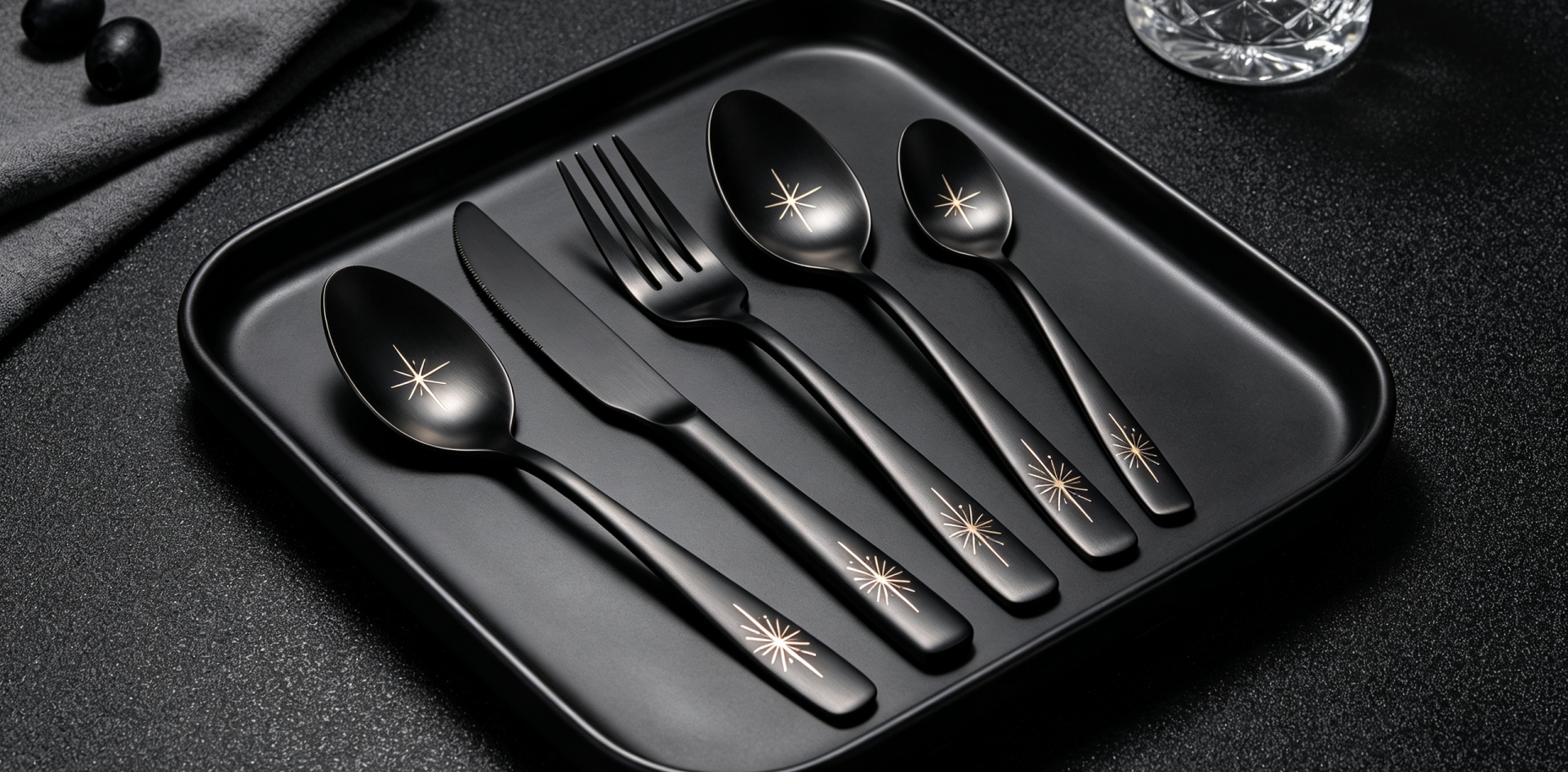
How to Plan New Product Development Costs for Stainless Steel Cutlery Collections
Launching a new stainless steel cutlery collection involves more than choosing a spoon, fork, and knife design. Importers, wholesalers, retailers, and private-label brands also need to budget for product development, sample revisions, tooling, testing, packaging artwork, and preparation for bulk manufacturing.
Without a clear cost plan, a project can exceed its original budget before the first commercial shipment is ready. Some expenses are easy to identify, such as prototype samples, while others emerge when a design requires additional revisions or special production arrangements.
A structured development budget helps B2B buyers compare product concepts, prioritize important features, and decide when a stainless steel flatware collection is ready to move from design approval to manufacturing.
1. Define the Product Scope Before Requesting a Quote
The first step is to establish exactly what the new collection should include. A project covering a basic stainless steel spoon and fork may require a different level of development work from a complete flatware set with several knife styles, serving pieces, and customized presentation packaging.
Prepare a product brief that identifies the intended market, customer group, item count, material requirements, dimensions, finish, target price range, and expected order quantity.
For each spoon, fork, or knife, define relevant specifications such as overall length, weight range, handle profile, bowl dimensions, tine configuration, blade style, and surface finish. Reference drawings or approved physical samples can help reduce uncertainty.
Also identify which elements are new and which can be adapted from existing factory designs. Using an established design may reduce development work, while a fully customized shape may require additional engineering, tooling, and evaluation.
A clear scope gives the manufacturer a consistent basis for estimating costs and makes later changes easier to assess.
2. Separate One-Time Development Costs From Unit Costs
One of the most useful budgeting practices is to separate expenses that occur during development from the recurring cost of each manufactured piece.
One-time or project-specific costs may include design development, prototype preparation, dedicated tooling, sample shipping, and packaging artwork. Recurring unit costs may include stainless steel material, forming, polishing, finishing, assembly, inspection, and standard packaging.
Some expenses fall between these categories. A special finish may require a development trial before it can be priced for regular production. A custom gift box may involve an initial artwork setup charge and a separate per-unit packaging cost.
Ask the stainless steel cutlery supplier to list these charges separately rather than combining every expense into one estimated product price. This makes it easier to compare alternative designs and calculate the cost of the first order versus later repeat orders.
3. Budget for Design and Prototype Revisions
Prototype work helps buyers evaluate whether a proposed design meets functional, visual, and commercial expectations before committing to bulk production.
For stainless steel cutlery, a prototype review may examine handle proportions, balance, weight, bowl depth, fork tine alignment, knife profile, surface finish, and the relationship between individual pieces in a set.
The budget should account for the expected number of sample rounds, any special sample preparation, and the cost of shipping samples between the factory and the buyer. Complex designs may require additional revisions if the first version reveals production or usability issues.
To avoid unnecessary repetition, consolidate feedback from purchasing, product development, quality, and marketing before requesting a revision. Comments should identify the exact item, feature, reference measurement, and desired adjustment.
A signed sample approval or clearly documented approval record can establish the reference for the next stage. If a buyer changes the design after approval, the parties should evaluate the impact on development cost, production timing, and any tooling already prepared.
4. Evaluate Tooling and Design Complexity
A custom cutlery shape may require dedicated tooling or production adjustments. The cost depends on the design, manufacturing process, existing equipment, and the extent to which current tooling can be adapted.
Before approving tooling expenses, ask the manufacturer to explain what the charge covers, whether it is a one-time or recurring expense, and which product designs it supports. Confirm the ownership, storage, maintenance, and permitted use of customer-funded tooling in the commercial agreement.
Buyers should also consider the expected sales volume. A more complex design may be commercially attractive, but its development investment must be evaluated against realistic demand.
For example, a distinctive handle profile intended for a high-volume retail collection may justify dedicated tooling more readily than a specialized design expected to sell only in small quantities. This is a commercial comparison rather than a universal rule; actual costs and production requirements vary by project.
Where possible, request a comparison between adapting an existing design and developing a new one. This helps the buyer understand the additional investment associated with customization.
5. Include Testing and Quality Verification in the Budget
Testing and inspection should be planned before bulk production rather than added only after a problem appears. The required checks depend on the product, target market, customer specifications, and applicable regulations.
Potential evaluation areas include dimensions, weight consistency, surface finish, edge condition, component fit, corrosion-related performance, and packaging protection. Where food-contact requirements apply, buyers should confirm the relevant standards and testing documentation with qualified laboratories or compliance specialists.
Not every project requires every test. The objective is to identify the verification activities needed to demonstrate that the proposed product meets the agreed requirements.
Ask the supplier which checks are performed in-house and which require external testing. Confirm whether costs apply per design, material, finish, or product family, because the scope of a report may not automatically cover every item in a collection.
Homefelt works with B2B customers on stainless steel cutlery manufacturing and customized product programs. Buyers can discuss product specifications, sample evaluation, inspection expectations, and available supporting documentation when planning a new collection.
6. Plan Packaging Development as a Separate Workstream
Packaging can significantly influence the development budget, especially for retail-ready flatware sets and private-label projects.
A collection may require product sleeves, individual wrappers, dividers, inserts, gift boxes, outer cartons, barcode labels, or printed instructions. Each element can have different artwork, setup, and per-unit costs.
Before requesting a final packaging quote, confirm the number of pieces in each set, the arrangement of the spoon, fork, and knife, the required protection, and the target retail presentation. The package should accommodate the actual product dimensions and protect polished surfaces during handling and transport.
Artwork approval should cover the final text, logo placement, color references, barcode information, product details, and required market-specific markings. Late revisions can create additional printing costs or leave unusable packaging.
Where appropriate, compare several packaging options that meet the same functional requirements. A simpler structure may reduce cost and material use without compromising product protection or brand presentation.
7. Calculate the Development Investment Per Saleable Unit
A product's development cost should be considered alongside its expected commercial volume. Buyers can calculate an indicative development allocation by dividing the relevant one-time development expenses by the expected saleable units over a defined period.
For example, if a new stainless steel flatware design requires $6,000 in documented development expenses and the buyer expects to sell 12,000 units, the simple allocation is $0.50 per unit.
This figure is only a planning estimate. The buyer should state whether the expected volume covers the first order, the first year, or the full commercial life of the design. If actual sales are lower than forecast, the development cost allocated to each unit will be higher.
The budget should also account for the possibility of unsold stock, product revisions, or the need to develop a replacement design. Sensitivity analysis using low, expected, and high sales scenarios can show whether the project remains commercially viable under different demand conditions.
8. Use Stage-Gate Approvals to Control Spending
A staged approval process helps prevent a promising product idea from accumulating costs before the buyer confirms its commercial potential.
A practical sequence may include:
-
Product brief and preliminary feasibility review.
-
Initial design and cost estimate.
-
Prototype sample evaluation.
-
Tooling and testing approval.
-
Final sample and packaging approval.
-
Bulk production authorization.
At each stage, identify the decision-maker, the documents required, the costs approved so far, and the conditions for proceeding. If the design changes materially, revise the budget before authorizing the next activity.
This process does not need to be complicated. A shared development tracker can record decisions, responsible people, deadlines, and approved versions. The key is to prevent informal comments from being mistaken for authorization to incur additional costs.
Conclusion
Planning new product development costs gives stainless steel cutlery buyers a clearer understanding of the investment required before bulk manufacturing begins. Separating development charges from recurring unit costs, controlling sample revisions, evaluating tooling, budgeting for testing, and approving packaging early can make projects easier to manage.
For importers, wholesalers, and private-label brands, the most reliable budget is built on a clear product brief and transparent cost breakdown. Homefelt supports B2B customers developing stainless steel spoons, forks, knives, and complete flatware collections through OEM and ODM customization, wholesale production, and coordinated packaging and transportation planning.
To discuss a new cutlery concept or request a quotation, contact ingrid@homefelt.net with your product drawings or reference images, target specifications, estimated quantity, and intended market.
You May Be Interested In
How to Evaluate Product Line Profitability for Stainless Steel Cutlery Distributors
How to Manage Aging Inventory and Dead Stock in Stainless Steel Cutlery Distribution
Related Article