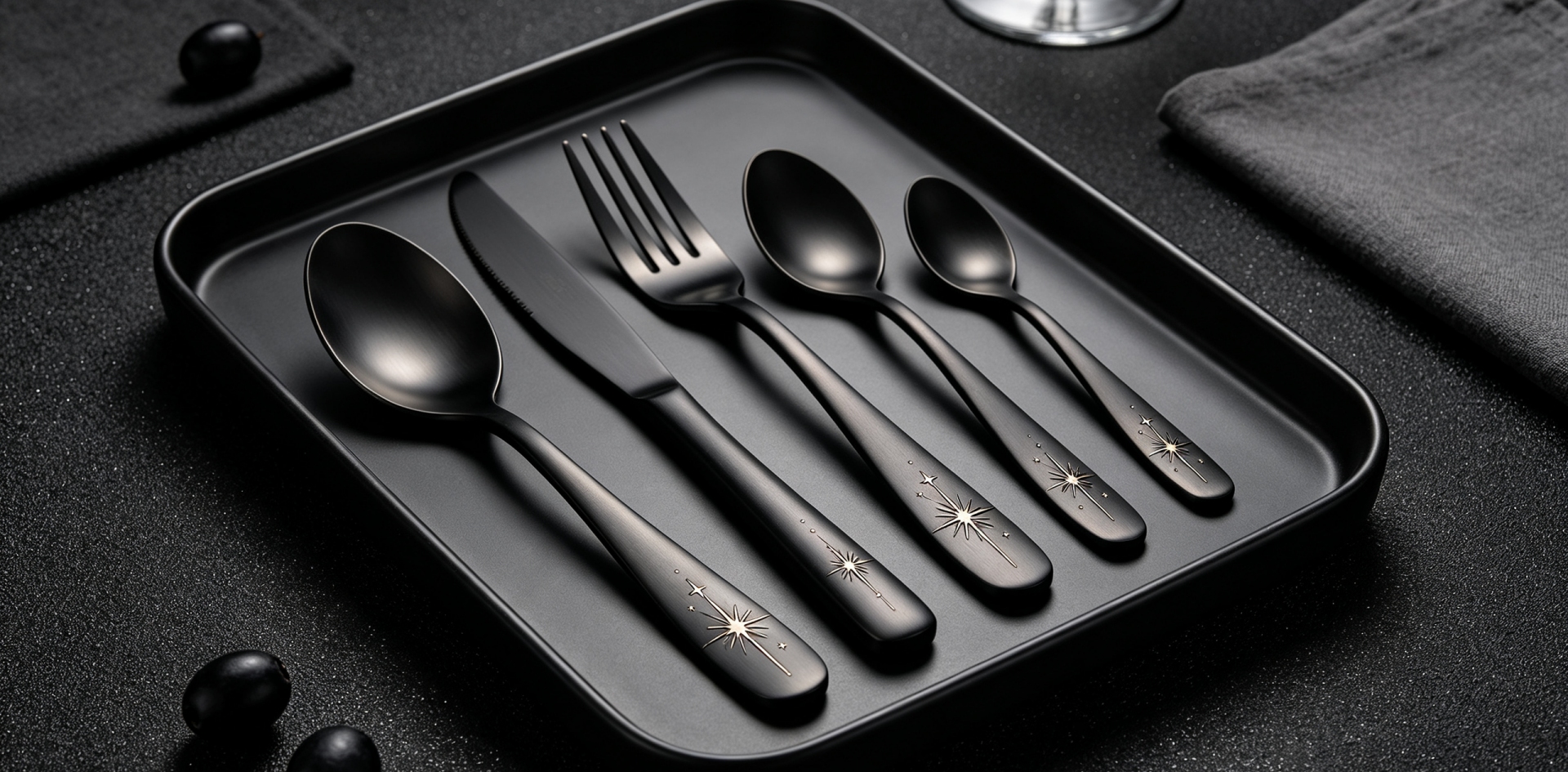
How to Improve Packaging Efficiency for Stainless Steel Cutlery Wholesale Orders

How to Improve Packaging Efficiency for Stainless Steel Cutlery Wholesale Orders
Packaging decisions influence more than the appearance of a stainless steel cutlery product. For importers, wholesalers, distributors, and private-label brands, packaging affects product protection, warehouse handling, shipping efficiency, and the overall cost of supplying spoons, forks, knives, and complete flatware sets.
An efficient packaging plan balances protection with material use and practical handling. Excessive packaging can increase storage and transportation requirements, while insufficient protection may allow polished surfaces to rub against each other or become scratched during transit. The right approach depends on product design, packaging format, shipment route, and customer expectations.
Homefelt supports B2B stainless steel cutlery projects that include customized packaging and transportation coordination. By reviewing packaging requirements before bulk production, buyers and manufacturers can identify opportunities to reduce unnecessary material use while protecting the finished goods.
Begin With the Actual Product and Distribution Channel
Packaging should be designed around the product's shape, finish, and destination rather than selected only by appearance. A retail cutlery set, a bulk carton of individual spoons, and a hospitality supply order may need different packaging structures.
Retail products often require a presentation box, product identification, barcodes, and clear information for shoppers. Wholesale or commercial orders may prioritize compact packing, efficient counting, and convenient warehouse handling. Some projects need both: protective inner packaging for individual pieces and an outer carton suitable for distribution.
Start by identifying how the cutlery will be stored, handled, displayed, and delivered. Consider whether products will pass through a distribution center, be repacked by a retailer, or be delivered directly to a commercial customer.
This information helps the buyer and factory determine which packaging elements are essential and which may be simplified without affecting product protection or customer requirements.
Select Packaging Materials According to Protection Needs
Stainless steel cutlery can develop scratches or surface marks when individual pieces move against one another during handling and transportation. Packaging materials should therefore provide suitable separation and restraint for the product's finish and shape.
Depending on the project, packaging may include paper sleeves, protective bags, separators, inserts, trays, cartons, or presentation boxes. The selection should consider surface finish, the number of pieces, the product's weight, and the expected shipping conditions.
A polished spoon may require more attention to surface separation than a product supplied in a bulk format for later repacking. A coordinated flatware set may need an insert that keeps each piece in its intended position, while loose cutlery may need a simpler system that prevents movement and tangling.
Avoid choosing materials based on cost alone. If a cheaper material causes repeated surface damage, the resulting inspection, replacement, and customer-service costs may outweigh the initial savings. Packaging trials should confirm that the proposed solution protects the actual product.
Review Carton Dimensions and Packing Density
Outer-carton planning can improve the efficiency of warehouse storage and transportation. Cartons that are unnecessarily large may contain unused space, while cartons packed too tightly can increase the risk of pressure damage or make handling difficult.
The buyer and supplier should review the dimensions of the finished retail package or inner pack, the number of units per carton, and the available loading arrangement. Carton size should be determined using the real packaged product rather than estimated from the cutlery dimensions alone.
For wholesale orders containing multiple SKUs, it may be useful to standardize carton formats where practical. However, standardization should not force products with different protection needs into unsuitable packaging.
Check the packed carton weight as well as its dimensions. Excessively heavy cartons may be difficult to handle and may conflict with warehouse or carrier requirements. The appropriate packing configuration should reflect the destination, handling method, and customer specifications.
Reduce Unnecessary Components Without Compromising Quality
Packaging reviews often reveal materials that can be removed, reduced, or combined. For example, a product may use several layers of wrapping even though a single well-designed separator provides adequate protection. A carton may also contain oversized inserts or excessive empty space.
Any reduction should be tested before being applied to a large order. Compare the existing packaging with the proposed version and examine whether the cutlery remains separated, stable, and protected during handling.
The review should also consider the customer's unboxing or retail presentation requirements. Removing a decorative sleeve may reduce material use but could affect a private-label brand's intended presentation. The objective is to eliminate unnecessary packaging, not to remove features that serve a clear commercial purpose.
For custom projects, buyers can ask the factory to propose alternative packaging configurations and explain the effect on material use, packed dimensions, handling, and unit cost.
Consider Recyclability and Material Compatibility
Buyers increasingly evaluate packaging materials alongside product specifications. When sustainability is part of the purchasing brief, the team should identify the materials used in each packaging component and review the available information about their recyclability and disposal.
Avoid relying on broad claims such as “eco-friendly” without supporting details. Recyclability can depend on local collection systems, material combinations, coatings, adhesives, and contamination. A paper-based component may be easier to recycle in one market than a mixed-material structure, but the destination's actual recycling arrangements matter.
Packaging labels and environmental claims should also follow applicable market requirements. If a buyer needs certified materials or specific documentation, the requirement should be stated before the packaging is ordered.
For a stainless steel flatware program, packaging optimization can include reviewing paper grades, reducing unnecessary plastic components where appropriate, and choosing simpler structures that still protect the product. The final selection should balance protection, presentation, material use, and local requirements.
Test the Complete Packed Product
A packaging concept that looks suitable on screen may not perform as expected once the cutlery is packed. Before approving a large production run, inspect a representative packaged sample.
Check whether each spoon, fork, and knife stays in position, whether polished surfaces rub together, and whether inserts shift when the box is moved. Examine the fit of the retail box inside the master carton and confirm that the carton closes correctly without excessive compression.
Where the distribution route or buyer's standards justify it, consider appropriate transit or handling tests. The test method should match the likely shipping risks and the packaging configuration rather than being selected without reference to the product.
Record the approved packaging structure, materials, carton dimensions, and unit quantities. If a later change is proposed, review whether it affects product protection, packed weight, labeling, or transportation arrangements.
Calculate Packaging Costs Beyond the Unit Price
The lowest packaging unit price does not always produce the lowest delivered cost. Buyers should consider material costs, packing labor, carton volume, freight implications, storage requirements, and potential damage or replacement expenses.
A more compact carton may improve loading efficiency, but only if the new configuration maintains appropriate protection and handling. A slightly more expensive insert may reduce scratches and prevent rework. The best choice depends on the complete order and distribution model.
When requesting a quotation, ask the supplier to identify the packaging configuration included in the price. If alternative options are available, compare them using the same product quantity and specification so the differences are meaningful.
For large-volume orders, even small improvements per set can become significant across repeated shipments. Any cost comparison should nevertheless include quality and operational consequences rather than focusing on packaging expenditure alone.
A Practical Packaging Review Checklist
Before approving packaging for a stainless steel cutlery order, review these points:
-
Does the packaging suit the product finish and shape?
-
Are spoons, forks, and knives adequately separated?
-
Are inner-pack and master-carton quantities confirmed?
-
Are carton dimensions and weights suitable for handling?
-
Can unnecessary materials or empty space be reduced?
-
Are packaging materials identified accurately?
-
Do labels, barcodes, and artwork match the approved version?
-
Has a representative packed sample been checked?
-
Are sustainability claims supported by appropriate information?
-
Have packaging changes been reviewed for cost and transit impact?
A documented review gives purchasing, product, quality, and logistics teams one shared reference. It also makes future improvements easier because the original packaging configuration and approval basis are recorded.
Improve Your Wholesale Cutlery Packaging With Homefelt
Homefelt works with B2B customers sourcing stainless steel spoons, forks, knives, and complete flatware sets for wholesale, retail, and private-label markets. Project discussions can include product specifications, custom design, packaging development, and transportation planning based on the buyer's order requirements.
When requesting a quotation, share your target quantity, product finish, packaging format, destination market, branding needs, and any material or sustainability requirements. These details help the team evaluate practical packaging options for the intended distribution channel.
For stainless steel cutlery information, bulk quotations, or OEM/ODM packaging discussions, contact ingrid@homefelt.net. Reviewing packaging early can help buyers control costs, protect product quality, and prepare a more efficient wholesale supply program.
You May Be Interested In
How to Manage Customer-Specific Specifications for Stainless Steel Cutlery Orders
How to Protect Confidential Product Information in Stainless Steel Cutlery OEM Projects
Related Article