Stainless Steel Portable Utensil Sets
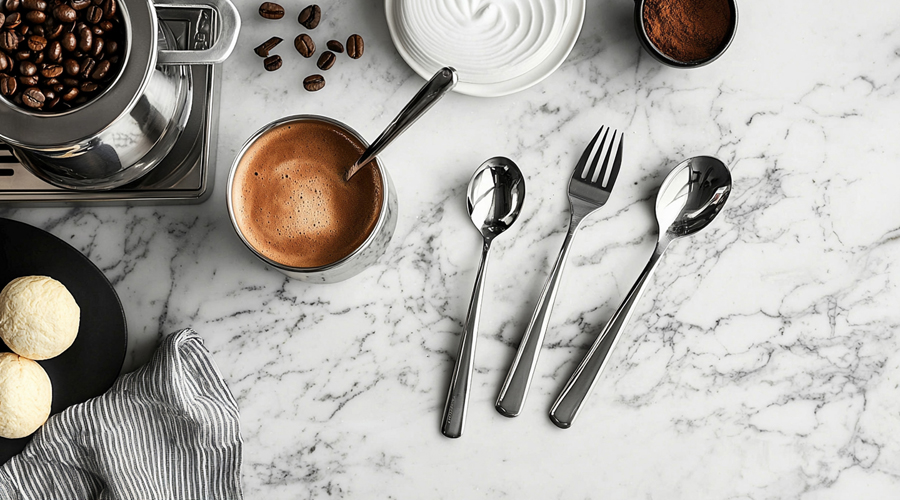
In an era defined by mobility, convenience, and environmental consciousness, a quiet revolution is transforming how people approach meals away from home. Portable stainless steel utensil sets, typically configured as compact 2-piece or versatile 3-piece collections, represent the convergence of sophisticated materials engineering, ergonomic design, and sustainable lifestyle choices. These meticulously crafted kits, comprising combinations of forks, knives, spoons, and increasingly chopsticks, are displacing single-use plastic alternatives while offering performance characteristics that often surpass conventional tableware.
The fundamental engineering challenge of portable utensil design lies in reconciling seemingly contradictory requirements: full-size functionality must coexist with minimal storage dimensions, substantial feel must balance with lightweight portability, and durable construction must maintain elegant aesthetics. Premium sets achieve this balance through advanced manufacturing techniques including precision stamping, computer-controlled grinding, and specialized heat treatments that optimize the material properties of stainless steel for portable applications.
Material Science: The Foundation of Performance
The selection of stainless steel grades for portable utensils involves careful consideration of the unique demands of mobile use. 18/8 (304) stainless steel remains popular for its excellent corrosion resistance and balanced properties.
The manufacturing process begins with precision blanking of utensil profiles from carefully calibrated stainless steel sheets, typically between 1.0mm and 1.5mm thick. The blanking process utilizes sophisticated nesting algorithms that optimize material utilization, particularly important for the complex geometries of folding mechanisms and specialized chopstick designs. Following blanking, the utensils undergo multi-stage forming operations that establish their three-dimensional characteristics. Spoon bowls receive particular attention, with progressive stamping dies gradually forming the complex curves that determine eating efficiency.
The Engineering of Compactness: Hinges, Angles, and Storage Optimization
For non-folding sets, the design emphasis shifts to geometric optimization that enables compact nesting. This often involves handles with slight tapers that allow utensils to stack with minimal air space, and specialized contours that create interlocking profiles. The integration of chopsticks presents particular challenges, solved through innovative approaches including telescoping sections, threaded connectors, and magnetic couplings that maintain perfect alignment during use. The manufacturing precision required for these connection systems typically involves computer-controlled machining with tolerances under 0.05mm, ensuring seamless joins that feel monolithic during dining.
Surface Engineering and Maintenance Considerations
The surface treatments applied to portable utensils significantly influence their performance and user experience. Mirror polishing, while aesthetically striking, requires protective coatings or storage separators to prevent scratching during transport. Satin and brushed finishes have gained popularity for their ability to conceal minor surface marks while maintaining an elegant appearance. Proprietary PVD finishes that introduce color options without compromising food safety.
Hygiene considerations receive particular attention in portable utensil design, with seamless construction and radiused corners that eliminate food traps. The cleaning protocols must accommodate various scenarios from proper kitchen washing to field conditions where only minimal water is available.
Packaging Integration: Protection and Presentation
The packaging for portable utensil sets represents a critical interface between product and user, serving multiple functions including physical protection, organization, and brand communication. Injection-molded plastic cases offer excellent impact resistance with precise interior fittings that prevent utensil movement during transport. Silicon cases provide superior flexibility and heat resistance while allowing for vibrant color options. Paper-based packaging appeals to environmentally conscious consumers through renewable materials and minimalist aesthetics.
The engineering of these packaging solutions involves extensive prototyping to optimize insertion effort, tactile feedback, and closure security. "The perfect case produces an satisfyingly precise 'click' when closed, maintains its integrity when dropped, and reveals the utensils in an inviting presentation when opened," explains packaging designer James Robertson. "We employ finite element analysis to simulate the stress distributions during impact and accelerated life testing that replicates years of use in weeks of laboratory evaluation."
As consumer preferences continue evolving toward sustainable choices that don't compromise quality or convenience, advanced portable stainless steel utensil sets represent an increasingly sophisticated solution. Through thoughtful engineering, precise manufacturing, and user-centered design, these compact dining companions are transforming meals on-the-go from functional necessities into dignified experiences, proving that the most impactful innovations often come in the smallest packages.
How Portable Stainless Steel Cutlery Sets Transforming Mobile Dining Culture
How to Make a Stainless Steel Dinner Knife
Related Article