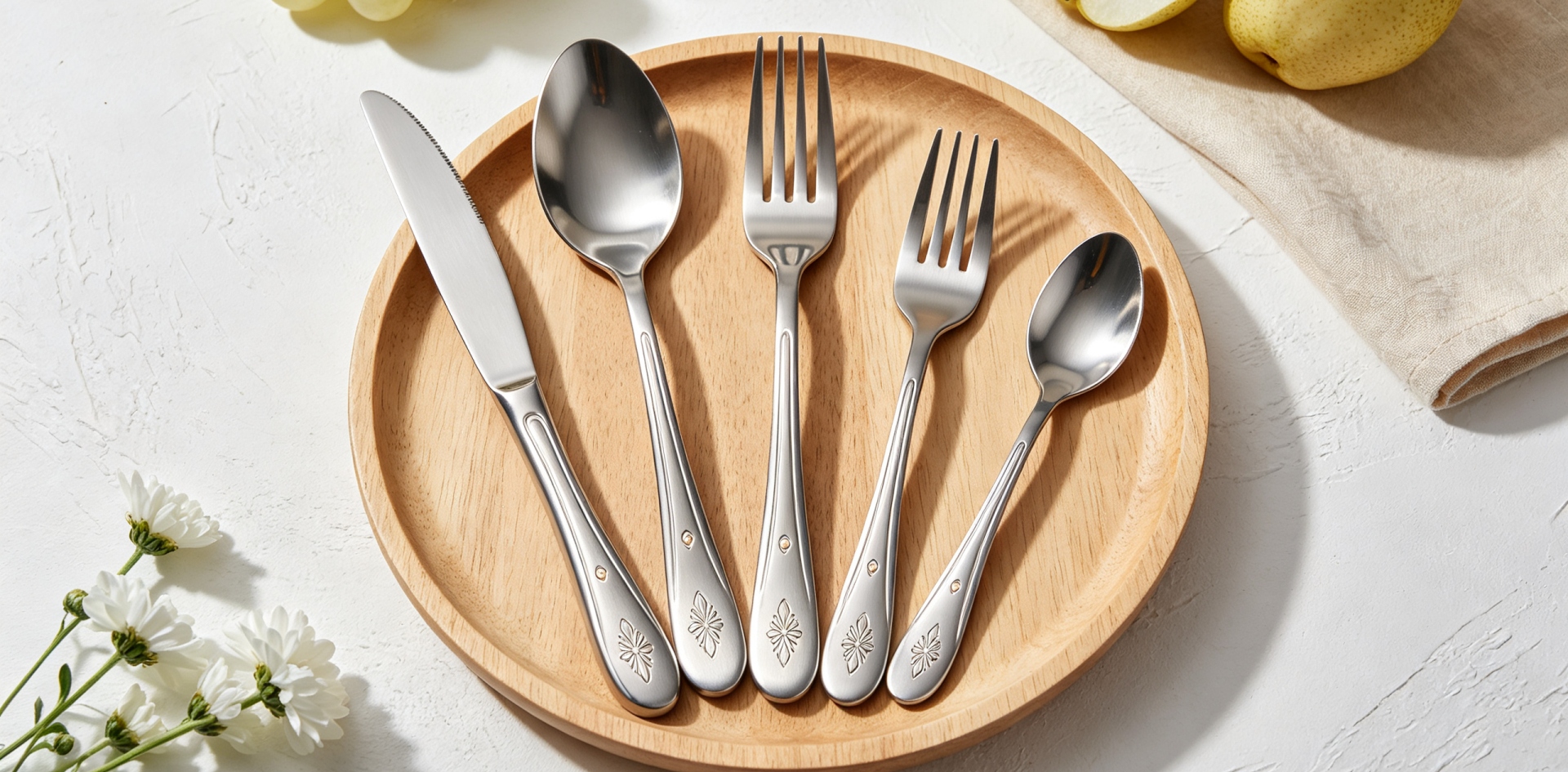
Stainless Steel Spoon Sample Evaluation Before Bulk Approval

Stainless Steel Spoon Sample Evaluation Before Bulk Approval
Before placing a large order for stainless steel spoons, buyers need to confirm that the proposed product meets their commercial and technical requirements. A sample provides an opportunity to examine the actual item, compare it with the intended design, and identify details that may need adjustment before production moves forward.
For importers, distributors, hospitality suppliers, and private-label brands, sample evaluation is especially important when a spoon has a customized handle, a special surface finish, a defined weight, or branded packaging. A product image can communicate the general appearance, but it cannot fully demonstrate how the spoon feels in the hand or whether its proportions match the buyer’s expectations.
Homefelt factory supports stainless steel cutlery customization, OEM/ODM development, wholesale supply, and bulk production. A structured sample review helps buyers communicate their requirements clearly and gives both parties a more reliable reference for the next stage of the order.
Begin With the Approved Product Requirements
Sample evaluation should start with a written product brief. Without a clear reference, different reviewers may judge the same spoon according to different expectations.
The brief should identify the spoon type, intended application, material grade, dimensions, surface finish, handle design, and any customization requirements. If the buyer has a technical drawing, reference product, or agreed specification sheet, it should be available during the review.
For a customized stainless steel spoon, the brief may also cover logo position, decorative details, edge treatment, packaging presentation, and any specific requirements for the finished product.
Not every feature needs to be described in excessive detail. The objective is to define the characteristics that matter to the buyer and distinguish mandatory requirements from preferences that can be adjusted during development.
For example, overall length may be a fixed specification, while a minor change to a decorative element may remain open for discussion. Recording this distinction makes sample feedback easier to interpret.
Check Dimensions and Proportions
Dimensions are among the first characteristics buyers should verify. Depending on the spoon design, useful measurements may include overall length, bowl length, bowl width, bowl depth, handle width, and thickness at specified points.
Measurements should use consistent units and a clear method. If the specification calls for an overall length of 180 mm, the reviewer should measure the sample using the same reference points established in the drawing or specification.
Proportions also deserve attention. Two spoons can have similar overall lengths but noticeably different bowl sizes or handle profiles. These differences may affect appearance, intended use, and compatibility with the rest of a coordinated cutlery range.
A practical review records both the measured result and the agreed requirement. If a difference is found, the buyer should clarify whether it falls within an approved tolerance or requires a design adjustment. Tolerances should be agreed for the relevant dimensions rather than assumed to be identical across every feature.
Evaluate Weight and Handling
The weight of a stainless steel spoon affects how the product feels to the user and how it fits the buyer’s product positioning. Some programs require a substantial feel, while others prioritize a lighter design for a particular price point or application.
A sample should be weighed using a suitable scale, and the result should be compared with the agreed specification when one exists. If the buyer has not established a target weight, the sample can serve as a reference for discussing the preferred balance between material use, handling, and commercial requirements.
Handling evaluation should consider the relationship between the bowl and handle, the distribution of weight, and the way the spoon rests in the hand. Reviewers should check whether the handle feels comfortable for its intended user and whether its shape supports the expected application.
These observations are partly subjective, so it is useful to record the reason behind each comment. Instead of writing “the spoon feels wrong,” a reviewer might note that the handle appears too narrow, the bowl feels too heavy relative to the handle, or the overall proportions differ from the reference product.
Inspect the Bowl, Handle, and Edges
A close visual inspection can reveal details that may not be obvious in product photographs.
For the bowl, examine the symmetry, contour, depth, and transition into the handle. The surface should match the agreed design and finish. For the handle, check its outline, decorative pattern, width, and alignment with the spoon’s centerline where applicable.
Edges and contact areas deserve particular attention. The spoon should have a suitable finished feel for its intended use, without unintended sharp edges or obvious finishing defects. The bowl and handle should also be examined for visible dents, scratches, uneven polishing, or other conditions that conflict with the agreed acceptance criteria.
Visual inspection alone cannot establish every material or performance property. If the project has defined requirements for corrosion resistance, food-contact suitability, or other technical characteristics, the relevant documentation or testing should be reviewed separately.
Confirm the Material and Surface Finish
The sample’s appearance should be compared with the specified stainless steel material and finish. A polished spoon may reflect light differently from a matte or brushed version, while the appearance of decorative handles can vary according to the design and finishing process.
However, appearance alone cannot reliably identify the stainless steel grade. Buyers should verify the material against the supplier’s written specification and request suitable supporting documentation where required.
If the spoon includes a special coating, colored finish, or another decorative treatment, the buyer should confirm the agreed appearance and clarify any applicable performance expectations. Requirements should reflect the actual product construction rather than assumptions based on a photograph or a sample viewed under different lighting conditions.
Where several spoon styles will be sold as one collection, reviewers should also examine whether their finishes appear coordinated. The objective is to confirm the intended product presentation, not to assume that every design will look identical despite differences in shape and surface area.
Test the Sample for Its Intended Application
A sample should be reviewed in the context of how it will be used. A teaspoon, soup spoon, dessert spoon, and serving spoon have different functional expectations.
For a spoon intended for everyday dining, reviewers may assess handling comfort, bowl proportions, and the overall user experience. For a serving spoon, the bowl size and shape may be more important to the intended task. A spoon developed for a particular customer program should be evaluated against that program’s stated requirements.
Any functional test should be appropriate to the product and use case. If a buyer requires specific performance testing, the method and acceptance criteria should be agreed in advance. General handling checks should not be presented as substitutes for formal testing where the order requires it.
The results can be documented using concise comments, photographs, measurements, and a clear decision for each important feature.
Use a Structured Sample Approval Record
A sample approval record reduces the risk of misunderstandings after feedback has been exchanged. It should identify the sample, the review date, the applicable drawing or specification revision, and the final decision.
A simple evaluation table can include:
| Evaluation item | What to record |
|---|---|
| Product identity | Spoon type, item code, and sample reference |
| Dimensions | Required values, measured values, and applicable tolerances |
| Weight | Sample weight and agreed target, if specified |
| Appearance | Bowl shape, handle design, finish, and visible defects |
| Handling | Comfort, balance, and suitability for intended use |
| Customization | Logo position, decorative details, and approved artwork |
| Documentation | Material information and any required supporting records |
| Decision | Approved, approved with recorded conditions, or revision required |
If changes are necessary, the record should state exactly what needs to be revised. A new sample may be appropriate when changes affect dimensions, balance, appearance, or another important product characteristic.
Approval should identify the specific version being accepted. If a revised sample is submitted later, the buyer should not rely on an earlier approval without confirming whether it still applies.
Connect Sample Approval With Bulk Production
Once a sample is approved, the buyer and factory should agree on the specification that will govern the bulk order. This may include the approved drawing, material grade, dimensions, finish, customization details, and relevant inspection requirements.
For OEM and private-label projects, the approved sample can be an important visual reference, but it should be supported by written specifications where measurable requirements matter. This helps reduce ambiguity when different teams handle purchasing, production, quality review, and delivery.
Homefelt factory works with business customers on stainless steel spoon and cutlery projects, including customized designs, OEM/ODM development, and wholesale orders. Buyers can discuss product specifications, packaging options, and transportation arrangements according to their project requirements.
The factory and buyer should also clarify whether any sample-related changes affect the quotation, production schedule, or packaging arrangements. Confirming these points before issuing the final purchase order helps keep the approved product and the commercial agreement aligned.
Make Sample Review a Business Decision
Sample approval is not simply a visual preference check. It is a way to confirm that the proposed spoon matches the buyer’s specifications, intended application, and market positioning before a larger commitment is made.
A useful review focuses on measurable requirements, functional suitability, finish quality, and clearly documented decisions. Where technical performance or market-specific requirements apply, the appropriate supporting records should be reviewed as part of the overall approval process.
Homefelt factory welcomes inquiries from distributors, importers, and brands sourcing stainless steel spoons for wholesale, customized, and private-label programs. To discuss a new design, sample requirements, or bulk-order specifications, contact ingrid@homefelt.net with your product details and project goals.
You May Be Interested In
Stainless Steel Spoon Surface Inspection Under Different Lighting
Stainless Steel Spoon Export Documentation for B2B Orders
Related Article