Stainless Steel Spoon Stacking Clearance and Storage Design
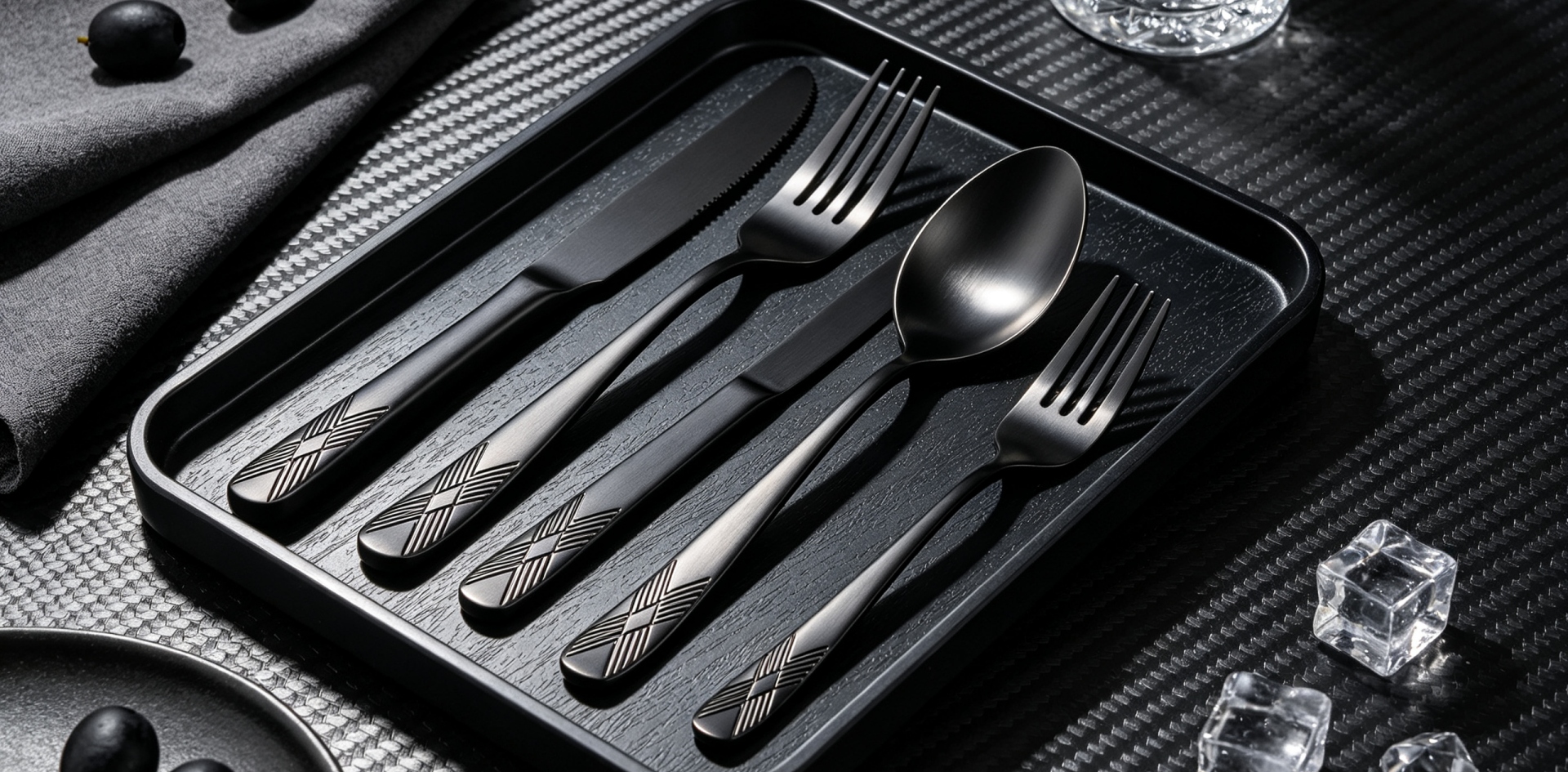
Stainless Steel Spoon Stacking Clearance and Storage Design
For stainless steel cutlery distributors, hospitality suppliers, and private-label brands, product design affects more than appearance and handling. The way spoons stack together can influence storage space, packaging dimensions, warehouse organization, and the convenience of handling multiple pieces at once.
Two spoon designs with similar overall lengths may behave very differently when stacked. Differences in bowl depth, handle curvature, decorative details, and surface finish can change how closely the pieces sit together. For buyers planning wholesale orders, evaluating these details before finalizing a product can help avoid unexpected storage and packing challenges.
Homefelt factory supports stainless steel spoon and cutlery projects for B2B customers, including OEM/ODM development, customization, wholesale supply, and bulk production. Discussing stacking behavior alongside the main product specifications helps buyers make more informed decisions about the finished design.
Why Stacking Clearance Matters in Spoon Design
Stacking clearance describes the space needed when multiple spoons are placed together. It is influenced by the spoon's three-dimensional shape rather than its overall length alone.
A spoon with a relatively shallow bowl and a gently curved handle may nest more closely with another piece of the same design. A deeper bowl, raised handle decoration, or pronounced curvature may create more space between adjacent spoons.
These differences can affect how many pieces fit within a storage container or a particular package. They may also influence how easily warehouse staff separate individual pieces during picking and packing.
However, minimizing stacking space should not be the only design objective. A spoon still needs to meet its intended functional, dimensional, aesthetic, and quality requirements. A design that nests tightly but is difficult to separate or vulnerable to visible surface marks may not be the best commercial choice.
Which Design Features Affect Spoon Stacking?
Several product characteristics influence how stainless steel spoons sit together.
Bowl shape and depth
The bowl is a curved surface, so its length, width, depth, and contour affect how one spoon rests inside another. A shallow bowl may allow closer nesting in some designs, while a deeper or more rounded bowl may create greater separation.
The result depends on the complete geometry of both pieces. Buyers should therefore evaluate the actual design instead of assuming that a smaller bowl will always stack more efficiently.
Handle curvature
A handle that rises noticeably from the bowl can prevent adjacent spoons from sitting closely together. Curvature may be necessary for the intended design or handling experience, but it should be considered when estimating storage requirements.
Handle width and decoration
Wide handles, embossed patterns, raised decorative elements, and unusual profiles can change the contact points between stacked pieces. A flat handle and a highly decorative handle may require different storage arrangements even when their lengths are similar.
Thickness and forming geometry
The thickness of the stainless steel and the shape of the formed bowl and handle influence the space between pieces. Thickness should be selected according to the product specification and intended use, not reduced solely to achieve tighter stacking.
Surface finish
When polished spoons contact each other, friction and movement can affect their appearance during handling. A design that stacks tightly may still require suitable separation or protective packaging if contact marks are a concern.
Measure Stacking Height With a Repeatable Method
For buyers who need to estimate storage capacity, measuring a single spoon is not enough. A practical evaluation should examine a group of identical pieces arranged in the way they will actually be stored.
One simple method is to place a defined number of spoons together on a level surface and measure the total height of the stack. The measurement should be repeated using the same orientation and stacking method.
For example, a buyer could compare two candidate designs by stacking ten pieces of each model and recording the resulting height. If one stack measures 65 mm and another measures 82 mm, the first design occupies less vertical space under that specific test arrangement.
These figures are only illustrative. Actual measurements must come from the products being evaluated, and the results may change if the spoons are arranged differently.
A useful comparison record includes:
-
Product code and design reference
-
Number of spoons in the test stack
-
Stacking orientation
-
Total stack height
-
Ease of separating individual pieces
-
Visible contact marks after handling
-
Any instability or tendency for the stack to shift
The test method should remain consistent when comparing designs. Otherwise, differences in arrangement may be mistaken for differences in product geometry.
Consider Separation and Handling, Not Just Storage Volume
Close nesting can reduce storage requirements, but the spoons should still be practical to handle. If the pieces fit too tightly together, staff may need extra effort to separate them during counting, packing, or service preparation.
This matters for buyers supplying restaurants, hotels, catering businesses, and institutional customers where large quantities of cutlery may be handled repeatedly.
A handling review can assess whether pieces separate smoothly, whether the stack remains stable during ordinary movement, and whether the edges or decorative details catch on neighboring pieces. The results should be evaluated against the intended application rather than a universal assumption that tighter stacking is always better.
For storage containers and service stations, buyers should also consider the way spoons will be loaded and removed. A compact stack may work well in a warehouse carton but be less convenient in a frequently accessed service tray.
The ideal arrangement balances storage efficiency with accessibility, product protection, and user convenience.
Translate Stacking Results Into Packaging Requirements
Stacking behavior can affect how spoons fit inside inner boxes, retail packages, and master cartons. Buyers developing packaging should evaluate the actual packed configuration rather than relying only on the nominal dimensions of one spoon.
If several spoons are stacked in a defined orientation, their combined height may be much less than the sum of their individual heights. However, the final package also needs space for protective materials, inserts, dividers, or other components required by the design.
The usable internal dimensions of the package are particularly important. A carton's external measurements do not describe the space available for the product after accounting for board thickness and internal structures.
For customized spoon programs, it is useful to test the intended quantity inside the proposed packaging before finalizing the specification. This can reveal whether the pieces fit comfortably, whether the package closes correctly, and whether the arrangement remains practical for packing operations.
Packaging should also protect the finish. If the spoons rub against one another during movement, buyers may need to consider separators, sleeves, or a different packing arrangement. The appropriate solution depends on the product finish, transport conditions, packaging budget, and customer expectations.
Compare Storage Needs Across Different Spoon Types
A product range may include teaspoons, dessert spoons, soup spoons, and serving spoons. Each type can have different dimensions and nesting behavior, so a single storage assumption may not apply to the entire collection.
A compact teaspoon may stack efficiently in a small container, while a serving spoon with a broad bowl may require a different arrangement. Coordinated products can share a visual style without having identical storage requirements.
For distributors managing multiple SKUs, recording stacking measurements for important models can improve warehouse planning and packaging estimates. These records are especially useful when introducing a new design that looks similar to an existing product but has a different bowl or handle profile.
Buyers should avoid relying on a single average measurement when a range contains significantly different spoon shapes. Product-specific data gives a more reliable basis for planning storage capacity and packed quantities.
What Buyers Should Confirm With the Factory
Before approving a spoon design for bulk production, buyers can discuss stacking requirements alongside the normal technical specification.
Useful points include the preferred stacking orientation, the quantity expected in a storage unit or package, any restrictions on packed height, and concerns about surface contact. If a particular container or packaging format must be used, sharing its internal dimensions can help the factory understand the practical design constraints.
For OEM and private-label projects, buyers may also need to balance stacking behavior against handle decoration, logo placement, product weight, and the desired appearance. A change intended to improve nesting may affect other product characteristics, so it should be evaluated as part of the complete design.
Homefelt factory can discuss stainless steel spoon customization, OEM/ODM development, wholesale requirements, and large-volume production with business customers. Product design, packaging, and transportation arrangements can be coordinated according to the needs of each project.
Any proposed change should be confirmed through an updated drawing, specification, or approved sample where appropriate. This gives both parties a clear reference before the product moves into bulk manufacturing.
Make Stacking Performance Part of Product Selection
Stacking clearance is a practical design consideration for businesses purchasing stainless steel spoons in volume. It affects how products are stored, handled, packaged, and distributed, but it should be evaluated together with dimensions, usability, appearance, and protection requirements.
By comparing actual samples with a repeatable method, buyers can identify which design best fits their storage and packaging needs. Clear measurements also help communicate requirements to the factory and reduce reliance on assumptions based on photographs.
Homefelt factory welcomes inquiries from distributors, importers, hospitality suppliers, and private-label brands sourcing stainless steel spoons and cutlery. To discuss spoon dimensions, stacking requirements, customized designs, or bulk-order planning, contact ingrid@homefelt.net with your product details and intended packaging arrangement.
You May Be Interested In
Stainless Steel Spoon Handle Joint Quality and Inspection
Stainless Steel Spoon Surface Inspection Under Different Lighting
Related Article