Stainless Steel Spoon Surface Finishes: Polished, Satin, Brushed and Matte Options

Stainless Steel Spoon Surface Finishes: Polished, Satin, Brushed and Matte Options
The surface finish of a stainless steel spoon has a major influence on its appearance, product positioning and overall tableware collection.
For B2B buyers, choosing a finish is not simply a visual decision. The selected surface treatment should also work with the product design, target market, packaging, cleaning requirements and other pieces in the collection.
Common options include mirror polished, satin, brushed and matte finishes. Each creates a different visual effect and can support a different product style.
What Is a Stainless Steel Spoon Surface Finish?
Surface finish refers to the final appearance and texture created on the stainless steel after the product has been formed and processed.
The finish can influence:
-
Reflectivity
-
Texture
-
Appearance
-
Visual uniformity
-
Product positioning
-
Collection consistency
For commercial orders, the finish should be clearly specified and approved with a physical sample whenever possible.
Why Finish Matters for B2B Buyers
A stainless steel spoon may have the correct dimensions and material but still look different from the buyer's expectations if the surface treatment is not clearly defined.
This becomes especially important for:
-
Retail collections
-
Hotel tableware
-
Restaurant flatware
-
Private label products
-
Coordinated cutlery sets
A consistent finish helps create a unified appearance across multiple products.
Mirror Polished Finish
Mirror polishing creates a highly reflective surface.
The finished spoon can have a bright appearance that works well with traditional and contemporary table settings.
Mirror polished spoons are often selected for:
-
Formal dining
-
Hotels
-
Restaurants
-
Premium tableware
-
Retail collections
The reflective appearance can make the product look bright and refined.
Satin Finish
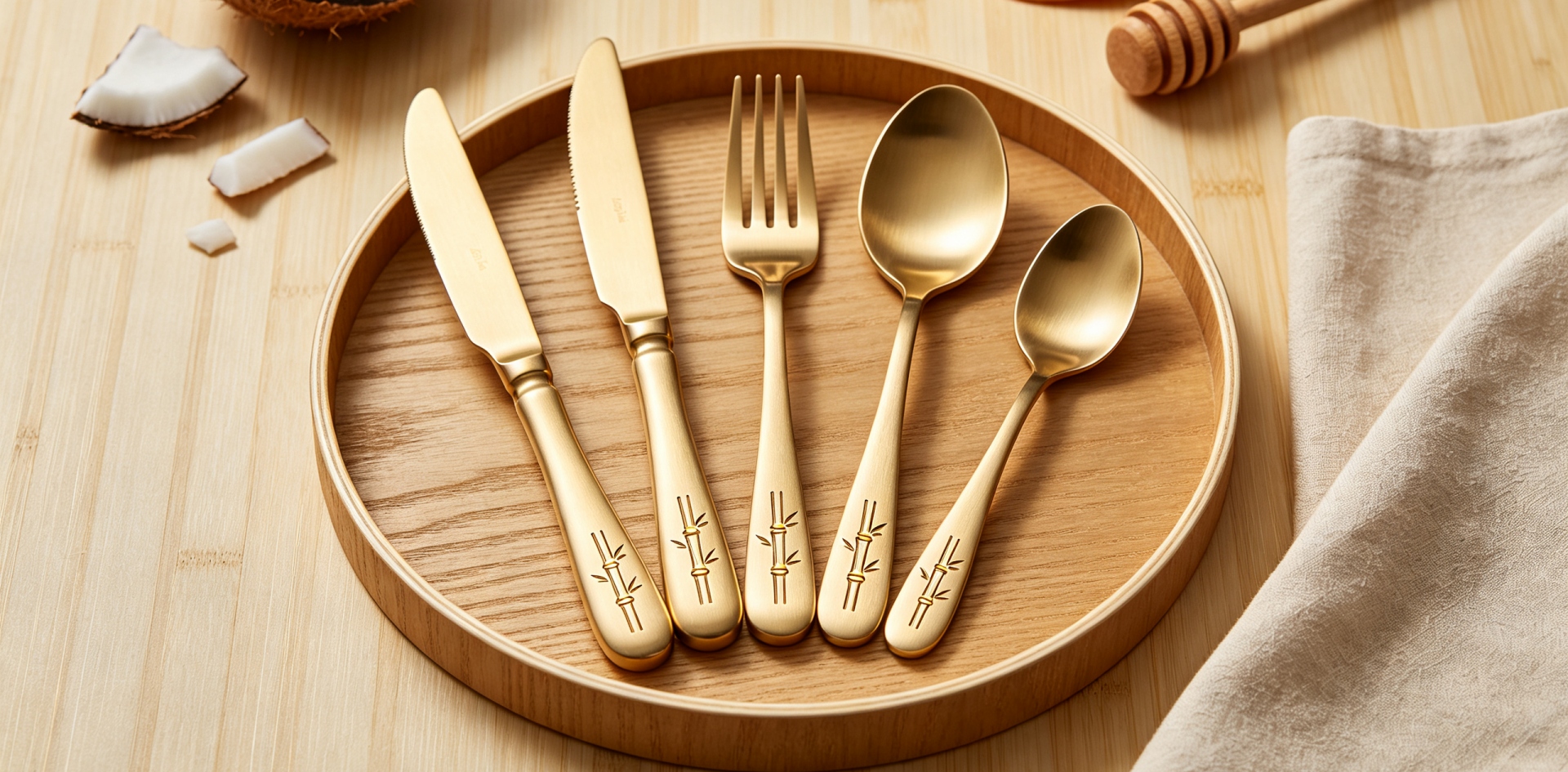
Satin finishing creates a softer appearance than a highly reflective polished surface.
The reduced reflection can give the spoon a more understated and contemporary look.
Satin finishes can work well for:
-
Modern dining collections
-
Restaurant tableware
-
Hospitality products
-
Everyday premium flatware
For buyers looking for a balance between refined appearance and a softer visual effect, satin can be an appropriate option.
Brushed Finish
A brushed surface typically has visible directional lines or a subtle textured appearance.
The result can create a modern industrial style.
Brushed stainless steel spoons may be suitable for:
-
Contemporary tableware
-
Modern restaurants
-
Kitchen-focused collections
-
Design-oriented retail products
The direction and consistency of the brushed effect should be controlled during production.
Matte Finish
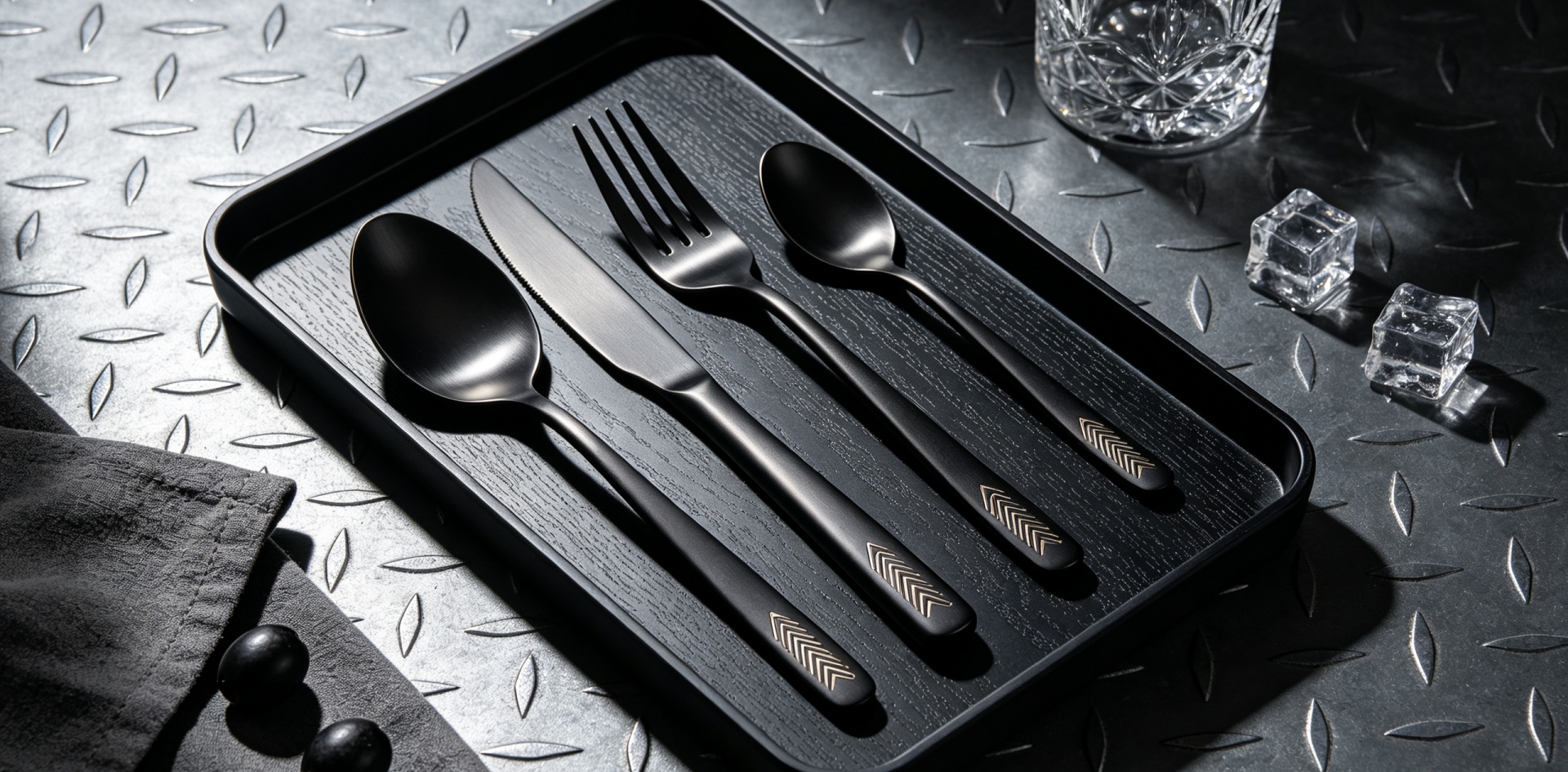
Matte finishing reduces surface reflection and creates a subdued appearance.
It can be used for minimalist or contemporary product collections.
A matte spoon may be particularly suitable when the buyer wants the product to look less reflective than traditional polished flatware.
Comparing Common Finishes
| Finish | Visual Character | Typical Product Positioning |
|---|---|---|
| Mirror polished | Bright and highly reflective | Formal and premium |
| Satin | Soft and refined | Modern and versatile |
| Brushed | Directional texture | Contemporary and industrial |
| Matte | Low reflection | Minimalist and modern |
The best choice depends on the intended product concept rather than one finish being universally better.
Finish and Product Design
The same surface treatment can look different depending on the spoon design.
A simple handle may emphasize the texture of a brushed finish, while a detailed handle may work better with a polished surface.
The relationship between:
-
Handle shape
-
Bowl shape
-
Thickness
-
Finish
should therefore be considered as a complete design.
Finish and Handle Design
The handle is often the most visible part of a spoon when it is placed on a table.
A highly reflective finish can emphasize decorative details.
A brushed or satin finish can create a softer appearance and reduce visual contrast.
For a complete cutlery collection, the finish should remain consistent across spoons, forks and knives.
Finish and Bowl Shape
The bowl should also be considered when selecting a surface treatment.
A reflective finish can highlight the curved shape of the bowl, while a lower-reflection treatment can create a more understated appearance.
The final choice should be evaluated using an actual sample rather than photographs alone.
Finish and Product Positioning
Different finishes can communicate different product characteristics.
Formal Dining
A bright polished appearance may suit traditional or formal table settings.
Contemporary Dining
Satin or brushed finishes can complement modern interiors.
Minimalist Collections
Matte surfaces may support a clean and understated design concept.
Premium Retail
A carefully controlled polished or satin finish can help create a more refined presentation.
Finish Consistency
For B2B orders, consistency is often more important than the specific finish selected.
A buyer may accept small manufacturing variations within an agreed range, but obvious differences between pieces can negatively affect a collection.
The manufacturer should therefore use a defined production reference.
Using a Physical Finish Sample
A physical sample is one of the best ways to define the expected surface appearance.
The buyer can approve a sample showing:
-
Reflection level
-
Texture
-
Direction
-
Brightness
-
Overall appearance
The approved sample can then be retained for future production.
Surface Finish and Lighting
Stainless steel surfaces can appear different under different lighting conditions.
A polished surface may look extremely bright under strong lighting, while a satin or matte surface may appear softer.
For this reason, buyers should evaluate samples under practical lighting conditions whenever possible.
Product photography should also be considered separately from physical product appearance.
Finish and Scratches
Different finishes can make surface marks more or less visually noticeable.
Highly reflective surfaces can make certain scratches easy to see.
Textured finishes may visually reduce the prominence of some minor marks, but this does not mean surface quality can be ignored.
Proper handling and packaging remain important for every finish.
Finish and Packaging
Packaging should be selected according to the surface characteristics of the spoon.
Products with highly polished surfaces may require appropriate protection to reduce contact marks and scratches during:
-
Packing
-
Transportation
-
Storage
-
Handling
The buyer should discuss packaging together with the selected finish.
Finish and Cleaning
Stainless steel spoons are designed for regular cleaning, but the buyer should still consider how the selected surface treatment fits the intended application.
For commercial tableware, the finish should be compatible with the expected cleaning and handling environment.
Restaurants and hotels may have significantly higher usage frequency than household consumers.
Finish for Restaurant Use
Restaurant buyers often need a combination of appearance and practicality.
A finish should complement the restaurant's table setting while maintaining a consistent appearance across repeated use.
For larger restaurant groups, using the same finish specification across all locations can simplify replacement purchasing.
Finish for Hotel Tableware
Hotels may require a coordinated collection for dining rooms, banquet services and other foodservice areas.
The spoon finish should match the rest of the collection.
Consistency across:
-
Spoons
-
Forks
-
Knives
-
Serving pieces
can create a more professional table presentation.
Finish for Retail Products
Retail brands may use surface treatment as part of product differentiation.
A standard spoon with a distinctive finish can have a different market appearance from a conventional polished product.
Retail buyers should evaluate the finish together with:
-
Product photography
-
Packaging
-
Brand positioning
-
Retail price
-
Complete product collection
Finish for Private Label Products
Private label brands should document the selected surface treatment carefully.
The specification can include:
-
Finish name
-
Reference sample
-
Visual standard
-
Product code
-
Packaging reference
This information becomes useful when the brand places repeat orders.
Quality Inspection of Surface Finish
Surface inspection should be included in the overall quality-control process.
Inspectors can check:
-
Overall consistency
-
Reflection
-
Brushing direction
-
Visible scratches
-
Polishing marks
-
Stains
-
Uneven areas
The inspection should be based on the approved sample and agreed acceptance criteria.
Why Photographs Are Not Enough
A photograph can provide a useful first impression, but it does not fully define a stainless steel surface finish.
The image may be affected by:
-
Lighting
-
Camera exposure
-
Editing
-
Background
-
Viewing angle
For commercial product development, a physical sample provides a much more reliable reference.
Selecting a Finish for a New Product
A practical selection process can include:
-
Define the target market
-
Review the spoon design
-
Select several potential finishes
-
Request physical samples
-
Compare the samples
-
Evaluate appearance under practical lighting
-
Consider packaging requirements
-
Confirm the preferred finish
-
Document the specification
-
Approve the production reference
This process reduces ambiguity before bulk manufacturing.
Working With an Experienced Stainless Steel Manufacturer
Homefelt has more than 30 years of stainless steel manufacturing experience and produces stainless steel cutlery together with kitchen and dining products, BBQ tools, pet bowls and children's tableware.
For international B2B customers, Homefelt supports stainless steel spoon projects involving different product designs, surface treatments, OEM requirements and private label programs.
Buyers can provide a reference product, finish preference or product concept for evaluation.
The final surface treatment can then be confirmed through sampling before bulk production.
Finish Selection for a Complete Collection
If a buyer plans to purchase several types of flatware, the finish should be selected at the collection level.
For example, the same finish can be applied to:
-
Tablespoons
-
Teaspoons
-
Dinner forks
-
Table knives
-
Serving utensils
This creates a more coordinated appearance and simplifies future purchasing.
Questions to Ask a Stainless Steel Spoon Manufacturer
Before confirming the finish, buyers can ask:
-
What surface finishes are available?
-
Can physical finish samples be provided?
-
Can the same finish be reproduced for repeat orders?
-
How is surface consistency controlled?
-
How are scratches checked?
-
Can the finish be combined with custom handle designs?
-
Is special packaging recommended?
-
Can the finish be applied across a complete cutlery collection?
-
What inspection standard is used?
-
How is the approved finish recorded for future production?
Common Finish Selection Mistakes
Choosing From a Product Photograph Only
Photos can change the perceived appearance of stainless steel.
Using an Unclear Finish Description
Terms such as "premium finish" do not provide enough technical information for production.
Ignoring Other Flatware Pieces
A spoon should match the finish of the rest of the collection when coordinated tableware is required.
Forgetting Repeat Orders
The selected finish should be documented so that future batches can be compared with the original product.
Treating Finish as Only a Visual Detail
Surface treatment also affects handling, packaging and quality inspection requirements.
Conclusion
Stainless steel spoon surface finish is an important part of product design and commercial positioning.
Mirror polished, satin, brushed and matte finishes can each create a different appearance. The right choice depends on the spoon design, target market, intended application and overall tableware collection.
For B2B purchasing, the most reliable approach is to evaluate physical samples, establish a clear finish reference and include the selected treatment in the final product specification.
Homefelt has more than 30 years of stainless steel manufacturing experience and works with international B2B customers on standard, customized, OEM and private label stainless steel products.
By treating surface finishing as part of the complete product specification, buyers can achieve better consistency across initial and repeat stainless steel spoon orders.
You May Be Interested In
Stainless Steel Spoon Mirror Polish: Understanding Bright Reflective Tableware Finishes
Stainless Steel Spoon Satin Finish: When a Soft Surface Works Best
Stainless Steel Spoon Brushed Finish: Creating a Contemporary Tableware Appearance
Stainless Steel Spoon Matte Finish: Considerations for Minimalist Product Collections
Stainless Steel Spoon Finish Quality Control: How Manufacturers Check Surface Consistency
Stainless Steel Spoon Finish and Packaging: Protecting Surface Appearance During Shipping


Stainless Steel Spoon for Restaurants and Hotels: A B2B Foodservice Guide
Stainless Steel Spoon Quality Control: What B2B Buyers Should Inspect
Related Article