18/10 vs 18/0 Stainless Steel Flatware: A B2B Buying Guide
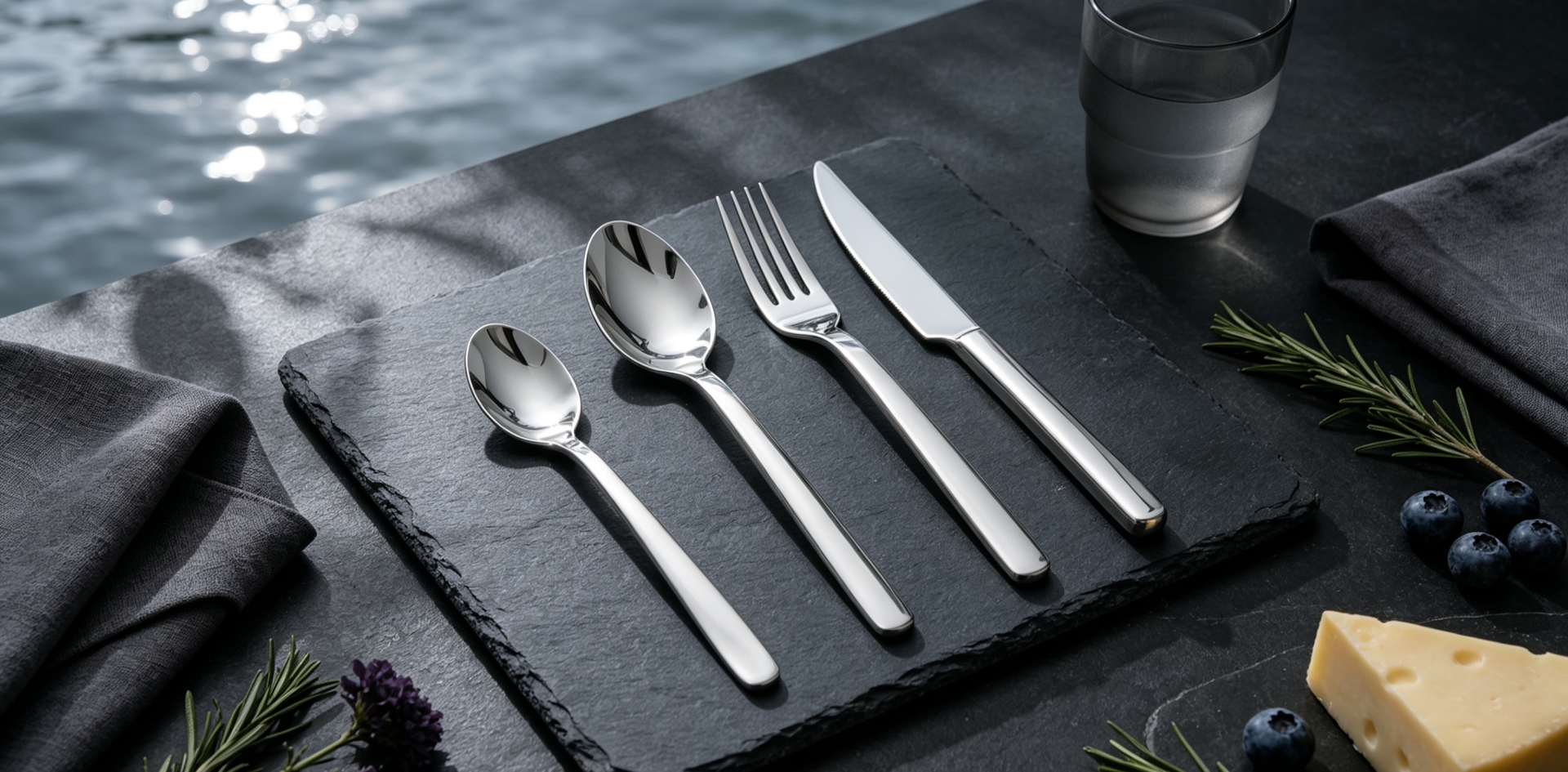
18/10 vs 18/0 Stainless Steel Flatware: A B2B Buying Guide
When sourcing stainless steel flatware, one of the first material questions B2B buyers may encounter is whether to choose 18/10 or 18/0 stainless steel. These specifications are commonly used in the flatware industry to describe the approximate percentages of chromium and nickel in the stainless steel.
For importers, distributors, restaurant suppliers, hospitality groups and private label brands, understanding the difference can make product selection and supplier communication more precise.
The choice between 18/10 and 18/0 should not be based on one characteristic alone. Buyers should consider the intended application, product positioning, appearance, corrosion resistance requirements, magnetic properties, budget, target market and overall product design.
What Does 18/10 Stainless Steel Mean?
The term 18/10 generally indicates stainless steel containing approximately 18% chromium and 10% nickel.
Chromium contributes to the corrosion resistance of stainless steel, while nickel can contribute to corrosion resistance, formability and the overall characteristics of the material.
In flatware, 18/10 is often associated with products positioned toward higher-end commercial, hospitality or retail markets.
The exact material specification should always be confirmed with the manufacturer rather than relying only on a product name.
What Does 18/0 Stainless Steel Mean?
18/0 generally indicates stainless steel containing approximately 18% chromium and little or no intentionally added nickel.
Because nickel content is much lower, the material can have different characteristics from 18/10 stainless steel.
18/0 flatware is commonly selected for applications where cost efficiency and practical performance are important.
As with 18/10, buyers should confirm the actual material specification with the supplier before placing a bulk order.
The Main Difference Between 18/10 and 18/0
The most commonly discussed difference is nickel content.
18/10 contains approximately 10% nickel, while 18/0 contains little or no intentionally added nickel.
This difference can influence several material characteristics, including corrosion resistance, appearance, formability and magnetic behavior.
However, the final performance of a cutlery product also depends on the complete manufacturing process and the specific stainless steel composition.
18/10 Flatware Appearance
18/10 stainless steel can provide a bright and refined appearance when properly finished.
It is often selected for collections where visual presentation is an important part of the product positioning.
Polishing and surface treatment still play a major role in the final appearance.
A well-finished 18/0 product can also have an attractive surface, so material grade should not be treated as the only factor determining appearance.
18/0 Flatware Appearance
18/0 stainless steel can also be produced with polished, satin or other surface finishes.
Its appearance can work well in commercial dining, foodservice and value-oriented retail applications.
The final visual result depends on the material, product design and finishing process.
Buyers should compare physical samples when appearance is important.
Corrosion Resistance Considerations
Chromium is an important element in stainless steel because it contributes to corrosion resistance.
Nickel can provide additional benefits depending on the stainless steel composition and environment.
In general, 18/10 is often selected when buyers place greater emphasis on corrosion resistance and premium material positioning.
However, actual performance depends on the complete material specification, manufacturing quality, cleaning practices and operating environment.
Magnetic Properties
The lower nickel content of many 18/0 stainless steel products can result in different magnetic behavior compared with 18/10 products.
This can be relevant for buyers who have specific requirements related to magnetism.
If magnetic properties matter to the project, buyers should discuss the requirement directly with the manufacturer and verify the finished product.
18/10 for Premium Flatware
18/10 can be suitable for premium restaurant, hotel and retail collections where material positioning is an important part of the product offering.
It may be selected for:
-
Fine dining
-
Premium hotels
-
Hospitality projects
-
Higher-end retail
-
Private label premium collections
The final product should still be evaluated according to design, finish, weight and overall workmanship.
18/0 for Commercial Flatware
18/0 can be attractive for buyers looking for practical stainless steel flatware at a more cost-conscious position.
Potential applications include:
-
High-volume restaurants
-
Catering operations
-
Institutional dining
-
Commercial foodservice
-
Wholesale distribution
-
Value-oriented retail
The suitability depends on the buyer's market and product requirements.
Price Considerations
Material composition can influence raw material cost.
18/10 generally contains a significant amount of nickel, which can affect material pricing.
18/0 uses substantially less nickel, which can provide opportunities for more cost-conscious product positioning.
However, the final flatware price also depends on thickness, weight, dimensions, design, finish, order quantity and packaging.
A material-only comparison does not provide a complete quotation comparison.
Weight Is Not Determined by Material Grade Alone
A common misunderstanding is that 18/10 flatware must always be heavier than 18/0 flatware.
Material grade does not determine the entire weight of a product.
Dimensions, thickness, handle shape and overall design can have a much larger influence on finished weight.
When comparing products, buyers should request equivalent specifications.
Thickness and Material Grade
Thickness should be considered separately from material composition.
An 18/0 product with a substantial thickness may feel heavier than a thinner 18/10 product.
For B2B purchasing, material and thickness should therefore be documented as separate specifications.
Surface Finish and Material Selection
Both 18/10 and 18/0 flatware can be manufactured with different surface finishes.
Common options include polished, satin and brushed surfaces.
The selected finish should match the intended product positioning and dining environment.
Physical samples are recommended when the appearance is a key purchasing requirement.
Choosing 18/10 for Hospitality
Hotels and premium hospitality businesses may prefer 18/10 when they want a stronger premium material position.
The product can be combined with refined handle designs and polished or other selected finishes.
For large hotel groups, the decision should also consider replacement requirements and long-term availability.
Choosing 18/0 for Foodservice
High-volume foodservice operations may prioritize practical performance and purchasing efficiency.
18/0 can be considered when the buyer's target market does not require the additional material positioning associated with higher nickel content.
The decision should be based on actual operational requirements and customer expectations.
18/10 vs 18/0 for Restaurants
Restaurant requirements can vary widely.
A premium dining restaurant may focus on appearance, feel and material positioning.
A high-volume casual restaurant may place greater emphasis on cost efficiency, replacement and large-scale availability.
There is no universal material choice for every restaurant.
18/10 vs 18/0 for Distributors
Distributors may benefit from offering both material options to serve different customer segments.
A premium collection can target hospitality and higher-end retail customers, while a cost-conscious collection can address commercial foodservice and value-oriented markets.
Clear product labeling and specifications are important when managing multiple material categories.
18/10 vs 18/0 for Private Label Brands
Private label brands should select the material according to their target customer and product positioning.
If the brand is positioned around premium tableware, 18/10 may support that positioning.
If price competitiveness is a major factor, 18/0 may be considered.
The material decision should be made before finalizing product samples and packaging information.
Consider the Complete Product
Material grade is only one component of a stainless steel flatware specification.
B2B buyers should also evaluate:
-
Product design
-
Material thickness
-
Weight
-
Dimensions
-
Surface finish
-
Handle profile
-
Manufacturing quality
-
Packaging
-
Order quantity
-
Repeat production capability
This broader evaluation provides a more useful basis for supplier selection.
Confirm the Material With the Manufacturer
Product descriptions can use different terminology between suppliers and markets.
Before placing an order, buyers should request a clear material specification.
For larger projects, the material information should be included in the purchase documentation and product specification.
This can help prevent misunderstandings during future replenishment.
Sample Both Materials When Unsure
When a buyer is deciding between 18/10 and 18/0, comparing physical samples can be useful.
Samples allow the buyer to evaluate:
-
Appearance
-
Weight
-
Balance
-
Handle feel
-
Finish
-
Overall workmanship
-
Product positioning
The final decision can then be based on the actual product rather than material terminology alone.
Material Selection for Long-Term Supply
A B2B buyer should consider whether the selected material will remain available for future orders.
Restaurants, hotels and distributors may need replacement pieces years after the initial purchase.
The manufacturer should be able to retain the material and product specifications required for repeat production.
Working With an Experienced Manufacturer
Material selection is only the beginning of a successful flatware sourcing program.
Homefelt has more than 30 years of stainless steel manufacturing experience and produces stainless steel cutlery together with kitchen and dining products, BBQ tools, pet bowls and children's tableware.
For international B2B customers, Homefelt supports standard and customized stainless steel products.
Importers, distributors, restaurant suppliers, hospitality businesses and private label brands can discuss material, dimensions, thickness, weight, surface finish, packaging, branding and estimated quantities according to their requirements.
For long-term programs, approved samples and documented material specifications can help support consistent repeat production.
What B2B Buyers Should Specify
When requesting a quotation for 18/10 or 18/0 stainless steel flatware, buyers can provide:
-
Product type
-
Material requirement
-
Product dimensions
-
Thickness
-
Target weight
-
Surface finish
-
Handle design
-
Order quantity
-
Packaging requirements
-
Branding requirements
-
Target market
-
Expected repeat demand
Complete specifications make supplier quotations easier to compare.
How to Decide Between 18/10 and 18/0
The decision can be simplified by considering the business objective.
Choose 18/10 when the project places stronger emphasis on premium material positioning, appearance and corrosion resistance characteristics.
Consider 18/0 when cost efficiency and practical commercial applications are higher priorities.
For either option, the final product should be evaluated through samples and complete specifications.
Conclusion
18/10 and 18/0 stainless steel flatware can both serve important B2B markets, but they are not identical material choices.
The main distinction is nickel content, which can influence material characteristics, corrosion resistance, appearance, magnetic behavior and cost.
For restaurants, hotels, distributors and private label brands, the correct choice depends on the target market and intended application.
Buyers should evaluate material together with thickness, weight, dimensions, surface finish, design, manufacturing quality and long-term supply capability.
Homefelt has more than 30 years of stainless steel manufacturing experience and works with international B2B customers on standard and customized stainless steel products.
By clearly defining the required material and comparing physical samples, B2B buyers can select a stainless steel flatware specification that better matches their market, budget and long-term purchasing strategy.
You May Be Interested In
Stainless Steel Cutlery Thickness Guide: What B2B Buyers Need to Consider
Stainless Steel Cutlery Weight Guide for Bulk and Wholesale Buyers
Stainless Steel Cutlery Polishing and Surface Finish Process
Stainless Steel Cutlery Quality Control and Inspection Guide
How Stainless Steel Flatware Is Made: From Sheet to Finished Product
How to Choose Stainless Steel Cutlery for Commercial Foodservice

How Stainless Steel Flatware Is Made: Manufacturing Process Guide
Stainless Steel Cutlery Quality Control and Inspection Guide
Related Article