Titanium has the potential to become a more prominent, premium material in future cookware
author: Alisa
2026-02-09
-
Health & Safety First: As consumers become more health-conscious, titanium’s inert, non-toxic, and non-leaching properties are a major selling point. It doesn’t react with acidic or alkaline foods, doesn’t require coatings, and is hypoallergenic. This aligns perfectly with the "clean living" and wellness trends.
-
Unmatched Strength-to-Weight Ratio: It is incredibly light yet strong. This is a huge advantage for:
-
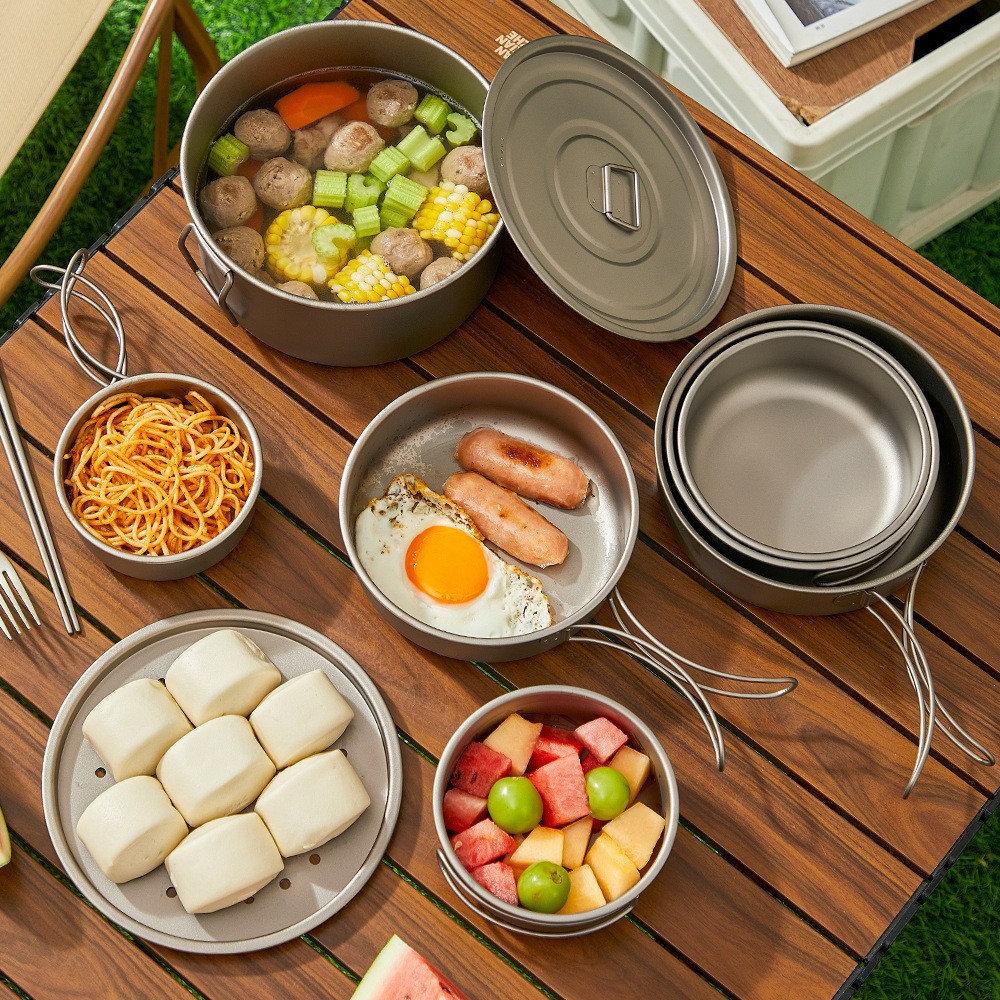
Portable/Outdoor Cookware: It's already the gold standard for ultralight backpacking gear.
-
Everyday Handling: Lighter pots and pans reduce wrist strain, appealing to an aging population and those with physical limitations.
-
Shipping & Retail: Lighter weight reduces logistics costs and carbon footprint.
-
-
Extreme Durability & Corrosion Resistance: It is virtually indestructible under normal use—highly resistant to scratches, dents, pitting, and rust. This offers a "buy-it-for-life" appeal, which counters fast consumerism and appeals to sustainability-minded buyers.
-
Compatibility with Modern Cooking Tech: It works well with induction stoves (when bonded with a magnetic layer) and can withstand extremely high temperatures, making it future-proof for various kitchen setups.
Challenges & Limitations (Why it won't dominate the entire market):
-
High Cost: The primary barrier. The raw material and manufacturing costs for pure titanium are significantly higher than for aluminum or stainless steel. This will keep it in the premium price segment for the foreseeable future.
-
Thermal Conductivity: Pure titanium has relatively poor and uneven heat distribution compared to aluminum or copper. To compensate, it is often clad with an aluminum or copper core in high-end cookware (adding to cost), or designed to be very thin (relying on quick, responsive cooking styles).
-
Established Competition: Materials like stainless steel (affordable, durable), cast iron (great heat retention, classic), and non-stick aluminum (low-cost, user-friendly) have deep market penetration, established manufacturing ecosystems, and high consumer familiarity. Replacing them entirely is economically and culturally difficult.
-
Specialized Use Case: Its best properties—lightweight and extreme corrosion resistance—are overkill for many home cooking scenarios. Most home cooks don't need a pan that can survive a saltwater environment for decades.
The Most Likely Future Scenario:
-
Growth in Premium & Niche Segments: Titanium will continue to grow its share in the high-end, health-focused, and specialty cookware markets. Think of it as the "performance" or "technical" material for discerning consumers and professionals.
-
Material Blends & Cladding: We will see more multi-clad designs where titanium is used as the exterior or interior surface for its inert properties, bonded to an aluminum or copper core for optimal heat conduction. This combines the best of all worlds.
-
Not a Full Replacement, but a Strong Contender: It is unlikely to become the "main" material for all厨具, but it is poised to become a major and respected material category alongside stainless steel and cast iron, especially for those who prioritize health, durability, and lightweight design and are willing to pay for it.
Advantages of a Compartmentalized Stainless Steel Lunchbox
The benefits of a portable folding salad/snow peak-style bowl made from pure titanium for outdoor