Custom Stainless Steel Flatware: Design and Manufacturing Guide

Custom Stainless Steel Flatware: From Product Concept to Mass Production
Custom stainless steel flatware allows B2B buyers to develop products that match a specific brand, market or commercial application. Instead of selecting an existing fork, spoon or knife from a standard catalog, buyers can work with a manufacturer to create a product with defined dimensions, handle details, material, surface finish and packaging.
Custom development can be particularly valuable for private label brands, restaurant groups, hotel suppliers, distributors and retailers that want to create a distinctive collection.
However, successful customization requires more than providing a reference photograph. The design needs to be translated into practical manufacturing specifications, tested through samples and approved before mass production.
What Is Custom Stainless Steel Flatware?
Custom stainless steel flatware is developed according to requirements provided by the buyer.
Customization can involve a single characteristic or a combination of several elements.
Typical options include:
-
Handle shape
-
Product dimensions
-
Thickness
-
Weight
-
Stainless steel material
-
Surface finish
-
Decorative details
-
Logo application
-
Packaging
-
Product sets
The scope of customization depends on the manufacturer's production capabilities and the complexity of the requested design.
Why Choose Custom Flatware?
Standard flatware can be suitable for many businesses, but custom products can provide greater control over product identity.
A custom collection may help a brand:
-
Create a distinctive appearance
-
Match an existing tableware collection
-
Support a specific price position
-
Develop private label products
-
Build a consistent product range
-
Differentiate from competing products
For commercial buyers, customization can also help adapt a product to a particular dining environment.
Start With the Product Concept
The first stage is to define the purpose of the product.
A buyer should consider where the flatware will be used and who the target customer is.
For example, a product designed for premium hospitality may have different requirements from flatware intended for high-volume foodservice.
The product concept can guide decisions about shape, material, finish and weight.
Provide Reference Materials
Buyers can provide different types of references when starting a custom project.
Useful materials include:
-
Product photographs
-
Sketches
-
Technical drawings
-
Existing samples
-
CAD files
-
Dimension requirements
-
Surface finish references
The more precise the reference, the easier it is for the manufacturer to understand the intended result.
Custom Handle Design
The handle is one of the most common areas for customization.
Buyers can define:
-
Handle length
-
Handle width
-
Handle thickness
-
Handle profile
-
Edge shape
-
Decorative details
-
Surface finish
A handle can be straight, tapered, rounded, geometric or developed around a completely original concept.
The final design should balance appearance with practical manufacturing requirements.
Custom Fork Design
A custom fork can include changes to the handle as well as the head.
Potential specifications include:
-
Overall length
-
Tine length
-
Tine spacing
-
Head width
-
Handle profile
-
Thickness
-
Weight
The fork should maintain a coordinated relationship between the functional head and the handle.
Custom Spoon Design
Spoon customization can involve both the bowl and handle.
Buyers may specify:
-
Bowl dimensions
-
Bowl depth
-
Handle length
-
Handle shape
-
Thickness
-
Weight
-
Surface finish
The bowl design should be evaluated carefully because its shape directly affects the appearance and practical use of the spoon.
Custom Knife Design
Knife customization may involve the blade, handle or complete construction.
Requirements can include:
-
Overall length
-
Blade dimensions
-
Handle dimensions
-
Weight
-
Surface finish
-
Product profile
The exact construction should be determined according to the intended product design and manufacturing process.
Choosing the Stainless Steel Material
Material selection should be established before finalizing production.
B2B buyers may consider specifications such as 18/10 or 18/0 stainless steel depending on their market and product positioning.
The selected material should be documented clearly.
For custom projects, the material requirement should be included in the technical specification and quotation.
Selecting Thickness
Thickness affects the physical feel, weight and appearance of flatware.
A heavier commercial collection may use a different thickness from a lightweight retail collection.
Thickness should be considered together with dimensions and handle design rather than independently.
Determining Product Weight
Weight can contribute to the perceived quality of a cutlery product.
However, heavier does not automatically mean better.
The target weight should correspond with the intended market, design and application.
For custom development, buyers can establish a target range and evaluate it during sampling.
Surface Finish Selection
Surface finish can significantly change the appearance of custom flatware.
Common choices include:
-
Mirror polish
-
Satin finish
-
Brushed finish
The same handle design can look very different under different finishing treatments.
A physical finish sample can help buyers make a more accurate decision.
Decorative Details
Custom flatware can include lines, grooves, textures or other visual elements.
These details can strengthen a collection's identity.
However, complex decoration can increase manufacturing requirements.
The manufacturer should review the design before the buyer commits to mass production.
Sample Development
A sample is an important step in custom flatware manufacturing.
It allows the buyer to evaluate the physical product before approving the full order.
The sample can be reviewed for:
-
Dimensions
-
Weight
-
Balance
-
Handle comfort
-
Surface finish
-
Shape
-
Overall appearance
A design that looks correct in a drawing may feel different when produced as a physical object.
Sample Revision
The first sample does not always need to become the final production version.
The buyer may request adjustments to dimensions, weight, handle shape or finish.
The manufacturer can then revise the product according to the agreed requirements.
A clear revision process helps prevent confusion during development.
Tooling for Custom Flatware
Some custom designs require dedicated tooling.
Tooling requirements depend on the product structure and manufacturing method.
Before production, the manufacturer can assess the design and determine what tooling is needed.
Tooling costs and ownership arrangements should be clarified before mass production begins.
Production Approval
Once the buyer approves the final sample, the product specification should be confirmed.
The specification can include:
-
Material
-
Dimensions
-
Thickness
-
Weight
-
Surface finish
-
Product drawings
-
Packaging
-
Branding
-
Quality requirements
This information becomes the manufacturing reference for the bulk order.
Custom Branding
Private label buyers may add branding to the product or packaging.
Depending on the product, branding may be incorporated through suitable production methods.
The buyer should provide approved artwork and clearly define the required position and appearance.
Custom Packaging
Packaging can be developed alongside the flatware.
Options may include:
-
Individual packaging
-
Product sets
-
Retail boxes
-
Gift packaging
-
Bulk cartons
-
Customized labels
The packaging should reflect the distribution channel and target market.
Quality Control for Custom Products
Custom products require inspection against their own specifications.
A generic quality standard may not fully describe the buyer's requirements.
Inspection can cover:
-
Product dimensions
-
Material
-
Weight
-
Shape
-
Surface finish
-
Branding
-
Packaging
-
Quantity
The approved sample should be available as a physical reference.
Custom Flatware for Restaurants
Restaurant groups may develop custom flatware to match a particular dining concept.
The design can be coordinated with plates, glassware, furniture and interior finishes.
For multiple locations, a standardized product specification can make replacement and replenishment easier.
Custom Flatware for Hotels
Hotels often require products that combine visual appeal with practical commercial use.
A custom collection can be developed for restaurants, banquet service or specialty dining.
Long-term availability should be considered if the product will become part of a hotel's standard table setting.
Custom Flatware for Distributors
Distributors can use custom products to create exclusive collections for their customer base.
An exclusive design may help differentiate the distributor's catalog.
The distributor should consider expected annual demand and future replenishment when developing the product.
Custom Flatware for Private Label Brands
Private label brands can use custom flatware to create products that are not identical to standard catalog items.
The product can be coordinated with brand packaging and other kitchen or dining products.
For new brands, it is particularly important to define the target retail price before finalizing the product specifications.
Customization and Minimum Order Quantity
Custom production generally requires more planning than standard products.
Tooling, sampling and production setup can affect minimum order requirements.
Buyers should discuss MOQ early in the development process to ensure the project is commercially practical.
Customization and Production Cost
Custom flatware pricing depends on multiple factors.
These can include:
-
Material
-
Product size
-
Thickness
-
Weight
-
Design complexity
-
Tooling
-
Surface finish
-
Order quantity
-
Packaging
-
Branding
A clear specification allows the manufacturer to provide a more accurate quotation.
Customization and Lead Time
Custom projects can require more time than standard products because they may involve design review, tooling and sample approval.
Buyers should allow sufficient time for revisions before the desired mass production date.
Planning early can reduce pressure during the final production stage.
Protecting Design Consistency
Once a custom product has been approved, its specifications should be retained for future production.
Important records can include drawings, material information, dimensions, finish requirements and approved samples.
This documentation helps support consistency when the buyer places repeat orders.
Working With an Experienced Manufacturer
Custom stainless steel flatware requires cooperation between product development and manufacturing.
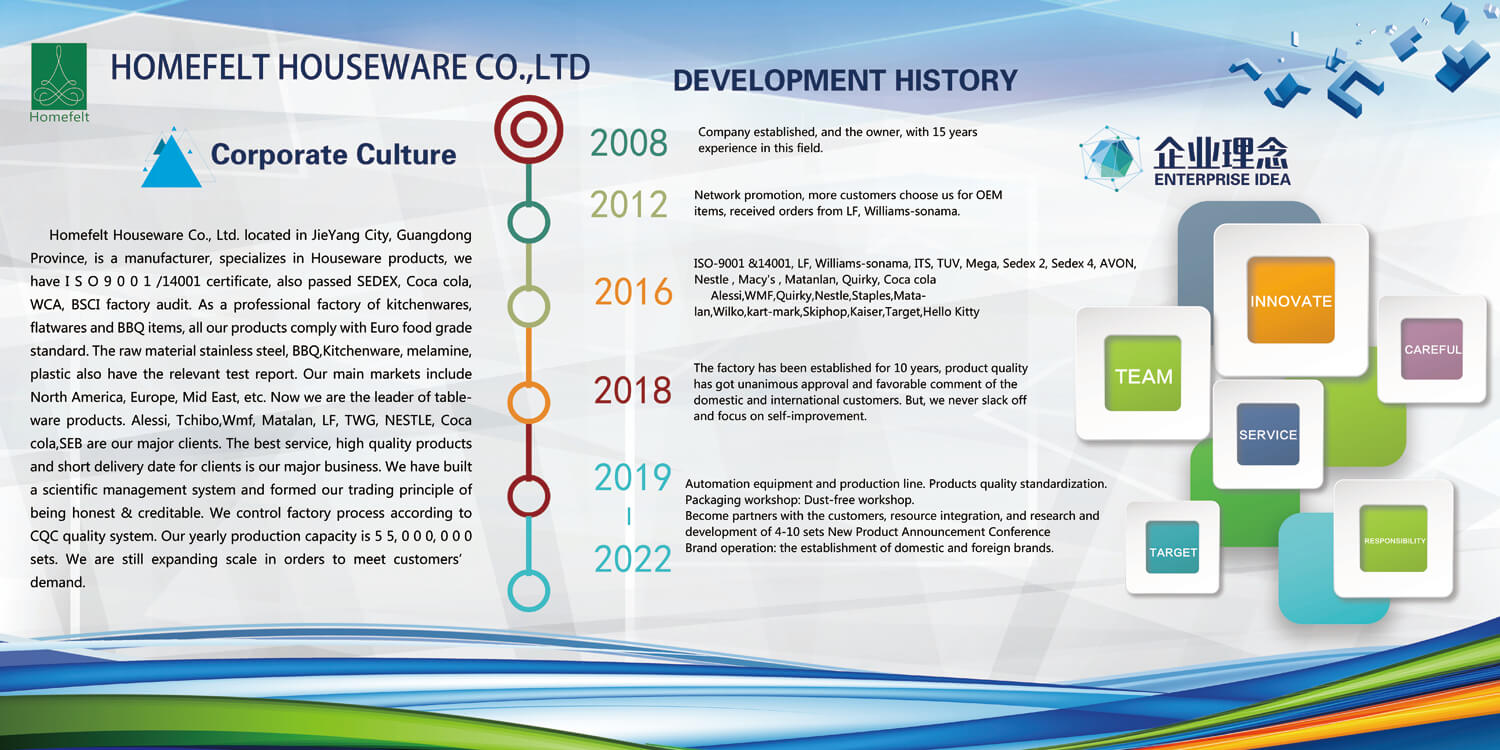
Homefelt has more than 30 years of stainless steel manufacturing experience and produces stainless steel cutlery together with kitchen and dining products, BBQ tools, pet bowls and children's tableware.
For international B2B customers, Homefelt supports standard and customized stainless steel products.
Importers, distributors, restaurant suppliers, hospitality businesses and private label brands can discuss product design, material, dimensions, thickness, weight, surface finish, packaging, branding and estimated quantities according to their project requirements.
For long-term custom programs, approved samples and documented specifications can provide a useful reference for repeat production.
What Buyers Should Prepare Before Custom Development
A buyer can prepare the following information:
-
Product concept
-
Target market
-
Reference images
-
Technical drawings if available
-
Product dimensions
-
Material requirement
-
Thickness
-
Target weight
-
Surface finish
-
Packaging requirements
-
Branding requirements
-
Estimated quantity
-
Expected annual demand
Providing this information early can make the development process more efficient.
From Concept to Finished Product
A practical custom flatware development process can be summarized as:
-
Define the product concept
-
Provide references
-
Review technical feasibility
-
Confirm material and dimensions
-
Develop the sample
-
Evaluate the sample
-
Revise the design if necessary
-
Approve the final sample
-
Confirm production specifications
-
Begin mass production
-
Complete quality inspection
-
Pack and prepare the finished order
This structured approach helps connect design expectations with manufacturing requirements.
Building a Long-Term Custom Collection
Custom flatware can become part of a broader product strategy.
Once a successful fork, spoon and knife collection has been established, the same design language can potentially be extended to serving utensils or additional tableware products.
Maintaining consistent specifications across the collection can strengthen the overall product identity.
Conclusion
Custom stainless steel flatware gives B2B buyers greater control over product design, material, dimensions, surface finish and branding. It can be particularly valuable for private label brands, restaurants, hotels, distributors and retailers looking to develop a distinctive product range.
The most important stage is not mass production itself but the development process that comes before it. Clear references, technical review, physical samples and documented specifications can help reduce misunderstandings and create a reliable manufacturing standard.
Homefelt has more than 30 years of stainless steel manufacturing experience and works with international B2B customers on standard and customized stainless steel products.
By combining a clear product concept with practical manufacturing evaluation, B2B buyers can move from an initial design idea to a finished stainless steel flatware collection that is suitable for commercial production and long-term supply.
You May Be Interested In
Wholesale Stainless Steel Flatware Supplier: B2B Buying Guide
18/10 vs 18/0 Stainless Steel Flatware: A B2B Buying Guide
How Stainless Steel Flatware Is Made: A Complete Manufacturing Process Guide
Stainless Steel Cutlery Quality Control and Inspection Guide
Stainless Steel Cutlery Polishing and Surface Finish Process
Stainless Steel Cutlery Handle Design: A Practical Guide for B2B Buyers

Private Label Stainless Steel Flatware Manufacturing Guide
Wholesale Stainless Steel Flatware Supplier: B2B Buying Guide
Related Article