Custom Stainless Steel Spoon Manufacturing for OEM and Private Label Buyers
Custom Stainless Steel Spoon Manufacturing for OEM and Private Label Buyers
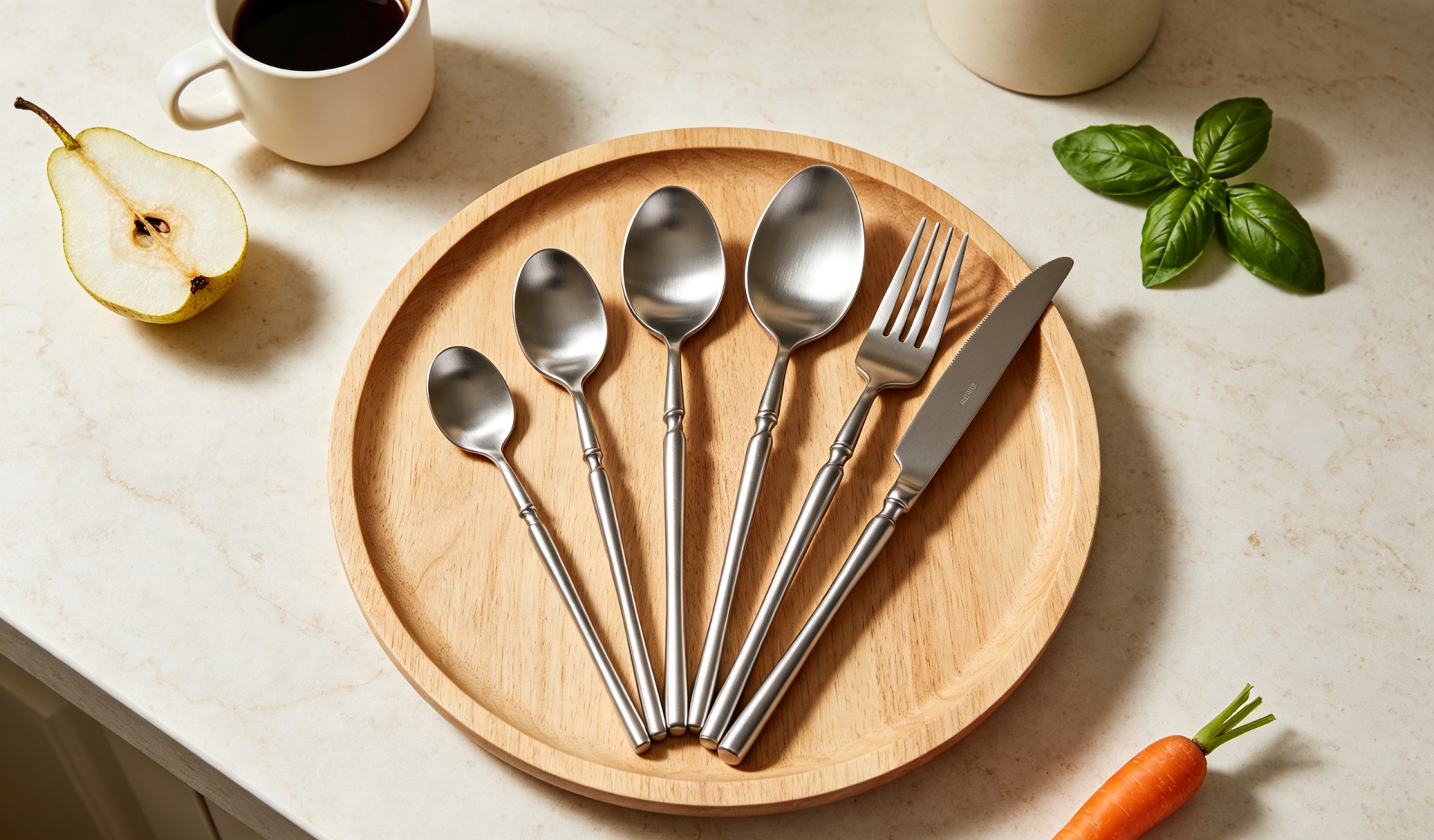
Custom stainless steel spoons allow B2B buyers to create products that match a specific market, brand identity or tableware collection. Instead of selecting only from standard designs, importers, distributors, retailers and private label brands can define dimensions, handle shapes, finishes, logos and packaging according to their requirements.
Custom manufacturing is particularly useful when a buyer needs a spoon that is visually different from standard products or wants to develop a coordinated private label collection.
A successful project begins with a clear product specification and communication between the buyer and manufacturer.
What Is a Custom Stainless Steel Spoon?
A custom stainless steel spoon is a spoon developed according to specific customer requirements.
Customization may involve:
-
Overall dimensions
-
Bowl shape
-
Handle design
-
Product thickness
-
Product weight
-
Surface finish
-
Logo
-
Packaging
The level of customization depends on the product concept and manufacturing requirements.
Why Choose Custom Stainless Steel Spoons?
Custom products can help B2B buyers create a more distinctive product range.
Potential advantages include:
-
Brand differentiation
-
Consistent collection design
-
Specific market positioning
-
Custom product dimensions
-
Private label opportunities
-
Customized retail packaging
For businesses competing on product design rather than price alone, a custom spoon can become part of the overall brand presentation.
Custom Spoon Dimensions
Dimensions are one of the most common customization requirements.
A buyer may specify:
-
Overall length
-
Bowl length
-
Bowl width
-
Bowl depth
-
Handle width
-
Thickness
-
Target weight
The manufacturer can review whether the requested dimensions are suitable for production.
For custom products, technical drawings can make communication easier.
Custom Spoon Bowl Design
The spoon bowl can be customized according to the intended application and visual style.
Possible design differences include:
-
Round bowl
-
Oval bowl
-
Narrow bowl
-
Wide bowl
-
Deep bowl
-
Shallow bowl
The bowl shape should balance appearance, function and manufacturing feasibility.
Custom Spoon Handle Design
The handle is often one of the most visible parts of a custom spoon.
A custom handle may include:
-
Straight profile
-
Tapered profile
-
Rounded edges
-
Decorative details
-
Geometric shapes
-
Embossed patterns
-
Engraved elements
Handle design can help create a recognizable product collection.
Custom Spoon Thickness
Thickness can influence the weight and hand feel of the finished product.
Buyers should define:
-
Target thickness
-
Measurement location
-
Acceptable tolerance
The manufacturer should evaluate whether the requested thickness works with the selected design and production process.
Custom Spoon Weight
Product weight can be specified when hand feel or premium positioning is important.
Weight depends on:
-
Material
-
Thickness
-
Dimensions
-
Bowl size
-
Handle design
The target weight should be defined separately from the material grade.
Custom Stainless Steel Material
B2B buyers may specify a preferred stainless steel material according to their target market and product requirements.
Common material options discussed in stainless steel flatware include:
-
18/10
-
18/8
-
18/0
The selected material should be evaluated together with the product design and intended application.
Custom Spoon Surface Finishes
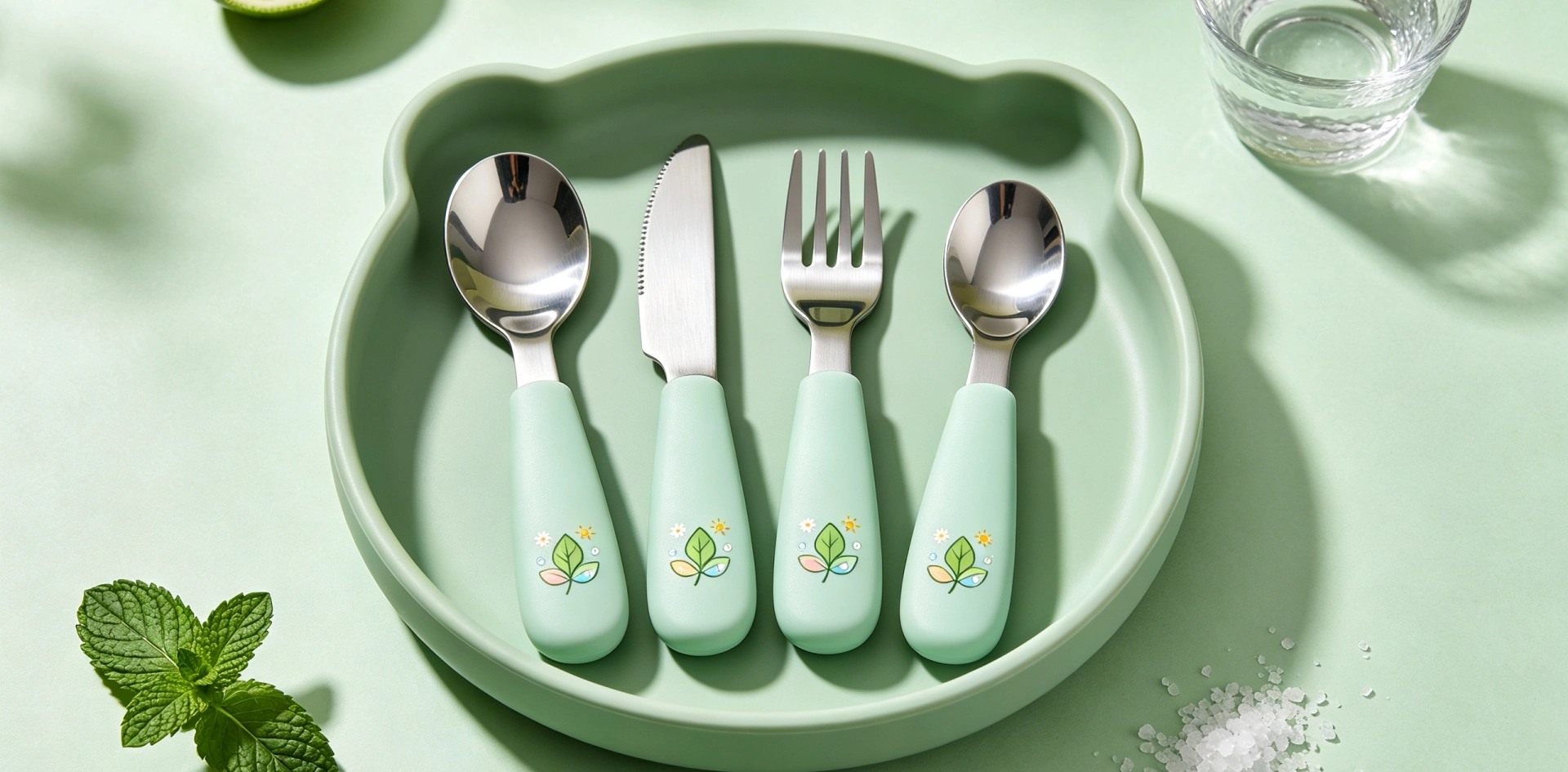
A custom spoon can use different surface finishes.
Common options include:
-
Mirror
-
Polished
-
Satin
-
Brushed
-
Matte
-
Decorative colored finishes
A physical sample is recommended when the exact visual appearance is important.
Custom Colored Stainless Steel Spoons
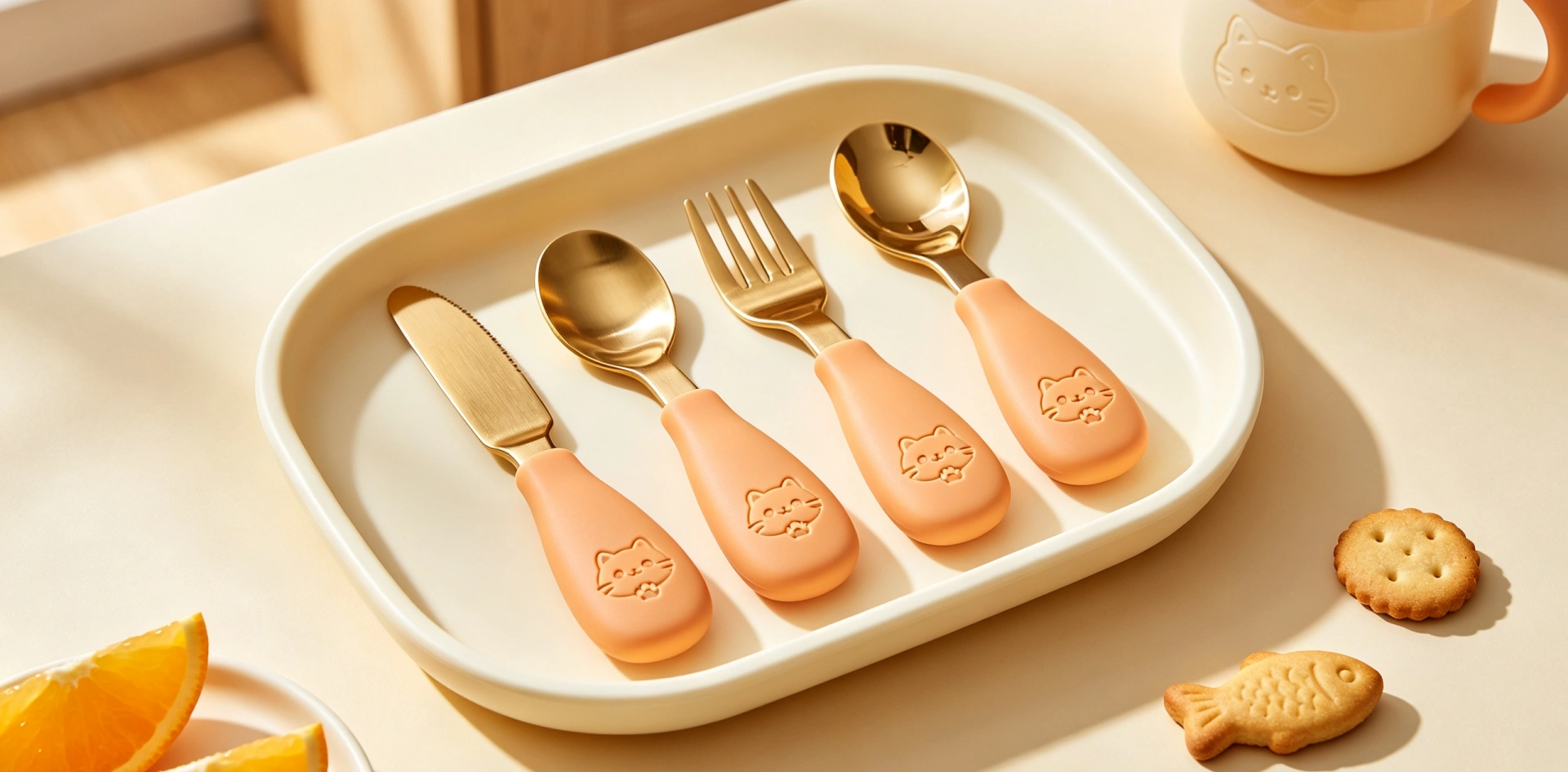
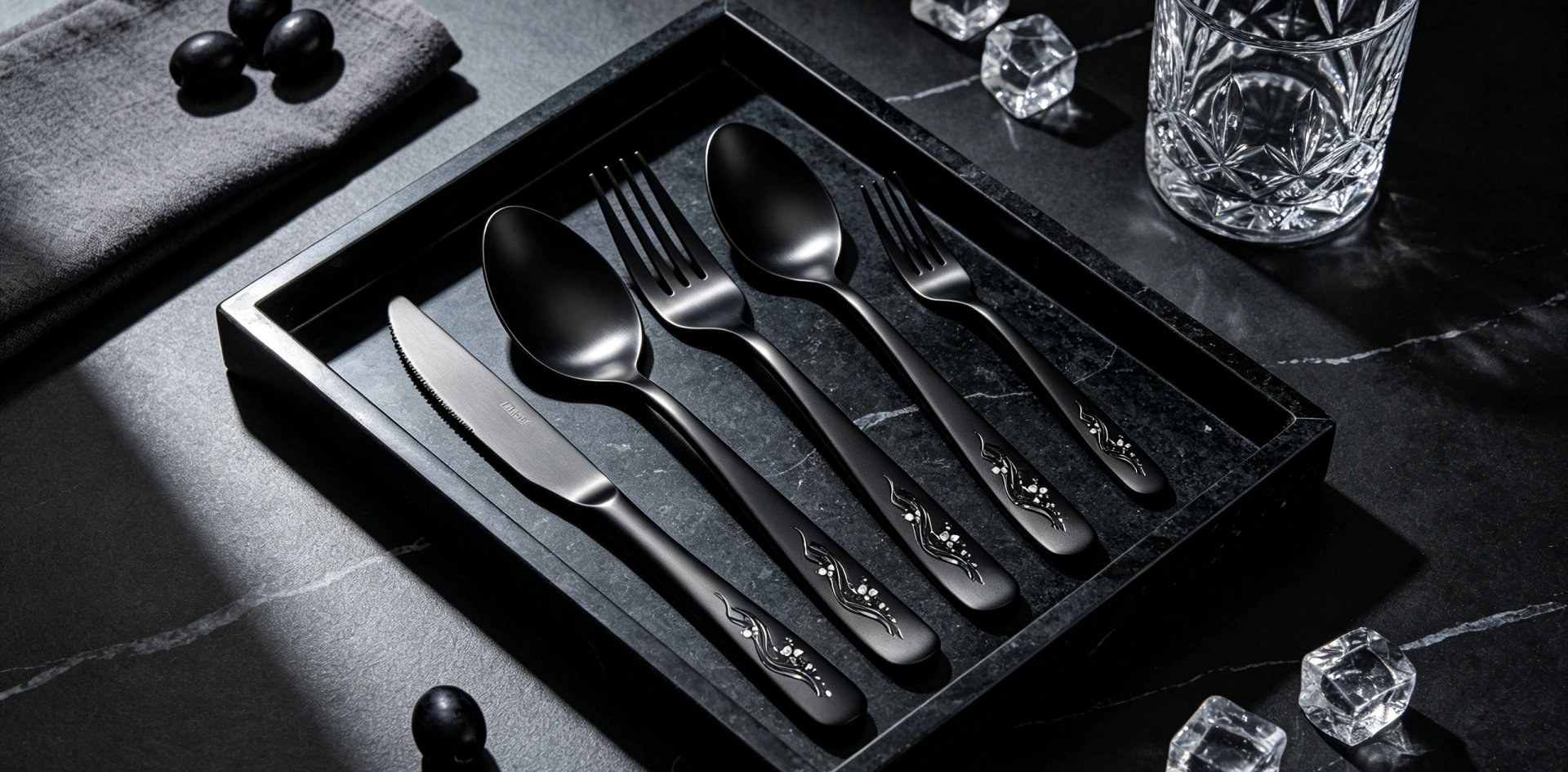
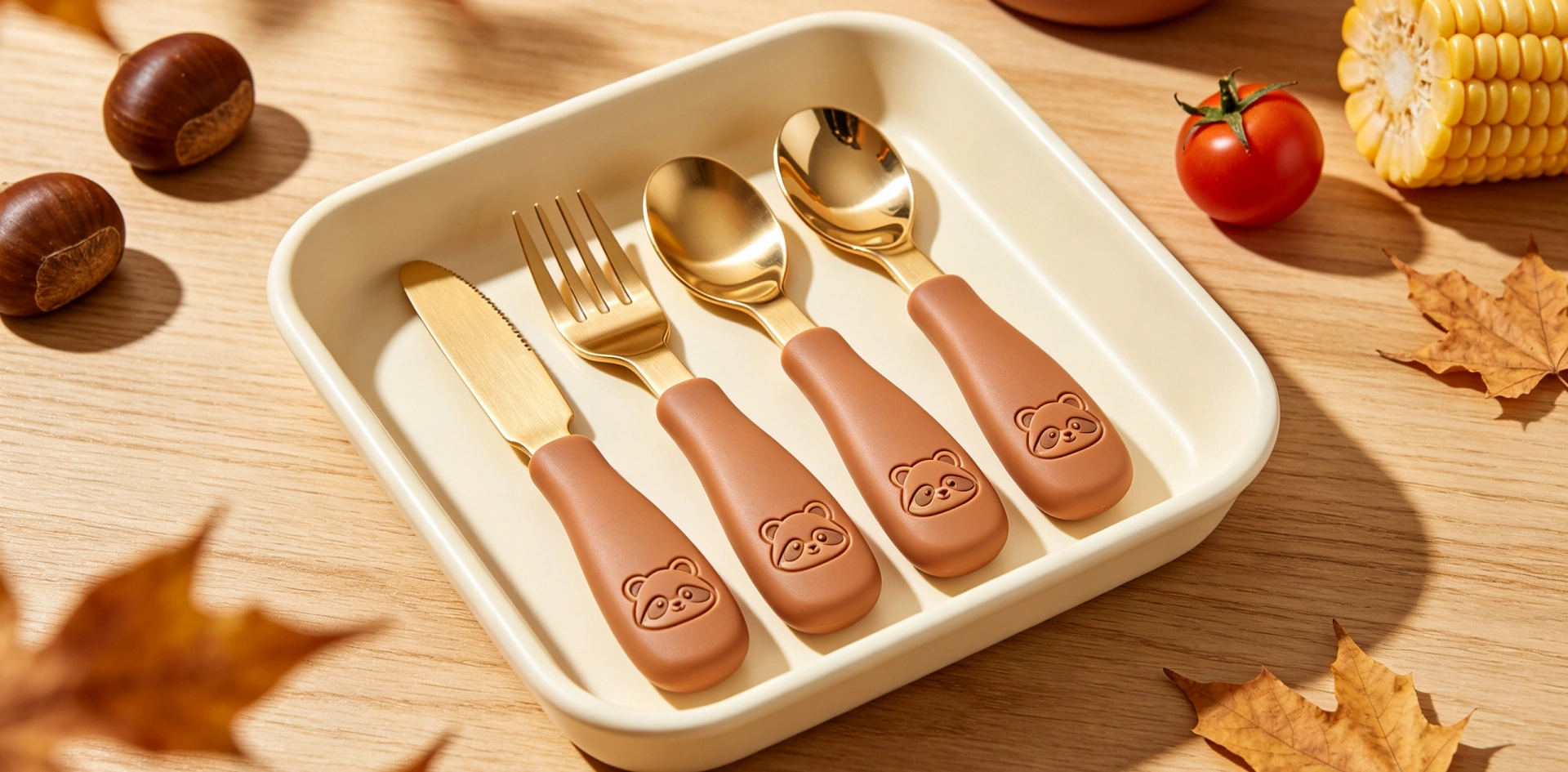
Some private label projects use decorative colored finishes to create a distinctive appearance.
Possible colors may include:
-
Gold
-
Black
-
Other customer-specified finishes
For these products, buyers should approve a physical sample before mass production.
Custom Spoon Logo and Branding
Branding can be added to a stainless steel spoon according to the product design.
Possible branding methods may include:
-
Laser marking
-
Engraving
-
Embossing
-
Other suitable decorative methods
The logo position, size and appearance should be confirmed during sample development.
Custom Spoon Packaging
Private label products often require customized packaging.
Packaging can include:
-
Retail boxes
-
Color boxes
-
Gift boxes
-
Individual sleeves
-
Cutlery set packaging
-
Custom export cartons
The packaging should protect the product while supporting the brand's market positioning.
OEM Stainless Steel Spoon Manufacturing
OEM projects are based on the buyer's product requirements and branding.
The buyer may provide:
-
Product drawings
-
Existing samples
-
Product specifications
-
Logo artwork
-
Packaging artwork
The manufacturer then evaluates production feasibility and develops the product according to the agreed specification.
ODM Stainless Steel Spoon Manufacturing
ODM projects can be based on an existing manufacturer design that is modified for the buyer.
Possible changes may include:
-
Handle design
-
Surface finish
-
Dimensions
-
Logo
-
Packaging
ODM can be useful when a buyer wants a differentiated product without developing every part of the design from the beginning.
Private Label Stainless Steel Spoons
Private label buyers may combine a standard or customized spoon design with their own branding and packaging.
A private label project may include:
-
Product selection
-
Material confirmation
-
Finish selection
-
Logo development
-
Packaging design
-
Sample approval
-
Bulk production
This approach can help brands develop a complete product offering under their own identity.
From Drawing to Finished Spoon
A custom project can follow a structured development process.
Step 1: Define the Product
The buyer explains the intended application, target market and product concept.
Step 2: Provide a Drawing or Sample
A technical drawing, sketch or physical reference can help communicate the design.
Step 3: Review Manufacturing Feasibility
The manufacturer evaluates dimensions, forming requirements, tooling and finishing.
Step 4: Confirm the Specification
Material, dimensions, thickness, weight and finish are documented.
Step 5: Develop the Sample
A sample is produced for review.
Step 6: Approve the Sample
The buyer evaluates appearance, dimensions, finish and hand feel.
Step 7: Begin Bulk Production
Production begins after the specification and sample are approved.
Step 8: Inspect and Package
The finished spoons are inspected and packaged according to the agreed requirements.
Tooling for Custom Spoon Manufacturing
A completely new design may require custom tooling.
Tooling can be influenced by:
-
Bowl shape
-
Handle design
-
Product dimensions
-
Material thickness
-
Design complexity
The manufacturer should confirm tooling requirements before the project schedule and quotation are finalized.
How to Prepare a Custom Spoon Specification
A useful specification can include:
-
Product name
-
Material
-
Overall length
-
Bowl dimensions
-
Handle dimensions
-
Thickness
-
Target weight
-
Surface finish
-
Logo
-
Packaging
-
Quantity
The more complete the specification, the easier it is to evaluate production feasibility.
Using an Existing Spoon as a Reference
A physical spoon can be used as a reference for a new project.
The manufacturer can evaluate:
-
Overall dimensions
-
Bowl shape
-
Handle profile
-
Thickness
-
Weight
-
Surface finish
The buyer should specify which features need to be reproduced exactly.
Custom Spoon Sample Approval
Sample approval is an important stage in custom manufacturing.
The buyer should review:
-
Overall shape
-
Dimensions
-
Weight
-
Bowl profile
-
Handle design
-
Surface finish
-
Logo
-
Packaging
Once approved, the sample can become a production reference.
Quality Control for Custom Spoons
Custom products should be inspected against the approved specification.
Quality checks may include:
-
Material
-
Dimensions
-
Thickness
-
Weight
-
Shape
-
Surface finish
-
Logo
-
Packaging
Clear acceptance requirements should be agreed before bulk production.
Custom Spoon Production Quantities
Custom manufacturing is generally more practical when the order quantity supports development and tooling costs.
The required quantity depends on:
-
Product complexity
-
Tooling requirements
-
Packaging
-
Manufacturing process
-
Buyer budget
The manufacturer can evaluate the project according to the intended order volume.
Custom Spoons for Restaurants
Restaurants may develop custom spoons to match a specific table setting or brand style.
Customization can include:
-
Handle design
-
Product size
-
Surface finish
-
Restaurant logo
-
Complete flatware collection
The spoon can then coordinate with matching forks and knives.
Custom Spoons for Hotels
Hotels may require customized products for restaurants, banquet service or premium dining areas.
The product can be developed around the hotel's:
-
Table setting
-
Service concept
-
Brand identity
-
Product quantity
-
Replacement requirements
For long-term supply, the approved specification should be retained.
Custom Spoons for Retail Brands
Retail brands can use custom spoons to create a unique product collection.
A retail project may combine:
-
Custom handle design
-
Premium material
-
Special finish
-
Logo
-
Custom packaging
The complete product should be evaluated as both a tableware item and a retail product.
Custom Spoons for Distributors
Distributors may request customized products to differentiate their range from competing suppliers.
A customized spoon can be developed around the distributor's target market, price level and sales channel.
Standardized product documentation can also make future replenishment easier.
Working With an Experienced Stainless Steel Spoon Manufacturer
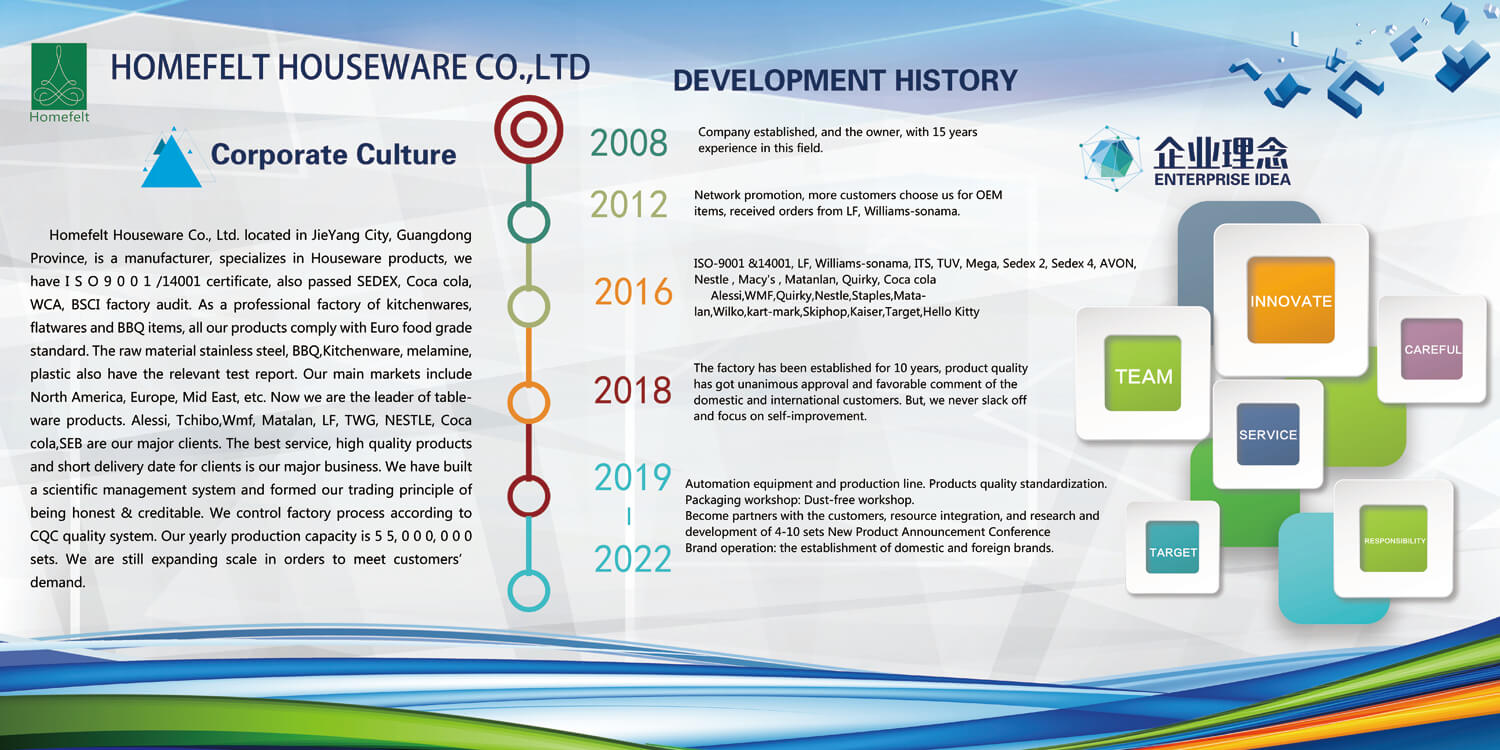
Homefelt has more than 30 years of stainless steel manufacturing experience and produces stainless steel cutlery together with kitchen and dining products, BBQ tools, pet bowls and children's tableware.
For international B2B customers, Homefelt supports standard, OEM, ODM and customized stainless steel products according to project requirements.
Importers, distributors, restaurant suppliers, hospitality businesses, retailers and private label brands can discuss stainless steel spoon material, dimensions, thickness, weight, surface finish, logo, packaging and estimated quantities.
For custom projects, drawings, reference samples and approved product specifications can provide a clear basis for development and mass production.
A Practical Custom Spoon Development Workflow
B2B buyers can follow these steps:
-
Define the target market
-
Determine the intended application
-
Prepare a drawing or reference sample
-
Confirm material
-
Define dimensions
-
Specify thickness and weight
-
Select the surface finish
-
Define branding requirements
-
Confirm packaging
-
Review tooling requirements
-
Approve the sample
-
Begin mass production
-
Inspect finished products
-
Approve shipment
A structured development process can reduce misunderstandings and improve production consistency.
Conclusion
Custom stainless steel spoon manufacturing gives B2B buyers more control over product dimensions, bowl shape, handle design, material, surface finish, branding and packaging.
OEM, ODM and private label projects can be developed from technical drawings, existing samples or new product concepts. The most important step is to define the product clearly and approve a physical sample before bulk production.
Homefelt has more than 30 years of stainless steel manufacturing experience and works with international B2B customers on standard and customized stainless steel products.
By combining a clear specification, practical product design and sample approval, importers, distributors, restaurant suppliers, hospitality businesses, retailers and private label brands can develop stainless steel spoons that better match their market and brand requirements.
You May Be Interested In
Stainless Steel Spoon Manufacturing Process: How Spoons Are Made
Stainless Steel Spoon Quality Control and Inspection Guide for B2B Buyers
Stainless Steel Spoon Materials and Grades: 18/10, 18/8 and 18/0 Compared
Stainless Steel Spoon Finishes: Polished, Satin, Brushed and More
Stainless Steel Spoon Packaging and Shipping: A B2B Export Guide
Wholesale Stainless Steel Spoon Supplier: How to Choose the Right Factory

Wholesale Stainless Steel Spoon Supplier: How to Choose the Right Factory
Stainless Steel Spoon Packaging and Shipping: A B2B Export Guide
Related Article