
Evidence-Based Tableware Recommendations from 24 Months of Hands-On Experience
After twenty-four months of testing tableware across two children's developmental journeys, the conclusions are clear: not all materials are created equal, and timing matters. The empirical evidence gathered through thousands of meals reveals a distinct pattern—exclusive silicone use during the first year provides undeniable advantages, while a carefully managed transition to stainless steel after twelve months offers the perfect balance of safety and functionality. These insights, forged in the crucible of real-world parenting rather than laboratory conditions, provide a practical roadmap for parents navigating the overwhelming marketplace of children's feeding products.
The recommendation for silicone dominance during the 0-12 month period emerged from solving three persistent challenges: gum sensitivity during teething, the frequency of self-inflicted oral impacts during early feeding attempts, and the frustrating slippage of bowls and plates during enthusiastic but uncoordinated eating. "During our first child's initial months of solid food introduction, we experimented with various materials including BPA-free plastic and bamboo," recalls father of two Ken. "The moment we switched to LFGB-certified silicone, multiple problems resolved simultaneously. The gentle texture soothed rather than aggravated teething gums, the inherent stickiness prevented constant plate chasing across the highchair tray, and the material's forgiveness prevented the dramatic crying spells that followed enthusiastic but misdirected self-feeding attempts with harder materials."
The LFGB Difference: Beyond Marketing Claims
The specific insistence on LFGB certification developed after disappointing experiences with products bearing generic "food-grade silicone" claims. "We initially purchased several beautifully designed silicone products marketed as food-safe that developed a distinct odor after repeated sterilization and began showing tiny surface cracks near the edges," Ken notes. "Our subsequent research revealed that while 'food-grade' represents a baseline standard, LFGB certification involves dramatically more rigorous testing, particularly regarding material stability under real-world use conditions including heating, cooling, and mechanical stress."
This practical experience aligns with technical reality. LFGB standards evaluate multiple migration scenarios using various food simulants including 3% acetic acid (simulating acidic foods), 10% ethanol (alcohol-containing foods), and olive oil (fatty foods). The testing extends beyond initial state evaluation to assess material behavior after repeated stress applications. "Parents should understand that LFGB certification isn't merely a paperwork exercise—it represents demonstrated material integrity under conditions that mirror actual use," advises chemical safety consultant Amanda Pierce. "When a product bears legitimate LFGB certification, you're receiving independent verification that the material won't break down and release compounds into food, even when subjected to common stressors like microwave heating or dishwasher cleaning with harsh detergents."
The Twelve-Month Transition: Why Timing Matters
The recommendation to introduce stainless steel elements around the first birthday emerged from observing distinct changes in eating abilities and behaviors. "With both children, we noticed a dramatic shift in eating competence around the first birthday," Ken observes. "Their scooping motions became more efficient, they applied appropriate pressure when spearing food, and they developed the jaw strength to effectively remove food from spoons. The limitations of all-silicone utensils became apparent—their inherent flexibility made scooping firmer foods inefficient, and their thicker profiles struggled with narrower containers."
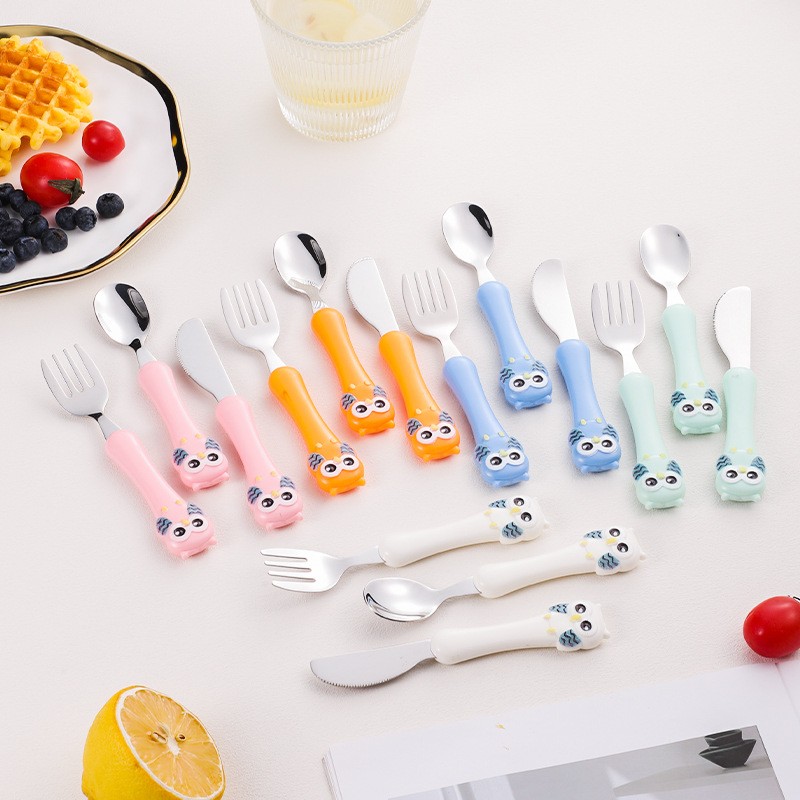
The transition strategy that proved most successful involved hybrid implements featuring 304 stainless steel functional ends paired with silicone-coated handles. This combination delivered metal efficiency while maintaining the grip and impact protection of silicone. "The hybrid approach prevented the frustration that occurred when we transitioned directly to full stainless steel utensils," Ken notes. "The weight and slipperiness of all-metal implements frequently led to dropped utensils and mealtime frustration, while the hybrid designs provided a perfect intermediate step that built confidence while improving functionality."
The 304 Stainless Steel Standard: Practical Advantages Beyond Safety
The preference for 304 stainless steel developed through comparative use with other materials. "We initially received 200-series stainless steel utensils as gifts and noticed they developed slight surface discoloration and required more vigorous polishing to maintain their appearance," Ken recalls. "After researching stainless steel grades, we understood why—the lower nickel content in 200-series steel provides less corrosion resistance. The 304 utensils maintained their appearance with significantly less maintenance, an important practical consideration for busy parents."
The practical advantages of 304 stainless steel extend beyond corrosion resistance. The material's optimal weight provides valuable proprioceptive feedback that helps children develop appropriate pressure control during scooping and cutting motions. The smooth, non-porous surface enables complete sanitation with minimal effort—a significant advantage when cleaning after protein-rich foods like eggs or peanut butter that tend to adhere to more porous materials. "The cleanability factor cannot be overstated," Ken emphasizes. "Whereas silicone occasionally retained tomato-based sauce discoloration despite thorough cleaning, the 304 stainless steel components consistently returned to pristine condition with simple washing."
Implementation Strategy: A Phased Approach
The successful implementation of this staged material approach involves strategic product selection:
*Months 4-6:* Single LFGB silicone spoon for initial food introduction
*Months 6-9:* Suction-backed silicone plates with divided sections and basic silicone utensils
*Months 9-12:* Advanced silicone utensils with ergonomic handles and deeper bowls
*Months 12-18:* Hybrid utensils with stainless steel heads and silicone handles, silicone-coated stainless steel bowls
*Months 18+:* Predominantly stainless steel with silicone elements limited to grip surfaces and protective bumpers
This empirical approach to tableware selection, refined through continuous observation and adjustment, provides a practical framework that prioritizes both developmental support and real-world functionality. For parents overwhelmed by contradictory marketing claims and endless product options, this field-tested perspective offers clarity grounded in experience rather than abstraction—proving that the best parenting decisions often emerge from attentive observation and thoughtful response to a child's evolving needs.
Eco-Friendly Stainless Steel Baby Cutlery and Toddler Tableware
A Scientific Guide to Selecting Optimal Tableware for Children



