
How Advanced Stainless Steel Utensil Sets Are Transforming Early Eating Experiences
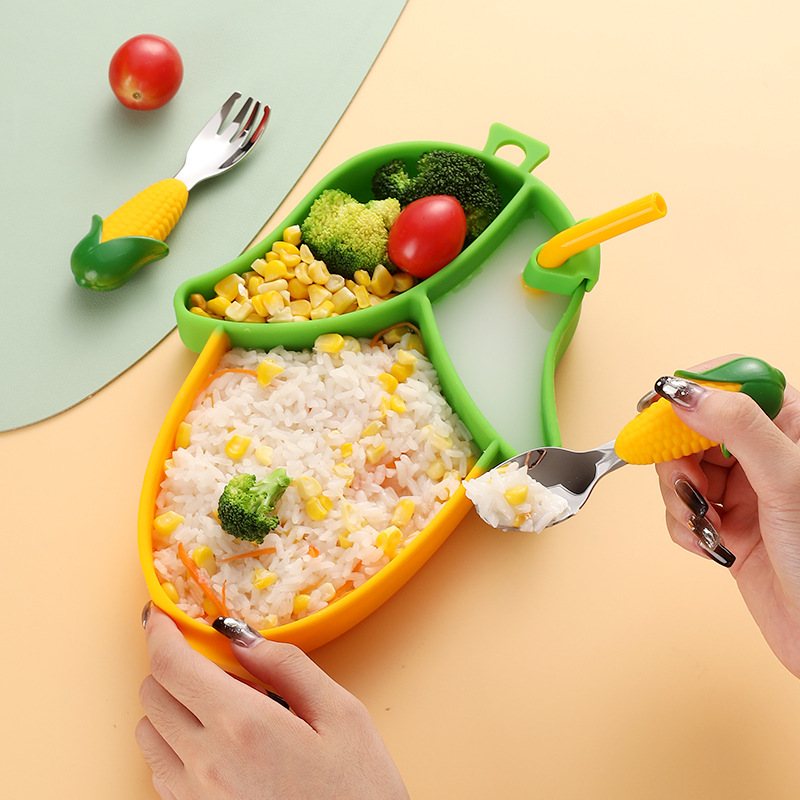
In an era defined by heightened parental awareness and scientific advancement, the humble children's utensil set is undergoing a remarkable transformation. What was once considered a simple feeding tool has evolved into a sophisticated developmental instrument, with premium stainless steel sets leading this quiet revolution. The global market for children's feeding utensils is projected to reach $4.2 billion by 2028, and within this expanding market, stainless steel options represent the fastest-growing segment, driven by increasing consumer education about material safety, developmental psychology, and environmental sustainability.
The fundamental shift from plastic to stainless steel represents more than just a material substitution—it signifies a profound change in how parents approach childhood nutrition and development. "We're witnessing a paradigm shift in parental purchasing behavior," observes Dr. Elena Martinez, child development specialist at Stanford University's Pediatric Research Institute. "Today's parents aren't just buying utensils; they're investing in tools that support their child's holistic development. The material composition, weight distribution, and structural design of these utensils directly impact a child's relationship with food, their motor skill development, and even their psychological confidence. Stainless steel, with its unique combination of durability, safety, and appropriate heft, provides sensory feedback that lightweight plastics simply cannot replicate."
The Material Science Behind the Revolution
The superiority of stainless steel children's utensils begins at the molecular level. Premium sets utilize either 304 (18/8) or 316 (18/10) surgical-grade stainless steel, both classified as food-safe alloys by the U.S. Food and Drug Administration. These materials are inherently non-porous, creating a surface that cannot harbor bacteria in microscopic scratches or absorb food particles and oils. This characteristic is particularly crucial for children, whose immune systems are still developing. Unlike plastic alternatives that can degrade when exposed to acidic foods, heat, or UV light—potentially releasing microplastics and chemical additives—stainless steel maintains its structural integrity through years of use and cleaning.
The cleaning and sterilization advantages cannot be overstated. A 2024 study published in the Journal of Pediatric Health found that stainless steel utensils demonstrated a 99.8% reduction in bacterial colonies after standard dishwashing compared to 87.3% for plastic utensils with similar cleaning. This significant difference is attributed to stainless steel's non-porous nature and its ability to withstand high-temperature sanitation without warping or degrading. For parents of children with compromised immune systems or food sensitivities, this margin of safety represents a critical consideration in utensil selection.
Ergonomic Innovation: Where Science Meets Tiny Hands
Modern stainless steel utensil sets represent the culmination of extensive ergonomic research. Unlike simply shrinking adult utensils, these products are specifically engineered for the developmental stages of childhood. The handles incorporate progressive diameter sizing, starting at approximately 1.5 centimeters for beginner sets (ages 6-12 months) and gradually increasing to 2 centimeters for advanced sets (ages 3+). This precise calibration supports the palmar grasp of infants transitioning to the digital grasp of toddlers, ultimately facilitating the mature tripod grasp used by older children and adults.
The strategic weighting of these utensils represents another sophisticated design element. "We've discovered that utensils with a slightly forward-weighted balance—approximately 60% of the weight in the functional head—provide proprioceptive feedback that helps children develop spatial awareness of the utensil in relation to their mouth," explains industrial designer Marcus Thorne, whose firm specializes in developmental tools. "This seemingly minor design detail significantly reduces frustration during self-feeding attempts and accelerates the learning curve." The inclusion of soft-grip silicone sleeves made from food-grade platinum-cured silicone addresses both comfort and safety concerns, providing necessary friction while protecting emerging teeth from uncomfortable metal contact.
The Third Utensil: Reimagining the Children's Knife
Perhaps the most innovative aspect of modern stainless steel sets is the inclusion of a practice knife—a tool that challenges conventional wisdom about what young children can safely handle. These implements feature specially engineered blades with either rounded nylon construction or lightly serrated stainless steel edges that can spread and cut soft foods but cannot break skin or cut fingers. Their introduction aligns with Montessori and Waldorf educational philosophies that emphasize practical life skills.
"Introducing a safe cutting tool around age two capitalizes on a child's natural desire to participate in meal preparation," says Amanda Chen, founder of a progressive early childhood center in Portland. "When a child successfully spreads avocado on toast or cuts a banana into pieces, they experience an enormous sense of accomplishment. This positive reinforcement creates healthier attitudes toward mealtimes and fosters independence." Research from the Child Development Institute shows that children who regularly engage in food preparation activities with appropriate tools demonstrate improved fine motor skills and are 34% more likely to try new foods than their peers who don't participate in meal preparation.
Economic and Environmental Impact Assessment
The long-term economic advantage of stainless steel utensils becomes apparent through lifecycle analysis. While the initial investment for a quality stainless steel set typically ranges from $25 to $45—compared to $8 to $15 for plastic alternatives—the durability factor dramatically alters the cost-per-use equation. Plastic utensils frequently require replacement every 6-12 months due to degradation, discoloration, or damage, while stainless steel sets often remain functional through multiple children over 5-10 years.
The environmental implications are equally significant. The Children's Product Sustainability Initiative estimates that approximately 42 million plastic children's utensil sets enter landfills annually in the United States alone, where they may require centuries to decompose. Stainless steel's infinite recyclability and longevity present a compelling alternative for environmentally conscious families. Additionally, the manufacturing process for high-quality stainless steel has become increasingly efficient, with many manufacturers utilizing at least 60% recycled content in their products.
Market Evolution and Future Directions
The children's utensil market continues to evolve with increasing sophistication. We're now seeing the emergence of specialized sets designed for specific needs—including utensils with enhanced grips for children with motor challenges, travel sets with hygienic cases, and even temperature-sensitive silicone that changes color when food is too hot. The aesthetic evolution has been equally remarkable, with designs now ranging from minimalist Scandinavian-inspired sets to artist collaborations featuring licensed characters and educational themes.
As research continues to illuminate the connections between feeding tools, developmental outcomes, and long-term eating behaviors, the trend toward thoughtfully designed stainless steel utensils appears poised for continued growth. These products represent a convergence of material science, developmental psychology, and environmental stewardship—offering families a simple yet profound way to support their children's health and independence from the very first bite.
The Comprehensive Guide to Stainless Steel Utensil Sets for Every Stage of Childhood
Portable spoon chopsticks



