Premium Stainless Steel Cutlery for B2B: Building a Higher-Value Flatware Range
Premium Stainless Steel Cutlery for B2B: How to Build a Higher-Value Flatware Range
For many B2B buyers, stainless steel cutlery is no longer simply a basic tableware product. Retail brands, distributors and hospitality suppliers increasingly need collections that combine practical function with a stronger visual identity.
This is especially true when a business wants to position a new product range toward the premium segment.
Premium cutlery does not necessarily mean adding unnecessary decoration or making the product complicated. In many cases, the difference comes from how material, proportions, design details, finishing and overall presentation work together.
For brands developing an OEM or private label collection, understanding these details can make the product development process more focused and practical.
What Makes Stainless Steel Cutlery Feel Premium?
A premium impression usually comes from a combination of factors rather than one specific feature.
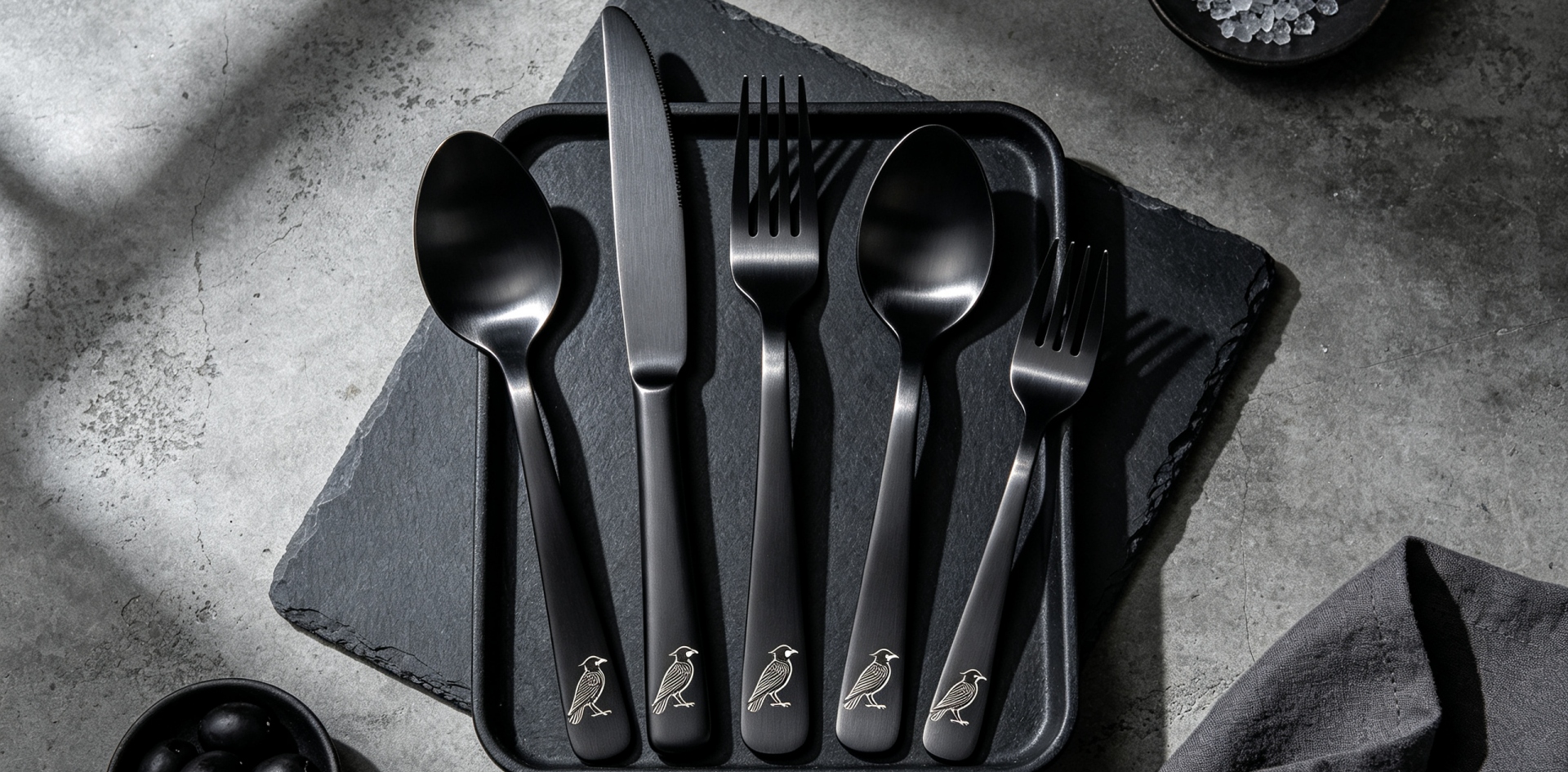
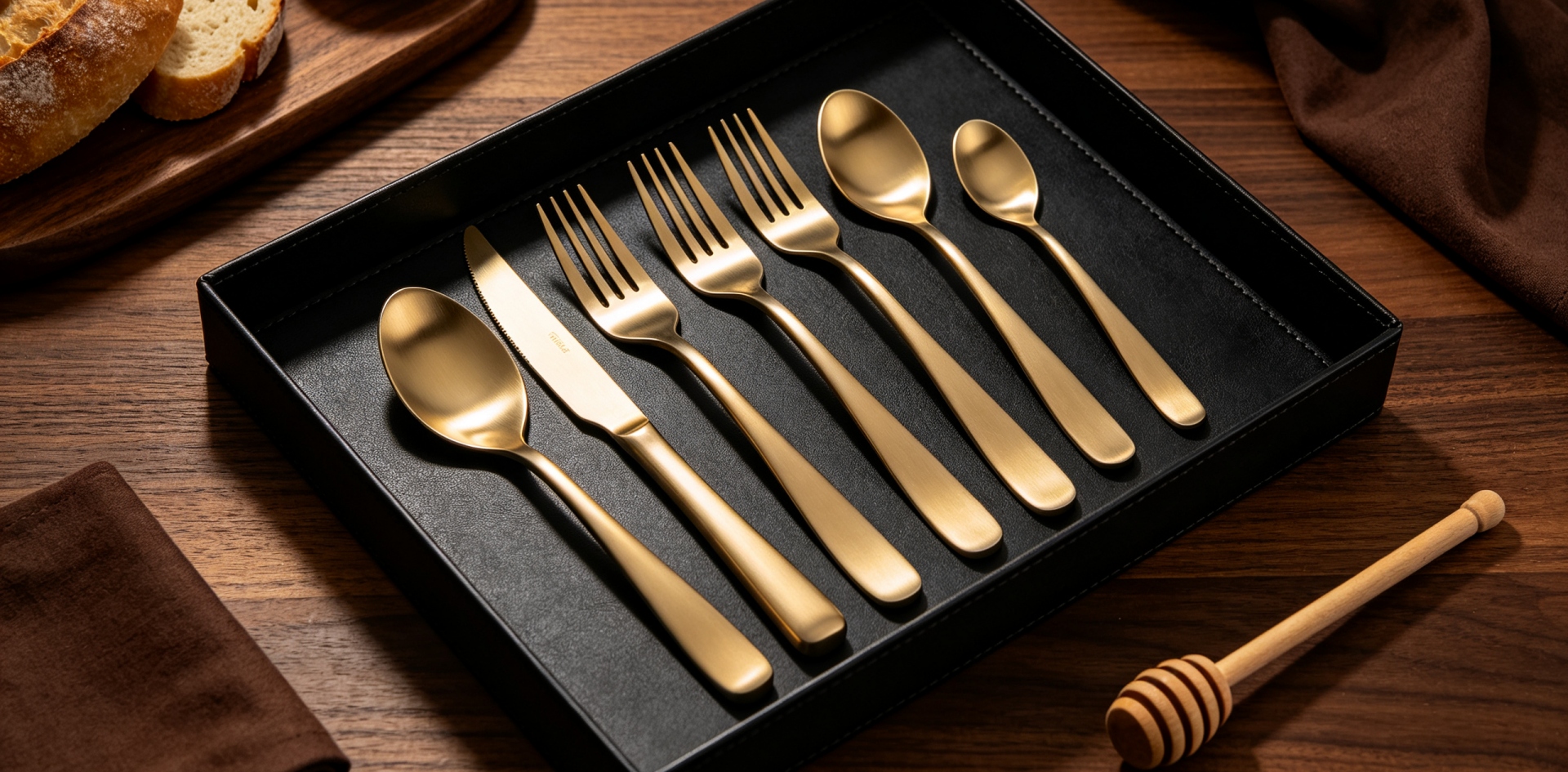
The overall silhouette is important. Clean proportions and carefully considered lines can make a collection look more refined. The handle should feel visually connected to the functional part of the cutlery, while the knife, fork and spoon should appear to belong to the same family.
Material selection also contributes to the positioning of a product, but material alone does not create a premium collection.
Manufacturing quality, surface consistency, edge treatment and attention to small design details all influence the final result.
For B2B buyers, this means that premium product development should be considered as a complete project rather than simply choosing a more expensive specification.
Design Direction Comes Before Production
Before contacting a manufacturer, it can be useful for a brand to define the general direction of the collection.
A premium range may be modern and minimalist, classic and elegant, or distinctive and design-focused.
Each direction creates different requirements.
A minimalist collection may depend heavily on clean lines and precise proportions. A classic range may use softer shapes and more traditional details. A contemporary collection may introduce stronger geometric elements.
The manufacturer needs to understand this direction before developing samples.
A simple description of the intended style, together with reference images or existing products, can provide a useful starting point.
Building a Consistent Premium Collection
A premium collection should not rely on one attractive product while the remaining items look unrelated.
The knife, fork and spoon should work together visually.
This does not mean that every product has to have exactly the same proportions. Each item has a different function and therefore requires its own construction.
Instead, certain design elements can be shared across the range.
The handle profile, overall lines, transitions and visual character can create a common identity.
For a private label brand, this approach can be particularly valuable because it creates a recognizable product family that can later be expanded with additional references.
The Importance of Small Design Details
Premium products are often distinguished by details that may appear relatively minor during the early design stage.
The transition between the handle and the functional part is one example.
The shape of the handle end is another. The width of a handle, the relationship between straight and curved lines, and the way different parts meet can all influence the appearance of the finished product.
These details are difficult to judge from a product title or basic specification.
This is why sampling is an important part of custom cutlery development.
A physical sample allows the buyer to examine the product from different angles and compare it directly with other pieces in the collection.
Premium Does Not Always Mean Heavy
One common assumption is that premium cutlery must be particularly heavy.
In practice, the appropriate product characteristics depend on the intended market.
Some premium collections use a substantial construction, while others create a refined appearance with more streamlined proportions.
The goal should be to create a product that feels appropriate for its positioning rather than simply adding material.
For B2B buyers, the target price, customer expectations and intended sales channel should therefore be considered together.
A manufacturer can help evaluate different options so that the final product remains commercially practical.
Designing for Retail Presentation
Premium cutlery is often purchased based on a combination of product appearance and perceived value.
Retail customers may first see the product in photographs, packaging or a showroom display before physically using it.
For this reason, the design needs to work visually in several contexts.
A knife, fork and spoon should look attractive individually but also form a convincing collection when displayed together.
This is particularly important for private label brands that invest in product photography and retail presentation.
A consistent collection gives the brand more opportunities to create visual content around the entire range rather than promoting every SKU as an unrelated item.
OEM Development for Premium Flatware
OEM manufacturing can be a practical solution for brands that already have a clear product concept.
The buyer may provide drawings, reference products, dimensions or design instructions. The manufacturer can then develop samples based on these requirements.
The development process can include different variations of the same concept.
For example, a brand may want to compare two handle profiles or several proportions before selecting the final version.
This allows the buyer to make decisions based on physical products rather than relying entirely on digital drawings.
For larger projects, the approved sample can then become the reference for subsequent production.
ODM Options for Brands Without a Final Design
Not every B2B buyer has a complete design ready.
Some brands know the market they want to target and the type of product they want to create but need help developing the actual collection.
An ODM approach can provide more room for collaboration.
The manufacturer can work from the buyer's general direction and suggest practical design solutions that can be produced at the required volume.
This can be useful for distributors and emerging brands that want something more distinctive than a standard catalog model but do not have an internal product development team.
The final collection can still be adapted to the brand's preferred specifications and commercial positioning.
Choosing Details According to the Target Market
A premium collection should be developed for a specific customer rather than for an abstract idea of luxury.
A product intended for a design-oriented retail brand may require a different appearance from one intended for upscale hospitality supply.
Similarly, a distributor may need several product levels within the same general category.
This is why the target market should be discussed at the beginning of the project.
Information about the expected customer, sales channel, estimated order quantity and target price can help the manufacturer understand what kind of product needs to be developed.
The objective is to find the right balance between design, manufacturing requirements and commercial value.
Why Samples Matter in Premium Cutlery Projects
Physical samples are particularly useful when developing a premium product.
Photographs can show the general shape, but they cannot fully communicate the actual presence of a stainless steel cutlery item.
A sample allows the buyer to inspect the surface, edges, proportions and overall workmanship.
It can also be compared with competing products or existing items in the brand's collection.
If adjustments are required, they can be discussed before bulk production begins.
This makes the sampling stage an important bridge between creative product development and actual manufacturing.
From a Premium Concept to Bulk Manufacturing
A successful premium cutlery project still needs to work in mass production.
A design may look attractive as a prototype but become difficult or inefficient to produce if the construction is too complicated.
For this reason, manufacturability should be considered during the development stage.
An experienced stainless steel cutlery factory can evaluate the relationship between design requirements and production processes.
This does not mean that customization has to be limited. Instead, the design can be refined so that the desired appearance can be achieved consistently at the required production volume.
For B2B buyers, this can be particularly important when the project involves thousands of pieces or multiple SKUs.
Creating a Premium Private Label Range
Private label gives distributors and brands the opportunity to develop their own identity rather than relying entirely on standard products.
A premium stainless steel cutlery range can begin with a small number of core products.
Once the main design language has been established, additional knives, forks, spoons and sets can be developed around the same concept.
This creates a foundation for future product expansion.
A manufacturer familiar with custom stainless steel cutlery can help manage the different product requirements while keeping the overall direction of the collection consistent.
For brands planning long-term product development, this can be more valuable than treating every purchase as a separate sourcing project.
Preparing Your B2B Cutlery Inquiry
If you are looking for a premium stainless steel cutlery manufacturer, the initial inquiry does not need to be complicated.
Start with the product types you need, estimated quantity, target market and preferred design direction.
If you have reference images, sketches or existing samples, include them as well.
For a private label project, you can also explain the position of your brand and the type of customer you want to reach.
This information gives the manufacturer a clearer understanding of the project and makes it easier to discuss possible specifications, samples and production options.
A detailed inquiry can also help the manufacturer prepare a more useful quotation instead of providing a generic price for a standard product.
Developing Long-Term Value Through Better Product Design
Premium cutlery is ultimately about creating a product that customers can recognize, use and associate with a certain level of quality.
For B2B brands, the development process should therefore consider more than the appearance of an individual piece.
The collection needs to make sense as a whole, fit the intended market and remain practical to manufacture in volume.
With OEM, ODM and private label manufacturing, brands can work with a stainless steel cutlery factory to turn a product concept into a finished collection.
The project may begin with one reference and later expand into a broader range. It may also start with a complete design concept and move directly toward sampling and production.
Either way, the most useful starting point is a clear understanding of what the product should represent and who it is designed for.
For brands, distributors and wholesalers looking to introduce a higher-value stainless steel flatware range, custom manufacturing provides the flexibility to develop products around specific commercial requirements.
Request a Premium Stainless Steel Cutlery Quote
Discuss Your Custom OEM Flatware Project
Develop a Private Label Cutlery Collection
Edelstahlbesteck für den B2B-Einkauf: So entsteht ein marktfähiges Sortiment
Couteau de Table Dentelé en Inox : Guide B2B pour Marques et Grossistes
Related Article