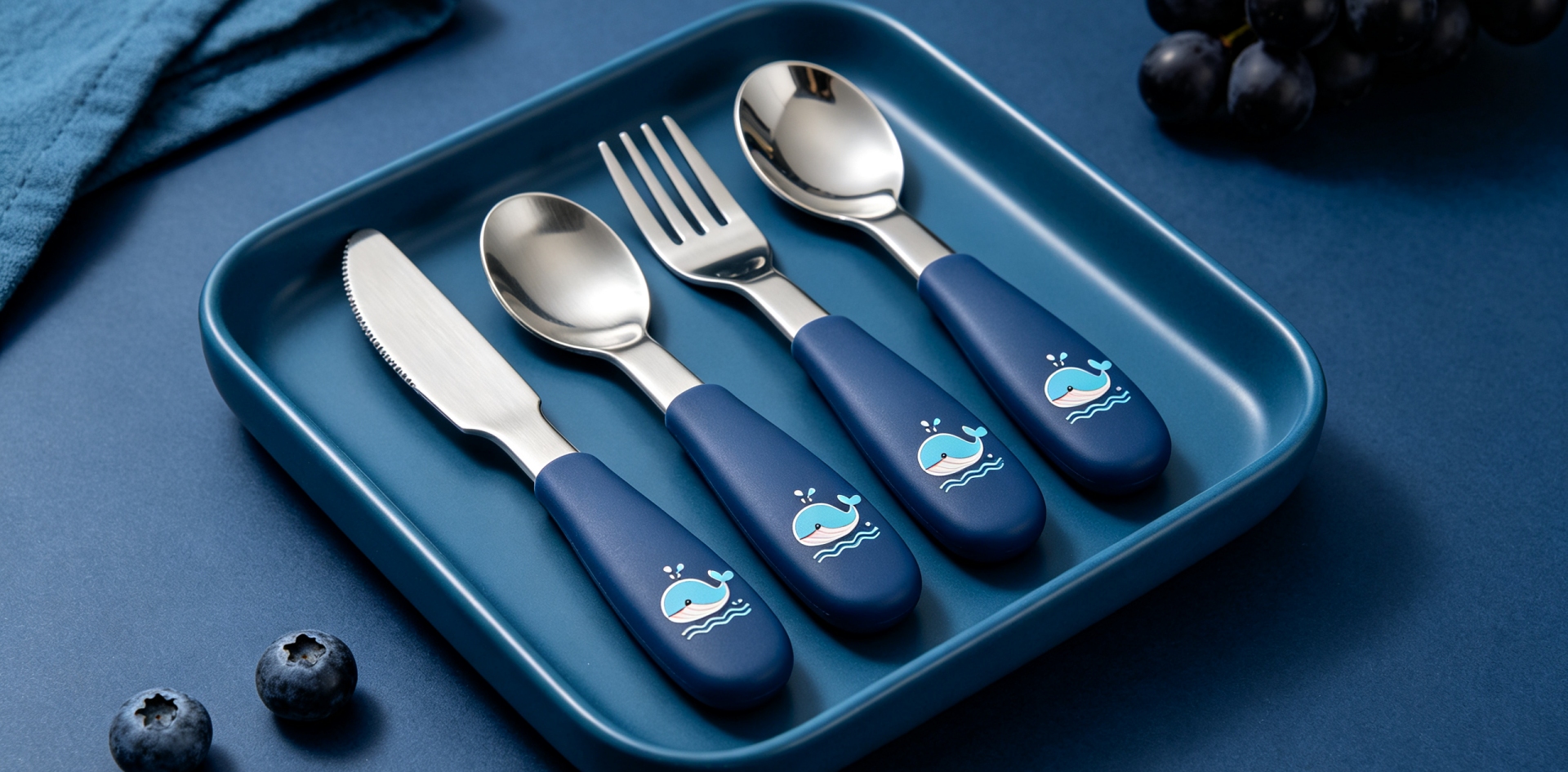
How Buyer Feedback Helps Improve Stainless Steel Cutlery Product Development

How Buyer Feedback Helps Improve Stainless Steel Cutlery Product Development
Buyer feedback is a valuable source of information for developing stainless steel cutlery that performs well in real commercial settings. Importers, wholesalers, retailers, and distributors see how products are received by their customers, which designs attract attention, and which details may affect repeat purchases. When this information is shared clearly with a manufacturer, it can help turn market observations into practical product improvements.
For a stainless steel cutlery factory, product development should not rely on design preferences alone. Feedback about spoon proportions, fork comfort, knife appearance, set composition, and packaging can help buyers and suppliers make more informed decisions before launching a new collection or placing a repeat order.
1. Collect Feedback That Can Guide Product Decisions
The first step is to collect feedback in a consistent format. General comments such as “customers like this set” or “the spoon feels too large” may indicate a direction, but they do not provide enough detail for product development.
B2B buyers can organize feedback into several categories:
-
Product appearance and design preferences
-
Spoon bowl size, depth, and overall length
-
Fork tine configuration and handle proportions
-
Knife dimensions and visual coordination with the set
-
Weight, balance, and perceived comfort
-
Surface finish, color, and logo presentation
-
Retail packaging and set composition
-
Price positioning and customer segment suitability
Where possible, include the product code, market, sales channel, customer type, and relevant sample photographs. This helps the supplier understand whether a comment relates to one specific design or a broader preference across the collection.
For example, feedback from a gift retailer may focus on presentation and coordinated finishes, while a distributor serving everyday household buyers may place more emphasis on practical design and price positioning. The same comment should not automatically lead to the same product change for every market.
2. Separate Personal Preferences From Repeated Market Signals
Not every suggestion needs to become a design revision. A single buyer may prefer a heavier spoon, while other customers may favor a lighter product. The important task is to identify patterns and understand which requirements matter most to the intended market.
Review feedback by frequency, business impact, and relevance to the target customer. Repeated comments about sharp edges, uncomfortable handles, or inconsistent finishing deserve a different response from isolated preferences about decorative details.
Buyers can also distinguish mandatory requirements from optional improvements. Food-contact requirements, agreed dimensions, and documented product specifications should be treated as defined criteria. Suggestions about appearance or styling can be assessed against the product’s intended positioning, development cost, and production feasibility.
This distinction helps prevent unnecessary changes that increase complexity without creating meaningful value for customers.
3. Translate Comments Into Measurable Product Requirements
A manufacturer cannot reliably act on vague feedback. Product development becomes more efficient when comments are translated into specifications that can be reviewed, sampled, and approved.
Consider a buyer who reports that a stainless steel spoon feels too large. The development team should clarify whether the concern relates to overall length, bowl width, bowl depth, handle thickness, or weight. These are different design variables and may require different solutions.
Similarly, feedback that a fork feels uncomfortable could relate to handle contour, edge finishing, balance, or the transition between the handle and working end.
Useful development information may include:
-
Reference photographs or marked-up drawings
-
Target dimensions and acceptable tolerances
-
Preferred weight range where applicable
-
Material grade and thickness requirements
-
Surface finish and color references
-
Logo position and size
-
Sample evaluation notes
-
Approval status and revision number
For stainless steel knives, forks, and spoons, these details help the supplier understand the intended change without relying on interpretation alone. The buyer and factory should confirm which requirements are changing and which must remain unchanged.
4. Use Samples to Validate Proposed Improvements
Before introducing a revised design into bulk production, buyers should evaluate a representative sample. A sample allows both parties to assess whether the proposed change solves the original problem and whether it introduces new issues.
For instance, increasing a spoon handle’s width may improve the perceived grip but change the visual proportions of the entire product. Adjusting a fork’s tine geometry may affect appearance and functional expectations. Revising a knife handle may require a fresh review of balance and coordination with the matching pieces.
The evaluation should use agreed criteria rather than a general statement that the sample looks better. Record the observations, request revisions where necessary, and confirm the approved version before production begins.
If the change affects multiple items in a coordinated flatware set, inspect the collection together. A revised spoon should still look appropriate beside the existing fork and knife. Consistency across the range is important for distributors selling complete sets or building a recognizable private-label collection.
5. Consider Production Feasibility Before Approving Changes
A design that looks attractive on a drawing may require additional tooling, processing steps, or more demanding finishing work. Before confirming a change, the buyer should ask the manufacturer to review its production implications.
Questions worth discussing include whether the current tooling can accommodate the revision, whether new tooling is necessary, how the change affects processing time, and whether the revised specification can be maintained across large production quantities.
Changes to thickness, material, handle geometry, surface finish, or decorative details may also affect the product cost. Buyers should request an updated quotation when the revision materially changes manufacturing requirements.
The purpose is not to avoid innovation. It is to ensure that the new design can be produced consistently at the required volume and commercial price. For wholesale programs, a small design adjustment can have a significant impact when repeated across thousands of pieces.
6. Use Feedback to Improve the Entire Product Collection
Buyer feedback can reveal opportunities beyond individual product revisions. Several comments across different SKUs may indicate that the collection needs better coordination, clearer product differentiation, or a more suitable range of set sizes.
A distributor may discover that customers want a simpler everyday flatware set alongside a premium gift-oriented option. Another buyer may find that particular spoon sizes sell more consistently than less common variants. These observations can help the business prioritize development resources and simplify the product range.
When evaluating collection-level changes, consider the relationship between product design, target price, packaging, and intended sales channel. A coherent collection is often easier to present to customers and manage in wholesale inventory than a large assortment of unrelated designs.
Homefelt supports B2B customers with stainless steel cutlery development, OEM/ODM customization, private-label options, and bulk production. Buyers can discuss proposed changes to spoons, forks, knives, and coordinated flatware sets while reviewing the related product specifications, packaging needs, and production requirements.
7. Maintain a Clear Record of Product Revisions
When feedback leads to a design change, the revision must be documented. Without clear version control, buyers may approve one sample while production follows an older drawing or packaging file.
A product revision record should identify the affected SKU, original specification, requested change, reason for the change, sample evaluation result, approval date, and updated documents. It should also state whether the revision applies only to a new order or to future orders more generally.
Buyers should confirm whether existing inventory, open purchase orders, and previously approved packaging are affected. Where a change is not intended to apply to every product in the collection, the scope should be explicit.
This process is particularly useful for distributors managing multiple private-label ranges. It reduces the risk of similar products gradually becoming inconsistent and makes future reorder discussions easier.
8. Review Results After the Revised Product Reaches the Market
Product development does not end when the sample is approved. After the revised cutlery reaches customers, buyers should review sales feedback, return reasons, customer questions, and repeat-order behavior where those records are available.
The purpose is to determine whether the change achieved its intended objective. If a new handle design receives positive feedback but increases product cost beyond the target price, the team may need to reconsider the specification or positioning. If packaging changes improve presentation but create additional shipping space, the overall commercial effect should also be assessed.
Avoid judging success from a single comment or a short sales period. Compare similar products, account for differences in customer groups, and look for repeated evidence before deciding whether to expand the revision across the range.
A simple feedback cycle—collect, analyze, specify, sample, approve, and review—helps buyers make product decisions based on practical evidence rather than assumptions.
9. Work With Your Supplier on the Next Development Brief
The most useful feedback is specific, prioritized, and linked to a business objective. Before approaching a stainless steel cutlery manufacturer, buyers should identify the target customer, desired improvements, estimated order volume, material requirements, preferred design references, and any packaging changes.
Separate essential requirements from optional ideas, then ask the supplier to evaluate feasibility, sampling needs, production implications, and pricing. This creates a more productive discussion and helps both parties focus on improvements that customers can recognize and the factory can reproduce reliably.
Homefelt’s one-stop service approach can coordinate product design, customized packaging, and transportation considerations for B2B cutlery projects. Whether you are refining a spoon design, developing a matching fork and knife collection, or preparing a private-label flatware range, sharing structured feedback early helps establish clear development priorities.
For product development discussions, bulk quotations, or OEM/ODM stainless steel cutlery inquiries, contact ingrid@homefelt.net with your product references, target market, expected quantities, and proposed changes.
You May Be Interested In
How to Communicate Stainless Steel Cutlery Price List Updates to B2B Buyers
How Importers Can Set Up Warehouse Receiving Inspection for Stainless Steel Cutlery
Related Article