How to Build Product Exclusivity for Stainless Steel Cutlery Distribution
How to Build Product Exclusivity for Stainless Steel Cutlery Distribution
For stainless steel cutlery distributors, competing only on price can make it difficult to maintain healthy margins and long-term customer relationships. When several sellers offer similar spoons, forks, knives, and flatware sets, buyers may struggle to recognize meaningful differences between collections. Developing a distinctive product range gives distributors a way to offer more value than a lower unit price alone.
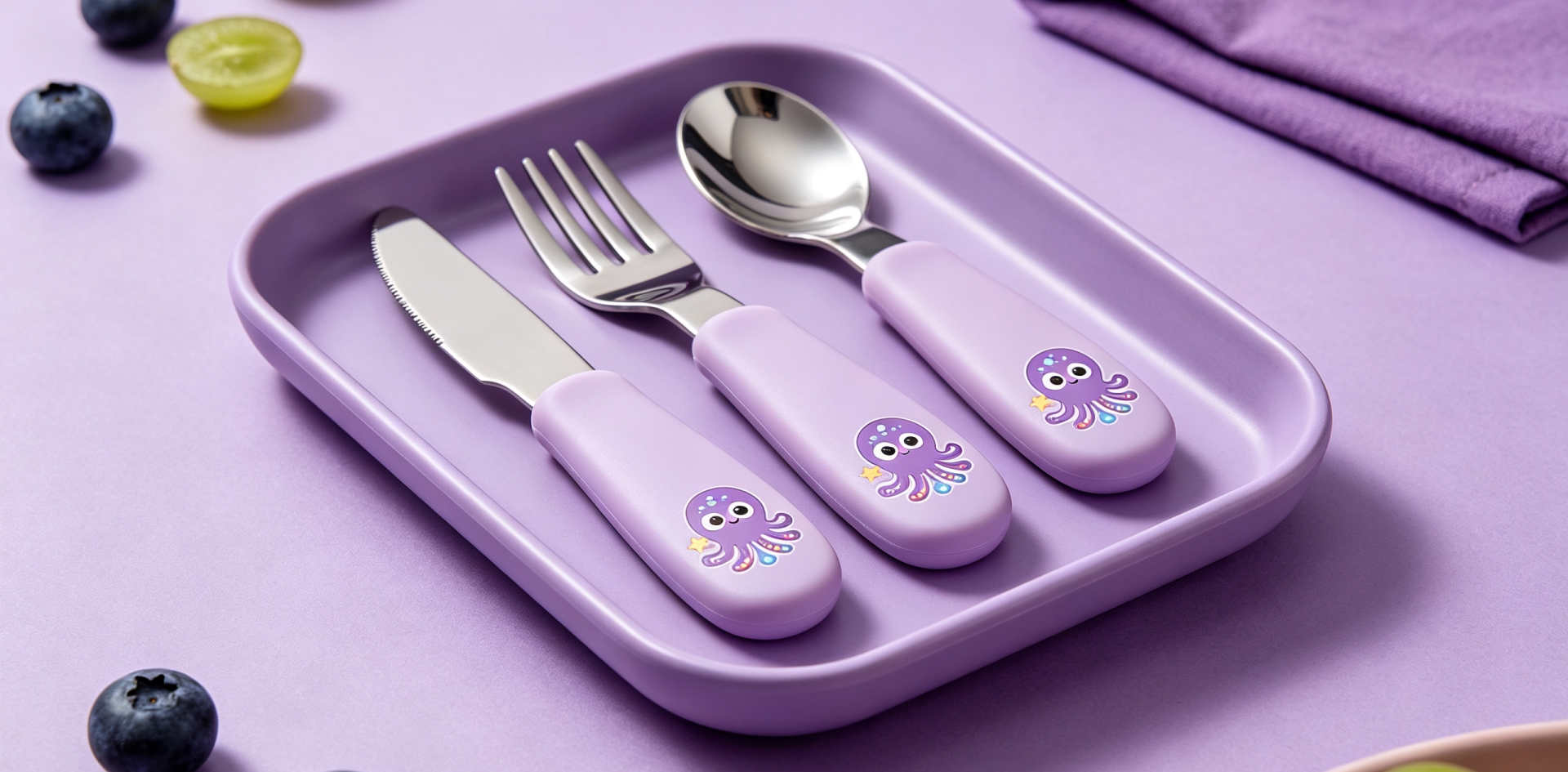
Product exclusivity does not always require an entirely new design or expensive tooling. It can come from a carefully selected combination of handle proportions, surface details, set composition, packaging, and customer-specific specifications. For B2B buyers, the goal is to create a recognizable collection that fits the target market and can be supplied consistently at commercial volumes.
Homefelt supports stainless steel cutlery projects involving product customization, OEM and ODM development, wholesale supply, and packaging coordination. The following considerations can help distributors plan a differentiated collection with a manufacturing partner.
1. Define What Makes the Collection Different
Before requesting a custom design, identify the specific reason customers should choose the collection. A product range may be differentiated by its visual style, weight, material specification, handle shape, coordinated set options, or retail presentation.
For example, a distributor serving contemporary homeware retailers may prefer clean lines and a restrained finish. A supplier serving hospitality buyers may prioritize practical proportions, durability, easy maintenance, and consistency across replacement pieces. A giftware brand may place greater emphasis on decorative handles and coordinated presentation boxes.
These requirements should be translated into product characteristics rather than broad descriptions such as “premium” or “modern.” Share reference images, target customer profiles, competing products, and expected price positioning with the factory. This gives the design discussion a clear commercial direction.
2. Choose the Right Level of Customization
There are several ways to develop a distinctive stainless steel flatware collection. Each option involves different costs, development time, and production considerations.
Existing designs with a selected assortment: Choose available spoon, fork, and knife designs and combine them into a collection that fits a specific market. This approach may reduce development work while allowing differentiation through assortment and presentation.
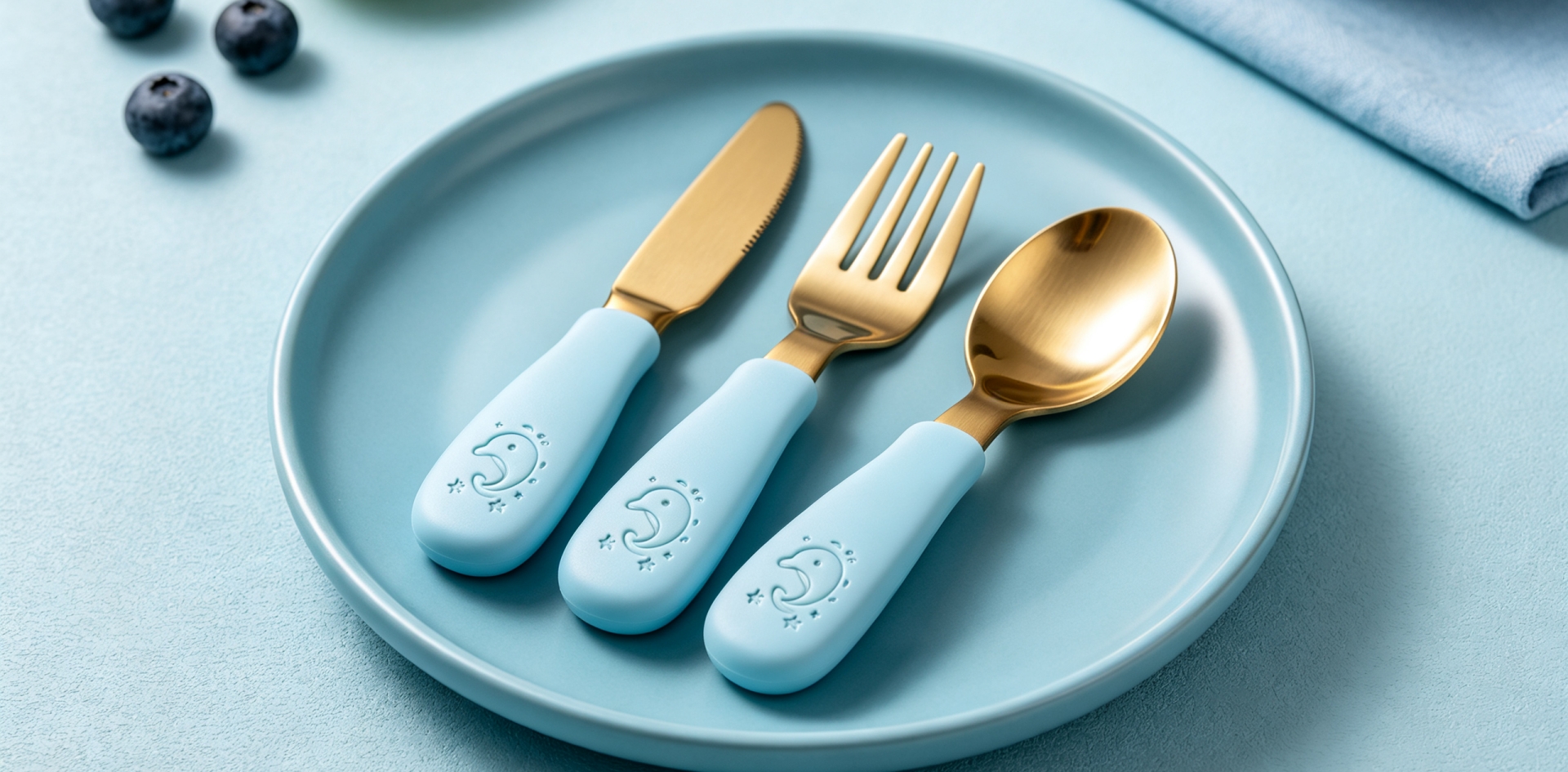
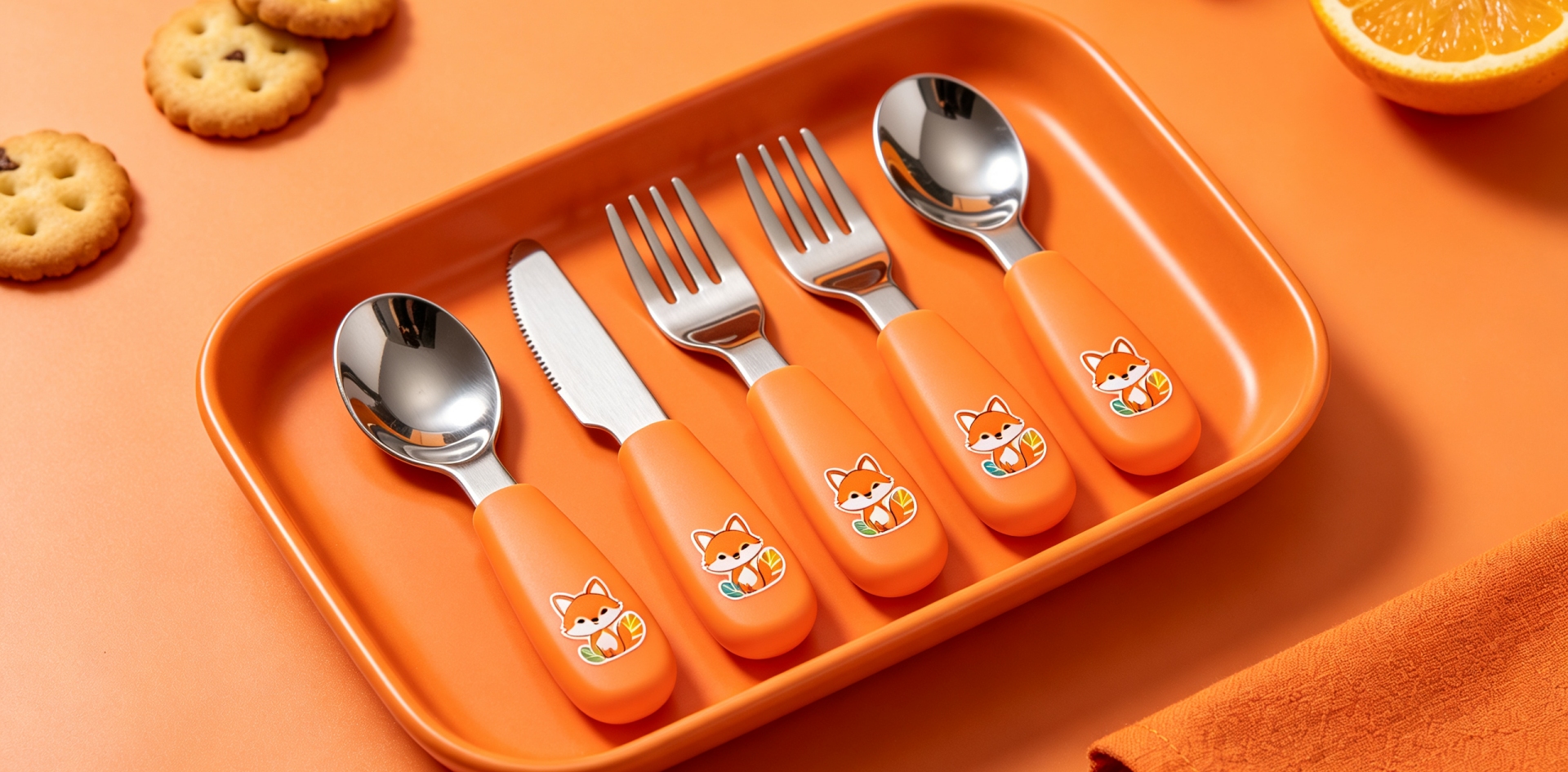
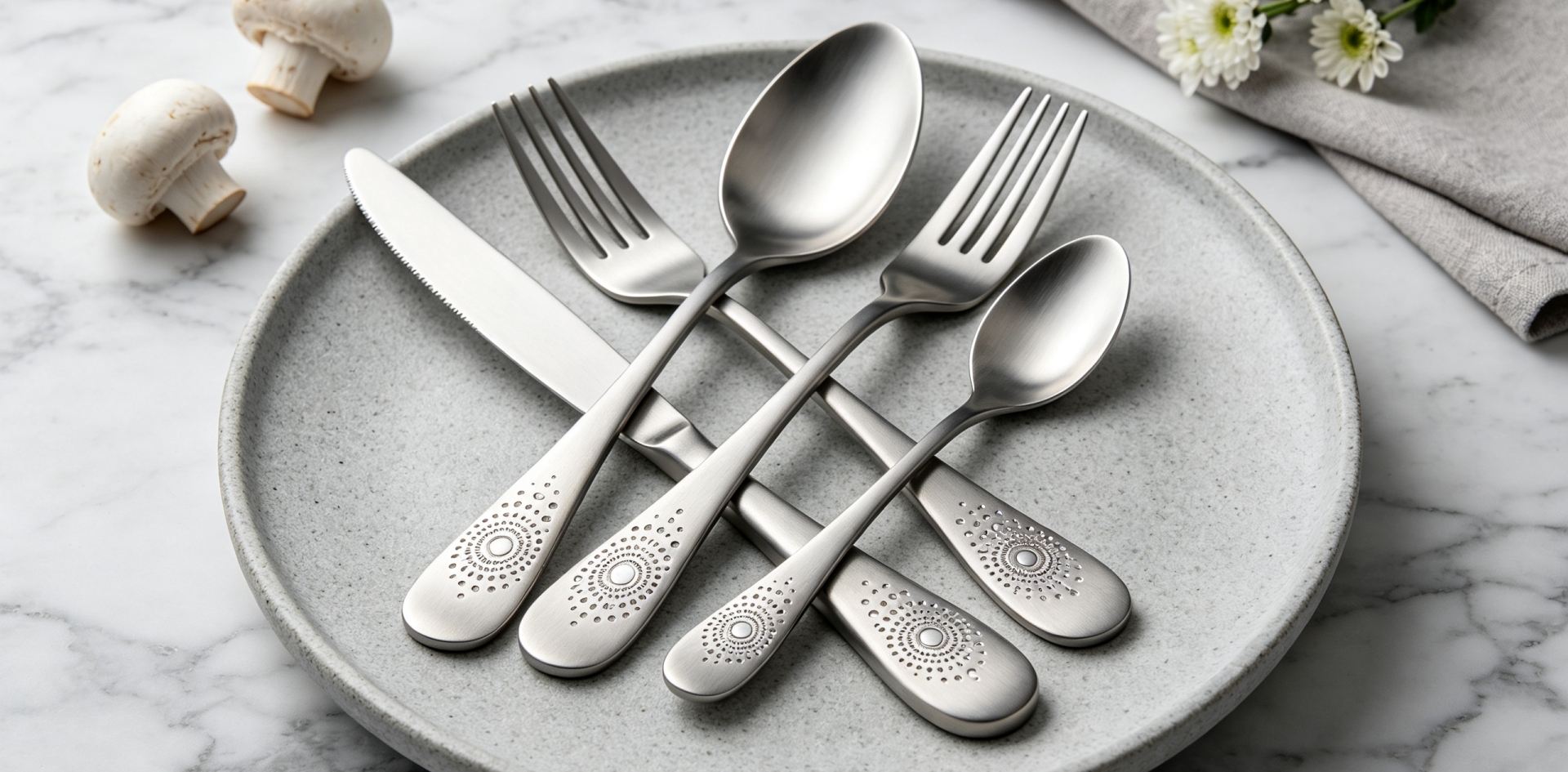
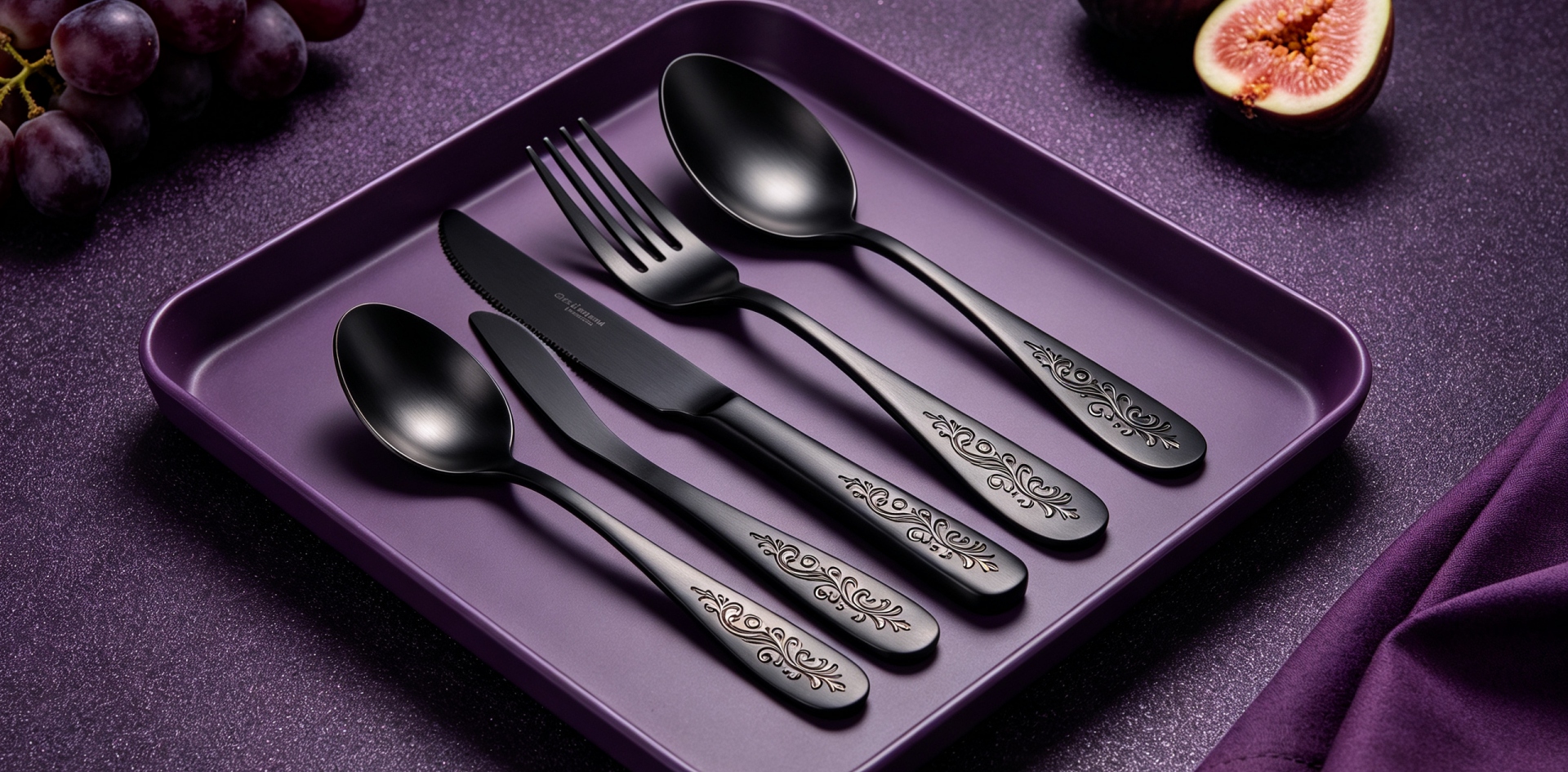
Modified product details: Adjust selected dimensions, handle proportions, decorative patterns, or other feasible features. The factory should assess whether these changes can be achieved using existing tooling or require new development.
New product design: Create a more distinctive design for a particular brand or customer segment. This may involve technical drawings, prototypes, tooling, and additional sample approvals before bulk production.
The most appropriate approach depends on order volume, target selling price, desired exclusivity, and the expected life of the collection. A distributor should confirm the development costs and production implications before committing to a design route.
3. Make Design Specifications Reproducible
A product becomes difficult to distinguish and protect commercially if its defining features exist only in informal discussions. Once the design direction is agreed, document the key details in a controlled specification.
Depending on the product, the specification may include:
-
Overall length, width, thickness, and target weight
-
Handle contour and decorative elements
-
Spoon bowl dimensions and shape
-
Fork tine geometry and spacing
-
Knife profile and intended use
-
Stainless steel grade and material requirements
-
Surface finish and acceptable appearance
-
Logo placement and marking method
-
Approved reference samples and drawings
These details help the factory understand which features must remain unchanged across production batches. They also give the distributor a practical basis for evaluating samples and incoming goods.
Where a design allows manufacturing adjustments, define acceptable tolerances instead of expecting every measurement to be mathematically identical. The final specification should distinguish essential design features from details that can be adjusted for production feasibility.
4. Discuss Exclusivity Before Development Begins
Distributors should not assume that a customized product is automatically exclusive. The commercial arrangement needs to define exactly what the supplier and buyer have agreed.
Important questions include whether exclusivity applies to a particular design, a product family, a customer segment, a geographic market, or a defined sales channel. The parties should also discuss the agreement period, minimum purchasing commitments, permitted exceptions, and what happens if sales targets are not achieved.
If the design is developed specifically for the buyer, clarify ownership and permitted use of technical drawings, tooling, artwork, and samples. Identify which elements are buyer-specific and which are based on the factory's existing designs or general manufacturing capabilities.
For more complex projects, both parties should put the agreed terms in writing and obtain appropriate legal review. The level of protection available may depend on the contract, applicable law, registered intellectual property rights, and the actual originality of the design.
5. Evaluate the Commercial Value of Exclusivity
A distinctive design is useful only if customers value it enough to support the business case. Before investing in custom tooling or development, estimate the expected sales volume, target margin, development cost, packaging expense, and likely product life cycle.
A simple evaluation should consider three questions:
First, does the design address a real need in the target market? Second, can the expected order volume support the additional costs? Third, can the distributor explain the product's differences clearly to retail buyers or other commercial customers?
A small initial assortment may help test market response before expanding into matching pieces. However, the distributor should confirm whether the factory can maintain consistent specifications and whether any minimum quantities apply to later additions.
Rather than developing many variations at once, it may be more practical to establish one recognizable core collection and introduce extensions when demand becomes clearer.
6. Align Packaging and Brand Presentation
Packaging can reinforce product differentiation when it follows the same design direction as the cutlery. A distinctive collection may use consistent naming, logo placement, coordinated colors, and clear product information across individual items and sets.
For private-label programs, provide approved logo files, packaging artwork, barcode information, and the required carton markings. Ask the supplier to confirm the packaging dimensions and protective structure for the actual products. A visually attractive box still needs to protect the cutlery during handling and transportation.
If several set configurations share a common design, standardizing selected packaging elements may help control inventory complexity. At the same time, avoid using identical labels for products with different contents or specifications. Clear identification helps distributors, warehouses, and retail customers distinguish the correct items.
Homefelt can coordinate product design and packaging requirements as part of a customized cutlery project, subject to the agreed scope and production feasibility.
7. Protect Consistency as the Collection Grows
Exclusivity loses commercial value when the product changes unexpectedly between orders. Once the distributor approves a sample, retain the relevant reference information and establish a process for managing changes.
Before repeat production, confirm whether any proposed adjustment affects material grade, weight, dimensions, surface finish, logo details, packaging, or the intended selling position. Changes that appear minor to the factory may alter the visual identity or customer experience.
For larger collections, assign a clear product code to each approved design and set configuration. Keep current drawings, artwork versions, and sample approval records together so that the purchasing team and factory are working from the same information.
The distributor should also establish how substitutions will be handled if a specified material or packaging component becomes unavailable. No change affecting an agreed product characteristic should be treated as approved without the buyer's confirmation.
8. Select a Manufacturing Partner for Long-Term Development
Developing a distinctive collection requires more than the ability to make one acceptable sample. The supplier should be able to discuss design feasibility, explain relevant production limitations, coordinate customization, and maintain consistent output as orders increase.
When evaluating a stainless steel cutlery factory, ask about experience with comparable product designs, available customization methods, sample development procedures, quality-control practices, and the ability to support repeat orders. Request relevant evidence for capabilities and certifications instead of relying solely on general claims.
Homefelt has experience in stainless steel cutlery manufacturing and offers OEM/ODM and wholesale support for buyers developing their own product ranges. Each proposed design should still be reviewed against the buyer's required specifications, budget, quantity, and delivery schedule.
A well-planned exclusivity program combines a clear market position with documented specifications, realistic purchasing commitments, and a workable agreement with the supplier. This allows distributors to build a recognizable flatware collection while keeping manufacturing and commercial expectations aligned.
To discuss a custom stainless steel spoon, fork, knife, or flatware collection, contact ingrid@homefelt.net with your target market, reference designs, estimated quantities, customization needs, and packaging plans. Homefelt can help review the project requirements and identify suitable next steps for quotation and sample development.
You May Be Interested In
-
How to Prepare a Clear Stainless Steel Cutlery RFQ for Bulk Purchasing
-
How to Manage Customer-Specific Specifications for Stainless Steel Cutlery Orders
-
How to Protect Confidential Product Information in Stainless Steel Cutlery OEM Projects
-
How to Prepare a Stainless Steel Cutlery Collection for Market Launch
How to Manage Sample Shipping for Stainless Steel Cutlery Projects
How to Prepare a Clear Stainless Steel Cutlery RFQ for Bulk Purchasing
Related Article