How to Simplify a Stainless Steel Cutlery Catalog for Wholesale Buyers
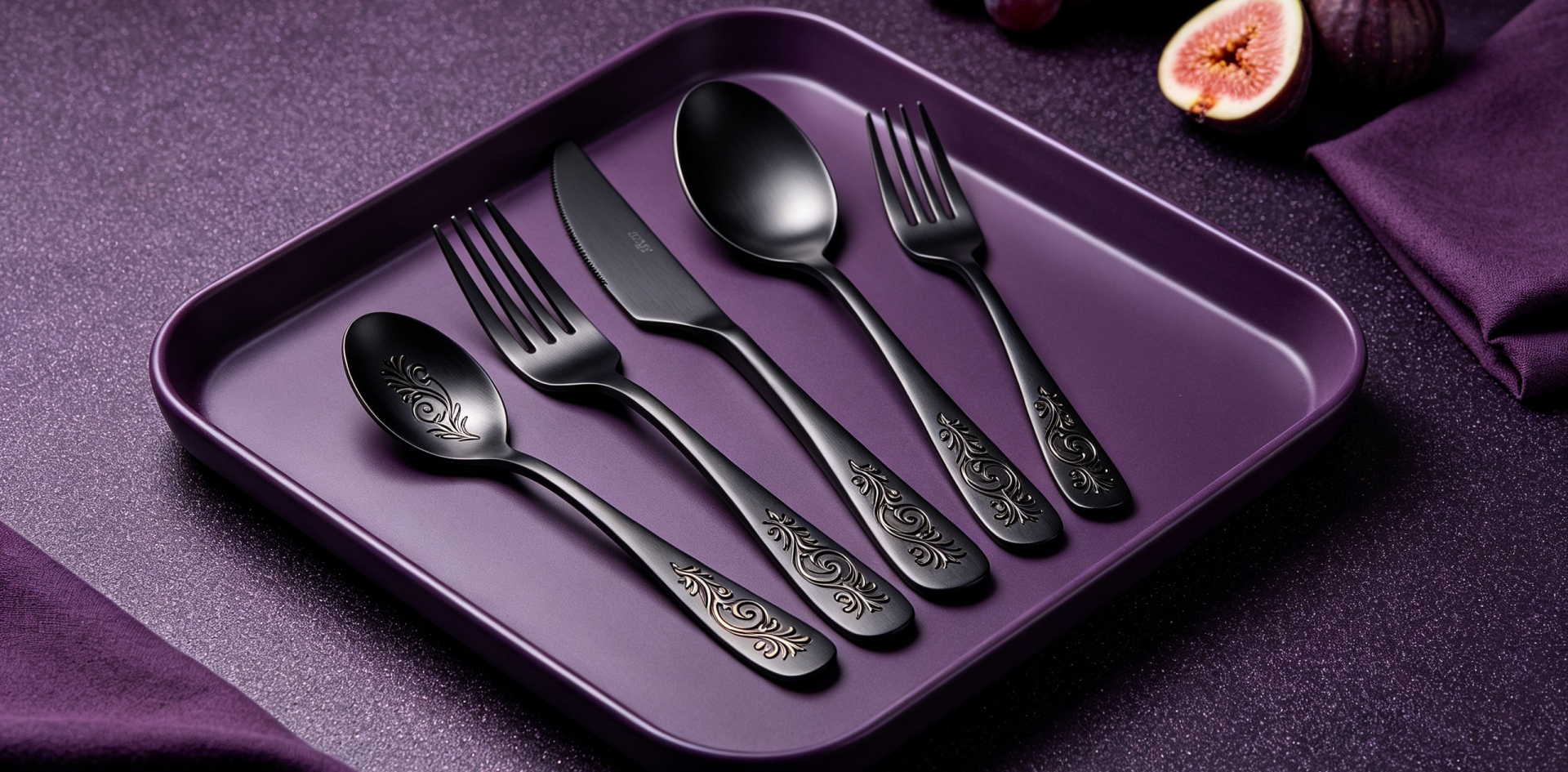
How to Simplify a Stainless Steel Cutlery Catalog for Wholesale Buyers
A well-organized product catalog helps stainless steel cutlery wholesalers present the right products to customers without creating unnecessary complexity. When a catalog contains many similar spoons, forks, knives, finishes, and set combinations, buyers may struggle to compare options, maintain inventory, and identify the products best suited to their markets.
Catalog simplification does not mean offering fewer choices indiscriminately. It means keeping a commercially useful range while making each product’s purpose clear. For importers, distributors, retailers, and private-label brands, a structured assortment can make quotation requests, purchasing decisions, and repeat orders easier to manage.
1. Review the Current Product Range by SKU
Start by creating a complete list of active products. Each SKU should have a clear product name, reference code, image, specification, packaging configuration, and current commercial status.
For stainless steel cutlery, organize products into logical groups, such as teaspoons, dessert spoons, tablespoons, table forks, dessert forks, table knives, and complete flatware sets. Separate standard catalog items from custom-developed products so buyers understand which options are readily available and which require project-specific confirmation.
During the review, identify products that differ only slightly. Two spoon models may have nearly identical dimensions and appearance, while two flatware sets may share the same design but use different piece counts or packaging. These differences may be commercially important, but they should be clearly documented rather than left for customers to discover during quotation.
A reliable SKU list creates the foundation for deciding which products deserve continued attention.
2. Identify the Role of Each Product
Every product in a wholesale catalog should serve a clear purpose. Some items may be core products that generate regular repeat orders. Others may attract customers looking for a particular design, price level, or specialized configuration.
Classify the range according to actual sales information where available. Useful indicators include order frequency, sales volume, repeat-purchase behavior, customer demand, margin contribution, and the number of accounts purchasing each SKU.
Avoid removing a product simply because it sells less frequently. A specialized knife or distinctive spoon may be important for completing a coordinated collection or serving a valuable customer segment. Equally, a product that looks popular in a catalog may create unnecessary inventory complexity if customers rarely order it.
The objective is to understand the commercial role of each SKU before deciding whether to retain, revise, combine, or discontinue it.
3. Reduce Unnecessary Design Overlap
Too many similar designs can make a catalog difficult to navigate. Buyers may encounter multiple stainless steel forks with small handle variations or several spoon models with only minor differences in proportions.
Compare similar products using measurable characteristics: overall dimensions, material grade, thickness, weight, handle design, surface finish, and intended use. Where the differences are meaningful, explain them clearly. Where the differences add little value for the target market, consider whether the assortment can be simplified.
For example, a distributor may benefit from a clear core collection with a consistent design across spoons, forks, and knives, supported by a smaller number of distinctive alternatives. This gives customers enough choice without requiring them to evaluate numerous near-identical products.
Any consolidation decision should account for existing customer commitments and approved private-label specifications. A model that appears redundant in the general catalog may still be required for a specific account.
4. Separate Core Products From Special Options
A useful catalog distinguishes standard products from optional customization. Core items can be presented with their confirmed specifications and packaging details. Special options, such as custom logos, alternative finishes, different set compositions, or tailored retail boxes, can be described in a separate section.
This structure helps buyers understand what they can select directly and what requires a customized quotation or sample approval.
For stainless steel cutlery, a product’s visual appearance alone may not communicate its material grade, thickness, weight, or packaging configuration. Include the relevant specifications beside each SKU so customers can compare products accurately.
For OEM and private-label projects, state which design elements are customizable and which depend on production feasibility. This prevents buyers from assuming that every catalog item can be modified in exactly the same way.
5. Standardize Product Codes and Naming Rules
A catalog becomes harder to manage when the same item appears under different names or when product codes do not follow a consistent structure. Clear naming rules help sales, purchasing, warehouse, and production teams refer to the same product.
A product code may identify the collection, item type, design, or revision, provided the system remains simple and consistently applied. Avoid changing a SKU without considering existing inventory, customer records, barcodes, and purchase orders.
Product names should also describe the item clearly. If two spoon models differ by size, material, or finish, make that difference visible in the product information. Avoid vague labels that force buyers to open several files to understand the distinction.
When a product is revised, retain a record linking the new version to the previous specification. This is particularly important for custom orders and recurring wholesale programs.
6. Compare Set Compositions Before Adding New SKUs
Complete flatware sets can expand a catalog quickly because the same design may be offered in multiple piece counts, combinations, and packaging formats. Before introducing another set variation, review whether it meets a distinct customer requirement.
Consider the intended buyer, number of place settings, pieces included, retail price positioning, packaging dimensions, and sales channel. A smaller set may suit entry-level retail, while a larger set may be intended for gift sales or more complete household use. The exact assortment should reflect market demand rather than arbitrary variation.
When several sets share the same individual spoon, fork, and knife models, make the composition easy to compare. A clear contents list helps customers understand what each set contains and reduces confusion during ordering.
For wholesale distributors, a manageable range of set configurations can also simplify stock allocation and product replenishment.
7. Use Product Data to Support Catalog Decisions
Catalog rationalization is more reliable when it is based on consistent information. Review available sales reports, quotation requests, customer inquiries, inventory movement, returns, and product feedback.
Look for recurring patterns. Several customers requesting the same missing specification may indicate an opportunity to improve the range. Conversely, a group of similar products with little demand may suggest that the assortment needs a closer review.
Check data quality before drawing conclusions. Sales figures may be spread across duplicate product codes, while custom orders may be recorded separately from standard catalog sales. If records are incomplete, identify that limitation and use customer feedback to supplement the analysis.
A periodic review helps the business keep the catalog relevant as customer needs and market preferences change.
8. Coordinate Catalog Changes With Inventory and Customers
Removing a SKU from a catalog does not automatically remove it from existing business commitments. Before discontinuing a product, check current inventory, open purchase orders, repeat-order agreements, and customer-specific requirements.
If a product will no longer be offered, communicate the change early enough for affected buyers to assess alternatives. Where appropriate, provide a proposed replacement with its specification, differences, pricing, and sample availability.
A replacement should not be described as identical unless its relevant characteristics match the approved requirements. Buyers may need to approve changes to dimensions, material, finish, logo placement, or packaging before ordering the alternative.
For private-label products, confirm who needs to approve the revision and whether existing packaging artwork or product documentation must also change.
9. Build a Catalog That Supports Faster Quotation
A simplified catalog should make it easier for buyers to request accurate prices. Each product entry should provide the information needed to identify the item and define the quotation scope.
Depending on the product, this may include material grade, dimensions, thickness, weight, finish, logo options, packing method, quantity basis, and minimum order requirements where applicable.
For customized projects, provide a clear route for submitting drawings, reference samples, branding files, and packaging requirements. Buyers should know whether they are requesting a standard product price or a quotation for a new OEM/ODM development.
Homefelt supports B2B customers sourcing stainless steel spoons, forks, knives, and coordinated flatware sets through wholesale supply, customization, and bulk production. Its one-stop service approach can coordinate product design, packaging, and transportation requirements, helping customers build a product range that reflects their target market and commercial needs.
10. Keep the Catalog Useful Through Regular Reviews
A catalog should evolve with actual business requirements rather than grow indefinitely. Set a regular review schedule to check product relevance, specification accuracy, image quality, SKU duplication, and the status of discontinued or customized items.
Assign responsibility for approving changes so that sales teams do not circulate outdated product information. When a SKU is updated, make sure the relevant specification sheet, quotation template, product image, and packaging record reflect the same version.
For buyers, a well-maintained catalog makes it easier to compare products, identify suitable options, and prepare repeat orders. For the factory, clearer product definitions reduce avoidable clarification and help align quotations with production requirements.
If you are reviewing a wholesale stainless steel cutlery range or planning a new private-label collection, prepare your target customer profile, preferred designs, expected order quantities, and packaging needs. Contact Homefelt at ingrid@homefelt.net to discuss product options, request a quotation, or develop a coordinated range of stainless steel spoons, forks, knives, and flatware sets.
You May Be Interested In
-
How to Simplify Procurement Planning for Stainless Steel Cutlery Wholesale Orders
-
How Buyer Feedback Helps Improve Stainless Steel Cutlery Product Development
-
How to Communicate Stainless Steel Cutlery Price List Updates to B2B Buyers
-
How to Prepare a Stainless Steel Cutlery Collection for Market Launch
How to Prepare Stainless Steel Cutlery Product Listings for Retail Buyers
How to Communicate Stainless Steel Cutlery Price List Updates to B2B Buyers
Related Article