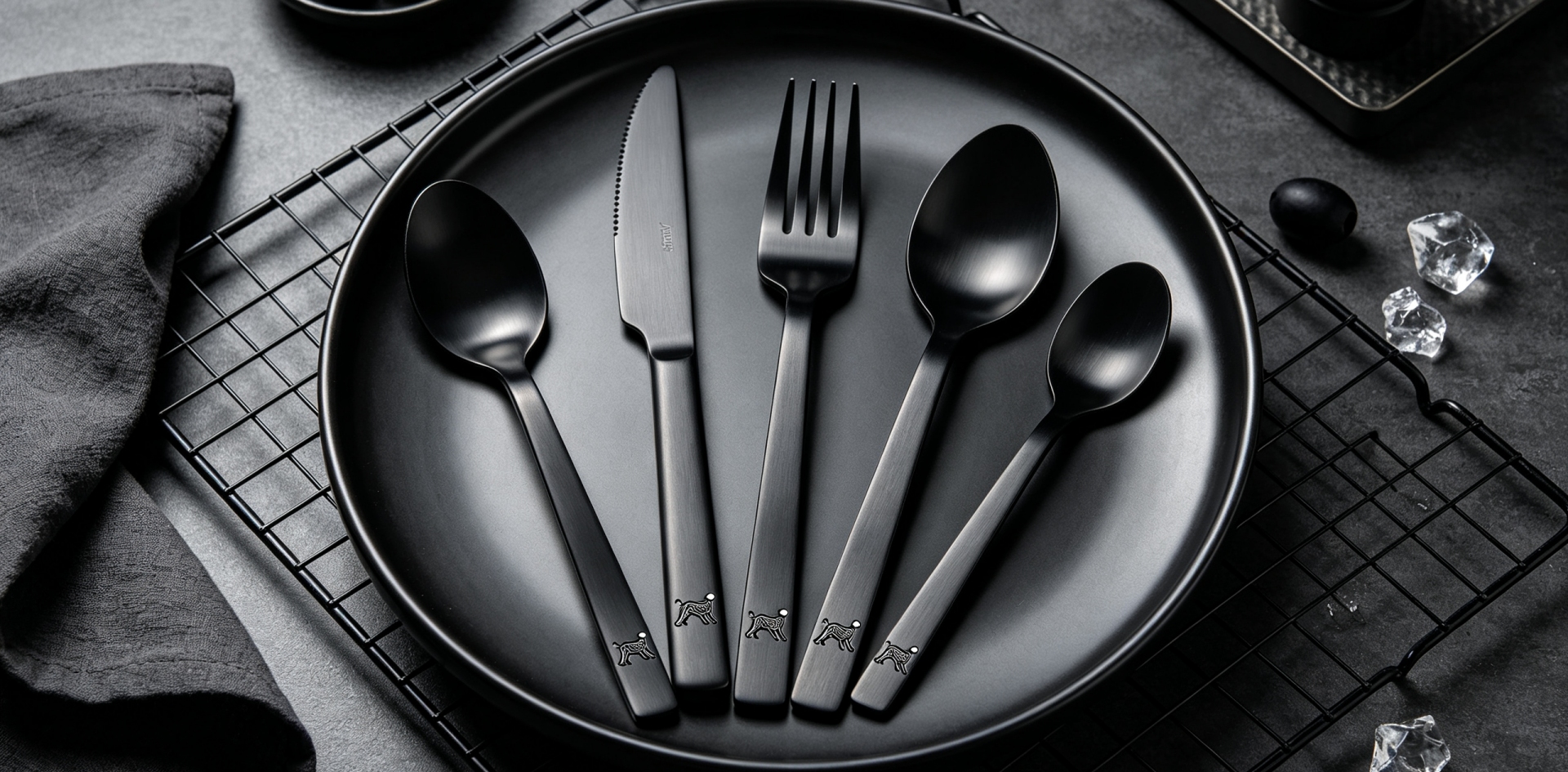
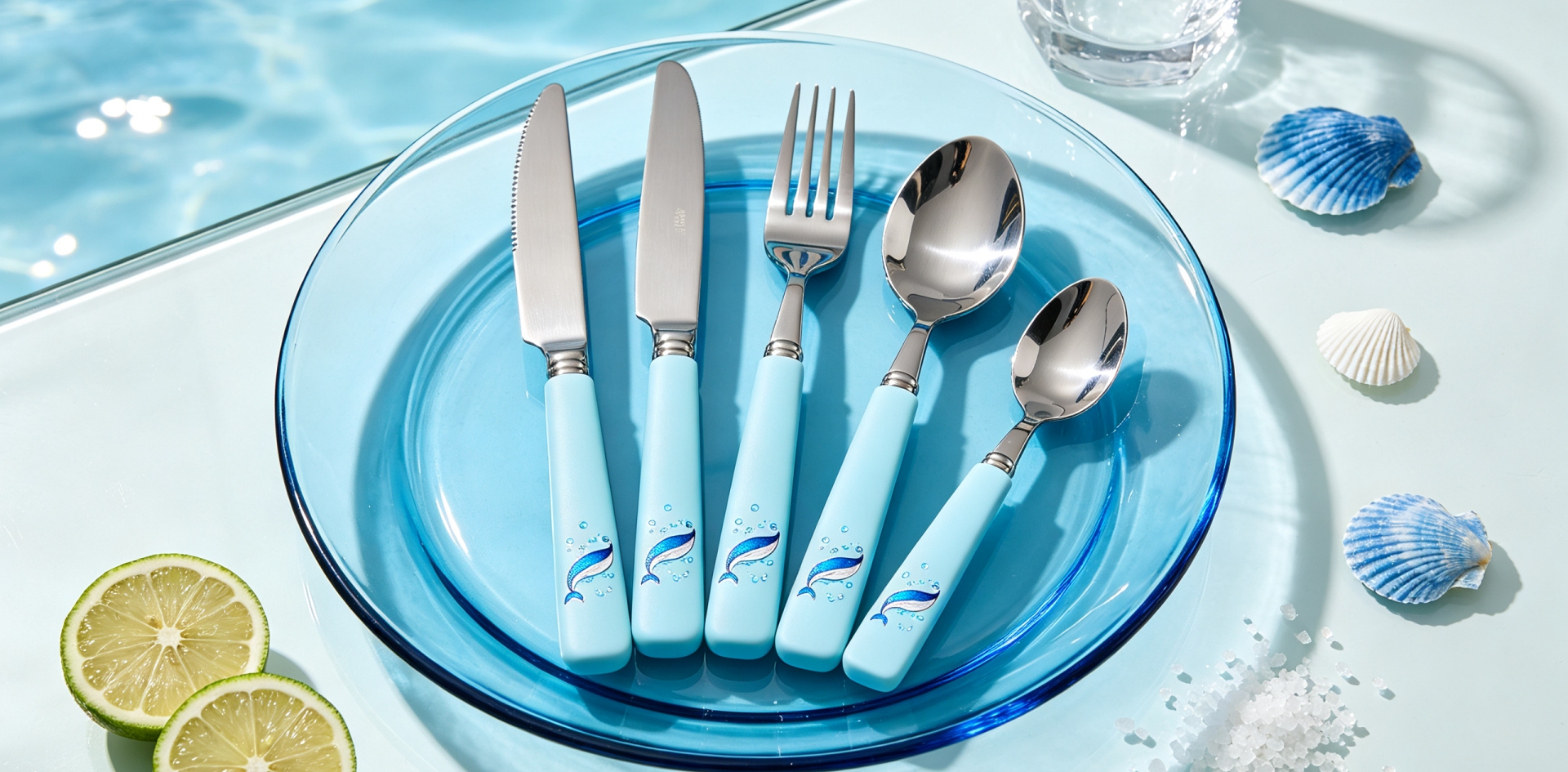
Stainless Steel Cutlery Manufacturer | How to Optimize Custom Cutlery Costs

For B2B buyers developing stainless steel cutlery, achieving the right balance between product quality and target cost is often one of the most important parts of a new project.
A product that is inexpensive to manufacture may not provide the appearance, durability or customer experience expected by the target market. On the other hand, adding unnecessary production complexity can increase the cost without creating enough additional value.
This is why cost optimization should ideally begin during product development rather than after a finished quotation has already been received.
An experienced Stainless Steel Cutlery Manufacturer can help buyers evaluate how design, material, production processes, finishing, branding and packaging work together to influence the overall cost of a customized cutlery project.
The goal is not simply to make a product cheaper. The goal is to create the best possible product within the buyer's target positioning and budget.
Start With the Target Product Position
Before discussing individual cost factors, B2B buyers should first define where the product will sit in the market.
A basic wholesale cutlery collection may have very different requirements from a premium retail collection or a branded hospitality product.
The target positioning influences decisions such as material, thickness, weight, handle design, surface finish, branding and packaging.
For example, a product intended for everyday commercial use may prioritize practical durability and efficient production. A premium retail collection may place greater emphasis on distinctive design and presentation.
When the target positioning is clear, the manufacturer can focus the cost discussion on features that actually contribute to the product's value.
Design Complexity and Manufacturing Cost
The design of stainless steel cutlery can have a significant influence on production requirements.
Simple handle shapes are generally easier to manufacture than highly complex designs involving multiple curves, deep contours or unusual structures.
This does not mean that B2B buyers should always choose simple designs.
A distinctive design can be an important selling point. However, buyers should understand that design complexity may influence tooling, forming, polishing and production time.
When developing a new product, the manufacturer can review the proposed design and identify areas where small changes may improve production efficiency without significantly changing the visual concept.
This type of design optimization can be particularly useful for private-label brands and retailers working toward a specific target price.
Material Selection and Cost Efficiency
The stainless steel material used for cutlery is another important cost consideration.
Different material specifications can affect raw material cost, product performance and final positioning.
However, material should not be selected based only on the lowest possible price.
The appropriate material should match the intended application, appearance and product requirements.
A professional Stainless Steel Cutlery Manufacturer can help buyers evaluate material options based on the specific product instead of treating every cutlery item in exactly the same way.
This approach allows the buyer to maintain the required product characteristics while avoiding specifications that do not provide meaningful additional value.
Thickness and Product Weight
Thickness can influence the material consumption and weight of a cutlery product.
A heavier product may create a more substantial feeling in the hand and may be appropriate for premium positioning. A lighter design may be more suitable for other markets or applications.
The right choice depends on the product strategy.
Instead of simply asking for the thickest possible material, buyers can establish a target product feel and weight and then discuss suitable specifications with the manufacturer.
This can help create a more balanced product in terms of customer experience and manufacturing cost.
Handle Design Optimization
The handle is often one of the most visually important parts of stainless steel cutlery.
A unique handle can help a brand differentiate its products, but certain shapes may require additional forming or finishing work.
During development, buyers can ask the manufacturer to review the handle design from both a visual and production perspective.
Sometimes a small modification to a curve, edge or profile can make manufacturing more efficient while preserving the overall appearance.
This is an example of cost optimization that does not necessarily reduce the perceived quality of the finished product.
Balancing Product Weight and Customer Expectations
Product weight is closely connected to material usage and overall manufacturing cost.
However, reducing weight simply to lower cost can have an unintended effect on the customer's perception of the product.
For some products, a certain level of weight contributes to the feeling of quality and durability.
For other products, a lighter design may be preferred because it is easier to handle or more appropriate for a specific application.
The manufacturer and buyer should therefore consider product weight as part of the overall product experience rather than as an isolated cost variable.
Reducing Unnecessary Manufacturing Complexity
A customized cutlery project may include many small design details.
Some details can provide meaningful differentiation, while others may add production complexity without significantly improving the final product.
During product development, it is useful to separate essential design elements from optional ones.
For example, a special handle feature that creates a recognizable brand identity may be worth retaining. A hidden design detail that customers are unlikely to notice may not provide the same value.
A detailed review with a Stainless Steel Cutlery Manufacturer can help identify these differences before production begins.
Choosing the Right Surface Finish
Surface finishing can also influence production requirements and final product cost.
Polished, matte, brushed, colored and other finishes may involve different production processes and quality-control considerations.
The correct finish should therefore be selected according to the intended market and product positioning.
A premium appearance may justify a more specialized finish for certain retail products. For other products, a practical standard finish may provide the right balance between appearance and manufacturing efficiency.
The key is to select a finish that supports the product's commercial purpose.
Logo and Branding Cost Considerations
Custom branding is valuable for private-label and branded cutlery, but the branding method and placement can affect production requirements.
A buyer may want a logo on the handle, a decorative pattern, or another customized element.
During development, the manufacturer can evaluate the logo size, location and production method.
A simple and well-positioned logo may communicate the brand effectively without requiring unnecessary complexity.
For B2B products, branding should ideally improve product recognition while remaining compatible with efficient manufacturing.
Packaging as Part of Total Product Cost
Packaging should also be considered during cost planning.
A cutlery set can be packed in different ways depending on whether it is intended for wholesale distribution, retail shelves, e-commerce fulfillment or hospitality supply.
A premium gift-style package may create a stronger retail presentation, while a simpler bulk package may be more appropriate for a distributor.
Neither option is automatically better.
The right packaging depends on the sales channel and product positioning.
By defining the packaging purpose early, buyers can avoid spending on features that are not necessary for their distribution model.
Avoiding Over-Engineering
One of the most effective ways to control custom cutlery costs is to avoid adding technical or visual features that do not provide enough commercial value.
A product should meet the required specifications, but every additional feature should have a reason.
For example, an unnecessarily complicated handle structure may increase production difficulty without making the product noticeably better for the end user.
Similarly, excessive packaging layers may increase cost and shipping volume without improving the customer experience enough to justify them.
Cost optimization is therefore closely connected to product discipline.
Production Efficiency and Order Quantity
Order quantity can influence how efficiently a customized cutlery product can be produced.
A larger production run may allow tooling and setup costs to be distributed across more units.
For buyers planning long-term sales, it can therefore be useful to consider not only the initial order but also potential repeat demand.
However, increasing quantity simply to achieve a lower unit cost is not always the correct decision.
Inventory, warehouse space, cash flow and market demand should also be considered.
The best production plan balances unit cost with realistic purchasing requirements.
Tooling and Custom Design Investment
Some custom cutlery designs require dedicated tooling.
Tooling is part of the development investment and may influence the economics of a new product.
When developing a custom product, buyers should consider whether the design has enough long-term commercial potential to justify the initial development investment.
For a product expected to be reordered over multiple years, custom tooling can become more worthwhile because the development cost can be distributed across repeated production.
A manufacturer experienced in OEM and ODM cutlery can help buyers understand how tooling relates to the proposed design and production process.
Design for Repeat Production
A product should not only be attractive when it is first manufactured. It should also be practical to reproduce.
This is particularly important for B2B customers who expect repeat orders.
A design that is difficult to reproduce consistently may create additional challenges as production volumes increase.
During the development stage, buyers can therefore consider whether the design can be efficiently manufactured at commercial quantities.
This does not mean avoiding creative designs. Instead, it means developing creativity within realistic manufacturing parameters.
Cost Optimization Through Product Standardization
For brands with multiple cutlery products, some level of standardization can improve manufacturing efficiency.
For example, several related products may share certain handle characteristics, finish requirements or packaging principles.
A coordinated product family can create a stronger brand identity while reducing unnecessary variation between SKUs.
Standardization should not eliminate product differentiation, but it can help buyers avoid creating many completely independent production requirements.
This approach can be particularly useful when developing a growing stainless steel flatware collection.
How a Manufacturer Can Support Cost Optimization
Cost optimization is more effective when the manufacturer becomes part of the product-development discussion.
A buyer may know the desired appearance, target price and customer requirements, while the manufacturer understands the production implications of different design choices.
Combining these perspectives can create better results.
For example, a manufacturer may suggest modifying a handle profile, adjusting a dimension, simplifying a packaging structure or selecting a more suitable production method.
The objective is not to change the buyer's concept unnecessarily. It is to identify practical alternatives that preserve the most important product characteristics.
Protecting Quality While Controlling Cost
Cost reduction should never mean removing the characteristics that customers actually value.
For stainless steel cutlery, important quality factors may include suitable material, appropriate construction, consistent appearance, comfortable handling and reliable workmanship.
If cost optimization reduces these fundamental characteristics too aggressively, the resulting product may be cheaper to manufacture but more difficult to sell.
A better approach is to identify areas where cost can be reduced without damaging the core customer experience.
This is why product development and manufacturing consultation should happen together.
Cost Optimization for Private-Label Cutlery
Private-label brands often need to balance product differentiation with a specific retail price.
The product needs enough customization to distinguish the brand while remaining commercially viable.
In this situation, buyers can prioritize the features that customers will notice most.
Handle design, finish, branding and packaging may have different levels of importance depending on the target market.
By allocating the budget toward the features that create the strongest perceived value, a brand can develop a more competitive product without simply reducing specifications across the board.
Cost Planning for Different B2B Buyers
Different types of B2B buyers may have different priorities.
A wholesaler may prioritize efficient unit cost and reliable repeat supply.
A retailer may place more emphasis on product appearance and packaging.
A private-label brand may prioritize design differentiation and branding.
A foodservice supplier may focus more heavily on practical performance and commercial usability.
A professional Stainless Steel Cutlery Manufacturer can work with these different priorities when evaluating a new project.
The result is not necessarily the cheapest cutlery product. It is a product whose specifications are aligned with the buyer's actual commercial requirements.
Questions to Discuss With Your Manufacturer
Before finalizing a custom cutlery design, B2B buyers can discuss several practical questions with the factory:
Which design features have the greatest influence on production cost?
Can the handle design be simplified without changing its overall appearance?
Is the selected material appropriate for the target product positioning?
Does the specified thickness match the intended product feel?
Can the surface finish be produced efficiently at the planned quantity?
Is the branding method suitable for the design?
Can the packaging be simplified without reducing product protection?
Are there production alternatives that maintain the same visual effect?
Can the product be reproduced efficiently for future orders?
These questions can help turn cost planning into a collaborative product-development process.
A Better Way to Approach Custom Cutlery Pricing
The most useful cost discussion does not begin with the question, “How can we make this product as cheap as possible?”
A better question is, “How can we achieve the required product value within our target cost?”
This change in approach can lead to better decisions.
Instead of removing quality features indiscriminately, buyers can focus on design efficiency, material usage, manufacturing processes, packaging structure and other areas where optimization may be possible.
For B2B buyers, this can result in a product that is easier to manufacture, easier to price and easier to position in the target market.
Building a Commercially Viable Cutlery Product
Successful custom stainless steel cutlery is the result of balancing multiple factors.
Design needs to attract customers. Materials need to support the intended application. Manufacturing needs to be practical. Branding needs to communicate the product identity. Packaging needs to support the sales channel. And the total cost needs to make commercial sense.
An experienced Stainless Steel Cutlery Manufacturer can help connect these elements during product development.
Homefelt Houseware Co., Limited has more than 40 years of experience in stainless steel cutlery manufacturing and supports OEM, ODM and private-label B2B projects. With experience serving international brands and buyers, the company can work with customers on product design, manufacturing requirements, customization and bulk production.
For a new project, the best time to consider cost optimization is before the final design is locked.
By discussing the target market, product positioning, material, design, finish, branding, packaging and production requirements together, B2B buyers can create stainless steel cutlery that delivers strong product value without adding unnecessary manufacturing cost.
A well-optimized product is not simply a low-cost product. It is a product designed to provide the right combination of appearance, function, quality and commercial value for its intended market.
Request a Custom Stainless Steel Cutlery Cost Evaluation
Send Your Cutlery Design to Our Factory
Discuss Your Target Cost With a Stainless Steel Cutlery Manufacturer
Request an OEM Stainless Steel Cutlery Quote
Start Your Custom Flatware Development Project
Ask Our Factory About Cost-Optimized Cutlery Design
Send Your Stainless Steel Cutlery Requirements for Evaluation
Request Custom Stainless Steel Spoon Manufacturing
Related Article