Stainless Steel Cutlery Manufacturer | Designing Custom Cutlery for Mass Production
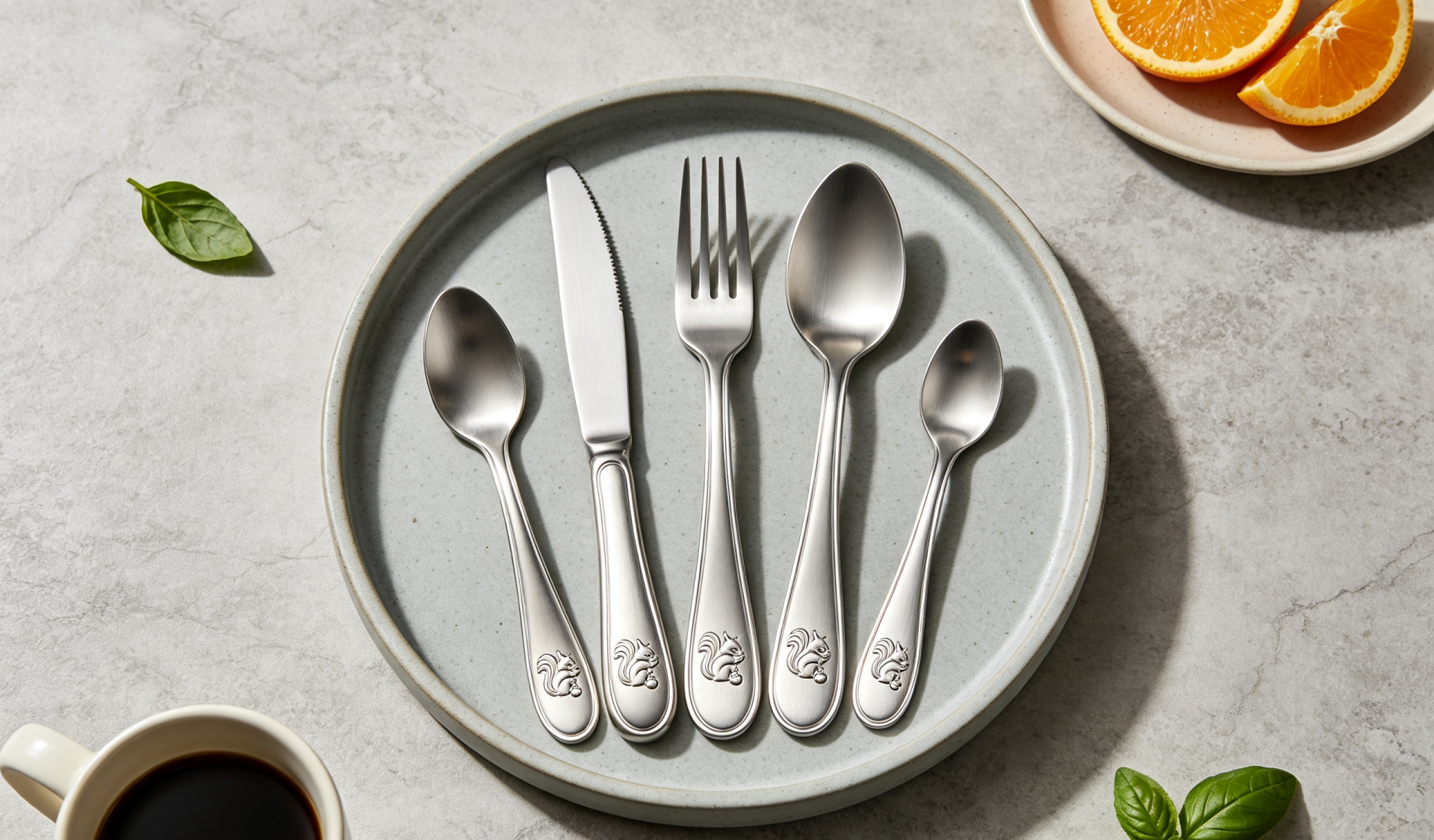
Stainless Steel Cutlery Manufacturer: How to Design Custom Cutlery for Mass Production
Creating a stainless steel cutlery sample is only the beginning of a successful B2B product development project. For buyers planning a commercial launch, the next challenge is turning an approved design into a product that can be manufactured efficiently and consistently at larger quantities.
A design that looks excellent as a prototype may still require adjustments before it is suitable for mass production. This is especially true when the product includes unusual handle shapes, complex curves, special finishes, customized logos or multiple matching pieces.
Working with an experienced Stainless Steel Cutlery Manufacturer during the development stage can help buyers identify these considerations early. The objective is not to make every product design simple. Instead, it is to make the approved design practical for repeatable commercial production while preserving the features that give the product its identity.
Why Mass Production Should Be Considered Early
Many custom cutlery projects begin with an idea, drawing or reference product. The buyer then develops a sample and evaluates its appearance.
Once the sample is approved, it may seem that the product is ready for bulk production.
However, mass production involves a different set of requirements.
A prototype can receive more individual attention during development. Commercial production must handle larger quantities through organized forming, polishing, finishing, branding, inspection and packaging processes.
The design therefore needs to work not only as an individual product but also as a repeatable manufacturing process.
Considering mass production before the final sample is approved can help reduce unnecessary changes later.
Design Features That Affect Production
Different parts of a cutlery design can influence how efficiently the product can be manufactured.
Handle shape, curves, thickness, transitions between components and decorative details may all affect production requirements.
For example, a handle with a distinctive three-dimensional shape may create a strong visual identity, but it may also require more complicated forming or finishing.
This does not mean the design should automatically be simplified.
Instead, the buyer and manufacturer should identify which features are essential to the product and which features could be adjusted if necessary.
The goal is to preserve the most commercially valuable design characteristics while making the overall product suitable for larger-scale manufacturing.
Handle Design and Forming
The handle is often one of the most important areas when preparing a custom cutlery design for production.
A handle needs to achieve the intended appearance while remaining practical to form and finish.
Sharp transitions, deep curves or unusual profiles may require additional production consideration.
An experienced Stainless Steel Cutlery Manufacturer can review the handle design before tooling and identify potential production challenges.
In some cases, a minor change to the curvature or profile can make the design easier to produce without significantly changing its appearance.
This type of adjustment is particularly valuable for brands that plan to place repeat orders over an extended period.
Designing Spoons for Production
Spoons contain several characteristics that need to work together.
The bowl needs to have the intended shape and proportions, while the handle needs to connect naturally with the bowl.
The relationship between bowl depth, width, handle shape and overall length can influence both appearance and manufacturing.
For a custom spoon, buyers should consider how the design will behave during forming and finishing rather than evaluating the product only from a visual perspective.
If the spoon is part of a larger collection, its design should also coordinate with the matching fork and knife.
Preparing Fork Designs for Production
Forks have their own production considerations.
The tine shape, spacing, length and alignment all contribute to the final product.
A custom fork may include unusual tine profiles or decorative handle elements, which should be reviewed for practical production.
The design should allow the finished pieces to maintain the required shape throughout manufacturing.
For B2B buyers, documenting the important fork dimensions and design characteristics can make the transition from development to mass production smoother.
Preparing Knife Designs for Production
Knives can require additional planning because of their blade and handle characteristics.
The blade profile, handle shape and overall proportions should be considered as part of the complete product design.
If the knife is intended to match a spoon and fork collection, visual coordination is also important.
The manufacturer can evaluate whether the proposed design is practical for the intended production method and quantity.
This early review can be especially useful when a buyer is developing a completely new knife profile rather than using an existing production design.
Tooling Considerations
Custom cutlery designs may require dedicated tooling.
Tooling is an important part of the transition from product concept to commercial manufacturing.
Before finalizing the design, buyers should understand whether the proposed product requires new tooling and whether the tooling is suitable for the expected production quantity and future repeat orders.
A design that is intended to become a long-term product line should ideally be developed with future production in mind.
This can help the manufacturer maintain the same product characteristics over multiple production cycles.
Production-Friendly Dimensions
A custom product should have dimensions that are not only attractive but also practical for manufacturing.
Overall length, handle width, thickness, bowl dimensions and other measurements may influence forming and finishing.
Buyers should identify which dimensions are critical to the product concept.
This allows the manufacturer to focus production control on the characteristics that matter most.
Clear specifications can also help prevent unnecessary changes after production has already started.
Balancing Design Detail and Manufacturing Efficiency
Decorative details can help a cutlery product stand out in the market.
However, too many independent details can make manufacturing more complicated.
A strong product design usually has a clear visual focus.
For example, a brand may choose a distinctive handle as the primary design feature while keeping other components relatively straightforward.
This can create a recognizable product without making every part of the cutlery unnecessarily complicated.
For B2B buyers, this balance can be particularly useful when the product needs to reach a competitive retail or wholesale price.
Surface Finish and Production Planning
The selected surface finish should also be considered during product development.
Polished, brushed, matte, colored and other finishes can create different visual effects and may require different finishing processes.
If a product contains complex curves or recessed areas, the design should be evaluated together with the planned surface finish.
A finish that looks excellent on a simple prototype may require additional attention when applied to a more complicated production design.
Discussing these factors with the manufacturer before final approval can help ensure that the finished product matches the intended appearance.
Designing for Consistent Polishing
Polishing is an important stage in stainless steel cutlery production.
The shape of the product can influence how easily different surfaces can be polished consistently.
Deep recesses, narrow areas or unusual transitions may create additional finishing challenges.
When developing a custom product, buyers can ask the manufacturer to evaluate whether the proposed design allows the required surfaces to be finished consistently.
This is particularly important for collections where multiple pieces need to share a similar visual appearance.
Branding Should Be Integrated Into the Design
Custom logos and branding should ideally be considered during product development rather than added as an afterthought.
The available handle area, logo size, placement and production method can all influence the final result.
A logo positioned on a curved surface may require different consideration from one placed on a flat area.
By integrating branding into the design from the beginning, the buyer can create a more balanced product and reduce the possibility of redesign later.
Designing Multiple Pieces as One Collection
For brands developing a complete flatware collection, mass production planning should consider the entire product family.
A collection may include several spoons, forks, knives and serving pieces.
Each item may have different dimensions, but common design elements can help create a consistent visual identity.
The manufacturer can review the collection as a whole and identify shared characteristics that can simplify development and production.
This can also make future product extensions easier when the brand decides to add new pieces.
Standardizing Where It Makes Sense
Customization does not mean every product characteristic needs to be completely unique.
Using certain standardized elements across a product family can improve production efficiency.
For example, several pieces may share the same handle profile while using different front sections for their specific functions.
This approach allows a brand to maintain a recognizable design language while reducing unnecessary variation.
For B2B product lines, this can make the collection easier to manage as the number of SKUs grows.
Designing With Packaging in Mind
The physical dimensions of the product should also work with its intended packaging.
Retail boxes, inserts and set packaging may have specific internal dimensions.
If the cutlery is being sold as a set, the arrangement of each piece should be considered during product development.
This is especially important for products with unusually long handles, oversized bowls or special shapes.
A design that fits well into the intended package can help simplify the final packing process.
Preparing for Repeat Orders
Mass production should not be viewed as a one-time event when developing a B2B cutlery product.
Many buyers expect successful products to be reordered.
The design should therefore be suitable for future production using consistent specifications.
Keeping product drawings, approved samples, material requirements, finish information and other specifications organized can help the manufacturer reproduce the product later.
This is particularly important for private-label brands and distributors that may reorder the same product months or years after the initial production.
Avoiding Last-Minute Design Changes
One of the biggest challenges in a custom manufacturing project is changing the design after tooling or mass production has already started.
A seemingly small change can sometimes affect tooling, production processes, packaging or cost.
For this reason, buyers should review the product carefully before final approval.
The review should include not only appearance but also dimensions, material, weight, finish, logo, packaging and other important characteristics.
The more complete the approval stage is, the smoother the transition to bulk production can become.
From Prototype to Production-Ready Product
A prototype demonstrates what a product can look like. A production-ready design demonstrates how that product can be manufactured repeatedly.
This distinction is important for B2B buyers.
During the prototype stage, the focus is often on design validation.
During production preparation, the focus expands to include tooling, process efficiency, quality requirements, consistency, packaging and future repeat orders.
An experienced Stainless Steel Cutlery Manufacturer can help connect these two stages.
The manufacturer can review the prototype and identify whether the product needs any adjustments before mass production begins.
Why Manufacturer Input Matters
Product designers and buyers understand the market, customer expectations and brand identity.
Manufacturers understand how those ideas translate into physical production.
The best results often come when these two perspectives are combined.
A manufacturer can identify potential forming difficulties, finishing challenges or tooling requirements that may not be obvious from a product drawing.
This does not mean the factory should control the design. Instead, the manufacturer can provide practical feedback while the buyer makes the final commercial decision.
A collaborative development process can help preserve the original concept while making it more suitable for commercial manufacturing.
Production Planning for B2B Cutlery Projects
Before mass production begins, the manufacturer and buyer should have a shared understanding of the product.
This may include:
Approved product drawings
Approved physical sample
Material requirements
Product dimensions
Important tolerances
Surface finish
Branding specifications
Packaging requirements
Production quantity
Inspection requirements
Shipping configuration
Future repeat-order expectations
These details provide a practical foundation for production.
They also give the purchasing and quality teams a clear reference when evaluating the finished order.
Designing for Different Production Volumes
A product intended for a small promotional order may have different production considerations from a product expected to become a long-term retail bestseller.
The expected volume should therefore be considered during product development.
For larger and recurring orders, it may be worthwhile to invest more attention in tooling and production efficiency.
For smaller projects, buyers may prefer to use existing manufacturing solutions where possible.
Discussing expected demand with the manufacturer can help determine the most practical development approach.
Creating a More Scalable Cutlery Product
Scalability is an important consideration for brands that expect their product range to grow.
A successful spoon or fork may eventually become part of a larger collection.
If the original design has been developed with a consistent visual language and practical manufacturing requirements, future extensions can often be easier to develop.
This can help a brand move from one custom product to a complete stainless steel flatware collection.
For B2B buyers, scalability can therefore be part of the original product-development strategy.
Choosing a Stainless Steel Cutlery Manufacturer for Mass Production
When selecting a manufacturer, buyers should consider more than the ability to produce a prototype.
The manufacturer should also have the production experience and organizational capability needed to move from sample approval to commercial quantities.
A suitable partner should be able to discuss design requirements, tooling, manufacturing processes, finishing, quality control, packaging and repeat production.
For buyers planning a long-term product line, this experience can be especially valuable.
Homefelt Houseware Co., Limited has more than 40 years of experience in stainless steel cutlery manufacturing and provides OEM, ODM and private-label solutions for B2B customers. The company has experience serving international brands and supporting customized stainless steel cutlery projects from product development through bulk production.
For a new cutlery project, the most effective approach is to consider mass production before the design is completely finalized.
A successful product needs to look right, feel right and function correctly, but it also needs to be practical to manufacture repeatedly.
By reviewing design complexity, forming requirements, tooling, finishing, branding, packaging and future production together, B2B buyers can create products that are not only attractive but also ready for commercial scale.
The transition from a sample to mass production is an important stage in custom stainless steel cutlery development. With clear specifications and close communication between the buyer and manufacturer, a creative product concept can become a practical, scalable and commercially viable cutlery product.
Request a Production Review for Your Custom Cutlery Design
Send Your Stainless Steel Cutlery Drawing to Our Factory
Ask About Mass Production for Custom Stainless Steel Cutlery
Start Your OEM Cutlery Manufacturing Project
Request a Custom Stainless Steel Flatware Sample
Discuss Your Production-Ready Cutlery Design With Our Factory
Get a Custom Stainless Steel Cutlery Manufacturing Quote
Send Your Product Concept for Factory Evaluation
Discuss Long-Term Production for Your Private Label Cutlery
Contact a Stainless Steel Cutlery Manufacturer for Your New Product
Related Article