How to Prepare Distributor Training Materials for Stainless Steel Cutlery
How to Prepare Distributor Training Materials for Stainless Steel Cutlery
When a distributor introduces a new stainless steel cutlery collection, sales teams need more than a product photograph and a price list. They must understand how the spoons, forks, and knives differ, which specifications matter to buyers, and how to explain product features accurately. Clear training materials help sales representatives answer routine questions, compare product options, and collect the right information for quotations.
For importers, wholesalers, hospitality suppliers, and private-label brands, product knowledge also reduces the risk of inconsistent descriptions across sales channels. A stainless steel flatware manufacturer can support this process by supplying organized specifications, approved images, packaging details, and relevant product documentation.
Homefelt works with B2B customers on stainless steel cutlery, including custom designs, OEM/ODM development, wholesale orders, and bulk production. Preparing distributor training materials during product onboarding can help customers introduce new collections with greater confidence and fewer avoidable misunderstandings.
Start With a Clear Product Family Overview
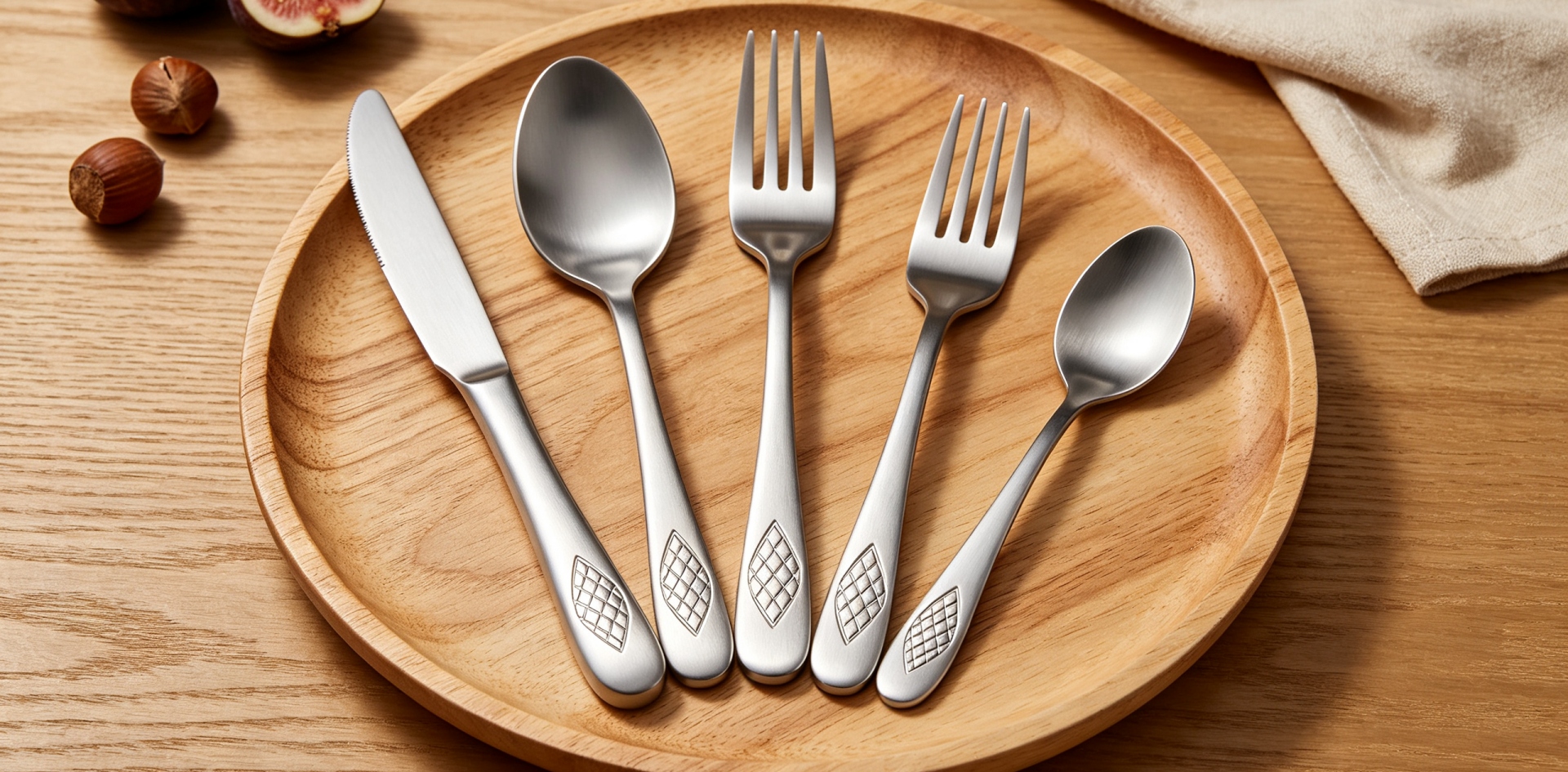
The first section of a training guide should explain the collection's structure. A product family may include dinner spoons, teaspoons, table forks, dessert forks, dinner knives, and coordinated cutlery sets. Similar-looking products can have different dimensions or intended uses, so each item should have a clear product name and SKU.
A simple product matrix can include the following information:
-
Product name and SKU
-
Product image and design reference
-
Overall length and key dimensions
-
Unit weight and material specification
-
Finish and handle design
-
Available set combinations
-
Packaging configuration and ordering unit
Use the same product names across the price list, quotation, packaging artwork, and sales guide. If a buyer calls an item a table spoon while another document identifies it as a dinner spoon, the team should establish one approved naming convention and note alternative terms where useful.
For distributors managing multiple collections, this approach makes it easier to compare products and avoid quoting the wrong SKU.
Explain Stainless Steel Specifications in Plain Language
Sales representatives do not need to become metallurgists, but they should understand the material information shown on a specification sheet. Stainless steel grades, thickness, weight, and surface finish can influence product performance, appearance, cost, and the expectations buyers should have.
Training materials should identify the exact material grade confirmed for each product. If the collection includes different grades, explain which SKUs use each grade instead of assuming that every item in the range has identical material composition.
Thickness and weight should also be presented carefully. A heavier spoon is not automatically better for every customer, and thickness alone does not describe every aspect of durability or comfort. Buyers should consider the product's dimensions, construction, intended use, target price, and approved quality criteria together.
For knives, the guide should clearly distinguish the relevant blade specification from the material used for other components when the design uses different materials. Sales staff should not infer a complete product's material composition from a general collection description.
When questions exceed the approved product information, representatives should refer them to the supplier's technical or quality team rather than improvise an answer.
Teach the Differences Between Spoons, Forks, and Knives
Product training becomes more useful when it explains how individual cutlery pieces should be evaluated.
For spoons, important details may include bowl shape, bowl depth, overall length, handle profile, and the intended serving or dining application. These features affect how the item looks and feels in use.
For forks, sales teams should understand tine count, tine shape, overall length, spacing, and handle design where these characteristics distinguish products in the collection. Consistency between matching pieces may be important when a buyer is purchasing a coordinated set.
For knives, the training guide should explain the intended product category, blade design, handle construction, and any applicable usage limitations. Staff should avoid broad performance promises that are not supported by the product specification or test evidence.
The objective is to help distributors explain real differences between products, not to make unsupported claims that one item is universally superior to another.
Standardize Product Images and Demonstration Samples
A product guide should use current, approved images that match the actual item being quoted. Differences in finish, color, handle decoration, or proportions can create confusion if sales teams reuse images from an older product version.
For important collections, provide a consistent set of visual references: a full product view, a close-up of distinctive details, and a coordinated set image when relevant. Label images with the correct SKU and revision so representatives can identify the product without relying on filenames alone.
Physical samples can complement digital materials, especially when buyers need to assess weight, balance, surface quality, or handle comfort. Training instructions should explain which sample is approved for reference and how to report any difference between the sample and a later shipment.
If a product changes, update the relevant images and guide pages together. Keeping obsolete images in circulation can result in inaccurate quotations, incorrect packaging artwork, or disputes about the expected appearance.
Include Packaging and Order Information
Product knowledge must connect to the purchasing process. A distributor needs to know not only what the item is, but also how it is supplied and ordered.
For each SKU, the guide should state the available packaging format, pieces per set where applicable, inner-pack quantity, master-carton quantity, and ordering unit. If buyers can choose between retail packaging and bulk packaging, identify which options are standard and which require confirmation.
The guide should also explain which details must be included in a quotation request, such as the product code, estimated quantity, destination market, branding requirements, and packaging preference. This helps sales teams collect complete information before asking the factory to calculate costs or confirm production timing.
For a custom stainless steel cutlery project, clarify which elements require separate approval. These may include logo artwork, handle design, special packaging, product combinations, and other buyer-specific specifications.
Build an Accurate Guide to Certifications and Test Reports
Distributors may receive questions about factory audits, material documentation, or product testing. Training materials should explain which documents are available for the specific supplier and product program, without suggesting that one certificate proves every possible product claim.
A practical document register can identify the document name, issuing organization, scope, applicable facility or product, validity details where relevant, and the person responsible for supplying an authorized copy. Access should be controlled when documents contain confidential or customer-specific information.
Homefelt has experience serving B2B customers in stainless steel cutlery manufacturing and has participated in recognized audit and certification programs, including BSCI, SEDEX 4P, BRC, and ISO 9001-related requirements, as well as Disney audits. The relevance of any particular document should be confirmed against the actual order, facility, and buyer requirements.
Sales staff should never alter a certificate, imply that an audit covers an unrelated product claim, or promise a test result that has not been verified. If a buyer asks for a specific food-contact or market-compliance document, the representative should confirm availability and applicability with the responsible team.
Prepare Answers to Common Buyer Questions
A useful training guide includes concise, approved answers to routine commercial questions. Examples include material grade, product dimensions, finish options, customization availability, packaging formats, minimum order quantities, and sample procedures.
Where answers depend on the product or order volume, the guide should explain what needs confirmation rather than give one fixed answer for every project. Lead time, tooling requirements, customization costs, and production capacity may vary according to the design and order details.
A question log can help the distributor identify information gaps. When a question repeatedly reaches the factory, the product guide can be updated with an approved explanation or a reference to the relevant specification sheet.
This feedback loop makes training materials more useful over time and reduces dependence on informal messages that may be incomplete or outdated.
Create a Simple Product Onboarding Workflow
For a new stainless steel flatware collection, distributor onboarding can follow a repeatable sequence:
-
Receive the approved product specifications and current images.
-
Check SKU names, dimensions, materials, finishes, and packaging details.
-
Confirm which certificates and test documents are applicable.
-
Prepare a concise comparison sheet for the sales team.
-
Review common buyer questions and escalation contacts.
-
Train representatives using actual samples where practical.
-
Collect feedback and update the guide when approved product information changes.
Assigning responsibility for document updates is important. Each guide should have a revision date or version reference, and sales teams should know where to access the current edition.
Work With Homefelt on Distributor-Ready Cutlery Information
Homefelt supports buyers seeking stainless steel spoons, forks, knives, and coordinated flatware sets for wholesale, retail, and private-label distribution. Depending on the project, discussions can include product design, OEM/ODM customization, specification confirmation, packaging development, and transportation arrangements.
If your team is preparing to launch a new collection, share the product range, target market, expected order volume, branding needs, and required documentation. These details help establish which specifications and sales materials should be prepared for your distributor network.
For product information, wholesale quotations, or custom stainless steel cutlery inquiries, contact ingrid@homefelt.net. A well-organized product guide helps your sales team communicate clearly and gives buyers a more consistent understanding of the collection.
You May Be Interested In
How to Prepare a Stainless Steel Cutlery Collection for Market Launch
How to Build Product Recall Readiness for Stainless Steel Cutlery Orders
Related Article