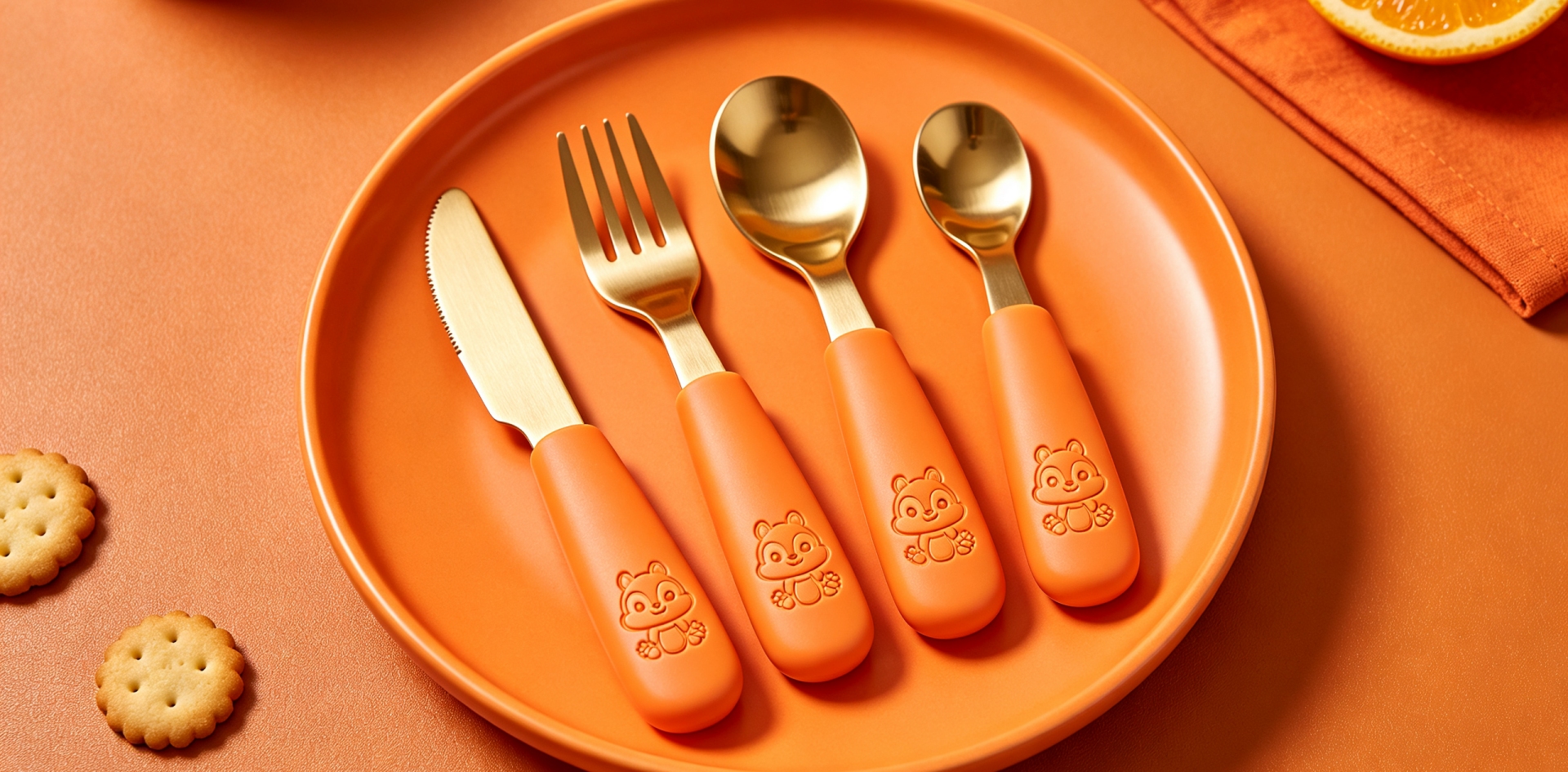
How Return Rate Analysis Improves Stainless Steel Cutlery E-Commerce

How Return Rate Analysis Improves Stainless Steel Cutlery E-Commerce
For brands selling stainless steel cutlery through online stores and digital marketplaces, customer returns can reveal problems that sales figures alone may not show. A product may attract strong initial interest but generate repeated returns because its dimensions differ from customer expectations, the finish looks different from online images, or packaging does not protect the pieces adequately during delivery.
For wholesalers, importers, and private-label businesses, return rate analysis helps connect customer feedback with product specifications, presentation, packaging, and supplier quality. Rather than treating every return as an isolated transaction, buyers can use consistent records to identify patterns and make more informed decisions about future stainless steel spoons, forks, knives, and flatware collections.
Calculate Return Rates Consistently
Before comparing products, define what counts as a return and which sales period is being measured. A basic return rate can be calculated as the number of returned units divided by the number of units sold during the same defined cohort or reporting period.
For example, if 500 units from a defined sales cohort are sold and 20 are returned, the unit return rate is 4%. However, buyers should avoid comparing this figure with another product's rate if the two calculations use different time windows or return definitions.
It is also important to distinguish between units returned and orders returned. One customer may return an entire cutlery set, while another may return only one item from a multi-piece package. Those situations have different implications for product performance and inventory recovery.
For reliable analysis, record the sales date, product SKU, order reference, return date, returned quantity, reason code, and final disposition where available. The goal is to make the numbers comparable rather than produce a single figure without context.
Separate Product Issues From Delivery Issues
Not all returns indicate a manufacturing defect. Customers may return stainless steel flatware because of product characteristics, inaccurate expectations, order mistakes, shipping damage, or personal preference.
A useful classification system might include:
-
Product dimensions or weight differed from expectations.
-
Finish or color did not match the product images.
-
A piece was missing or damaged.
-
The wrong model or set configuration was delivered.
-
Packaging arrived damaged.
-
The customer ordered the wrong item or changed their mind.
-
The product description did not explain a key feature clearly.
Reason codes should be specific enough to support action but simple enough for customer service teams to use consistently. If every return is classified as “other,” the business loses an opportunity to understand the underlying causes.
Where possible, compare customer comments and photographs with the original listing, approved sample, and product specification. This can help determine whether the issue relates to the product itself, how it was presented, or how it was delivered.
Review Product Expectations and Listing Accuracy
Online buyers cannot handle a spoon, fork, or knife before purchasing. Product images and descriptions therefore play an important role in setting expectations.
If customers frequently report that a spoon is smaller than expected, review the listing's dimensions and image scale. If a gold-colored flatware set receives returns because its appearance differs from the screen images, assess the photography, lighting, color representation, and description of the finish.
Product information should clearly state the set composition, piece count, dimensions, material specification where confirmed, finish, and care instructions. Buyers should avoid unsupported claims or ambiguous descriptions that may lead customers to expect characteristics the product does not provide.
For private-label collections, a review of the listing can be coordinated with the factory's specification sheet and approved sample. Consistency between the actual product and its online presentation helps reduce avoidable expectation-related returns.
Identify Patterns by SKU and Product Type
A collection-wide return rate may hide problems with one particular model. Analyze results by SKU, set configuration, finish, sales channel, and packaging format to see where returns are concentrated.
For example, a coordinated cutlery set may have a low overall return rate while one spoon model receives repeated complaints about bowl depth. Another product may perform well in a standard retail box but show higher damage rates when shipped in a different package.
Segmenting data helps buyers prioritize investigation. It also prevents an issue affecting one design from leading to unnecessary changes across an entire stainless steel cutlery range.
When comparing SKUs, consider sales volume. A product with two returns from 20 sales has a 10% return rate, while another with 20 returns from 1,000 sales has a 2% rate. Both figures matter, but the business impact and evidence base differ. Small samples should be interpreted cautiously.
Connect Returns With Quality and Packaging Records
When a return appears to involve product quality, link the case to the relevant order and available inspection records. Useful references may include the approved product specification, sample approval, production lot, inspection report, and shipment details.
For physical damage, examine how the item was protected inside the retail box and master carton. Look for evidence of movement, pressure, inadequate separation, or damage during handling. A packaging change should be based on the observed failure rather than applied automatically to every product.
If several customers report the same issue, the buyer can share a consolidated summary with the stainless steel cutlery supplier. Include the affected models, quantities, dates, photographs, and customer descriptions. This creates a more useful starting point for joint investigation than forwarding unrelated complaints without a clear pattern.
Returned goods should also be classified according to their condition. Sellable unopened items, opened but usable products, damaged pieces, and products requiring further assessment may need different inventory treatment, subject to applicable consumer and product requirements.
Measure the Financial Effect Beyond the Return Percentage
A return rate is useful, but it does not show the complete financial impact. Businesses may also need to consider reverse shipping, inspection labor, repacking, refunds, replacement shipments, marketplace fees, and inventory that cannot be resold as new.
A product with a modest return rate can still create significant costs if each return requires international replacement shipping or extensive manual handling. Conversely, some returns may be resalable with minimal processing.
For wholesale and private-label programs, buyers can estimate the cost per return and compare it across products or channels. This helps determine whether the best response is a specification adjustment, stronger packaging, clearer listing content, or a change in assortment.
Avoid assuming that the lowest return rate always represents the best commercial choice. Sales volume, margin, customer satisfaction, and the reasons for returns should be considered together.
Turn Findings Into Specific Improvements
Return analysis is valuable only when the results lead to measurable action. Each improvement should address a documented pattern and include a way to check whether it worked.
Examples include updating dimensions in a product listing, revising photographs to show actual scale, correcting set-composition information, adding protective packaging, or reviewing a product specification with the supplier.
After implementing a change, compare return reasons and rates across a suitable period while accounting for sales volume and seasonal differences. If the rate falls but sales also decline sharply, the result may require additional analysis.
For serious or repeated quality concerns, buyers should follow their established supplier complaint and corrective-action procedures. Changes to product specifications should be approved and documented before they are introduced into new bulk orders.
How Homefelt Can Support Better Cutlery Product Performance
Homefelt works with B2B customers on stainless steel spoons, forks, knives, and flatware sets for wholesale, OEM, and ODM projects. Buyers can discuss product dimensions, material requirements, surface finish, packaging structure, and other specifications that influence how a collection performs after delivery.
When return data indicates a possible product or packaging issue, providing specific SKU references, customer feedback, photographs, and affected quantities can help focus the review. Homefelt can coordinate relevant product and packaging discussions according to the requirements of the project.
For a new collection, buyers should prepare a clear product brief and ensure that the final listing accurately reflects the approved design and set contents. Homefelt also supports customized product design, packaging, and transportation arrangements for B2B orders.
If you are developing a stainless steel cutlery range for e-commerce or wholesale distribution, contact ingrid@homefelt.net to discuss your product specifications, packaging needs, and bulk purchasing plans.
You May Be Interested In
-
How to Prepare Stainless Steel Cutlery Product Listings for Retail Buyers
-
How to Improve Packaging Efficiency for Stainless Steel Cutlery Wholesale Orders
-
How Buyer Feedback Helps Improve Stainless Steel Cutlery Product Development
-
How to Manage Customer-Specific Specifications for Stainless Steel Cutlery Orders
How to Allocate Production Capacity for Stainless Steel Cutlery Orders
How Customs Valuation Affects Stainless Steel Cutlery Export Orders
Related Article