
Stainless Steel Cutlery Finish Boundary Definition for OEM Manufacturing
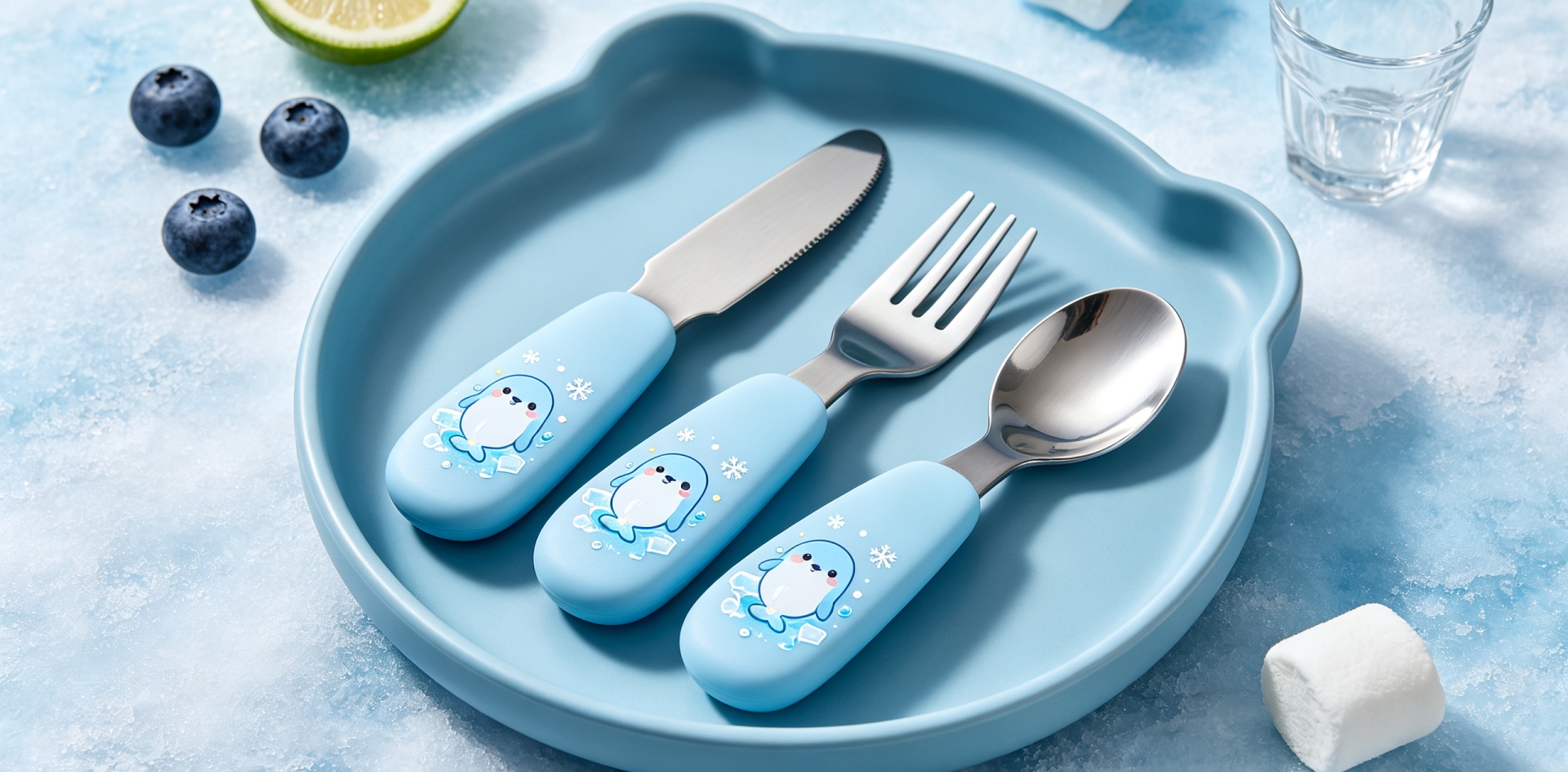
Stainless Steel Cutlery Finish Boundary Definition for OEM Manufacturing
The visual finish of stainless steel cutlery is influenced not only by the selected surface treatment but also by how clearly different finish areas are defined. On a single knife, fork or spoon, the handle may feature a mirror polish, brushed texture, decorative pattern or colored coating. When these treatments meet, the transition between them becomes an important detail for product appearance and manufacturing consistency.
For importers, wholesalers, retailers and hospitality suppliers, finish boundary definition is worth reviewing during product development. A clearly specified boundary helps buyers communicate design expectations, compare samples and establish practical inspection criteria before approving bulk production.
Homefelt factory provides stainless steel cutlery customization, OEM and ODM manufacturing, private label support and wholesale production for business customers developing their own flatware collections.
What Is a Finish Boundary on Stainless Steel Cutlery?
A finish boundary is the defined point or area where one surface appearance transitions into another. It may separate a polished handle from a brushed section, a decorative handle from a plain surface, or a coated area from an uncoated stainless steel section.
The boundary may be visually obvious or designed to blend gradually, depending on the product concept. The key is that the intended appearance should be clear in the approved design rather than left to individual interpretation during production.
For example, a private label cutlery set may use a mirror-polished spoon bowl with a satin-finished handle. Another collection may combine a metallic base with a colored handle accent. Both designs require clear instructions about where the treatment begins, where it ends and how the transition should look across different pieces.
Why Boundary Definition Matters in OEM Production
1. Maintaining a Consistent Collection Appearance
A cutlery collection normally includes several product types with different shapes and surface areas. Even when each piece has an attractive finish, inconsistent treatment boundaries can make the collection look uncoordinated.
The polished area on one fork might extend farther along the handle than on the matching spoon. A decorative line may appear closer to the edge on one product than on another. These differences can be more noticeable when the items are displayed together in retail packaging or photographed for an online product listing.
During OEM development, buyers should identify the intended finish area for each item and confirm how the design translates across the complete knife, fork and spoon range.
2. Supporting Repeatable Production
Surface finishing involves multiple operations, and the method used to create a boundary depends on the design. A transition may be established through polishing direction, masking, coating application, decorative processing or a combination of techniques.
The manufacturing team needs to understand which areas require treatment and which areas must remain unchanged. Clear reference drawings, annotated photographs and an approved physical sample help communicate those requirements.
For bulk production, the objective is not simply to create one attractive sample. It is to establish a repeatable result that can be checked throughout manufacturing.
3. Reducing Subjective Quality Disputes
Terms such as “clean transition,” “sharp boundary” or “even finish” can mean different things to different buyers and inspectors. These descriptions are useful as starting points, but they should be supported by visual references and measurable requirements wherever practical.
A buyer may specify the finish type, boundary location, acceptable variation, color reference and inspection viewing conditions. The factory can then review whether the requested appearance is achievable with the selected production method.
How Buyers Should Specify Finish Boundaries
When preparing a stainless steel cutlery specification, consider the following details.
-
Finish type: Identify whether each surface requires mirror polishing, satin finishing, brushing, coating or another treatment.
-
Boundary location: Mark the intended start and end points on a product drawing or annotated image.
-
Transition appearance: Explain whether the boundary should be visually distinct, softly blended or aligned with a decorative feature.
-
Reference sample: Keep an approved sample that represents the agreed finish and boundary position.
-
Inspection criteria: Define how appearance, visible irregularities and boundary consistency will be reviewed.
-
Product variation: State whether the same finish boundary must be maintained across knives, forks, spoons and serving pieces.
Specific numerical tolerances should be agreed according to the product geometry and manufacturing method. A tolerance suitable for a straight handle section may not be appropriate for a curved spoon bowl or a complex decorative pattern.
Materials, Finish Methods and Product Parameters
Stainless steel grade, base surface condition and finishing sequence can all influence the final appearance. For this reason, finish boundaries should be reviewed together with the material specification and the overall product design.
Common details to confirm include stainless steel grade, product dimensions, material thickness, handle construction, surface treatment and any additional decorative process. For colored or coated products, buyers should also clarify the intended color reference and the areas where the treatment must be applied.
A technical drawing can identify finish zones, while a product specification sheet records the agreed materials and processing requirements. Photographs of an approved sample provide a useful visual reference, especially when the design includes several surface treatments.
If a coating or decorative layer is used, relevant adhesion or durability testing may be appropriate for the particular product and intended use. Test methods and acceptance limits should be confirmed for the actual finish rather than assumed to be identical for every design.
Example: Developing a Two-Finish Private Label Cutlery Set
Consider a distributor developing a stainless steel flatware collection with a polished eating end and a brushed handle. The initial sample may look attractive, but the buyer notices that the transition point differs between the knife, fork and spoon.
The project team can address this issue by reviewing the design in three stages.
First, the buyer marks the intended transition location on drawings for each item. Second, the factory prepares revised samples and checks the appearance of the finish boundary under consistent lighting. Third, both parties approve the reference samples and record the relevant requirements for bulk production.
During inspection, the team can compare the finished products with the approved references, check for visible irregularities near the transition and confirm that the surface treatment is applied to the intended areas.
This example illustrates a practical development process, not a claim that every cutlery project uses the same method. The exact controls depend on the product design, finish technology and agreed acceptance criteria.
Quality Documentation and Manufacturing Experience
A reliable B2B cutlery project should connect design expectations with production records. Depending on the project, useful documents may include technical drawings, material specifications, approved samples, inspection records and relevant test reports.
Homefelt has experience in stainless steel cutlery manufacturing and supports OEM, ODM, wholesale and private label projects. The factory's business credentials include BSCI, SEDEX 4P, BRC and ISO 9001 audit or certification experience, as well as Disney audit experience. FAMA and FSC certificates are available for applicable projects. Buyers should confirm the specific document and its scope when evaluating requirements for an individual order.
For customers placing large-volume orders, discussing finish boundaries before production helps align the product design, packaging presentation and inspection process. It can also reduce avoidable revisions caused by differences between the approved sample and the bulk goods.
One-Stop Support for Custom Flatware Projects
Custom cutlery development often involves more than manufacturing the stainless steel pieces. Importers may also need support with product design, logo presentation, retail packaging, assortment planning and transportation arrangements.
Homefelt factory works with business customers to coordinate these requirements according to the needs of each project. Whether the order involves a new private label range, a wholesale collection or repeat production for an established customer, early confirmation of the product specification helps the teams plan more effectively.
Before requesting a quotation, buyers can prepare the intended product types, estimated quantity, stainless steel grade, surface finish, customization requirements, packaging preference and destination market. Drawings or reference photographs are helpful when a design includes more than one finish.
You May Be Interested In
Stainless Steel Cutlery Set Piece Weight Balance for OEM Production
Stainless Steel Fork Shoulder Transition Contour for OEM Manufacturing
Related Article



