Stainless Steel Cutlery Flatness: An Important Quality Detail for B2B Buyers
Stainless Steel Cutlery Flatness: An Important Quality Detail for B2B Buyers
When purchasing stainless steel cutlery in bulk, buyers usually pay close attention to material, weight, finish, design and price. These are important factors, but there are also some less obvious production details that can affect the final product. Flatness is one of them.
For stainless steel knives, forks and spoons, the shape needs to remain stable after forming and finishing. A small amount of variation may not be obvious when looking at a single piece, but differences can become much easier to notice when hundreds or thousands of pieces are placed together.
For B2B buyers developing a private label collection or purchasing wholesale flatware, consistent shape is part of overall product quality. It can affect how the cutlery looks in packaging, how individual pieces sit on a table and how the complete collection is perceived by customers.
Why Flatness Matters in Stainless Steel Cutlery
Stainless steel cutlery is manufactured through a series of forming and finishing operations. During these processes, the material is shaped into the required profile. Different parts of a spoon, fork or knife may experience different amounts of pressure and forming force.
If these factors are not properly controlled, unwanted deformation can occur. The finished product may show slight bending, uneven surfaces or differences in alignment.
For an individual consumer, a small variation may sometimes go unnoticed. For a B2B buyer receiving a large shipment, however, consistency becomes much more important.
A wholesale customer may need to display dozens of pieces together. A retailer may pack several pieces into one flatware set. A hospitality customer may place large quantities on tables at the same time. In all of these situations, inconsistent shapes can affect the visual presentation.
Flatness and the Overall Appearance of a Collection
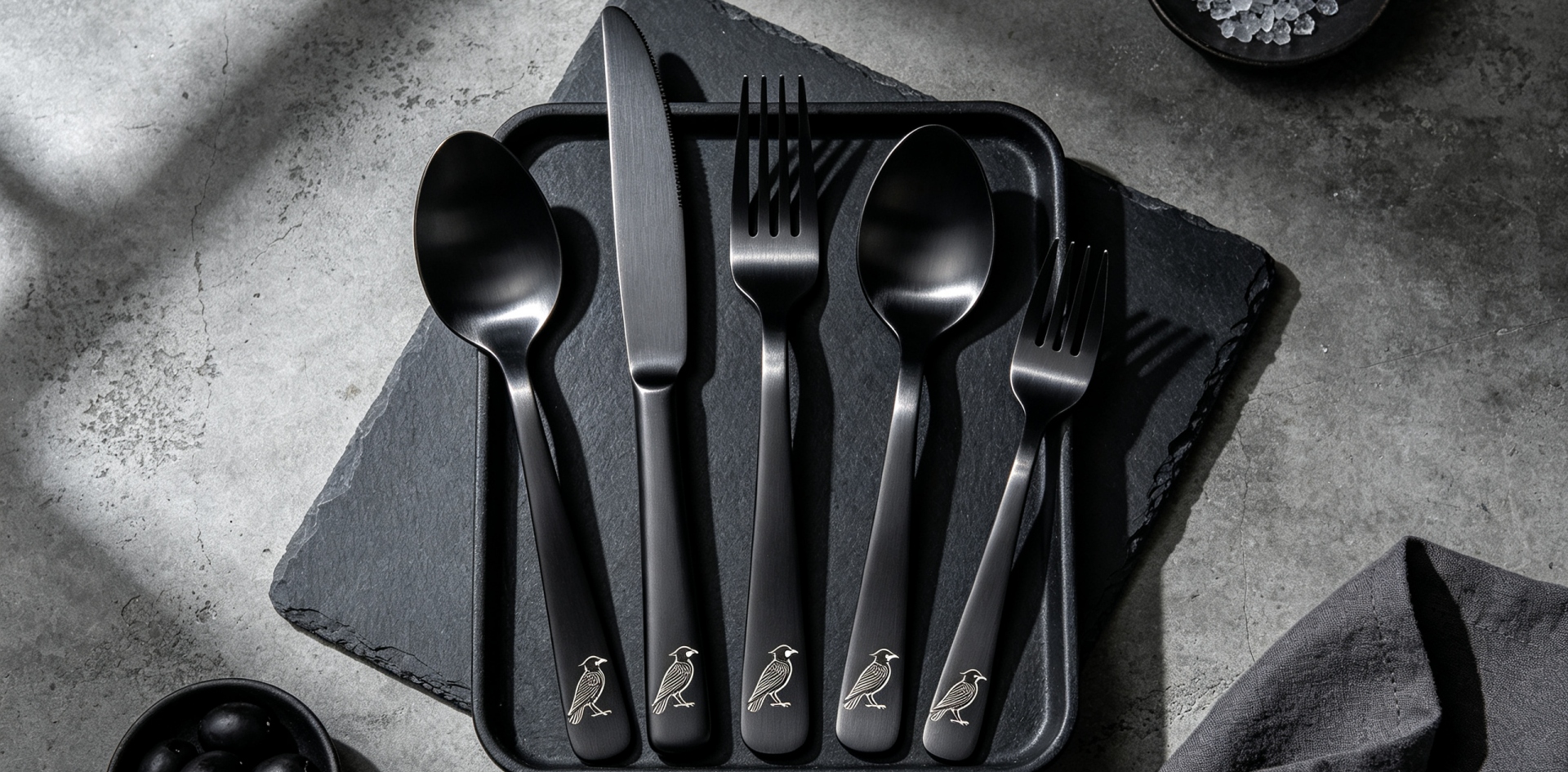
A successful stainless steel flatware collection should look consistent from one piece to another. The knife, fork and spoon do not need to have identical shapes, but they should share a controlled and intentional design language.
The surface profile is part of this appearance. When pieces are properly formed and finished, the collection looks cleaner and more professional.
This is especially relevant for custom flatware. When a brand invests in its own design, the shape of every component contributes to the final identity of the product.
A custom design may include specific proportions, handle details or transitions between different sections of the utensil. If production causes unexpected deformation, these design details may not appear as intended.
For this reason, flatness should be considered during product development rather than treated only as a final inspection issue.
The Relationship Between Design and Manufacturing
Not every cutlery design behaves in exactly the same way during production. The length, width, thickness, profile and shape of the product can influence how the material responds during forming.
A manufacturer with experience in stainless steel cutlery can evaluate these factors when developing a new product. This is useful for OEM and ODM projects where the buyer may provide a drawing, reference sample or original design concept.
The objective is not simply to reproduce a shape once. A B2B product needs to be manufactured consistently at commercial quantities.
This means the design should be practical for repeat production. If a particular detail creates unnecessary manufacturing difficulty, discussing it during development can help the buyer and manufacturer find a more suitable solution without changing the overall appearance of the product.
Why Sample Approval Is Useful
Samples are particularly valuable when developing custom stainless steel flatware.
Before bulk production, buyers can inspect the actual product rather than relying only on drawings or digital images. The sample provides an opportunity to check the overall shape, proportions, surface condition and relationship between different pieces.
For a collection containing several SKUs, it is also useful to compare the samples side by side. This helps confirm whether the knife, fork and spoon have the intended visual relationship.
Once the sample is approved, the confirmed specifications can provide a reference for production. This creates a clearer basis for communication between the B2B buyer and the factory.
Consistency Across Bulk Orders
For wholesale and private label customers, one successful sample is only the beginning. The larger challenge is maintaining consistent production when the order quantity increases.
A B2B buyer may place an initial order and later return for replenishment. If the shape changes noticeably between different production runs, maintaining a consistent product range becomes difficult.
This is why manufacturing controls are important. The production team needs clear product specifications and appropriate quality checks throughout the manufacturing process.
Consistency does not mean every stainless steel utensil is expected to be visually identical down to an unrealistic level. Instead, it means the products should remain within the agreed specifications and maintain the intended appearance and function.
This approach is particularly important for brands selling their own flatware collections. Customers expect the same product to look and feel consistent when they purchase it again.
Flatness in Different Cutlery Products
Knives, forks and spoons each have their own forming characteristics.
A table knife may require attention to the relationship between the handle and blade. A fork needs consistent alignment between the handle, neck and tines. A spoon requires control of the bowl shape and the transition toward the handle.
For cutlery sets, these individual requirements need to work together.
A manufacturer producing multiple pieces for one collection must therefore consider both individual product quality and the consistency of the complete set.
This is one reason why choosing a supplier with experience across stainless steel knives, forks and spoons can be useful for B2B buyers. Instead of treating every product as an isolated purchase, the manufacturer can approach the project as a complete collection.
Supporting OEM and Private Label Projects
For brands developing private label flatware, the manufacturing process needs to support the commercial concept from the beginning.
The buyer may already have a target market, packaging concept and visual direction. The factory then needs to translate these requirements into products that can be manufactured in stable quantities.
Homefelt focuses on stainless steel cutlery manufacturing and B2B export, supporting projects involving knives, forks, spoons, cutlery sets and customized flatware programs.
For OEM, ODM and private label projects, buyers can provide their existing specifications or discuss a new concept with the manufacturing team. Product details can then be reviewed before sample development and bulk production.
A Practical Approach for B2B Buyers
When evaluating a stainless steel cutlery supplier, it is useful to look beyond product photos and unit prices.
Ask how the supplier handles product specifications, samples and repeat production. Check whether the manufacturer can produce the complete collection and whether quality requirements can be clearly confirmed before mass production.
For a custom project, buyers can also provide reference samples or drawings together with the expected order quantity and target market. This gives the manufacturer more information for evaluating the project and preparing an appropriate quotation.
The more clearly the product requirements are defined, the easier it becomes to keep the finished cutlery consistent with the approved sample.
For B2B stainless steel flatware purchasing, small production details can have a noticeable commercial impact. Flatness, shape consistency and deformation control may not be the first characteristics buyers think about, but they contribute to how a finished product looks, feels and performs in the market.
When these details are considered from the beginning, a custom cutlery project can move more smoothly from design concept to sample approval and finally to bulk production.
If you are developing a new stainless steel cutlery collection, sourcing flatware for wholesale distribution or looking for a manufacturer for an OEM or private label project, sharing your product requirements and estimated quantity is a practical first step toward a customized quotation.
Request a Quote for Custom Stainless Steel Cutlery
Discuss Your OEM Flatware Project
Edelstahlbesteck-Sets für B2B: Die richtige Zusammenstellung für eine stimmige Kollektion
Qualité des bords des couverts inox : un détail essentiel pour les projets B2B
Related Article