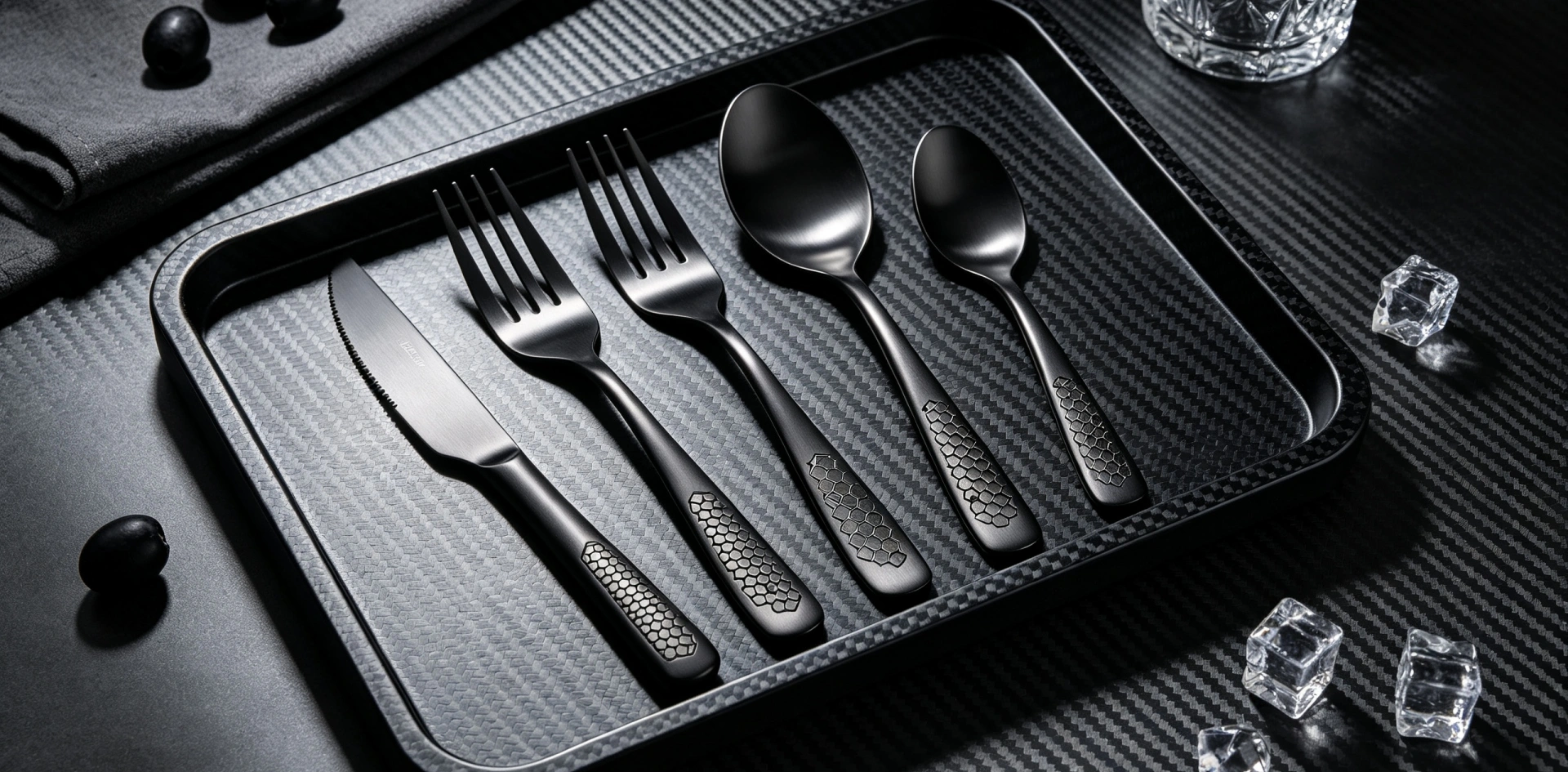
Stainless Steel Cutlery for E-commerce and Online Retail
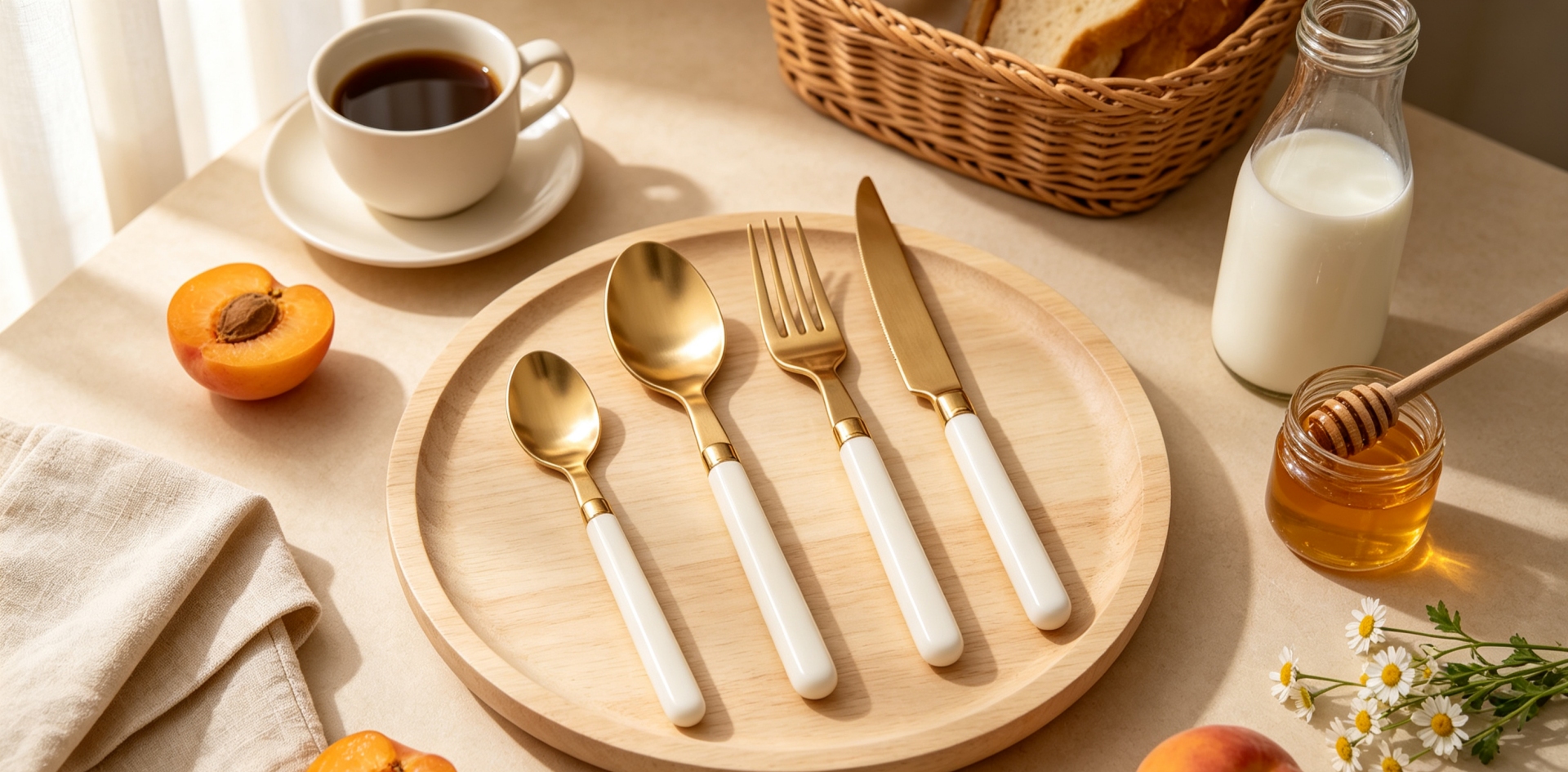
Stainless Steel Cutlery for E-commerce and Online Retail
Selling stainless steel cutlery online requires a slightly different approach from supplying products to physical stores. Customers cannot hold the fork, spoon or knife before purchasing, so product presentation, clear specifications and suitable packaging become especially important.
For e-commerce brands, wholesalers and online retailers, the product needs to be attractive in photographs while also meeting practical expectations when it arrives at the customer's home.
A well-planned cutlery collection should therefore consider product design, material, set configuration, packaging and repeat supply from the beginning.
Choosing Cutlery for Online Customers
Online shoppers often compare several products before making a purchase.
They may pay attention to:
- Product appearance
- Stainless steel material
- Number of pieces
- Product dimensions
- Weight
- Finish
- Packaging
- Brand presentation
Clear product information can help customers understand what they are buying.
For online retailers, accurate specifications also make it easier to create product pages and reduce confusion between similar collections.
Product Design for E-commerce
Product design has a strong influence on online sales because customers usually see the product through photographs first.
Simple designs can be easier to communicate visually.
Distinctive handles, special finishes or coordinated sets can provide stronger visual identity for private label brands.
However, the product should still be practical for everyday use.
A design that looks good in a photograph but feels uncomfortable in the hand may lead to disappointing customer experiences.
Choosing Stainless Steel Material
The stainless steel specification should be clearly established before launching an online product.
Common options include 18/10, 18/8 and 18/0 stainless steel.
The material selected should match the product positioning and target market.
For retail brands, product descriptions and packaging should use the same material information as the approved production specification.
This helps maintain consistency across the product page, packaging and actual product.
Cutlery Sets for Online Sales
Complete cutlery sets are often convenient for online shoppers because customers can purchase several matching pieces at once.
A set may include:
- Forks
- Knives
- Spoons
- Teaspoons
Different set sizes can target different households and price levels.
For example, a smaller set may suit couples or smaller households, while a larger set may be designed for families.
The number of pieces should always be clearly explained so customers know exactly what they will receive.
Product Weight and Dimensions
Online customers cannot physically evaluate weight before purchasing.
For this reason, product dimensions and weight can be useful information on an e-commerce product page.
Useful details may include:
- Overall length
- Handle dimensions
- Product weight
- Number of pieces
- Packaging dimensions
Providing accurate information helps customers compare different products more easily.
Surface Finish in Product Photography
Stainless steel finishes can look different depending on lighting and photography.
Mirror-polished products can create strong reflections.
Matte and satin finishes may appear softer.
Brushed finishes can show a visible texture.
For online retail, product photography should represent the actual finish as accurately as possible.
The physical sample used for photography should match the approved production specification.
Packaging for Online Orders
E-commerce products may travel directly from a warehouse to an individual customer.
This means packaging needs to provide sufficient protection during parcel transportation.
Retail packaging should protect the cutlery from:
- Scratches
- Movement
- Impact
- Moisture
- Carton compression
The outer shipping package may also require additional protection depending on the delivery method.
Packaging for Private Label E-commerce Brands
Private label brands often use packaging as part of their overall product presentation.
Custom packaging may include:
- Brand logo
- Product images
- Product information
- Barcode
- Care instructions
- Printed inserts
A consistent package design can help create a recognizable product family.
For new brands, it may be practical to develop one core packaging style and adapt it across several cutlery sets.
Protecting Cutlery During Shipping
E-commerce orders may pass through multiple logistics stages before reaching the customer.
Products can be moved through warehouses, delivery vehicles and parcel facilities.
Internal packaging should therefore keep the cutlery securely positioned.
This is particularly important for polished surfaces, which can show scratches if individual pieces move against one another.
Packaging should be tested with the actual product before large-scale production.
Choosing a Supplier for Online Retail
An e-commerce business needs more than an attractive product.
The supplier should also be able to support consistent production and future replenishment.
Important factors include:
- Manufacturing experience
- Product consistency
- Order quantity
- Packaging capability
- Customization
- Production schedule
- Repeat order support
A product that sells well but cannot be replenished consistently can create unnecessary problems for an online business.
Private Label Cutlery for E-commerce
Private label cutlery allows an online retailer to build its own product identity.
A business can start with an existing design and customize selected elements.
For example:
- Logo
- Handle finish
- Product set
- Packaging
More advanced projects can involve custom handle designs or new product development.
The appropriate level of customization depends on budget, expected quantity and market positioning.
Sample Approval Before Launch
Before listing a new cutlery product online, the actual sample should be reviewed carefully.
Check:
- Material
- Weight
- Dimensions
- Handle design
- Surface finish
- Product balance
- Packaging
The product shown in online photographs should accurately represent the product customers will receive.
For customized projects, the approved sample should become the production reference.
Managing E-commerce Inventory
Online retailers need to maintain enough inventory to support regular orders.
Inventory planning should consider:
- Average sales
- Seasonal demand
- Product popularity
- Production lead time
- Warehouse capacity
- Reorder quantity
New products can initially be ordered in controlled quantities while sales performance is evaluated.
Once a product becomes a reliable seller, larger repeat orders can be planned.
Building a Product Range
An online store does not necessarily need a large number of similar cutlery products.
A focused collection can be easier for customers to understand.
For example, an e-commerce brand may offer:
- Everyday stainless steel set
- Premium polished set
- Modern matte set
- Larger family set
Each product should have a clear difference in design, finish, size or positioning.
This can make the overall product range easier to manage.
Working With an Experienced Manufacturer
For e-commerce brands, the manufacturer can become part of the long-term product development process.
Homefelt has more than 30 years of stainless steel manufacturing experience and produces stainless steel cutlery along with kitchen and dining products, BBQ tools, pet bowls and children's tableware.
For international B2B customers, Homefelt can support standard products, custom designs and private label projects.
Buyers can discuss product specifications, finishes, packaging and branding requirements before sampling and production.
For online retailers planning repeat sales, maintaining the same product specifications across different orders is also important.
Preparing an E-commerce Cutlery Project
Before requesting a quotation, buyers can prepare:
- Product type
- Target customer
- Stainless steel grade
- Product dimensions
- Product weight
- Surface finish
- Set configuration
- Packaging
- Logo requirements
- Estimated order quantity
This information can help the manufacturer understand the product and packaging requirements more clearly.
Long-Term Supply for Online Retailers
A successful online cutlery product may remain in the store for several years.
For this reason, buyers should consider future replenishment before launching the product.
The manufacturer should be able to reproduce the approved product with consistent:
- Material
- Dimensions
- Weight
- Finish
- Packaging
Keeping complete product records can also make future orders easier to manage.
Conclusion
Stainless steel cutlery for e-commerce needs to combine attractive product design with clear specifications, practical packaging and dependable supply.
Online shoppers rely heavily on photographs and product information, so the actual product should closely match what is presented online.
For e-commerce brands and online retailers, choosing the right set configuration, packaging and product specifications can help create a stronger customer experience.
With more than 30 years of stainless steel manufacturing experience, Homefelt works with international B2B customers on stainless steel cutlery, kitchenware and other stainless steel products.
Whether the project involves a standard cutlery set, private label product or customized collection, clear specifications and sample approval can provide a solid foundation for long-term online sales.
Related Topics for Your Content Matrix
How to Develop a Private Label Stainless Steel Cutlery Collection
Stainless Steel Cutlery Packaging for E-commerce Shipping
How to Choose Stainless Steel Cutlery Sets for Retail
How to Photograph Stainless Steel Cutlery for Online Sales
Custom Stainless Steel Cutlery for Online Brands
How to Manage Stainless Steel Cutlery Inventory for E-commerce


Stainless Steel Cutlery Quality Control: What B2B Buyers Should Check
Stainless Steel Cutlery for Retail Brands and Wholesale Buyers
Related Article