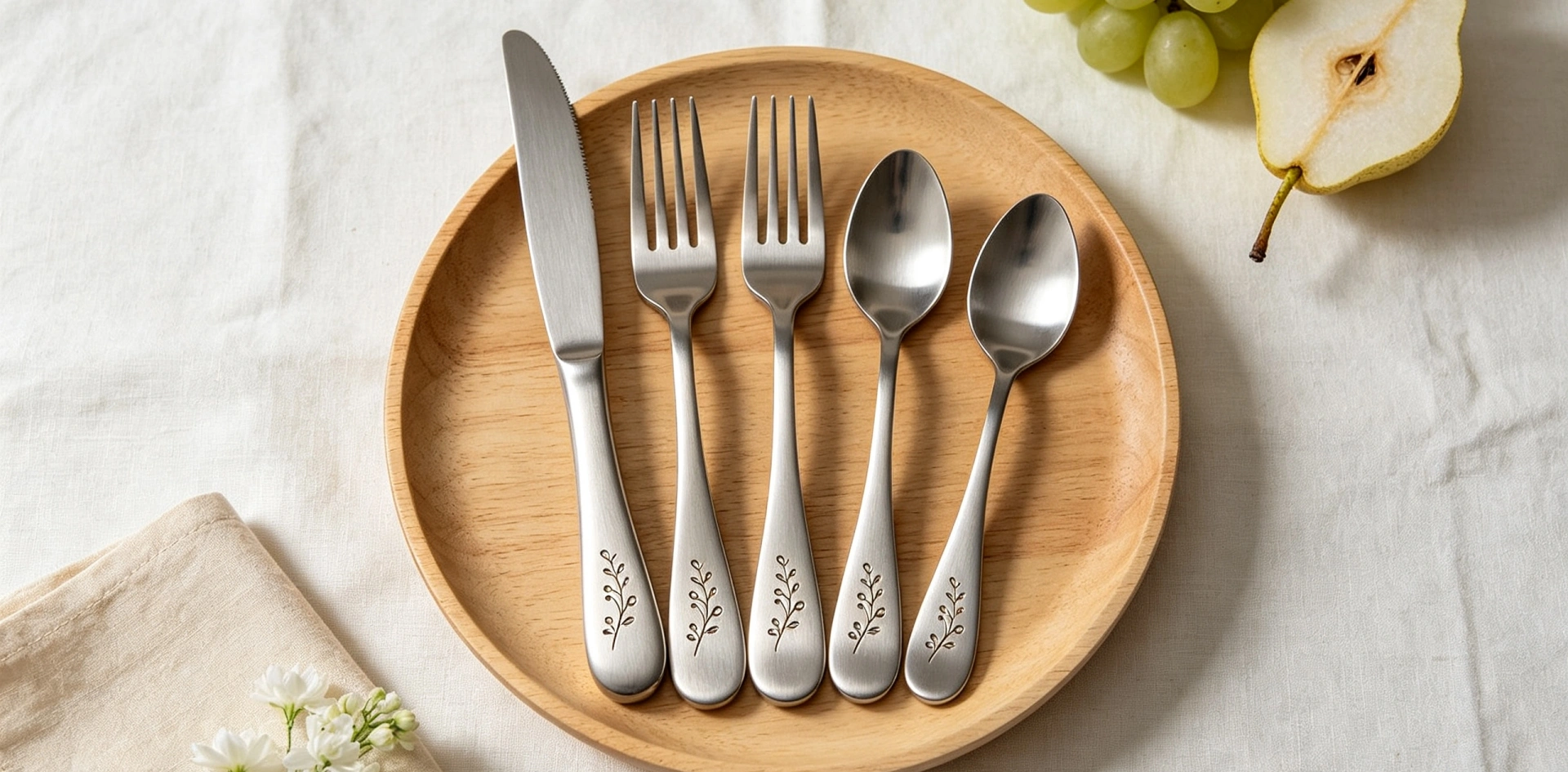
Stainless Steel Cutlery Handle Design Guide for B2B Buyers
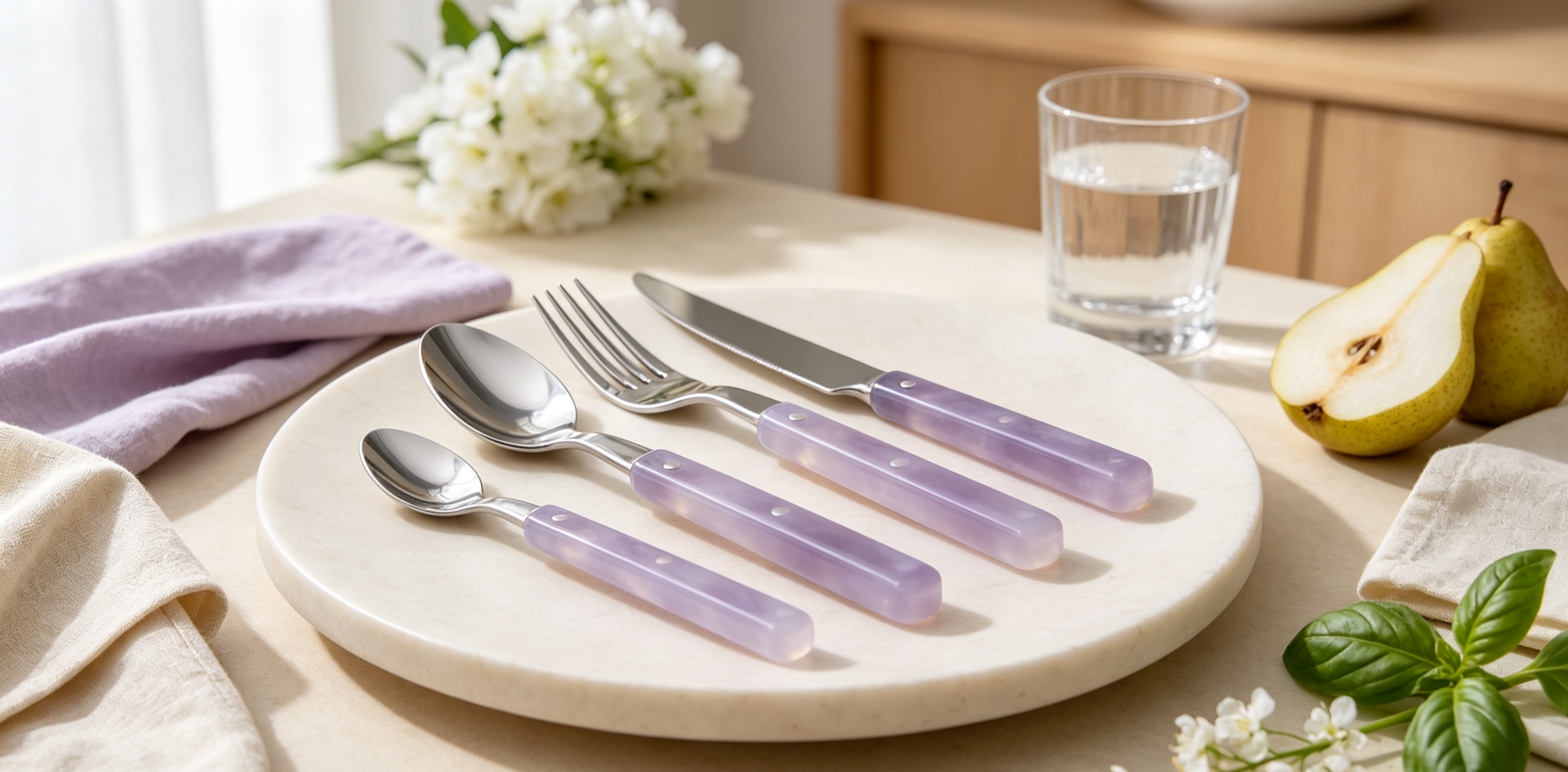
Stainless Steel Cutlery Handle Design: A Practical Guide for B2B Buyers
The handle is one of the most noticeable parts of stainless steel cutlery. It affects how a fork, spoon or knife looks on the table and how it feels when used. For restaurants, hotels, distributors, retailers and private label brands, handle design can therefore become an important part of product development.
A successful handle is not simply attractive. Its length, width, thickness, profile, weight distribution and connection with the functional end should work together. The design also needs to be practical for manufacturing and consistent across the complete collection.
For B2B buyers developing a new flatware range, understanding the main handle design considerations can make the sampling process more efficient and help translate a visual concept into a manufacturable product.
Why Handle Design Matters
The handle occupies a large visual area of many cutlery pieces.
When placed on a table, guests can immediately notice its shape, proportions and finish.
During use, the handle also determines much of the contact between the user's hand and the product.
A suitable design should balance:
-
Appearance
-
Comfort
-
Proportion
-
Weight
-
Balance
-
Manufacturing practicality
-
Product positioning
These elements should be considered together rather than independently.
Straight Handle Profiles
Straight handles provide a clean and simple appearance.
They can work well for modern restaurant concepts, commercial dining and minimalist table settings.
Because the shape is relatively straightforward, straight profiles can also provide a useful starting point for custom product development.
The final result still depends on width, thickness, edge treatment and overall proportions.
Tapered Handles
A tapered handle becomes narrower toward one end.
This can create a more dynamic appearance and change the way the product feels in the hand.
The degree of taper should be coordinated with the length and width of the handle.
A strong taper can create a distinctive visual identity, while a subtle taper can provide a refined variation on a simple profile.
Rounded Handles
Rounded or softened profiles can provide a smooth visual impression.
They may also feel comfortable during extended use.
The transition between the rounded handle and the neck of the fork, spoon or knife should be carefully designed to maintain visual continuity.
Wide Handles
A wider handle can create a more substantial appearance.
It may also increase the amount of material used in the product.
For premium collections, a wide handle can support a strong visual presence.
However, the width should remain appropriate for comfortable handling and the proportions of the complete table setting.
Narrow Handles
Narrow handles can create a lighter and more delicate appearance.
They can work well with compact table settings or designs intended to appear visually minimal.
The width should be evaluated together with thickness and length so that the finished product remains balanced.
Handle Length
Handle length affects both appearance and handling.
A longer handle can create an elegant visual line, while a shorter handle can feel more compact.
The appropriate length depends on the product type and overall dimensions.
Forks, spoons and knives do not necessarily need identical handle proportions.
Handle Thickness
Thickness contributes to the physical feel of the handle.
A thicker profile can create a more substantial sensation, while a thinner profile can provide a lighter appearance.
Thickness should be reviewed together with overall weight and balance.
A product should not be made thicker simply to increase weight without considering the complete design.
Edge Treatment
Handle edges can be sharp, softened, rounded or shaped according to the design.
Edge treatment influences both appearance and handling.
For products intended for frequent daily use, buyers should pay particular attention to how the edges feel when held.
Physical samples provide a better evaluation than photographs.
Handle Shape and Balance
The handle does not work independently from the fork head, spoon bowl or knife blade.
The weight distribution between these areas affects how the product feels.
Two handles with similar dimensions can create different handling characteristics when paired with different functional ends.
Custom development should therefore evaluate the complete cutlery piece.
Matching Fork, Spoon and Knife Handles
A cutlery collection should normally have a consistent design language.
The fork, spoon and knife can share:
-
Handle profile
-
Surface finish
-
Decorative elements
-
Proportional characteristics
-
Visual detailing
However, the dimensions of each piece may need to differ because their functional ends are different.
The objective is a coordinated collection rather than identical measurements.
Handle Design for Restaurant Collections
Restaurants often select handles according to their dining concept.
Casual restaurants may prefer practical and simple designs.
Contemporary restaurants may choose clean geometric profiles.
Premium dining businesses may prefer more detailed or substantial handles.
The design should complement the plates, glassware, furniture and interior.
Handle Design for Hotels
Hotels may require different collections for restaurants, banquets and specialty dining.
A hotel group can establish a consistent design direction while selecting different handle profiles for different service environments.
For multi-property purchasing, standardized specifications can simplify repeat orders.
Handle Design for Retail Brands
Retail brands often use handle design to distinguish their products from competing collections.
A distinctive profile can become part of the brand's visual identity.
Before committing to mass production, the brand should review physical samples and confirm the design at the intended production scale.
Handle Design for Distributors
Distributors may need products for several customer segments.
A practical portfolio can include simple commercial designs, contemporary profiles and more premium collections.
Clear product specifications make it easier to maintain inventory and manage repeat orders.
Handle Design and Surface Finish
The same handle can appear very different depending on its surface finish.
A polished surface emphasizes reflections and contours.
A satin or brushed surface can create a softer visual effect.
Finish selection should therefore be made together with the handle design rather than as a completely separate decision.
Handle Design and Material
Material specification can affect the production characteristics of the handle.
Buyers should confirm the required stainless steel grade before finalizing the design.
For custom products, the material and manufacturing process should be evaluated together to ensure that the proposed handle can be produced consistently.
Decorative Handle Details
Some collections use lines, grooves, curves, embossed elements or other decorative features.
These details can strengthen product identity.
However, complex decoration can also increase manufacturing requirements.
B2B buyers should evaluate whether the design can be reproduced consistently at the required production volume.
Custom Handle Development
Custom handle development usually begins with a reference design, drawing or concept.
The manufacturer can review the proposed dimensions and production requirements.
A sample can then be created for evaluation.
The buyer can assess appearance, handling, weight and balance before approving the final design.
Prototype Evaluation
A prototype should be tested as a complete product.
During evaluation, buyers can check:
-
Handle length
-
Handle width
-
Thickness
-
Edge comfort
-
Weight
-
Balance
-
Visual proportions
-
Surface finish
-
Connection with the fork, spoon or knife head
This stage can reveal design issues before mass production.
Handle Design and Manufacturing Cost
Handle complexity can affect production requirements and cost.
Simple profiles may be more straightforward to manufacture.
Detailed shapes, special finishes or unusual dimensions may require additional processing.
For accurate quotation comparisons, buyers should provide equivalent designs and specifications.
Handle Design Consistency
A collection should maintain consistent visual characteristics across all products.
The fork, spoon and knife should look like parts of the same range even though their dimensions differ.
A written design specification and approved samples can help maintain consistency during repeat production.
Custom Handle Design for Private Labels
Private label brands can develop handle profiles that distinguish their products in the market.
The design can be combined with selected material, finish, packaging and branding requirements.
Before production, the buyer should approve a physical sample and retain it as a reference for future orders.
Long-Term Replacement Considerations
A custom handle may become part of a brand's long-term product range.
If replacement pieces are needed later, the manufacturer should be able to reproduce the original design accurately.
Detailed product records can include dimensions, material, finish and approved sample information.
This can help reduce differences between the original and replacement products.
Working With an Experienced Manufacturer
Custom handle development requires cooperation between design and manufacturing.
Homefelt has more than 30 years of stainless steel manufacturing experience and produces stainless steel cutlery together with kitchen and dining products, BBQ tools, pet bowls and children's tableware.
For international B2B customers, Homefelt supports standard and customized stainless steel products.
Restaurant groups, hospitality suppliers, distributors, importers and private label brands can discuss handle design, dimensions, material, finish, packaging, branding and estimated quantities according to their requirements.
For custom projects, samples and detailed specifications can provide a reference for future production.
What B2B Buyers Should Prepare
Before requesting custom handle development, buyers can prepare:
-
Reference images
-
Sketches or drawings
-
Intended product type
-
Target market
-
Preferred handle length
-
Preferred handle width
-
Thickness requirement
-
Material specification
-
Surface finish
-
Estimated order quantity
-
Packaging requirements
-
Expected repeat demand
This information can help the manufacturer understand the design direction.
Create a Complete Handle Specification
A useful handle specification should describe the physical design rather than relying only on a visual name such as modern, classic or premium.
Dimensions, shape, finish, material and sample references provide a more practical manufacturing standard.
This is particularly important when the same design will be produced repeatedly.
Conclusion
Stainless steel cutlery handle design influences appearance, comfort, weight, balance and product identity. For B2B buyers, the most effective approach is to evaluate the handle as part of the complete fork, spoon or knife rather than as an isolated component.
Restaurants, hotels, distributors and private label brands should consider handle dimensions, profile, edge treatment, material, surface finish and manufacturing practicality during development.
Physical samples are essential for confirming how the final product looks and feels before mass production.
Homefelt has more than 30 years of stainless steel manufacturing experience and works with international B2B customers on standard and customized stainless steel products.
By providing clear design references and approving a complete product sample, buyers can develop a distinctive stainless steel cutlery collection while establishing a reliable specification for future production and replenishment.
You May Be Interested In
Stainless Steel Cutlery Thickness Guide: What B2B Buyers Need to Consider
Stainless Steel Cutlery Weight Guide for Bulk and Wholesale Buyers
Stainless Steel Cutlery Polishing and Surface Finish Process
Custom Stainless Steel Flatware Development From Sample to Production
Private Label Flatware Manufacturing for Retail and Distribution
How Stainless Steel Flatware Is Made: From Sheet to Finished Product


Stainless Steel Cutlery Quality Control and Inspection Guide
Stainless Steel Cutlery Polishing and Surface Finish Process
Related Article