
Stainless Steel Cutlery Handle Symmetry: A Detail for Custom B2B Designs
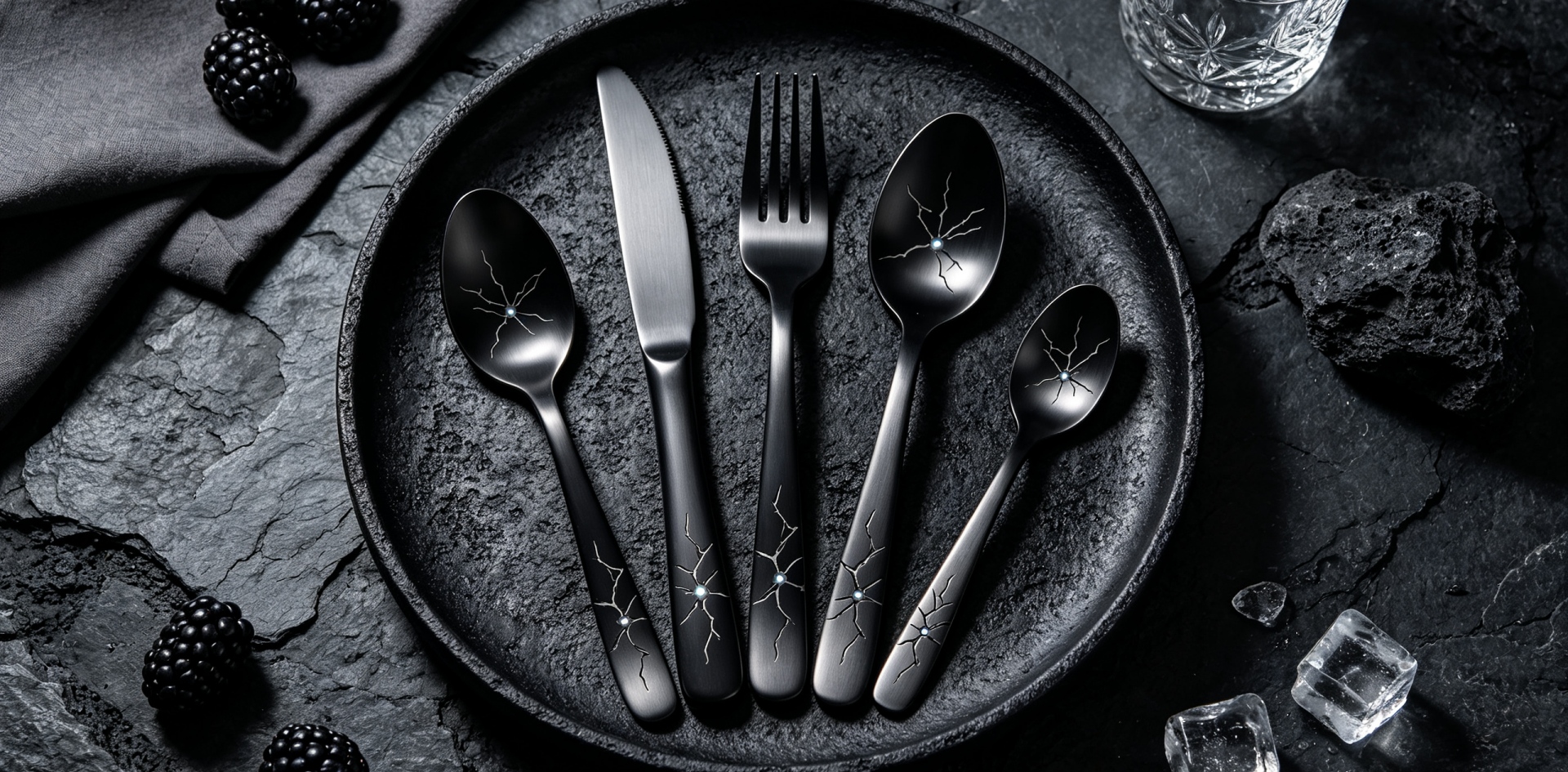
Stainless Steel Cutlery Handle Symmetry: A Detail for Custom B2B Designs
When a stainless steel cutlery handle is viewed from the front, its left and right sides create a visual balance around the centerline. In a standard product, this relationship is usually already defined. In a custom OEM or private label project, however, handle symmetry can become an important design consideration.
A handle may appear simple, but small differences between the two sides can change the overall character of the product. This becomes particularly noticeable when the handle contains curves, decorative details, tapered areas or a distinctive silhouette.
For B2B buyers developing a custom knife, fork and spoon collection, defining the intended symmetry can help create a cleaner product appearance and a more reliable manufacturing reference.
Why Handle Symmetry Matters
Symmetry gives a product a sense of visual order.
When the two sides of a cutlery handle are designed around a clear centerline, the shape can appear balanced when viewed from above. If the design is intentionally asymmetrical, that difference can also become part of the product identity.
The important point is that the result should be intentional.
For a custom stainless steel cutlery project, the manufacturer needs to know whether the handle should follow a symmetrical design or whether certain details are deliberately offset.
This distinction can be important during sample development.
Symmetry and the Handle Centerline
The centerline provides a useful reference for evaluating a cutlery handle.
For a symmetrical design, the main contours on both sides should relate consistently to this line. This can apply to the outer silhouette as well as to decorative features.
For example, a handle may have a central decorative element with matching curves on both sides. Alternatively, the handle itself may have a symmetrical outline while a logo or special detail is positioned separately.
By establishing a clear centerline, the manufacturer has a practical reference when interpreting the design.
This is especially useful when a customer supplies a custom drawing for an OEM project.
Visual Symmetry Is Not Always Exact Geometric Symmetry
There is an important difference between mathematical symmetry and visual symmetry.
A cutlery handle may contain different functional or decorative areas that make perfect geometric symmetry impractical. In some designs, a small adjustment can make the product look more balanced to the eye.
For example, a curved decorative feature may need to be positioned according to the overall silhouette rather than simply mirrored from one side.
This is why a physical sample remains valuable.
The drawing can establish the intended geometry, while the sample allows the buyer to evaluate how the completed product actually appears.
Symmetry Across Knives, Forks and Spoons
For a complete stainless steel flatware collection, symmetry should also be considered as part of the wider design language.
The knife, fork and spoon have different functional sections, but their handles can share a common visual concept.
If the handle design uses symmetrical curves or decorative elements, these characteristics can be adapted across the different products.
The objective is not to make every handle identical in every measurement.
Instead, the same design principle can be applied to create a recognizable family of products.
This can be particularly useful for private label brands that want to develop a complete cutlery range rather than purchase unrelated standard items.
Symmetry in Decorative Handle Designs
Decorative handles often make symmetry more noticeable.
A line, recessed area, embossed element or shaped contour can look different if it is slightly displaced from the intended center.
For this reason, decorative details should be clearly defined during custom product development.
A reference image can communicate the general appearance, but a technical drawing may be necessary when the exact position is important.
If the customer has a specific symmetry requirement, it should be included in the product specification.
This gives the manufacturer a clear point of reference during sampling and production.
How Symmetry Appears in a Physical Sample
Digital drawings are useful for developing custom cutlery, but they cannot always show the complete visual effect of a finished stainless steel product.
A physical sample can be placed on a flat surface and viewed directly from above. This makes the handle outline and centerline relationship easier to evaluate.
The buyer can also rotate the product and inspect whether the design remains visually balanced.
For a collection containing several pieces, placing the knife, fork and spoon together provides another useful check.
This process can reveal small details that are difficult to identify from a single product image.
Sample Approval Before Bulk Manufacturing
For a custom B2B order, the sample should represent the design that will eventually be produced in quantity.
If the handle symmetry is important to the product concept, it should be reviewed during sample approval.
If an adjustment is needed, the buyer can provide specific feedback and request a revised sample or specification.
This is much more efficient than discovering a design issue after a large quantity has already been produced.
Once the sample is approved, the final design can be documented as the reference for production.
Manufacturing Consistency and Symmetry
A custom design needs to remain consistent across the order.
For stainless steel cutlery, the handle silhouette is repeated across many individual pieces. If a design contains symmetrical details, maintaining that relationship consistently becomes part of the manufacturing requirement.
The manufacturer therefore needs clear product specifications and appropriate production references.
An approved sample can provide a physical benchmark, while technical drawings can define the intended dimensions and design relationships.
Together, these references help transform a visual concept into a repeatable production standard.
Why Clear Drawings Help B2B Projects
For international B2B orders, communication may involve buyers, designers, purchasing teams and factory engineers.
A clear technical drawing helps ensure that everyone is working from the same information.
For handle symmetry, useful drawing information may include the centerline, outer contours, key dimensions and the position of important decorative details.
The drawing does not need to describe every possible manufacturing operation. Its main purpose is to make the finished product requirements clear.
This becomes especially valuable when the product is reordered later.
Protecting Design Consistency in Repeat Orders
A private label cutlery project can continue for years.
The same handle may be used across multiple orders, while new products may gradually be added to the collection.
If the original design has been properly documented, the manufacturer can use it as a reference for future production.
This helps avoid gradual changes that can occur when a product is reproduced from memory or from incomplete visual information.
For brands, maintaining the same handle appearance across repeat orders is an important part of protecting the identity of the product range.
Symmetry and Custom Branding
Branding elements can also interact with handle symmetry.
A logo or decorative mark may be positioned along the centerline or placed deliberately away from it. Either approach can work, but the intended placement should be clearly communicated.
For OEM and private label projects, the manufacturer may need to consider the relationship between the branding element and the existing handle design.
A sample can then confirm whether the final placement looks balanced.
This is another example of why branding should be considered during product development rather than added as an afterthought.
Symmetry for Different Cutlery Styles
Not every stainless steel cutlery style needs the same level of symmetry.
A minimalist collection may rely heavily on clean symmetrical contours. A more artistic collection may intentionally use irregular or offset details.
A commercial wholesale range may prioritize a familiar and straightforward design, while a private label brand may use symmetry as part of a more distinctive visual identity.
Therefore, the appropriate approach depends on the product concept.
The role of the manufacturer is to understand the customer's intended design and translate it into a practical production specification.
What to Include in Your Custom Cutlery Inquiry
If handle symmetry is important to your project, it can be helpful to include this requirement when requesting a quotation.
Useful information can include:
Product type
Handle drawing or reference image
Centerline requirements
Overall dimensions
Decorative details
Material specification
Surface finish
Branding requirements
Estimated quantity
Packaging requirements
Existing reference samples
Even if the design is still at an early stage, these details can give the manufacturer a clearer understanding of your expectations.
From Handle Concept to Bulk Order
The purpose of custom design is ultimately to create a product that can be manufactured and sold at the required scale.
Handle symmetry is one of the many details that can contribute to the final appearance.
Once the design has been clarified, the process can move through technical review, sample development, approval and quotation before bulk production begins.
For B2B buyers, this structured development process provides a clearer path from an initial design concept to a commercially ready product.
Building a Recognizable Private Label Collection
A strong private label collection is usually built from a series of coordinated details.
The handle may share a recognizable silhouette. Decorative elements may follow a common principle. The knife, fork and spoon can use related visual characteristics while retaining their individual functions.
Symmetry can be one of those characteristics.
When it is carefully defined, it can contribute to a clean and deliberate appearance across the collection.
For brands that want to develop their own stainless steel flatware, these details can provide opportunities to create products that are more closely aligned with their market positioning.
Work With a Manufacturer That Understands Custom Cutlery
Custom stainless steel cutlery requires communication between design and manufacturing.
A factory needs to understand the customer's concept, identify the important product details and translate them into a sample that can eventually be produced in quantity.
For handle symmetry, this means understanding the centerline, outer contours, decorative features and relationship between different products in the collection.
An experienced stainless steel cutlery manufacturer can support this process from initial design discussion through sampling and bulk production.
Start Your Custom Cutlery Development
If you already have a handle design, reference sample or product concept, you can share it with a stainless steel cutlery manufacturer for evaluation.
The manufacturer can review the design requirements, discuss the practical specifications and prepare a sample for approval.
After the design is confirmed, the approved product can move toward quotation and bulk production.
Whether you are developing a single custom knife or a complete OEM flatware collection, defining important visual details early can make the development process more straightforward.
Handle symmetry may be a relatively small part of the overall product, but when it is carefully controlled, it can contribute to the clean appearance and consistent identity of a custom stainless steel cutlery collection.
Custom Stainless Steel Cutlery Manufacturing
OEM Stainless Steel Flatware for Your Brand
Private Label Cutlery Collection Development
Wholesale Stainless Steel Cutlery Supplier
Custom Knife, Fork and Spoon Manufacturing
Request a Custom Cutlery Quotation
Stainless Steel Cutlery Production Capacity: A B2B Guide for Bulk Orders
Stainless Steel Knife Blade and Handle Connection for Custom B2B Cutlery
Related Article



