
Stainless Steel Cutlery Market Adaptation for OEM and Private Label Programs
Stainless Steel Cutlery Market Adaptation for OEM and Private Label Programs
A stainless steel cutlery product may be manufactured in one factory but sold through very different B2B channels. Importers, distributors, retailers and foodservice suppliers can have different expectations for the same type of spoon, fork, knife or flatware set.
For manufacturers, this means that successful production is not simply about making a standard product. The factory needs to understand how the buyer intends to position and sell the cutlery, then translate those commercial requirements into practical product specifications.
Homefelt factory supports OEM, ODM, private label, wholesale and bulk stainless steel cutlery programs, helping customers develop products according to their specific purchasing and market requirements.
Understanding the Customer's Product Position
Before changing a stainless steel cutlery product, it is important to understand its intended position.
A distributor may require a practical collection that can be supplied to multiple customers. A retail brand may want a more distinctive product presentation. A private label customer may need the product, packaging and visual identity to work together.
These different objectives can influence product selection, specifications and packaging.
Homefelt begins project discussions by understanding the customer's requirements rather than applying one standard solution to every order. Customers can provide existing products, reference images, drawings or product ideas for review.
This creates a clearer basis for deciding which stainless steel spoons, forks, knives or sets are suitable for the project.
Adapting Product Specifications
Market adaptation can involve several product parameters.
Material specification, dimensions, thickness, weight and surface treatment can all influence how a stainless steel cutlery product fits a particular commercial program. The appropriate combination depends on the customer's product positioning and purchasing requirements.
For example, a buyer developing a premium private label collection may have different specifications from a distributor purchasing a large-volume commercial range.
The important point is that product specifications should be considered as a complete combination rather than changing one parameter without considering the rest.
Homefelt factory can discuss these specifications with B2B buyers and provide practical manufacturing options based on the intended product program.
Creating a Coordinated Cutlery Collection
When market requirements change, buyers often need more than one individual product.
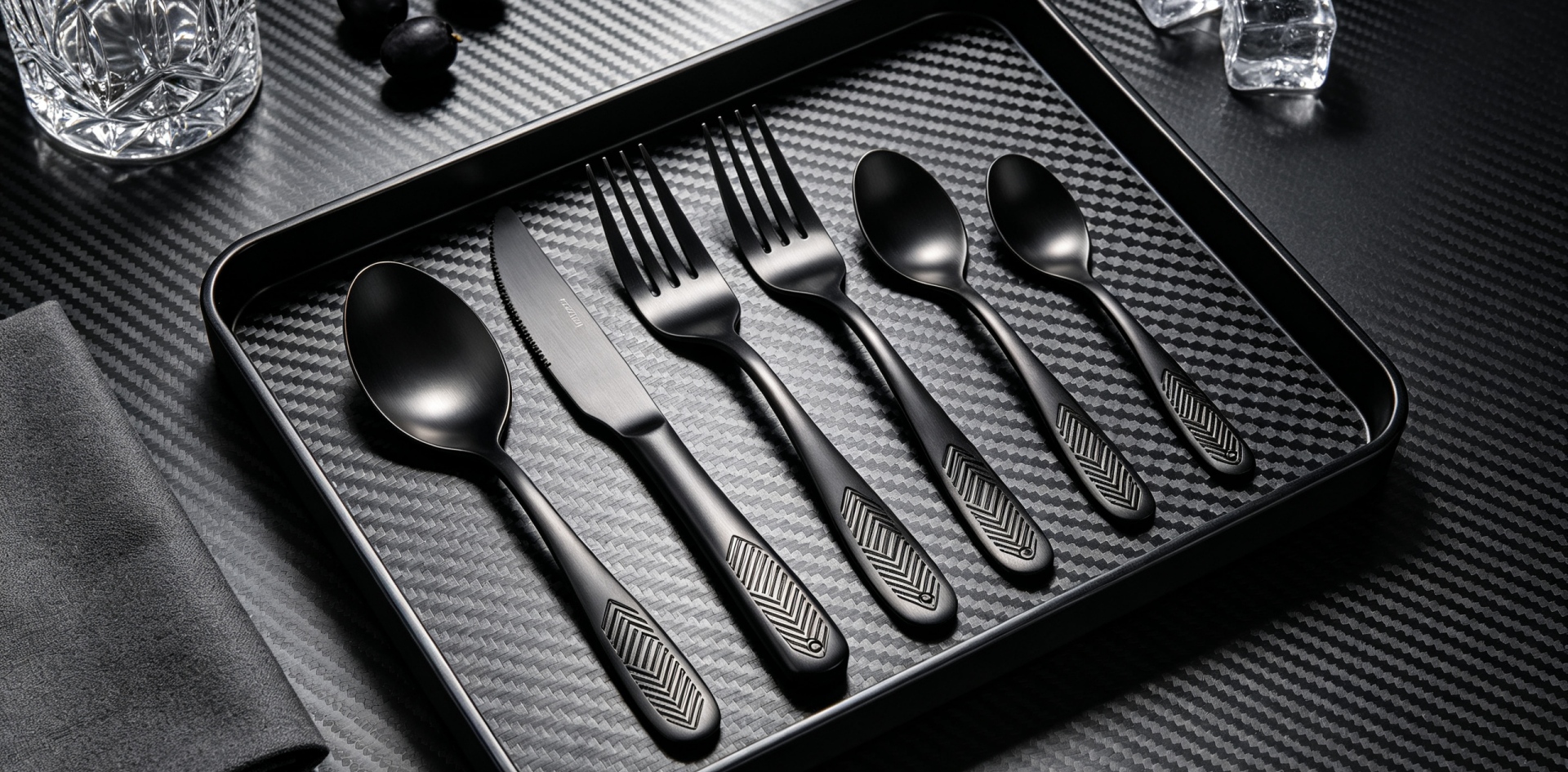
A stainless steel spoon may need to coordinate with a fork and knife in the same collection. The products should have a compatible visual direction and appropriate specifications while remaining practical for production.
For OEM and private label projects, this coordination can be particularly important because the buyer is developing a recognizable commercial range.
Homefelt can support customers in developing coordinated stainless steel knife, fork and spoon collections rather than treating each item as an unrelated product.
This gives buyers more flexibility when adapting a product range for different commercial requirements.
ODM Support for Market-Specific Collections
ODM cooperation can be useful when buyers know their target product direction but do not want to develop every detail independently.
Homefelt can provide existing stainless steel cutlery options as a starting point, allowing the customer to select suitable products and discuss possible modifications.
The buyer can then build a collection around its own market positioning.
This approach can reduce unnecessary development work while still allowing the final product program to be commercially differentiated.
For customers requiring a stronger brand identity, private label packaging can also be coordinated with the selected cutlery.
Balancing Adaptation and Production Practicality
Not every requested change is equally suitable for large-volume manufacturing.
A product adaptation should be evaluated not only from the design perspective but also from the production perspective. The final specification needs to be repeatable and commercially practical.
This is where factory experience becomes valuable.
Homefelt has extensive experience manufacturing stainless steel spoons, forks, knives and flatware sets for international B2B customers. The factory team can discuss proposed changes in relation to actual production requirements.
The goal is to help buyers create a product that fits their market while remaining suitable for reliable manufacturing.
Packaging Can Also Be Adapted
Product adaptation does not always stop with the stainless steel cutlery itself.
Different sales channels may require different packaging arrangements. A distributor may prefer bulk packaging, while a private label brand may require individual boxes or multi-piece retail sets.
Homefelt provides one-stop service covering product design, manufacturing, packaging and transportation.
By discussing packaging at the same time as the product requirements, buyers can create a more complete commercial proposal and avoid separating the product decision from the final delivery arrangement.
Experience With International B2B Projects
Homefelt has more than 40 years of experience in the stainless steel cutlery business and has worked with international customers and well-known brands.
This experience has shown that buyers often need practical adaptations rather than completely new products. A small change in specifications, product combination or packaging can sometimes make an existing cutlery design much more suitable for a customer's commercial program.
The factory can therefore approach each project according to its actual requirements rather than assuming that every buyer needs the same standard collection.
Supporting Documentation and Factory Credentials
Homefelt has passed BSCI, SEDEX 4P, BRC and ISO9001 requirements, as well as Disney audit requirements. The factory also holds FAMA and FSC certifications.
For customers carrying out supplier evaluations, applicable certification information, inspection documents and testing materials can be discussed according to the specific product and destination market.
This provides useful supporting information while keeping the main focus on product development and manufacturing.
From One Product to a Broader B2B Program
Market adaptation can become an important part of long-term product development.
A buyer may begin with one stainless steel spoon or fork, then add matching knives, complete sets or additional products after the initial collection performs well. The factory relationship can develop alongside the product range.
Homefelt supports OEM, ODM, private label, wholesale and bulk manufacturing for stainless steel cutlery. Customers can customize a service package according to their situation, including product design, manufacturing, packaging and transportation.
The objective is to help buyers develop products that fit their commercial requirements while establishing a dependable long-term manufacturing relationship in China.
Stainless Steel Cutlery Production Capacity for OEM and Bulk Programs
Stainless Steel Cutlery Lifecycle Supply for OEM and Private Label Brands
Related Article



