
Stainless Steel Cutlery Measurement Tolerances for Consistent B2B Orders
Stainless Steel Cutlery Measurement Tolerances for Consistent B2B Orders
For B2B stainless steel cutlery projects, product dimensions are not only about reaching a target number. The more important question is whether knives, forks, and spoons remain consistent from the approved sample to the first production run and then through repeated bulk orders. This is where measurement tolerances become an important part of product specifications and factory quality control.
For importers, distributors, restaurant suppliers, hotel projects, and private label brands, a cutlery specification may include overall length, width, thickness, weight, handle dimensions, spoon bowl dimensions, fork head dimensions, and other product parameters. Each parameter needs a defined target and an acceptable production range that fits the customer's application.
At Homefelt factory, stainless steel cutlery projects are developed around the customer's actual requirements rather than using one fixed specification for every collection. This allows product design, sampling, production, inspection, packaging, and transportation to be coordinated as one service process.
Why Measurement Tolerance Matters in Stainless Steel Cutlery
A stainless steel spoon or fork is a manufactured product, so small differences can occur during forming, polishing, stamping, and other production stages. A professional B2B specification therefore needs to distinguish between the target dimension and the acceptable tolerance.
For example, a customer may specify an overall cutlery length for a new collection. The approved sample establishes the visual and functional reference, while the production specification defines the required measurement range. This makes quality control more practical because inspectors and production teams have a clear reference instead of relying only on visual comparison.
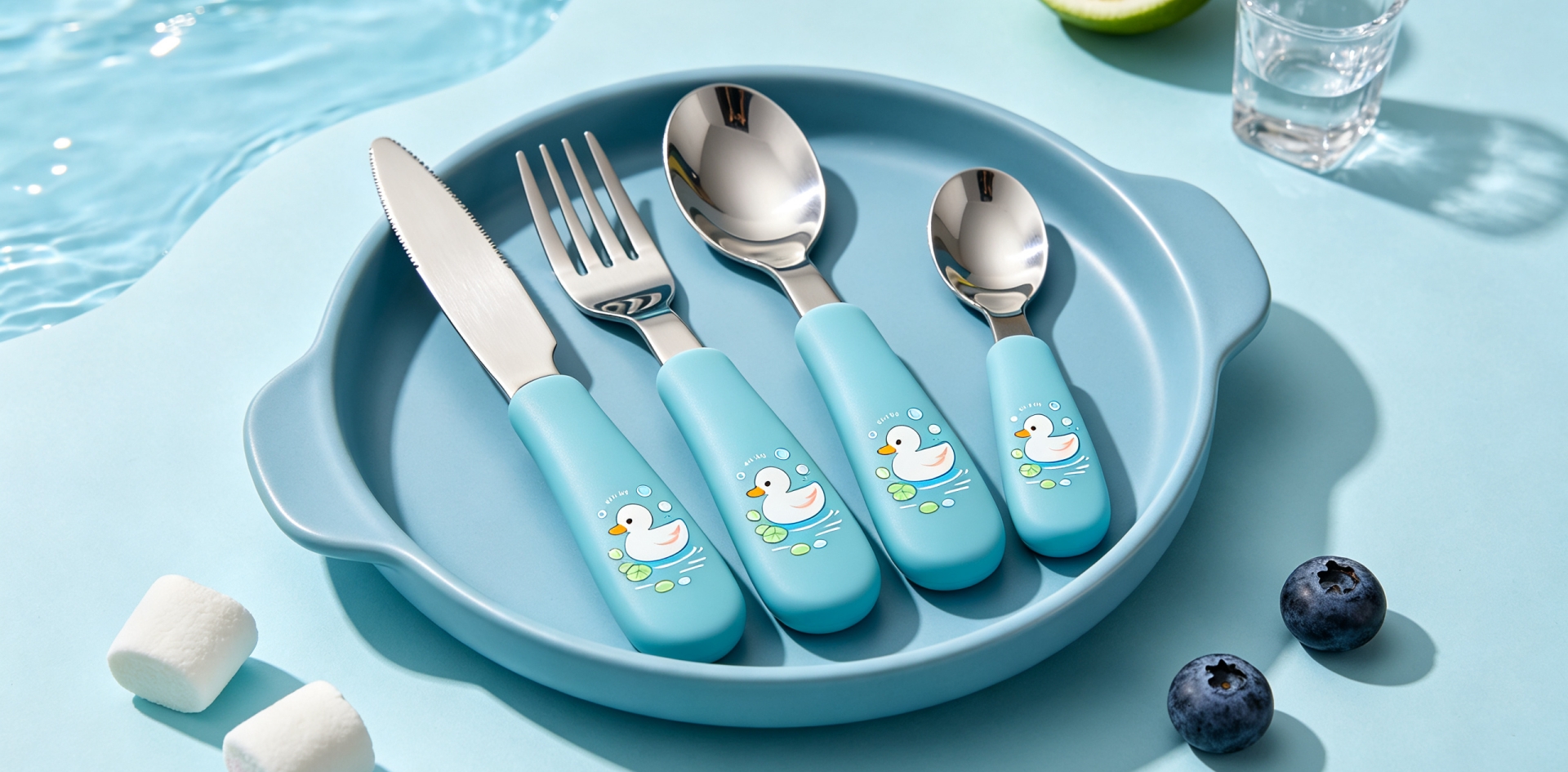
Tolerance is particularly important when several pieces are sold as one cutlery set. If the knife, fork, and spoon are designed as a collection, noticeable differences in proportions can affect the overall presentation even when every individual piece is technically usable.
For wholesale buyers, consistency also matters between different production batches. A product ordered this year may need to match a reorder made later. Clear specifications help the factory maintain the same product identity throughout the purchasing relationship.
Key Parameters to Define Before Production
A B2B stainless steel cutlery specification should identify the important measurable characteristics of each item.
Overall length is one of the most basic parameters. It establishes the general proportion of the product and helps ensure that different pieces within a collection maintain the intended visual relationship.
Width should be defined where it affects the appearance or functional use of the product. Depending on the item, this can include the relevant width of the spoon, fork, or knife.
Thickness is another important specification, but it should be considered together with the complete product structure rather than treated as an isolated number. The customer's target positioning, expected usage, and product design can all influence the appropriate specification.
Weight can also be included as a reference parameter. It can help buyers evaluate the balance and positioning of a collection, especially when several pieces need to maintain a coordinated feel.
Other project-specific measurements may also be included when they are important to the design. The key is to identify which dimensions are critical and establish how they should be checked.
How a Factory Uses Tolerance During Quality Control
Measurement tolerances become useful only when they are connected with an actual inspection process.
During product development, the factory can first confirm the customer's drawings, specifications, reference samples, or design requirements. Once the product sample is approved, the important dimensions can be documented as part of the production specification.
During mass production, quality personnel can use suitable measuring tools to check representative pieces according to the agreed inspection requirements. Critical dimensions receive greater attention because they have a direct influence on product appearance, assembly, set matching, or functional performance.
The purpose is not to make every measurement mathematically identical. Instead, the goal is to keep production within the agreed specification while maintaining stable product quality.
This approach is especially useful for large-volume orders. When thousands or tens of thousands of pieces are produced, a documented specification provides a common reference for the production team, inspection team, and buyer.
Project Experience and Sample Reference
Different B2B customers can have very different expectations for stainless steel cutlery. A hotel project may require one product proportion, while a restaurant supplier, supermarket distributor, or private label brand may need another.
For this reason, an experienced factory should not simply recommend one standard dimension for every customer.
In a custom project, the buyer may provide an existing sample, drawing, product photograph, packaging requirement, or target market positioning. The factory can then evaluate the product structure and confirm which parameters should be treated as key specifications.
For example, when developing a coordinated collection, the factory may review the relationship between the knife, fork, and spoon rather than checking each product independently. This helps the final set maintain a consistent visual identity.
Homefelt factory supports OEM and ODM stainless steel cutlery projects and can work with customers on product development, specification confirmation, sampling, private label requirements, and bulk production. The objective is to create a product specification that can be understood and reproduced throughout the order process.
Documentation Supports Consistent Bulk Orders
A reliable B2B order should not depend entirely on verbal instructions.
Important product information can be organized into a specification document covering material requirements, dimensions, tolerances, surface requirements, branding details, packaging, and other agreed characteristics. Where applicable, certification and testing documents can also be maintained as part of the project documentation.
Homefelt has experience serving customers that require documented factory qualifications and compliance information, including BSCI, SEDEX 4P, BRC, ISO9001, and Disney audit experience. The company also has FAMA and FSC certificates. These materials can help buyers evaluate supplier capability alongside the actual product specifications.
For a new project, buyers should ask which parameters will be recorded, how samples will be approved, and how production consistency will be checked. These questions are often more useful than simply comparing a supplier's unit price.
Choosing a Stainless Steel Cutlery Factory for Long-Term Supply
When purchasing stainless steel knives, forks, and spoons in bulk, the lowest quotation is not always the most useful basis for supplier selection. Product consistency, communication, specification management, production capability, and after-sales coordination can all affect the total purchasing experience.
A suitable factory should be able to understand the customer's target product and translate that requirement into practical production specifications.
Homefelt factory provides stainless steel cutlery customization for wholesale, OEM, ODM, and private label projects. Customers can develop their own product designs or adjust existing product concepts according to their market requirements. The service can also extend from product design to packaging and transportation, creating a one-stop custom service package for the project.
For buyers developing a new collection, the factory can help review the important product parameters before sampling. This can reduce unnecessary revisions and provide a clearer reference for future bulk production.
The long-term goal is not simply to complete one shipment. A stable specification, reliable production process, and clear communication can make future reorders easier and help both sides grow together.
Stainless Steel Cutlery Final Inspection Before Shipment for B2B Orders
Stainless Steel Fork Head Width Specification for B2B Cutlery
Related Article



