Stainless Steel Cutlery MOQ: What B2B Buyers Need to Know
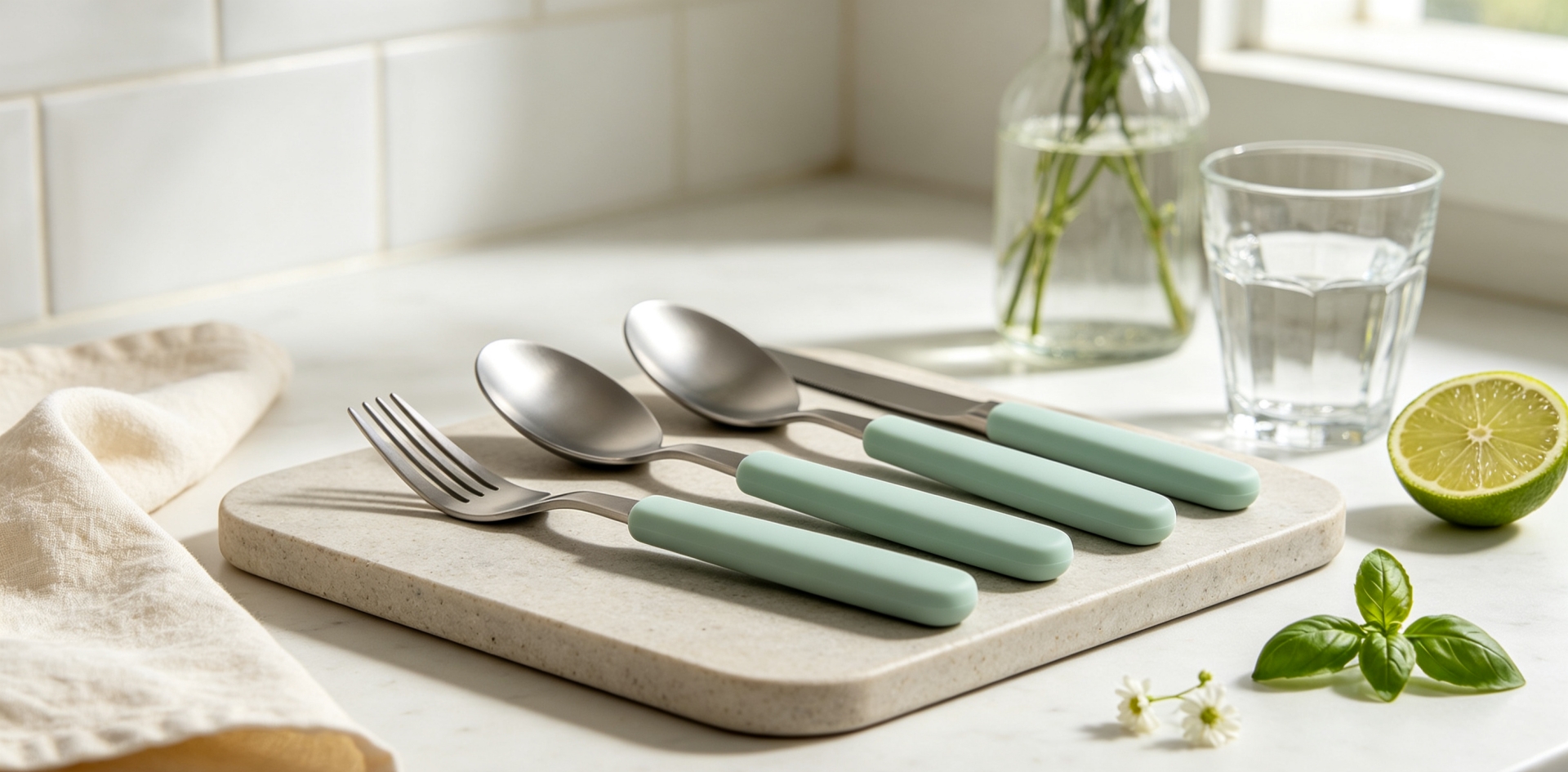
Stainless Steel Cutlery MOQ: What B2B Buyers Need to Know
For wholesalers, retailers, restaurant suppliers and private label brands, minimum order quantity is an important part of purchasing stainless steel cutlery. Before starting a new project, buyers often want to know how many pieces they need to order, whether different products can be combined and how customization may affect the required quantity.
Understanding stainless steel cutlery MOQ can make the purchasing process easier and help buyers prepare a more realistic order plan.
MOQ does not always mean that every project must follow the same quantity. The actual requirement can depend on product design, material, finish, packaging, customization and production arrangements.
What Does MOQ Mean for Cutlery?
MOQ stands for minimum order quantity. It refers to the smallest quantity a manufacturer is prepared to produce or supply for a particular order.
For stainless steel cutlery, MOQ may be discussed in:
- Pieces
- Sets
- Cartons
- Individual product styles
For example, a buyer may purchase forks, spoons and knives separately, or order them as complete cutlery sets.
The actual arrangement should be confirmed with the manufacturer before placing an order.
Why Do Cutlery Manufacturers Set an MOQ?
Manufacturing stainless steel cutlery involves preparation before production begins.
Depending on the product, the factory may need to arrange:
- Raw materials
- Molds or tooling
- Production equipment
- Surface finishing
- Packaging materials
- Quality inspection
- Production scheduling
These preparations require time and resources.
A suitable order quantity allows the production process to operate more efficiently and helps manufacturers maintain consistent product quality.
What Affects Stainless Steel Cutlery MOQ?
MOQ can vary from one project to another.
Important factors include:
Product Design
Standard products may be easier to manufacture in smaller quantities than completely new designs.
A custom handle or specially developed shape may require additional preparation.
Material
Different stainless steel specifications can require different material purchasing arrangements.
If a project uses a specific material that is not part of the factory's regular production schedule, the order quantity may be affected.
Surface Finish
Mirror, matte, brushed and other finishes may involve different production arrangements.
A special finish requested for a small project can sometimes affect the overall order requirement.
Packaging
Custom packaging may require a separate minimum quantity from packaging suppliers.
This is particularly relevant for private label projects using printed boxes, sleeves or custom inserts.
Customization
Logo customization, new tooling and special product designs can affect the quantity required for production.
For this reason, buyers should discuss customization requirements at the beginning of the project.
Standard Products vs Custom Products
There can be a significant difference between ordering standard and custom cutlery.
For standard products, the manufacturer may already have:
- Existing molds
- Established production processes
- Regular raw materials
- Standard packaging
This can make the project easier to arrange.
Custom products may require additional development work, samples or tooling.
For businesses starting with a new product line, standard products can sometimes provide a practical way to test market demand before investing in a completely new design.
Can Different Cutlery Products Be Combined?
This is one of the most useful questions for B2B buyers.
Whether different products can be combined toward an order quantity depends on the manufacturer's production arrangements.
For example, a buyer may want:
- Table forks
- Table spoons
- Table knives
- Teaspoons
Rather than treating every product as a completely separate project, buyers can ask whether several products can be included in one production plan.
This can be especially useful for wholesalers and retailers building a new collection.
MOQ for Cutlery Sets
Ordering complete sets can sometimes make product planning easier.
A set may include:
- Forks
- Knives
- Spoons
- Teaspoons
The number of pieces per set should be determined according to the target market.
For retail brands, a four-piece or larger set may be appropriate.
For hospitality or foodservice customers, individual pieces may be more practical.
MOQ and Private Label Cutlery
For private label cutlery, MOQ can involve more than the stainless steel products themselves.
A private label project may include:
- Product quantity
- Logo customization
- Retail packaging
- Printed cartons
- Product labels
Each part may have its own production requirements.
Discussing the complete project with the manufacturer at an early stage can help avoid unexpected limitations later.
How to Reduce the Impact of MOQ
For buyers with limited initial demand, several approaches can be considered.
One option is to begin with standard products rather than developing a completely new design.
Another is to use standard packaging while testing the market.
Buyers can also focus on a smaller number of core products rather than launching a large collection immediately.
For example, starting with one fork, one spoon and one knife can provide a simple product range for initial sales.
MOQ and Product Cost
Order quantity can influence the overall unit cost.
Production setup, tooling, packaging preparation and material purchasing are distributed across the order quantity.
Larger orders may therefore provide better production efficiency.
However, buyers should not select a quantity based only on the lowest possible unit price.
Inventory costs, warehouse space and expected sales should also be considered.
A slightly smaller initial order may be more practical if it allows a business to test demand before committing to larger inventory.
MOQ for Wholesale Buyers
Wholesalers often need enough inventory to supply multiple customers.
For this type of buyer, MOQ should be considered together with:
- Expected sales
- Customer demand
- Storage capacity
- Product range
- Reorder frequency
A supplier that can maintain consistent product specifications for repeat orders can be particularly useful for wholesale businesses.
MOQ for Retail Brands
Retail brands may have a different approach.
A new brand may want to test a product before committing to a large inventory.
In this situation, it can be useful to discuss whether standard products, existing designs or simplified packaging can support the initial launch.
Once the product demonstrates market demand, larger production quantities can be planned for future orders.
MOQ and Repeat Orders
Initial orders and repeat orders do not always have the same considerations.
Once a product specification has been established, repeat production may be easier to organize.
For example, the manufacturer may already have:
- Product specifications
- Approved samples
- Packaging information
- Production records
- Quality requirements
Maintaining clear records can help make future orders more consistent.
Questions to Ask Before Ordering
Before requesting a quotation, B2B buyers should prepare several basic details:
- Which products are required?
- What stainless steel material is preferred?
- What quantity is needed?
- Is customization required?
- Is a logo required?
- What type of packaging is needed?
- Is the order a one-time purchase or a repeat program?
- What is the target delivery schedule?
Providing this information can help the manufacturer understand the project more accurately.
Why Sample Approval Still Matters
MOQ should not be the first and only consideration.
Before placing a large order, buyers should review the actual product.
Check:
- Product shape
- Weight
- Dimensions
- Surface finish
- Handle design
- Overall quality
For custom projects, the approved sample should become the reference for production.
This can help both sides maintain the same product expectations.
Homefelt for Wholesale and Custom Cutlery Projects
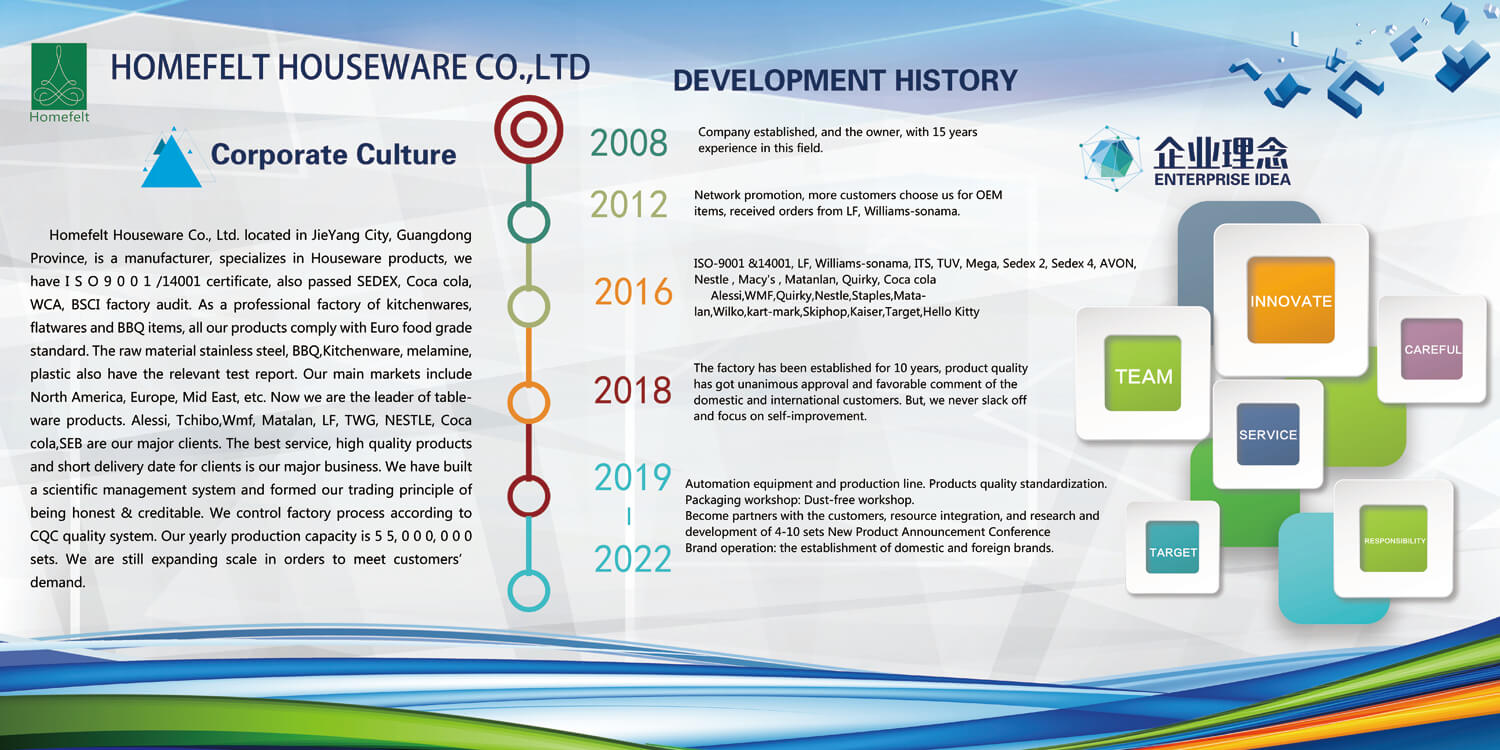
Homefelt has more than 30 years of experience in stainless steel product manufacturing.
The factory produces stainless steel cutlery along with a wide range of kitchen and dining products, BBQ tools, pet bowls and children's tableware.
For international B2B customers, Homefelt can discuss different project requirements, including standard products, customized designs, surface finishes, packaging and private label projects.
For buyers who are unsure about the appropriate order quantity, discussing the product specification and expected application first can help establish a more suitable purchasing plan.
Frequently Asked Questions
What is the MOQ for stainless steel cutlery?
The MOQ depends on the product design, material, finish, packaging and customization requirements. Buyers should confirm the exact quantity with the manufacturer for each project.
Can I order different cutlery products together?
In some projects, different products can be planned together. This depends on the manufacturer's production arrangements and should be confirmed before placing the order.
Does custom cutlery have a higher MOQ?
Custom designs, tooling, special finishes and packaging can increase production requirements. The actual MOQ depends on the specific project.
Can I order stainless steel cutlery with my own logo?
Yes. Logo customization can be discussed for suitable products. The logo method, position and quantity should be confirmed before production.
Is it better to start with a smaller cutlery order?
For a new product or brand, a smaller initial range can help control inventory and test market demand. Standard products may be a practical starting point.
Does a larger order reduce the unit cost?
A larger order can improve production efficiency and may reduce the average manufacturing cost, but the final price also depends on material, design, finish, packaging and other specifications.
Conclusion
Understanding stainless steel cutlery MOQ can help B2B buyers plan their purchasing more effectively.
The appropriate order quantity depends on the product itself as well as material, design, finishing, packaging and customization requirements. Standard products may offer a simpler starting point, while customized products can provide greater differentiation for established brands.
Before placing a bulk order, buyers should confirm the product specifications, quantity, customization requirements and packaging together with the manufacturer.
With more than 30 years of stainless steel manufacturing experience, Homefelt works with international wholesalers, retailers, foodservice businesses and private label customers on different stainless steel product projects.
A clear specification at the beginning can make the first order easier to manage and provide a reliable foundation for future repeat purchasing.

Commercial Stainless Steel Cutlery for Foodservice
Stainless Steel Cutlery for Catering and Foodservice
Related Article