
B2B Stainless Steel Cutlery Supplier for Multi-Market Product Programs
Stainless Steel Cutlery Supplier: Managing Multi-Market B2B Product Requirements
For international brands, wholesalers, importers, and distributors, stainless steel cutlery is rarely purchased for only one market. A company may sell the same general product category across several countries while adjusting the assortment, specifications, packaging, or product presentation according to different commercial requirements.
This creates a practical challenge for purchasing teams. The supplier needs to understand not only how to manufacture stainless steel knives, forks, spoons, and flatware sets, but also how to manage different product requirements within an organized B2B production program.
For businesses developing their own cutlery range, choosing a manufacturer that can support multiple product requirements can make the sourcing process more efficient and provide greater flexibility as the business expands.
Understanding Different Market Requirements
Different markets may have different expectations for stainless steel flatware. A distributor serving the hospitality sector may focus on durable everyday cutlery, while a homeware brand may be more interested in distinctive designs and coordinated collections.
Retail programs can also require different combinations of knives, forks, and spoons compared with foodservice projects. Some customers may purchase individual pieces, while others may require complete cutlery sets.
These differences do not necessarily mean that every market requires a completely new product. In many cases, an experienced manufacturer can adapt a suitable product platform to different commercial requirements.
This approach allows buyers to build a broader product program while keeping the manufacturing process organized.
Building a Flexible Cutlery Product Program
A flexible product program can be valuable for companies that operate across multiple markets.
Instead of developing completely unrelated products for every customer, a B2B buyer can work with a manufacturer to establish a core range and then develop selected variations for different sales channels.
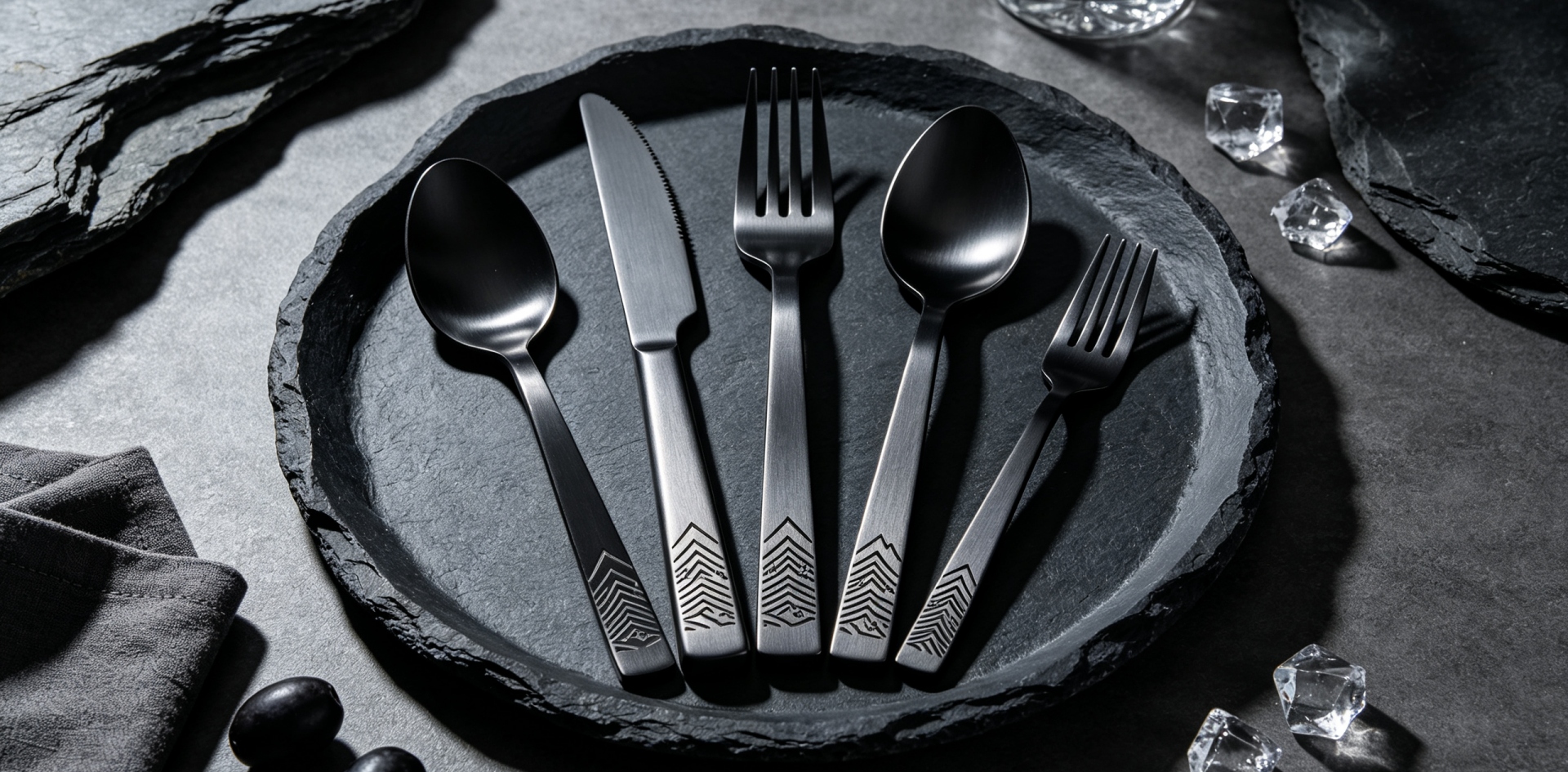
For example, a basic stainless steel cutlery collection may be offered in several configurations. One market may require a five-piece set, another may need a larger household set, while a distributor may prefer individual knives, forks, and spoons for professional customers.
The manufacturer can work from the agreed specifications and produce the required SKUs according to the purchasing plan.
This gives the buyer greater freedom when developing a commercial range without unnecessarily complicating the entire product portfolio.
OEM Manufacturing for Different Customer Programs
OEM production is particularly useful when a distributor or brand has its own product specifications.
Instead of purchasing a standard catalog item, the buyer can provide requirements relating to the shape, dimensions, material, surface treatment, packaging, branding, or product combination.
The manufacturer then develops the production solution according to the agreed specifications.
For businesses serving several customers, this can create an efficient structure in which different collections are manufactured through the same experienced stainless steel cutlery factory while maintaining their individual product identities.
This is especially useful for distributors that need to offer customized solutions to different retail or hospitality customers.
ODM Support for Product Development
Some B2B buyers know the type of product they want but do not have a complete technical design.
In this situation, ODM cooperation can provide another route to product development.
The buyer may start with a general concept, market positioning, reference product, or collection style. The manufacturer can then discuss the practical production requirements and develop a suitable stainless steel cutlery solution.
This can be useful for brands entering the flatware market for the first time or for established companies looking to introduce a new collection.
The key is to turn the commercial concept into specifications that can be consistently manufactured in volume.
Managing Different SKUs Efficiently
Multi-market programs can quickly increase the number of SKUs.
A company may have several handle designs, different set configurations, multiple individual pieces, and separate packaging options. If these products are not organized properly, purchasing and production communication can become unnecessarily complicated.
A professional B2B manufacturing program should therefore establish clear product information for every SKU.
The buyer and factory can work from agreed product references, specifications, approved samples, and order quantities. This creates a common reference point for future production.
For repeat business, this structure can make it easier to identify exactly which products need to be manufactured and in what quantities.
Supporting Wholesale and Distribution Businesses
Wholesale customers often need flexibility because their product range may serve many downstream customers.
A distributor may require several types of stainless steel flatware at the same time, with some products ordered in large quantities and others maintained as supporting SKUs.
Working with a manufacturer that can handle both standard and customized products allows the distributor to build a more complete offering.
Instead of relying entirely on ready-made products, the buyer can develop selected private label or custom collections while continuing to purchase other products as part of a broader wholesale program.
This combination can help create a more practical product portfolio for different customer groups.
Private Label Flatware for International Brands
Private label programs require a closer connection between manufacturing and brand requirements.
The finished cutlery needs to reflect the identity of the brand while remaining suitable for efficient production and commercial distribution.
A private label project may involve customized cutlery designs, selected finishes, branded packaging, product sets, or a combination of these elements.
For international brands, the ability to manufacture several related products under one coordinated program can be particularly valuable.
The manufacturer can work with the brand to establish the product specifications and then support production as the collection expands.
Why Factory Experience Matters
Multi-market B2B projects often involve more than simply producing a large quantity of metal products.
The factory needs to understand how different specifications affect manufacturing, how related SKUs can be organized, and how customized products can remain commercially practical.
An experienced stainless steel cutlery manufacturer can help buyers identify which requirements are straightforward to implement and which may require additional development.
This practical manufacturing knowledge can be useful when a company is planning a new product range, expanding into another market, or creating a private label collection.
Homefelt supports B2B customers with stainless steel knives, forks, spoons, cutlery sets, and flatware programs. The factory works with brands, wholesalers, importers, and distributors on OEM, ODM, private label, custom manufacturing, and bulk production projects.
From an initial product concept to production specifications and volume manufacturing, the focus is on creating stainless steel cutlery that matches the customer's commercial requirements.
Planning a Multi-Market Cutlery Order
Before placing a large order, buyers can prepare a clear product list covering the required models, quantities, specifications, packaging requirements, and target markets.
This information gives the manufacturer a better understanding of the complete project rather than treating every product as an isolated order.
For larger programs, buyers can also identify which SKUs are core products and which are market-specific variations. This helps the factory understand production priorities and allows the purchasing team to manage the product range more effectively.
A structured request also makes it easier to discuss quotation, customization, samples, and production arrangements with the supplier.
From Product Requirements to Bulk Production
The value of a B2B stainless steel cutlery supplier is not limited to manufacturing individual products.
For companies selling across multiple markets, the supplier can become an important part of the product development and purchasing process.
A well-organized manufacturing program can support different product specifications while maintaining a consistent approach to production. This allows brands and distributors to expand their range without starting the sourcing process from zero every time they introduce another SKU.
For companies planning long-term growth in the flatware category, this type of manufacturing flexibility can be especially useful.
Conclusion
Managing stainless steel cutlery for multiple markets requires more than finding a factory that can produce knives, forks, and spoons. It requires a manufacturing partner that understands different B2B requirements and can organize customized products into a practical production program.
OEM, ODM, private label, wholesale, and bulk manufacturing provide different ways for brands and distributors to develop their own stainless steel flatware ranges.
Whether you are launching a new collection, expanding an existing product line, or preparing a multi-market purchasing program, providing clear product requirements to an experienced stainless steel cutlery manufacturer can make the process more efficient.
Homefelt can support B2B buyers with customized stainless steel cutlery manufacturing and volume production for international markets.
Request a Quote for Custom Stainless Steel Cutlery
Explore OEM and ODM Flatware Manufacturing
Develop a Private Label Stainless Steel Cutlery Collection
Single-Source Stainless Steel Cutlery for B2B Orders
Stainless Steel Cutlery Set Piece Count: A Practical Guide for B2B Buyers
Related Article



