
How to Manage Packaging Artwork Approval for Stainless Steel Cutlery Projects
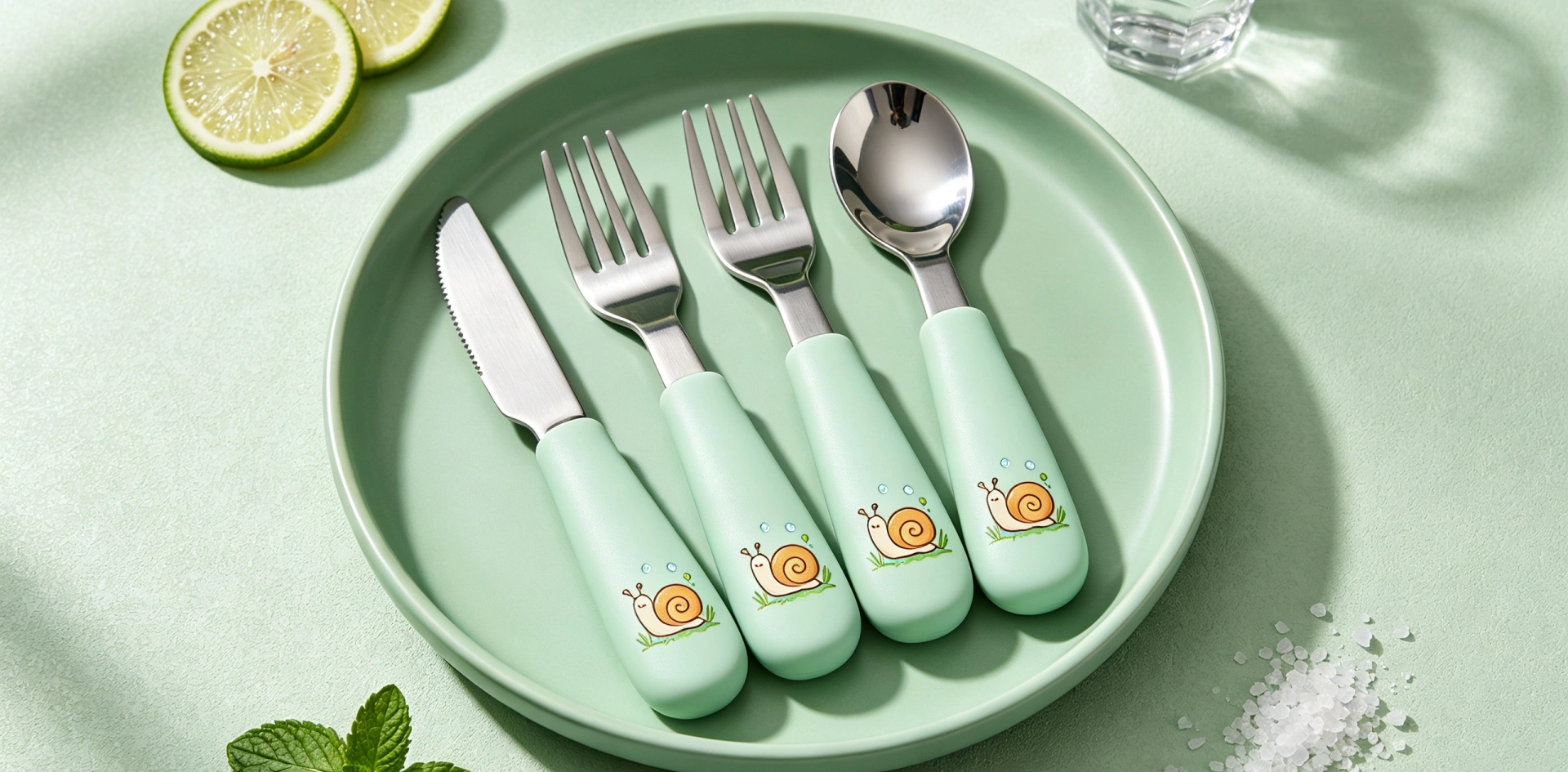
How to Manage Packaging Artwork Approval for Stainless Steel Cutlery Projects
Packaging artwork is an important checkpoint in a stainless steel cutlery project. A product may meet its material and dimensional specifications, yet incorrect wording, an outdated logo, a misplaced barcode, or an inaccurate piece count can still create problems for the finished order.
For importers, distributors, retailers, and private-label brands, an organized artwork approval process helps ensure that the packaging matches the approved product and commercial requirements. It also reduces the risk of discovering avoidable errors after thousands of boxes have already been printed.
Homefelt factory works with B2B buyers on stainless steel knives, forks, spoons, and complete flatware sets. For OEM, ODM, wholesale, and private-label projects, packaging details can be coordinated with product design and bulk manufacturing according to the confirmed project scope.
1. Prepare the Packaging Brief Before Design Begins
Artwork approval starts with an accurate brief. Buyers should provide the information needed to design the packaging before a designer creates the first layout.
A practical brief should identify the cutlery model, set composition, target market, packaging format, brand assets, required languages, and any customer-specific labeling instructions. It should also clarify whether the packaging is intended for retail display, gifting, storage, or bulk distribution.
For a set containing dinner forks, dinner spoons, teaspoons, and table knives, the brief should specify the exact number of each piece. If the set includes a special handle finish or decorative treatment, the packaging concept should reflect the actual product rather than a similar-looking model.
Buyers should also provide approved logo files and brand guidelines where available. Low-resolution screenshots or logos copied from existing packaging may lead to blurred printing, incorrect proportions, or inconsistent colors.
The more complete the initial brief, the fewer assumptions the design team needs to make.
2. Match Artwork to the Approved Cutlery Configuration
One of the most common packaging risks is a mismatch between the artwork and the product configuration. This can happen when a buyer changes a handle design, piece count, finish, or model after the packaging layout has already been prepared.
Before reviewing artwork, establish the product reference that the packaging must represent. This may include an approved sample, product specification sheet, model number, and final set composition.
Check that the following details are consistent:
-
Product name and model reference
-
Number and type of cutlery pieces
-
Product photographs or illustrations
-
Material and finish descriptions
-
Logo position and branding
-
Color or decorative details
-
Package contents and any included accessories
For example, if a buyer changes a set from a four-piece place setting to a larger assortment, the product image, contents list, and relevant packaging text may all need revision. Updating only the written piece count is not enough if the visual representation is also incorrect.
A final artwork review should compare the packaging directly with the approved product reference.
3. Check the Print Layout and Technical Details
A design that looks correct on a computer screen may not be ready for production. Packaging files need to follow the printer's technical requirements, including dimensions, bleed, safe areas, color settings, image resolution, and font handling.
The exact requirements depend on the packaging material and printing method. A folding carton, paper sleeve, gift box, and printed insert may use different dielines and production specifications.
Before approval, ask the packaging supplier to confirm that the artwork fits the correct dieline and that important content will remain clear after folding, cutting, and assembly. Text should not sit too close to a cut edge or disappear into a fold.
Color expectations should also be documented. If a brand color is important, agree on the applicable color reference and confirm whether a physical print proof is needed. Screen colors can differ from printed results because of display settings, printing processes, and material surfaces.
For a customized stainless steel cutlery collection, packaging artwork and product finish should be reviewed as separate but coordinated elements. A printed image should not be treated as proof that the physical cutlery finish will look identical under every lighting condition.
4. Verify Barcodes, Labels, and Required Information
Packaging may contain barcodes, product identifiers, origin information, care instructions, recycling marks, or other statements required by the buyer or destination market. These details should be checked against the relevant requirements before final approval.
Barcode verification should cover the correct number, format, placement, and print readability. If a retail customer provides its own barcode data, the buyer should confirm that the artwork uses the approved information and that the code has not been stretched or altered in a way that affects scanning.
Product descriptions and material statements require similar care. Do not claim a particular stainless steel grade, performance characteristic, certification, or test result unless the statement is accurate and supported by appropriate documentation.
Requirements can differ by destination, product type, and sales channel. Buyers should confirm applicable labeling obligations with the relevant customer or qualified compliance adviser instead of assuming that one packaging layout is suitable for every market.
5. Use a Structured Artwork Review Checklist
A checklist helps purchasing, design, quality, and sales teams review the same version of the artwork. It also reduces the chance that a team approves the appearance while overlooking important commercial details.
| Review area | What to confirm |
|---|---|
| Branding | Correct logo, proportions, and approved colors |
| Product identity | Correct model and collection name |
| Set contents | Accurate item names and quantities |
| Product images | Match the approved cutlery configuration |
| Technical layout | Correct dieline, bleed, and safe areas |
| Text and language | Spelling, measurements, and approved wording |
| Barcode and labels | Correct data and placement |
| Supporting claims | Statements match available evidence |
| Version control | Revision number and approval status |
| Final proof | Required changes completed before release |
Each item should have a clear review outcome. If a detail is still pending, mark it for revision rather than approving the artwork conditionally without defining what remains outstanding.
6. Manage Revisions Without Losing the Approved Version
Artwork revisions are normal in customized cutlery projects. A buyer may request a logo adjustment, a different language, a revised product image, or updated carton information. Problems arise when several versions circulate without clear identification.
Use a consistent naming convention that includes the project or model reference, revision number, and date. Keep the latest review copy separate from superseded files, and identify which version has received final written approval.
A simple revision log can record the change requested, the person responsible, the date submitted, and the approval status. This is especially useful when the buyer, designer, factory, and packaging supplier work in different locations.
Before mass printing begins, confirm that the printer or packaging supplier is using the approved file. If the cutlery specifications change after approval, assess whether the packaging needs to be revised and approved again.
Written approval provides a clear reference for production and helps prevent confusion over which version was authorized.
7. Decide When to Request a Physical Print Proof
A digital proof is useful for checking layout, wording, and general appearance. A physical proof can provide additional information about actual color, paper or board texture, surface coating, folding, and assembly.
A physical proof may be particularly valuable for premium gift boxes, complex structures, distinctive brand colors, or packaging with multiple printed panels. For simpler packaging, a digital proof may be sufficient if the buyer and supplier agree that it meets the project's needs.
The decision should consider the cost of a mistake, packaging complexity, production quantity, and customer expectations. If a proof is required, identify who approves it and whether any changes to the proof require another review.
For bulk orders, it is generally better to resolve important design concerns before authorizing full-scale printing. The approved proof or final artwork should be retained as a project record.
8. Coordinate Artwork Approval with the Production Schedule
Packaging and cutlery production do not always follow the same sequence. The product may be undergoing sampling while the packaging design is still being developed, or the cutlery may be ready before printed materials have been approved.
To avoid unnecessary delays, agree on artwork deadlines alongside product approval, packaging procurement, and shipment planning. Identify which decisions must be finalized before production can proceed and which can be completed in parallel without creating risk.
Homefelt factory can discuss product specifications, customization requirements, packaging coordination, and transportation arrangements with B2B customers according to the confirmed project scope. Buyers should confirm the artwork schedule, packaging lead time, and production milestones directly for each order rather than relying on a universal timeline.
For a private-label project, the final checkpoint should verify that the approved cutlery, packaging artwork, set composition, and order specification all refer to the same configuration.
You May Be Interested In
How to Maintain Brand Consistency Across Private Label Stainless Steel Cutlery
How to Set an Inspection Sampling Plan for Stainless Steel Cutlery Orders
Related Article



