How to Approve Packaging Artwork for Stainless Steel Cutlery Orders
How to Approve Packaging Artwork for Stainless Steel Cutlery Orders
Packaging artwork approval is an important checkpoint in stainless steel cutlery projects. For importers, wholesalers, retailers, and private-label brands, the packaging is more than a container: it communicates product information, presents the brand, and helps products move through warehousing and retail operations. A small error in a barcode, product image, set composition, or printed specification can affect thousands of units if it is discovered after mass printing.
A clear artwork approval process allows buyers and factories to confirm that the package accurately represents the stainless steel spoons, forks, knives, or flatware sets inside. It also helps purchasing teams manage revisions, avoid misunderstandings, and keep production schedules under control.
1. Prepare the Correct Packaging Brief
Before a designer starts the artwork, the buyer should provide a complete packaging brief. This should identify the product model, sales market, package type, dimensions, material, printing requirements, and intended sales channel.
For a stainless steel cutlery set, the brief should also confirm the number and type of pieces included. A package designed for a 16-piece set cannot automatically be reused for a 24-piece set, even when both products share a similar appearance. Images, product descriptions, quantity statements, and internal tray layouts must reflect the actual configuration.
Useful reference materials include the approved product specification, current product photographs, logo files, packaging dimensions, and any retailer-specific artwork instructions. If the project involves several models, assign a separate reference number to each packaging design to reduce the risk of mixing files.
2. Match the Artwork to the Approved Product
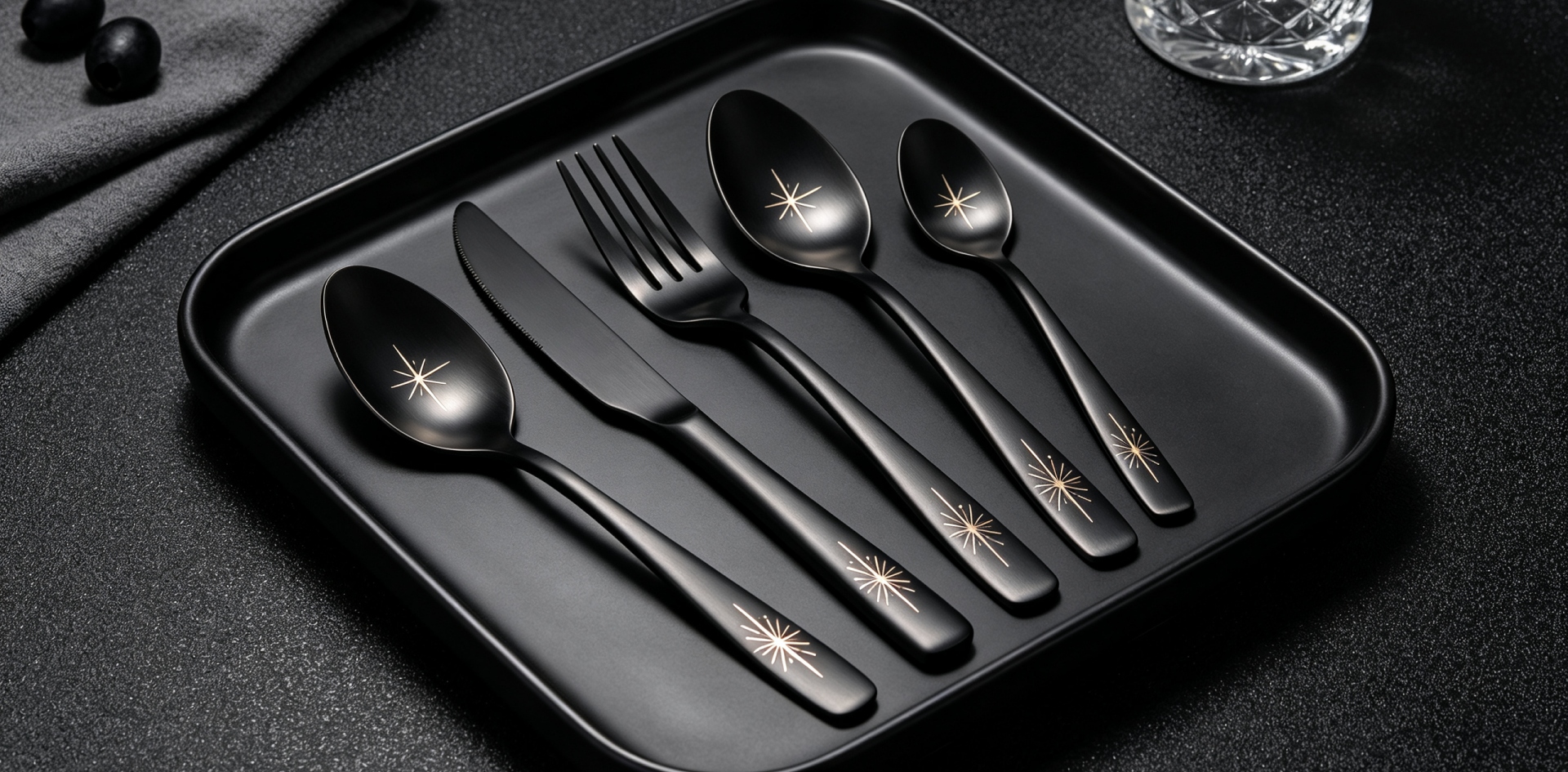
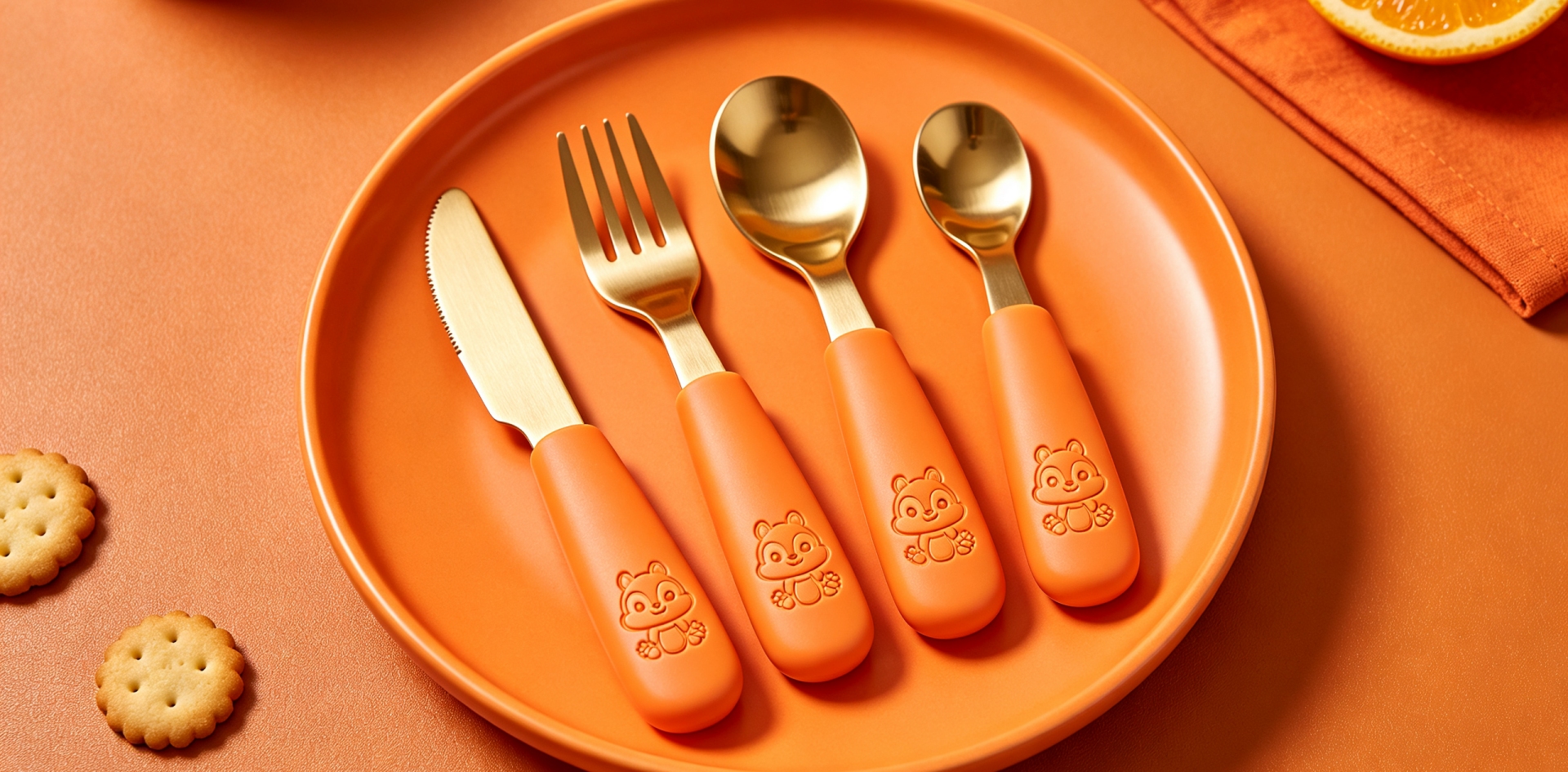
Product images and descriptions should match the final approved sample. Check the handle shape, finish, color, pattern, and proportions of the stainless steel cutlery. If the package shows a gold-tone flatware set, the image should not represent a silver-tone version or an earlier prototype.
The same principle applies to product claims. Statements about stainless steel grade, coating, dishwasher suitability, or other performance characteristics should be used only when they are supported by the relevant product specifications or evidence. Avoid adding broad claims simply because they sound attractive on a retail package.
For knives, forks, and spoons sold as a set, review the arrangement and quantity of each item. If the product includes a special serving spoon or additional pieces, make sure these are represented correctly. Buyers should confirm whether the package displays the complete set or a representative selection.
3. Verify Every Text Element
Packaging artwork often passes through several teams, so text errors can remain unnoticed if reviewers focus only on appearance. Check the brand name, model number, product name, piece count, material description, care instructions, country-of-origin statement where required, and importer or distributor details where applicable.
Text should be reviewed against an approved source document rather than copied from an older package. Pay particular attention to decimal points, dimensions, material grades, and unit conversions. A small typographical difference can create confusion between a product specification and a marketing description.
If multiple languages are required, use reviewed translations and confirm that each version communicates the intended meaning. Do not assume that a translation fits correctly just because the original-language layout looks balanced. Different languages may require more space and can affect font size, line breaks, or label placement.
4. Check Barcode and Retail Information
For retail-ready stainless steel cutlery packaging, barcode verification deserves its own approval step. Confirm that the assigned barcode belongs to the correct product and packaging level. A single retail set, a multipack, and a master carton may require different identifiers depending on the buyer's system.
Review the barcode number against the retailer's item data, and check that the printed symbol is positioned on a suitable surface. Avoid placing it across a fold, seam, strong curve, or area likely to be covered by a label. The final printed barcode should be tested for readability using appropriate verification procedures rather than judged only by its appearance on a screen.
Where a retailer supplies specific packaging or labeling instructions, use the current version and confirm any requirements for carton labels, shipping marks, or product identification before printing.
5. Review Layout, Color, and Production Feasibility
A digital proof can show general layout, but it may not fully represent the final printed result. Buyers should check logo placement, image sharpness, text legibility, margins, folds, glue areas, and the relationship between artwork and the packaging dieline.
Color-sensitive designs may need an agreed color reference or a physical print proof. Metallic effects, dark backgrounds, and special finishes can appear differently depending on the printing process and material. If the package uses a window, printed insert, molded tray, or protective sleeve, verify that the design remains practical when assembled.
The factory or packaging supplier should also check whether critical text or graphics sit too close to cutting and folding lines. Artwork that looks correct on a flat screen may lose important content during conversion if the dieline is not followed precisely.
6. Control File Versions and Approval Responsibility
One of the most common causes of packaging mistakes is uncertainty about which file is approved. Use a consistent file-naming system that includes the product model, market or language, revision number, and date. Keep editable source files and final production files clearly separated.
A revision log should record what changed, who requested it, who reviewed it, and whether the change affects cost or timing. If the buyer updates a logo or product description after approval, the factory should not assume the change is minor. It may require another proof, a new approval, or replacement of previously prepared packaging materials.
Assign final approval to a named buyer or authorized team. Comments from different departments should be consolidated before the factory receives a release instruction. This reduces conflicting feedback and prevents production from starting while important details remain unresolved.
7. Confirm the Final Proof Before Mass Printing
Before releasing packaging for bulk production, review the complete proof one final time against the approved product specification. Confirm the product model, piece count, artwork revision, barcode, text, dimensions, and packaging structure.
For large orders, a signed or otherwise documented approval record can provide a clear reference if questions arise later. The approval should identify the exact file version and distinguish between approval of the artwork and approval of the physical packaging sample, when both are required.
If packaging materials are already in production, any subsequent changes should be assessed for their impact on cost, waste, and delivery timing. Buyers and suppliers should agree on how to handle obsolete printed materials rather than leaving responsibility unclear.
8. How Homefelt Supports Customized Cutlery Packaging
Homefelt factory supplies stainless steel spoons, forks, knives, and flatware sets for wholesale and customized B2B projects. For OEM, ODM, and private-label orders, packaging requirements can be discussed alongside product specifications, brand presentation, packing methods, and transportation arrangements.
Buyers can help the process move smoothly by supplying accurate artwork files, approved product details, barcode information where applicable, and destination-market requirements early in the project. Homefelt can coordinate packaging discussions with the cutlery order so that product selection and presentation are reviewed together before bulk production.
For your next stainless steel cutlery project, prepare the intended set composition, packaging format, target quantity, destination market, and branding requirements before requesting a quotation. Contact ingrid@homefelt.net to discuss custom flatware, packaging options, and bulk-order arrangements.
You May Be Interested In
-
How to Manage Customer-Specific Specifications for Stainless Steel Cutlery Orders
-
How to Review Export Label Content for Stainless Steel Cutlery Products
-
How to Build a Clear SKU Naming System for Stainless Steel Cutlery Collections
-
How to Prepare a Stainless Steel Cutlery Collection for Market Launch
How to Validate Retail Barcodes for Stainless Steel Cutlery Products
How to Review a Stainless Steel Cutlery Supplier with a B2B Scorecard
Related Article