
How to Create Effective Stainless Steel Cutlery Product Data Sheets for B2B Buyers
How to Create Effective Stainless Steel Cutlery Product Data Sheets for B2B Buyers
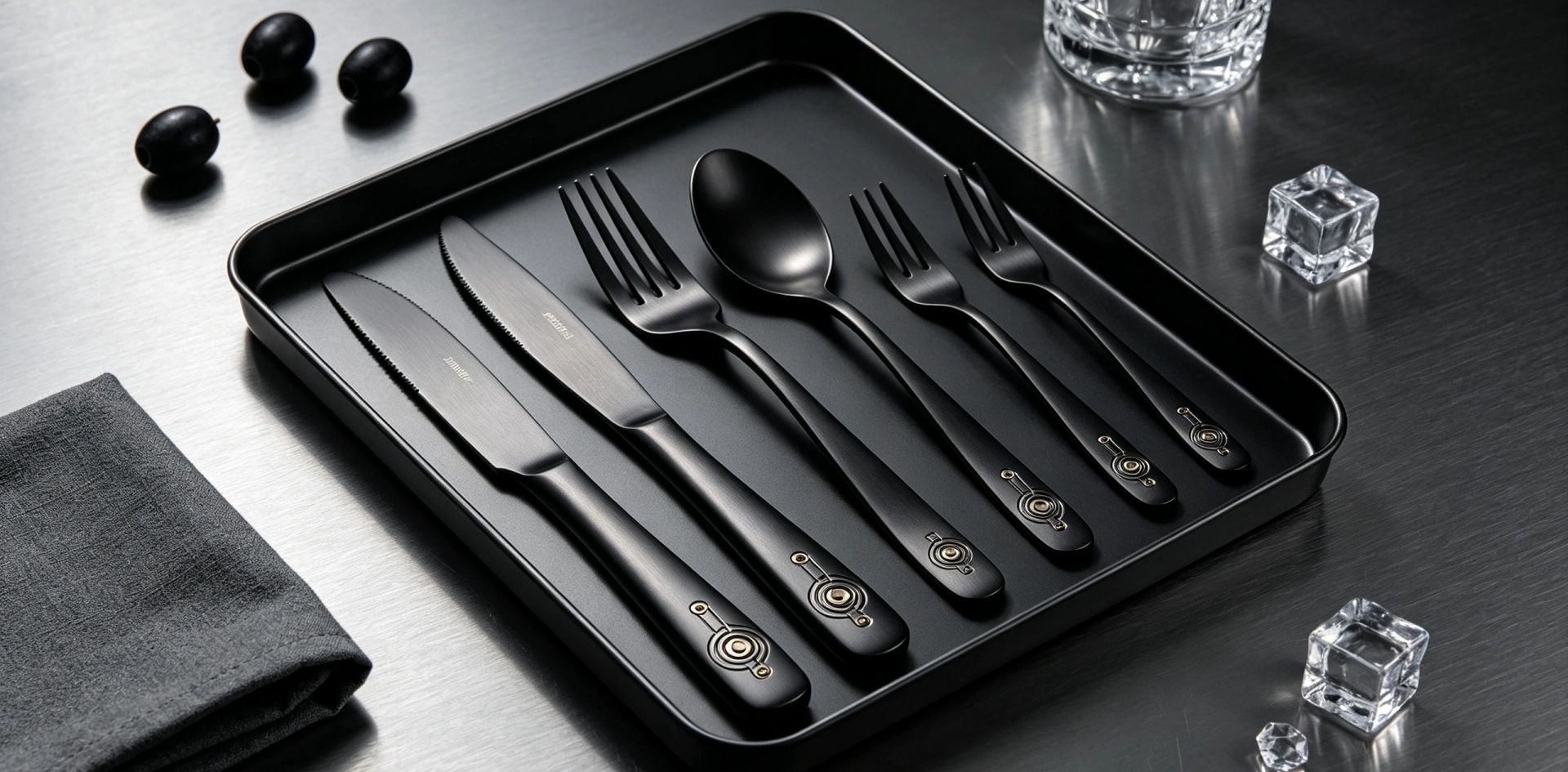
When buyers evaluate stainless steel cutlery for distribution, retail, or hospitality supply, clear product information helps them compare models and make purchasing decisions. Product photographs show the appearance of knives, forks, and spoons, but they cannot communicate every important detail about material, dimensions, weight, packaging, or customization.
A well-prepared product data sheet brings these details together in a consistent format. It helps importers prepare quotations, enables distributors to maintain accurate product listings, and gives purchasing teams a reference when confirming bulk orders.
Homefelt factory works with B2B customers on stainless steel cutlery, including customized products, OEM/ODM projects, private-label collections, wholesale orders, and large-volume manufacturing. Accurate product data supports communication from the initial selection stage through sample approval and production confirmation.
1. Start with a Clear Product Identification Section
Every data sheet should identify the product without ambiguity. This is particularly important when a collection contains several similar-looking forks, spoons, knives, or coordinated cutlery sets.
Include the product name, model number, product category, image, and version date. If the product belongs to a collection, record the collection name and identify any individual pieces included in the set.
For example, a flatware set may contain dinner forks, dinner spoons, teaspoons, and table knives. The data sheet should specify the quantity of each item rather than describing the package only as a complete set.
For customized projects, distinguish the standard model from the buyer's customized version. A logo, handle pattern, finish, or packaging change may create a different approved configuration even when the basic product shape remains similar.
Consistent identification reduces the risk of selecting the wrong model during quotation, sample review, or repeat ordering.
2. Record Material Specifications Accurately
Material information is one of the most important parts of a stainless steel cutlery data sheet. Buyers may compare products according to their intended application, target price, and material requirements.
Where verified, specify the stainless steel grade used for each product. Avoid using a generic description such as “high-quality stainless steel” as a substitute for a material specification. If different components use different materials, identify them separately where relevant.
A practical material section can include:
-
Confirmed stainless steel grade
-
Material specification for individual components, where applicable
-
Handle material for products with non-steel handles
-
Surface finish and any decorative treatment
-
Available supporting material documentation
-
Relevant care instructions or limitations
The data sheet should distinguish confirmed technical information from optional features that depend on a particular order. If material testing or documentation is available, ensure that it corresponds to the relevant product or material and is suitable for the buyer's intended review.
3. Use Consistent Units for Dimensions and Weight
Dimensions and weight allow B2B buyers to compare products, estimate packaging requirements, and check whether a design matches their market expectations.
Depending on the item, useful measurements may include total length, maximum width, handle width, thickness, and product weight. For spoons, bowl dimensions may also be relevant. For forks, buyers may want the overall length and tine configuration. For table knives, the blade profile and overall dimensions can help distinguish models.
A sample data table might look like this:
| Specification | Example format |
|---|---|
| Product length | mm |
| Maximum width | mm |
| Thickness | mm |
| Individual item weight | g |
| Material | Confirmed grade |
| Surface finish | Mirror or brushed |
| Measurement reference | Approved sample or drawing |
The units and measurement methods should remain consistent across the collection. If dimensions or weight have agreed tolerances, include them in the controlled specification rather than assuming every manufactured item will have exactly the same measured value.
For a customized order, confirm which drawing or approved sample takes priority if a discrepancy appears between documents.
4. Describe Finish and Appearance with Reference Images
Surface finish influences how customers perceive stainless steel cutlery. A mirror finish produces a reflective appearance, while a brushed finish creates a more subdued visual effect. Colored coatings, decorative patterns, and special handle treatments may also be available depending on the design.
Product data sheets should use accurate descriptions and clear photographs. Where possible, include views that show the front, back, handle, working end, and important decorative details. A single front-facing image may not reveal the construction or appearance of the entire item.
For custom designs, record the agreed finish reference, logo location, color specification where applicable, and any approved artwork. These details help the factory and buyer work from the same reference during sampling and bulk production.
Photographs are useful for identification, but they should not replace written requirements for measurable characteristics or approved physical samples where those are necessary.
5. Make Packaging Information Easy to Compare
Packaging details can influence the commercial suitability of a cutlery product. Retail buyers may require gift boxes or branded packaging, while distributors may prefer simpler packs that support storage and bulk handling.
A product data sheet should identify the standard packaging format and separate it from optional customized solutions. Depending on the order, relevant information may include the number of pieces per set, inner-pack quantity, carton quantity, packaging dimensions, carton material, and agreed labeling requirements.
For export orders, buyers may also need carton dimensions and gross or net weight to plan storage and transportation. These values should be confirmed against the actual packing configuration rather than copied from another model.
When a project requires customized packaging, record the approved artwork, language, barcode or labeling details, and packaging version. Keeping these details together reduces the possibility of outdated packaging being used for a new production run.
6. Organize Certificates and Test Documents by Scope
Some B2B buyers need supporting documents as part of their supplier evaluation or product approval process. The data sheet can identify which relevant documents are available and how they relate to the product.
Potential supporting materials include applicable factory management-system certificates, audit documentation, material records, product-specific test reports, and inspection records. The appropriate documents depend on the product, market, customer requirements, and actual testing completed.
The data sheet should never imply that a certificate covers a product or requirement outside its documented scope. A factory-level certificate and a product-specific laboratory report serve different purposes. Buyers should review the issuer, validity, covered product or facility, test method, and relevant limitations.
If a report applies only to a particular material or model, identify that scope clearly. Where a required document has not yet been obtained, list it as pending rather than presenting it as completed evidence.
This approach helps buyers assess the available documentation without creating unrealistic expectations.
7. Separate Standard Options from Customization Choices
For OEM, ODM, and private-label projects, a product data sheet should make it easy to distinguish the standard product from available customization options.
Possible project variables include logo application, handle design, finish, set composition, packaging, and labeling. Not every option is suitable for every model or order quantity, so availability should be confirmed with the factory.
A useful format can divide the information into three sections:
-
Standard specification: the existing approved product configuration
-
Available options: features that can be discussed for customization
-
Project-specific confirmation: details requiring quotation, sampling, or technical approval
Homefelt factory can discuss customization, product design, packaging coordination, and transportation arrangements according to the project scope. Before mass production, buyers should confirm the final specification, sample reference, packaging details, and commercial terms in writing.
This structure helps distributors explain possibilities to their customers without treating every requested change as automatically available.
8. Maintain One Controlled Version of Each Data Sheet
Product information may change as a collection develops. A new finish, revised packaging format, updated measurement, or different logo arrangement can make an older data sheet inaccurate.
Assign each document a version number or revision date. Keep a controlled master copy and make sure the sales team uses the latest approved version. When a change affects an existing product, record what changed and whether it applies to current orders, future orders, or both.
A distributor managing several cutlery collections can use a regular document review to check product images, dimensions, packaging information, and available supporting records. This reduces inconsistent descriptions across quotations, catalogs, and online product pages.
You May Be Interested In
How to Set an Inspection Sampling Plan for Stainless Steel Cutlery Orders
How to Prepare Stainless Steel Cutlery Distributors for Successful Product Sales
Related Article



