How to Prepare a Product Photography Brief for Stainless Steel Cutlery Collections
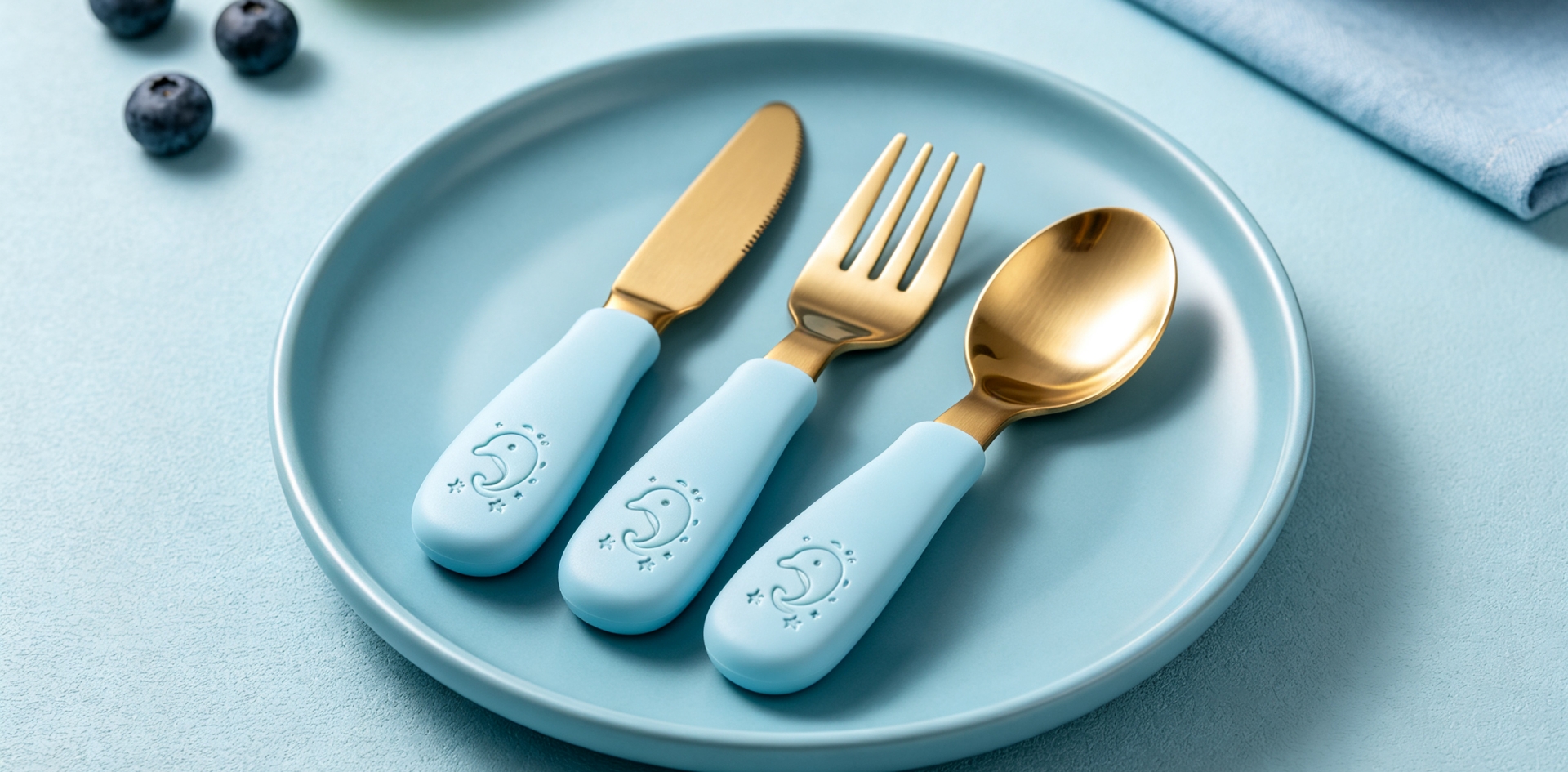
How to Prepare a Product Photography Brief for Stainless Steel Cutlery Collections
For importers, wholesalers, distributors, and retail brands, product photography is an important part of presenting a stainless steel cutlery collection to customers. Clear images help buyers understand the shape, finish, proportions, and packaging of spoons, forks, knives, and complete flatware sets before placing an order.
However, reflective stainless steel can be difficult to photograph. Bright highlights may hide surface details, dark reflections can make a polished handle appear uneven, and an image taken from the wrong angle may misrepresent the shape of a spoon bowl or the thickness of a fork handle. A structured photography brief helps the buyer and manufacturer agree on what the images must communicate before production of the final visual assets begins.
1. Define the Purpose of Each Image
Start by identifying where the images will be used. A wholesale catalog, retailer product page, distributor presentation, and packaging design project may each require different image types.
For a B2B catalog, buyers often need clean product images that show the overall design and allow comparisons between models. Retail product pages may also need close-ups of surface finishes, handle details, and the contents of a cutlery set. Sales presentations can benefit from coordinated images showing a complete collection or several related designs together.
List the intended uses before arranging the shoot. This helps determine the required image count, backgrounds, angles, resolution, and file formats. It also prevents unnecessary reshoots caused by discovering additional requirements after the images have been delivered.
2. Prepare an Accurate Product Reference Sheet
A photography brief should identify each product by its approved model number or SKU. Include the product category, dimensions, material specification, finish, and any relevant customization details.
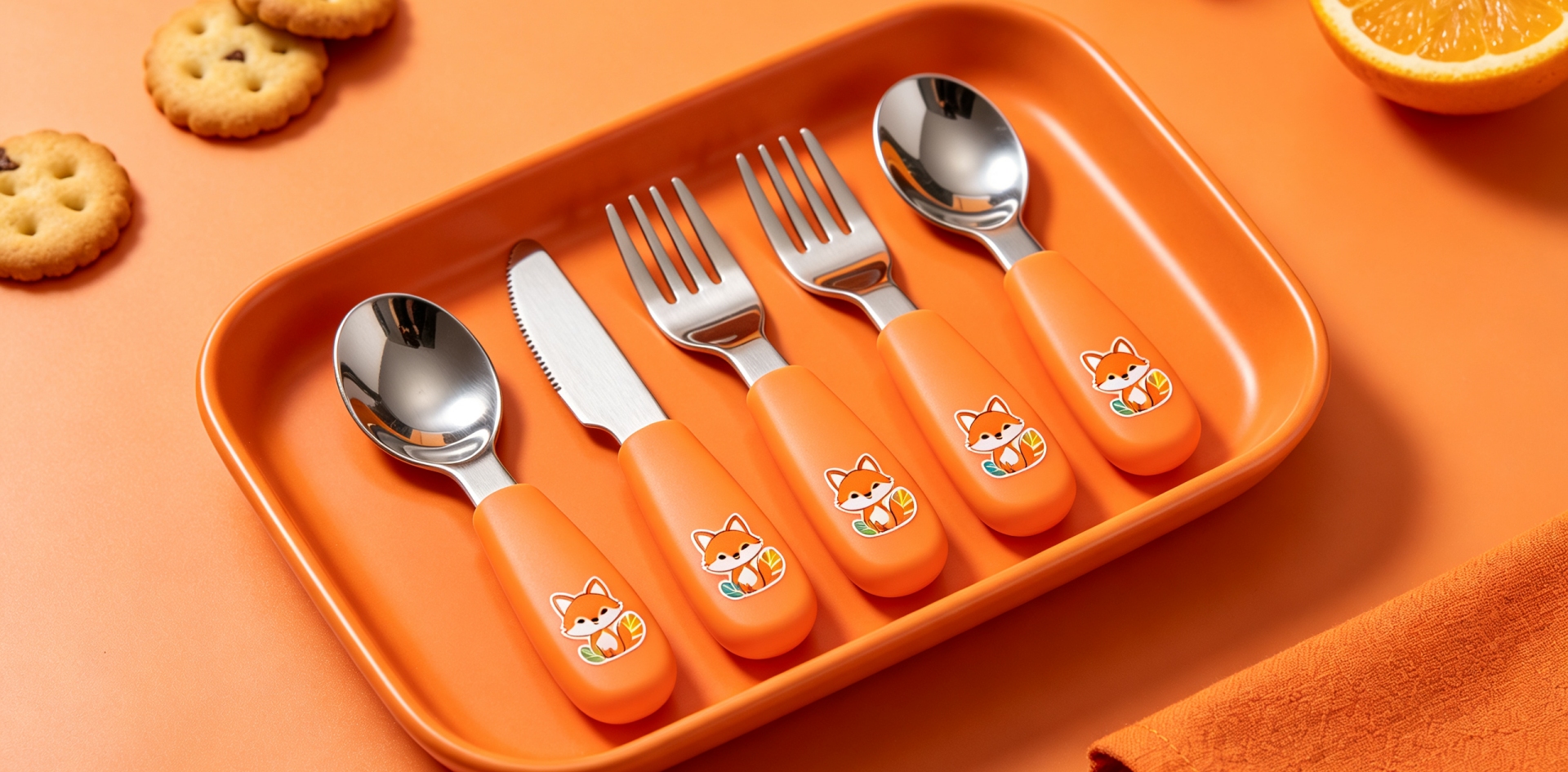
For stainless steel spoons, useful views may include the full spoon, the bowl profile, the handle design, and the transition between the bowl and handle. Fork photography should make the tine shape, spacing, and handle proportions visible. Knife images may need to show the blade profile, handle connection, and overall balance of the design.
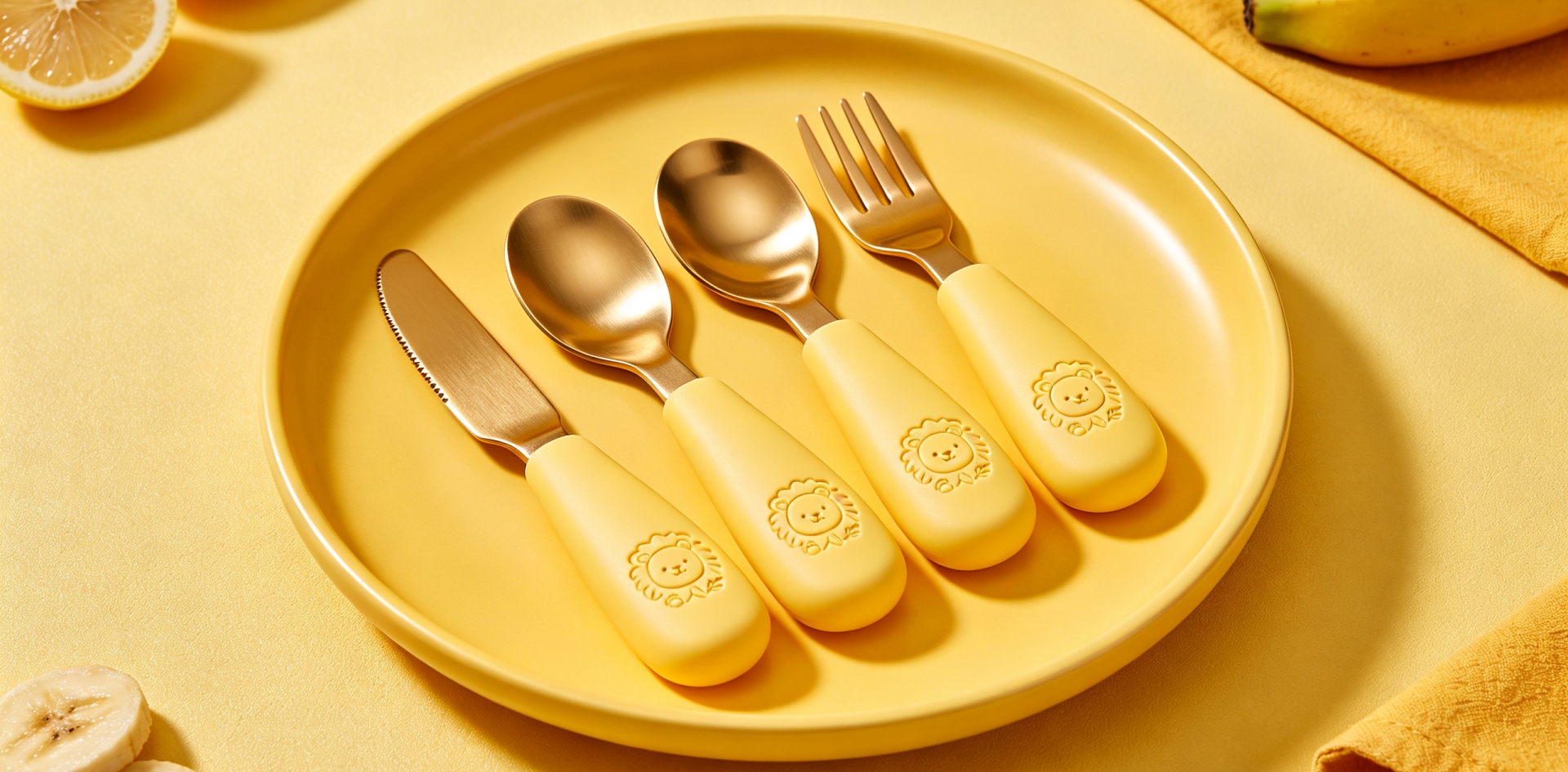
If a cutlery set contains several pieces, provide a confirmed component list and specify the arrangement expected in the final image. The photograph should match the actual order configuration rather than a visually attractive combination that includes pieces not supplied with the set.
Reference sheets should also identify any approved logos, decorative patterns, or private label markings. This reduces the risk of photographing an outdated sample or displaying an unapproved design.
3. Show Stainless Steel Finishes Honestly
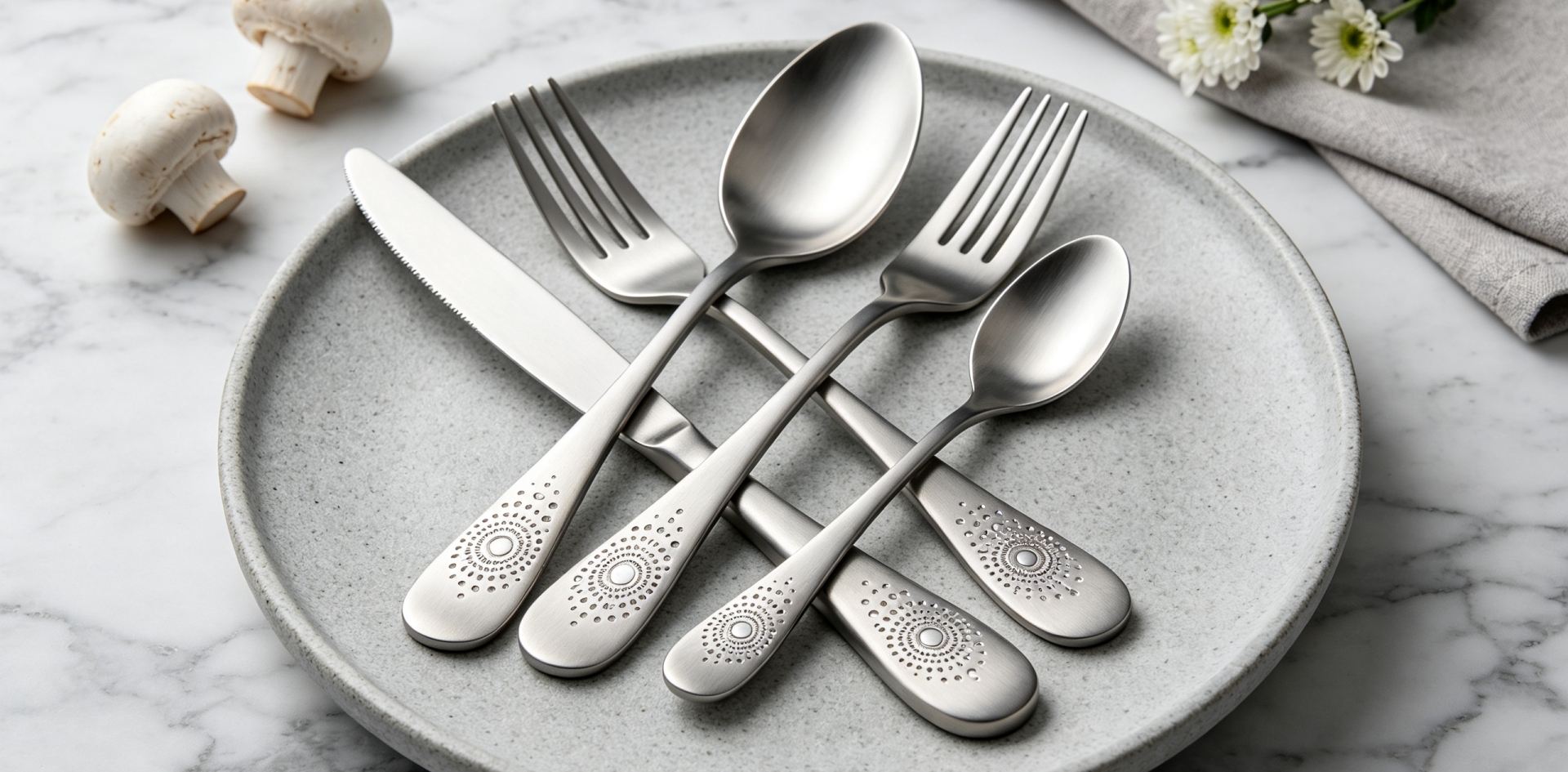
Stainless steel surfaces reflect their surroundings, so lighting and background choices can change how a product appears. A mirror-polished spoon may reflect dark shapes from the studio, while a brushed finish may look smoother or more reflective under strong lighting than it does in normal use.
The photography team should understand the intended finish before taking images. Where relevant, capture close-ups that show the actual surface texture and avoid editing that makes one finish look like another.
For buyers comparing several finishes, use consistent lighting, camera angles, and backgrounds. This makes differences easier to evaluate and helps prevent confusion between polished, brushed, or other specified surface treatments.
Images should represent the supplied product faithfully. Retouching may remove dust or temporary photographic distractions, but it should not alter the product's shape, color appearance, surface characteristics, or other commercially important details.
4. Standardize Camera Angles and Scale
A coordinated collection looks more professional when similar products are photographed consistently. Decide which views are required for every model and apply the same rules throughout the collection.
A practical shot list may include:
-
Full product view against a neutral background
-
Three-quarter angle showing the handle and working end
-
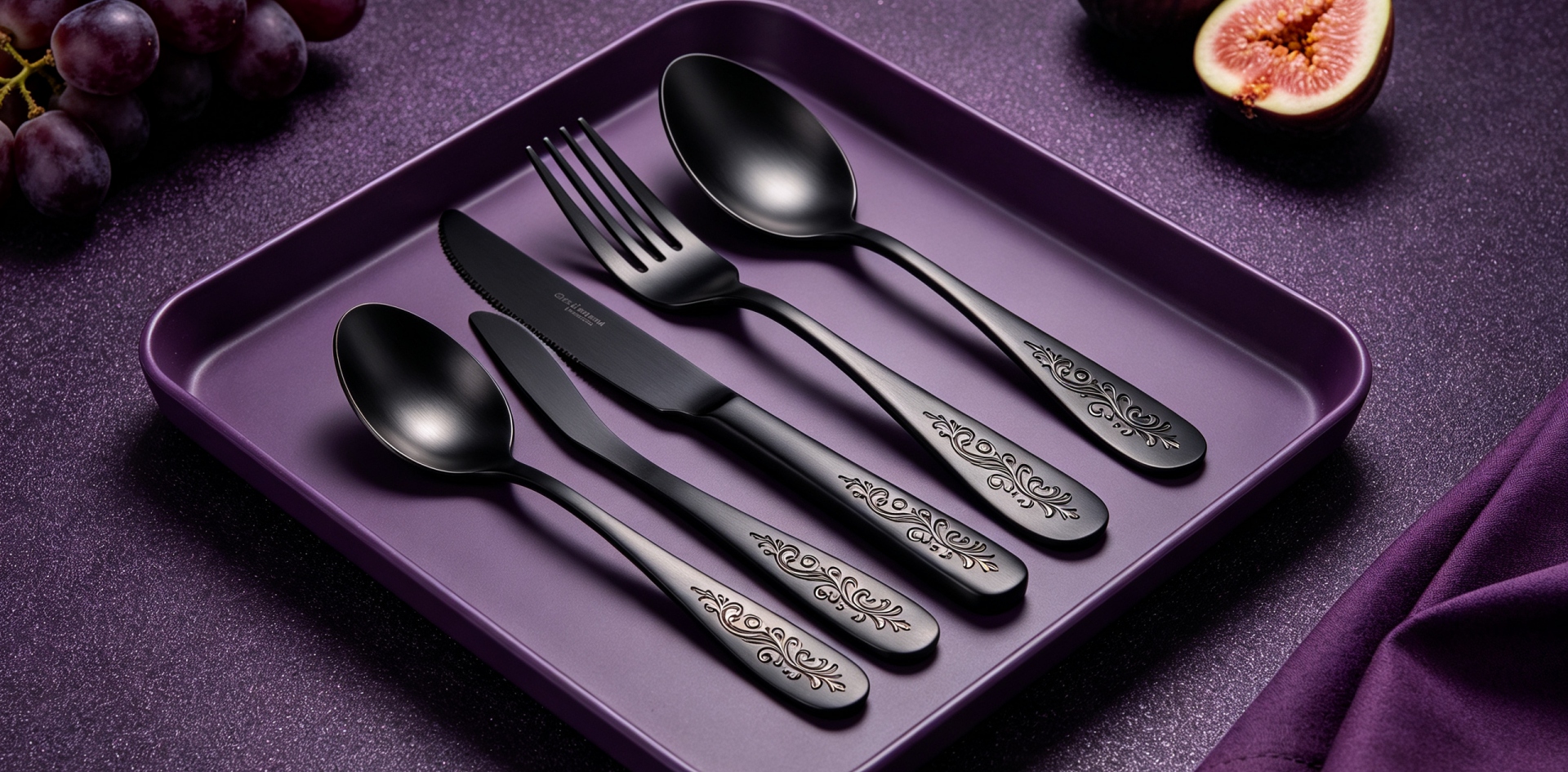
Close-up of the surface finish and decorative details
-
Side profile showing shape and proportions
-
Set arrangement displaying the confirmed contents
-
Packaging view, when packaging is part of the offer
For size comparisons, use consistent positioning and camera distance where practical. If products have different lengths, avoid perspective distortion that makes a smaller spoon appear larger than a longer model.
Photographs can support product specifications, but they should not replace measurements. List actual dimensions and other agreed parameters separately so professional buyers can evaluate the product using both visual and technical information.
5. Photograph Branding and Customization Carefully
OEM and private label projects may require logo placement, laser marking, printed packaging, or customer-specific decorative elements. These details should be photographed only after the relevant design and authorization have been confirmed.
The brief should identify the approved artwork version, logo position, marking method, and required close-up views. If the project is still at the sampling stage, clearly distinguish sample photography from images of the final approved product.
For custom packaging, provide the confirmed layout and specify whether the images should show the outer carton, retail box, insert, or complete set presentation. Check that the displayed product quantity and packaging match the configuration being quoted.
If an image will be used to represent a future production order, the buyer and manufacturer should agree on which features are final and which remain subject to approval. This avoids creating expectations based on a concept image that differs from the final product.
6. Agree on File Specifications and Delivery
Image requirements should be documented before the shoot. Confirm the file format, resolution, background requirements, aspect ratio, naming convention, and intended placement. Some buyers may need high-resolution master files for print, while online catalogs may require separate web-ready versions.
Create a file naming structure that connects every image to the correct SKU or model reference. For example, a product code followed by a view description can distinguish the main image from a handle close-up or packaging photograph.
Ask the supplier or photographer to deliver images in clearly organized folders and include a simple index linking each file to the relevant product. This is especially useful when a wholesale catalog contains many similar stainless steel flatware models.
Before accepting the files, verify that each required image is present, opens correctly, and corresponds to the correct product. Check image orientation, visible dust, distracting reflections, cropping, and any accidental display of obsolete labels or unauthorized branding.
7. Coordinate Photography with Sample Approval
Photography is most effective when it is linked to the product approval process. If dimensions, finish, logo position, or packaging may still change, the buyer should decide whether early images are suitable for internal evaluation only or can be used for public-facing materials.
A final photography review should compare the images against the approved product sample and specification sheet. Pay particular attention to details that may be difficult to identify in a full-product view, such as fork tine geometry, spoon bowl shape, handle thickness, and logo placement.
For larger collections, a sign-off sheet can record which models have been photographed, which images have been accepted, and whether any retakes are required. This gives sales and marketing teams a reliable set of approved visual references.
Working with Homefelt on Stainless Steel Cutlery Projects
Homefelt factory supports B2B customers sourcing stainless steel spoons, forks, knives, and cutlery sets for wholesale and bulk orders. OEM/ODM services can include customized product designs, branding requirements, packaging coordination, and transportation arrangements.
When planning product photography for a new collection, buyers can share their model list, product specifications, intended sales channels, image requirements, and approved artwork. Aligning these details with sample development helps create accurate images that support distributor presentations, catalog preparation, and product launch planning.
For quotation requests or questions about custom stainless steel flatware, contact ingrid@homefelt.net. Providing your target models, estimated order quantities, and customization requirements will help establish the next steps for your project.
You May Be Interested In
-
How to Prepare a Stainless Steel Cutlery Collection for Market Launch
-
How to Prepare Stainless Steel Cutlery Product Listings for Retail Buyers
-
How to Build a Clear SKU Naming System for Stainless Steel Cutlery Collections
-
How to Protect Confidential Product Information in Stainless Steel Cutlery OEM Projects
How to Build a Clear SKU Naming System for Stainless Steel Cutlery Collections
Related Article