How to Plan Retail Shelf Space for Stainless Steel Cutlery Collections
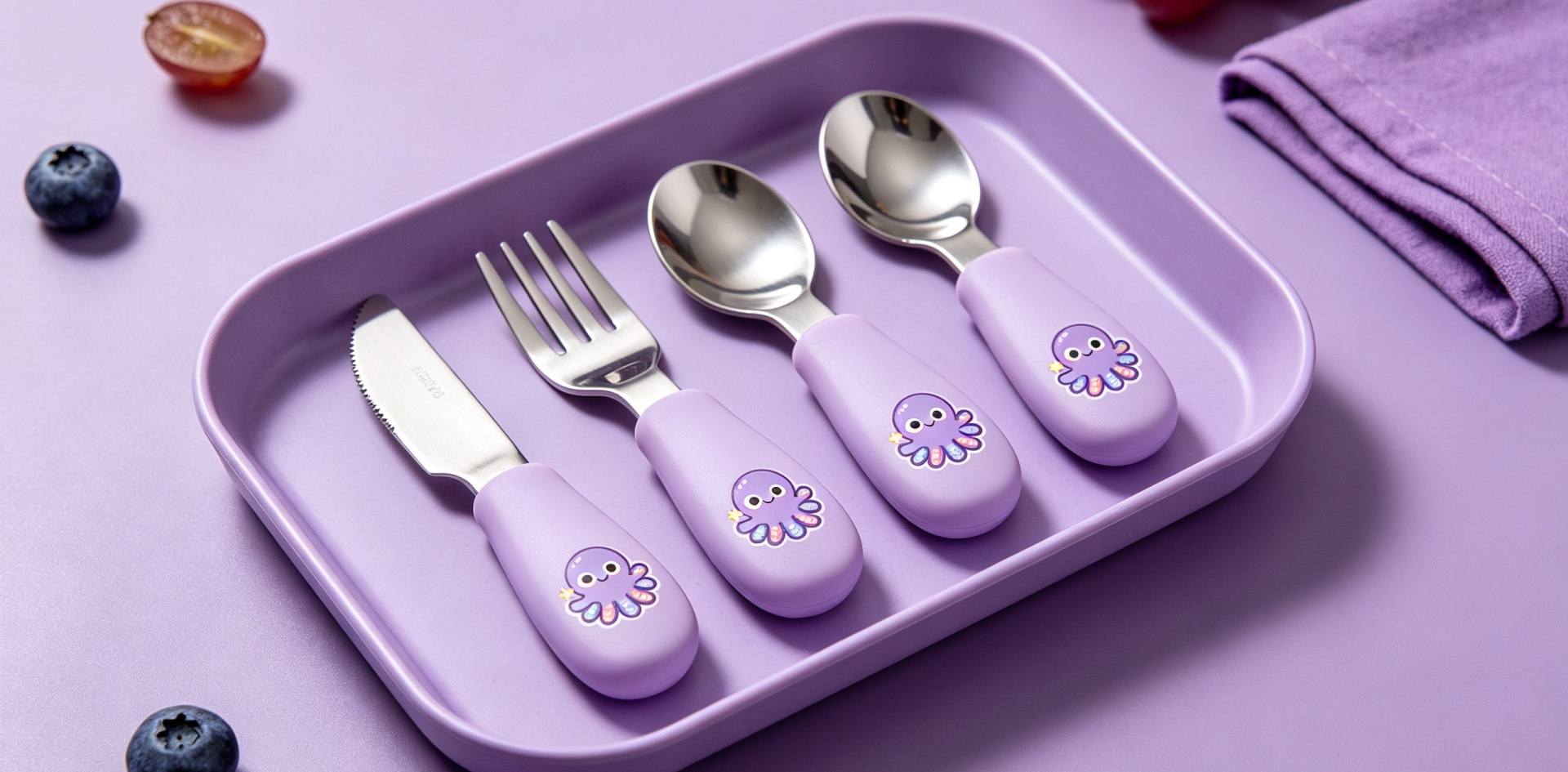
How to Plan Retail Shelf Space for Stainless Steel Cutlery Collections
Retail shelf space influences how customers discover, compare, and purchase stainless steel cutlery. For retailers, importers, and wholesale distributors, a well-planned display can make product differences easier to understand while helping stores manage limited space. For manufacturers, understanding shelf requirements can also guide product packaging, set composition, and collection development.
A planogram is a visual layout showing where products should be placed within a retail fixture. For stainless steel spoons, forks, knives, and complete flatware sets, it can help retailers group products logically, distinguish price levels, and maintain a consistent presentation across stores.
Effective shelf planning is not simply about fitting the largest number of products into a display. The objective is to make the range easy to shop, commercially productive, and practical to replenish.
1. Start with the Retail Fixture and Product Dimensions
Before arranging the assortment, measure the available shelf width, height, depth, and any restrictions created by dividers, rails, cabinet doors, or display fixtures. Confirm whether products will be displayed in standing boxes, flat gift boxes, hanging packages, or open presentation formats.
Packaging dimensions should be measured after assembly, not estimated from the flat carton artwork. A gift box containing a stainless steel flatware set may need extra clearance for its lid, while a hanging package requires sufficient space for hooks and neighboring products.
For each SKU, record package width, height, depth, and the minimum facing space needed for clear visibility. Also consider the space required to remove a product without disturbing adjacent packages. An arrangement that fits perfectly on paper may be difficult to use when customers handle the products.
Where multiple store formats are involved, create separate layouts for different fixture sizes rather than forcing one planogram into every location.
2. Group Products in a Way Customers Understand
Customers should be able to identify the differences between cutlery products without examining every package. Group products using a clear logic, such as price tier, collection design, set size, intended use, or packaging format.
For example, a retailer might organize standard everyday flatware separately from premium gift sets. Individual spoons, forks, and knives may need a different section from complete sets because customers shop for replacement pieces differently from coordinated collections.
Avoid grouping products solely by supplier or factory code. Internal codes help purchasing teams manage inventory, but they rarely explain the product range to shoppers. Retail-facing labels and shelf organization should communicate meaningful differences.
If two stainless steel cutlery models look similar, highlight the distinctions that matter, such as piece count, finish, handle design, or presentation. Clear grouping reduces confusion and helps the retailer use shelf space more effectively.
3. Allocate Space Based on Commercial Performance
Not every SKU should receive the same number of facings. Shelf allocation can consider sales velocity, gross margin, stock availability, package size, and the product's role in the collection.
A frequently purchased flatware set may need more visible stock than a slow-moving specialty item. However, historical sales should be interpreted carefully. Low sales may reflect limited availability, weak placement, or a short selling period rather than a lack of customer interest.
Review performance by store type where possible. A premium gift collection may perform better in a department store or seasonal display, while basic stainless steel cutlery may suit a broader range of retail locations.
A practical allocation process starts with minimum presentation requirements, then adjusts facings according to evidence. After implementation, compare the results with the previous layout and refine the plan when actual performance becomes available.
4. Make Price Tiers and Product Differences Visible
A well-organized display should help customers compare products quickly. Price tiers can be arranged from entry-level to premium, provided the layout remains intuitive for the store and customer group.
Product packaging should communicate the relevant differences clearly. A set may stand out through its piece count, coordinated design, finish, or gift-ready presentation. These features should be described accurately and should match the actual product inside.
For stainless steel spoons, forks, and knives, shoppers may not be able to assess weight, balance, or surface quality through a closed package. Product photography, accurate specifications, and approved display samples can help bridge that gap where the retail format permits them.
Avoid overcrowding the shelf with too many visually similar models. If customers cannot distinguish the options, additional SKUs may add complexity without improving the shopping experience.
5. Coordinate Shelf Planning with Packaging Design
Packaging affects both product visibility and how efficiently a cutlery collection fits into a fixture. Tall gift boxes may present well vertically but use shelf height differently from compact cartons. Window packaging may show the product itself, while fully printed packaging relies more heavily on images and written information.
Retailers should share shelf and display constraints early in product development. Useful information includes maximum package dimensions, preferred orientation, shelf depth, hanging requirements, display rules, and any restrictions on promotional labels.
The factory can then evaluate packaging options alongside product presentation. Changes to box size, insert layout, or set configuration should be reviewed for their effect on product protection, appearance, packing efficiency, and transport.
A smaller package is not automatically better if it compromises protection or makes the contents difficult to understand. The right solution balances shelf fit with the need to deliver stainless steel cutlery in suitable condition.
6. Consider Replenishment and Backroom Inventory
A planogram should support store operations as well as customer presentation. Products need enough visible stock for the expected sales rate, while the backroom must hold practical replenishment quantities without creating unnecessary congestion.
Review how many units fit on the shelf and how easily staff can identify the correct model when replenishing it. Clear SKU labels and consistent package orientation can reduce the risk of placing the wrong finish or set size in the wrong location.
For distributors supplying multiple stores, align planogram information with case-pack quantities and warehouse picking practices. If the shelf holds only a small number of units but the supplier ships large case packs, the retailer may need a suitable backroom allocation or a different replenishment routine.
Seasonal displays should also have a defined changeover plan. Products intended for a gift promotion may require a different location or stock level once the promotion ends.
7. Test the Layout and Measure the Results
Before rolling out a new planogram across every store, test it in a representative location where practical. Confirm that packages fit, product labels remain visible, customers can reach items, and staff can replenish stock without difficulty.
Record the starting conditions and define what success means. Relevant measures may include sales per facing, sell-through, stockout frequency, replenishment time, and the number of damaged packages. Use comparable time periods and account for promotions or seasonal demand when interpreting results.
If a product performs poorly, investigate the reason before removing it from the range. Its position, price, availability, packaging, or role in the assortment may need review. A controlled test provides better evidence than changing several variables at once.
Document the final approved layout and its effective date so that store teams and replenishment staff work from the same version.
8. How Homefelt Supports Retail Cutlery Collections
Homefelt factory supplies stainless steel spoons, forks, knives, and flatware sets for wholesale, OEM, ODM, and private-label projects. For retailers and importers developing a collection, packaging dimensions, set composition, product finish, and visual presentation can be discussed alongside manufacturing requirements.
To support retail planning, buyers can share target store formats, shelf dimensions, preferred packaging styles, price positioning, and estimated order quantities. These details help the team evaluate product and packaging options that fit the intended display and distribution model.
Homefelt can also coordinate customized product design, packaging, and transportation planning according to each project. Buyers should confirm final product specifications, packaging samples, and commercial terms before releasing bulk orders.
If you are preparing a stainless steel cutlery collection for retail distribution, contact ingrid@homefelt.net to discuss suitable spoons, forks, knives, flatware sets, and customized packaging options. A clear shelf plan at the beginning of a project can help align product design with the retailer's actual selling environment.
You May Be Interested In
How to Test Stainless Steel Cutlery Packaging Before International Shipping
How to Organize Product Compliance Files for Stainless Steel Cutlery
Related Article