How to Prepare Stainless Steel Cutlery Product Listings for Retail Buyers
How to Prepare Stainless Steel Cutlery Product Listings for Retail Buyers
A clear product listing helps buyers understand what they are purchasing before they request a sample or place an order. For stainless steel cutlery manufacturers, wholesalers, and private-label suppliers, product information needs to do more than show an attractive photograph. It should explain the product’s material, dimensions, design, set composition, packaging, and customization options accurately.
Retail buyers often compare several similar spoons, forks, knives, and flatware sets online before contacting a supplier. If product details are incomplete or inconsistent, they may struggle to distinguish between models or determine whether a product fits their target market. Well-prepared listings make the comparison process easier and provide a more reliable starting point for B2B inquiries.
1. Define the Intended Buyer and Sales Channel
Before preparing a product listing, identify who will use the information. A wholesale distributor may need SKU codes, carton quantities, order requirements, and product specifications. A retail buyer may focus more on appearance, set contents, dimensions, packaging, and suitability for the intended customer segment.
The same stainless steel cutlery product can be presented differently depending on the sales channel, but its factual specifications must remain consistent. A listing intended for a gift retailer may highlight coordinated design and presentation packaging, while a distributor serving everyday household customers may prioritize practical product details and available quantity options.
Start by defining the intended buyer, market, and product category. This helps determine which information should appear prominently and which details can be provided in a downloadable specification sheet or quotation.
2. Write a Product Name That Identifies the Actual Item
A product name should make the item easy to recognize. Generic titles such as “Premium Cutlery” or “Luxury Tableware” do not tell buyers whether the product is a spoon, fork, knife, individual piece, or complete set.
A stronger naming structure combines the product type with its most relevant distinguishing feature. Depending on the item, that may include the design collection, finish, material specification, or set size.
For example, a listing for a stainless steel spoon should identify it as a spoon rather than relying only on a decorative collection name. A complete flatware set should indicate its piece count or place-setting configuration where applicable.
Avoid adding claims that cannot be supported by the product specification. Terms relating to material grade, durability, food-contact suitability, or performance should be used only when the corresponding information has been verified.
3. Provide the Specifications Buyers Need to Compare Products
Product listings should include the measurements and characteristics that influence purchasing decisions. For stainless steel cutlery, the relevant information varies by item but commonly includes:
-
Product type and SKU
-
Stainless steel grade, where specified
-
Overall length and key dimensions
-
Thickness or weight, where relevant
-
Surface finish and color
-
Handle design and decorative details
-
Logo or branding options
-
Individual packaging and set configuration
-
Available customization options
For spoons, buyers may need overall length, bowl dimensions, and bowl depth. For forks, tine configuration, spacing, and overall length may be relevant. For knives, buyers may need the model dimensions, handle design, and agreed blade characteristics.
Use consistent units throughout the catalog. If dimensions are shown in millimeters, keep the format consistent across related products. Where tolerances are important, include them in the formal specification rather than relying on a rounded figure in a short product description.
4. Make Product Images Match the Listed Specification
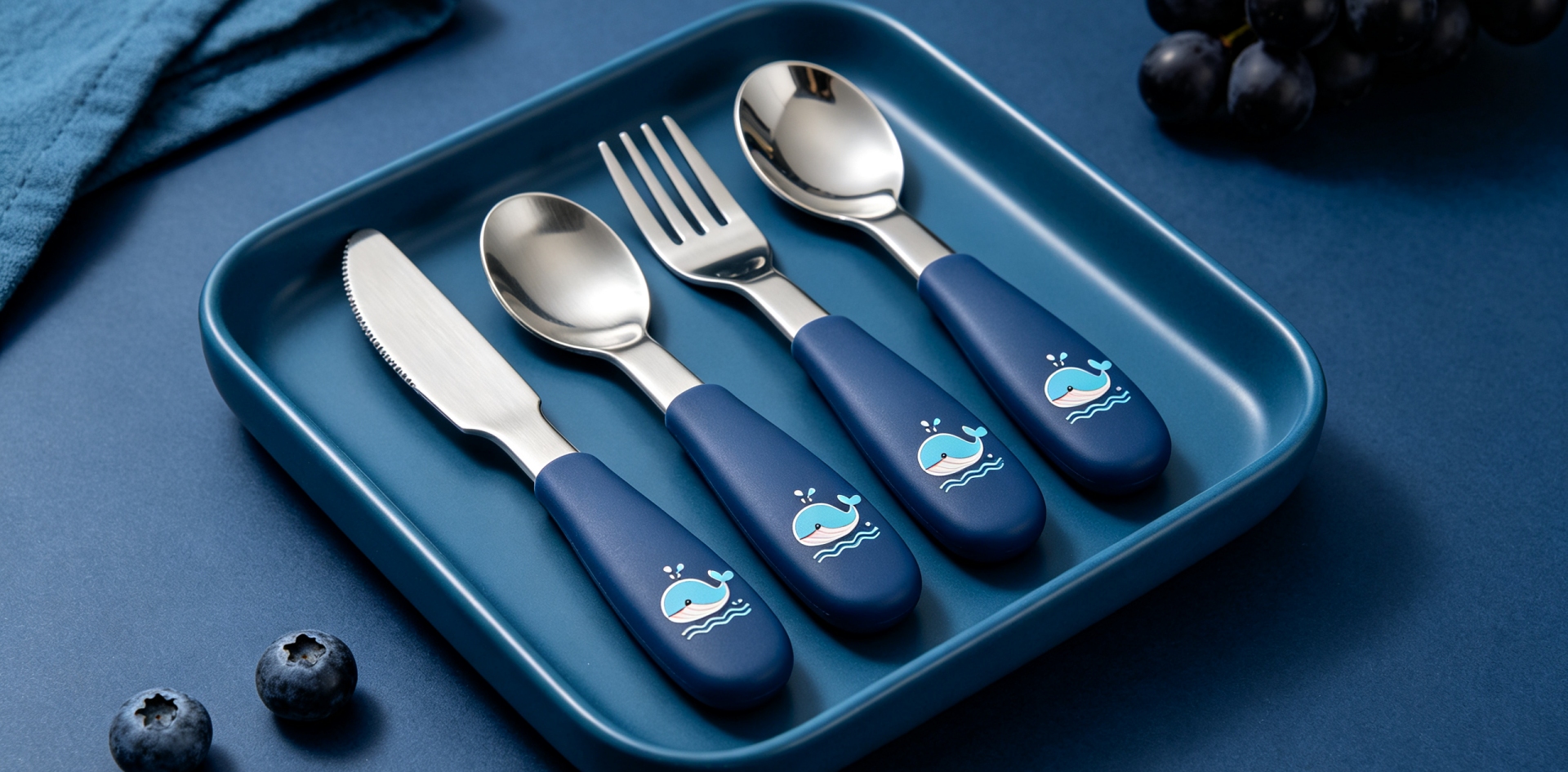
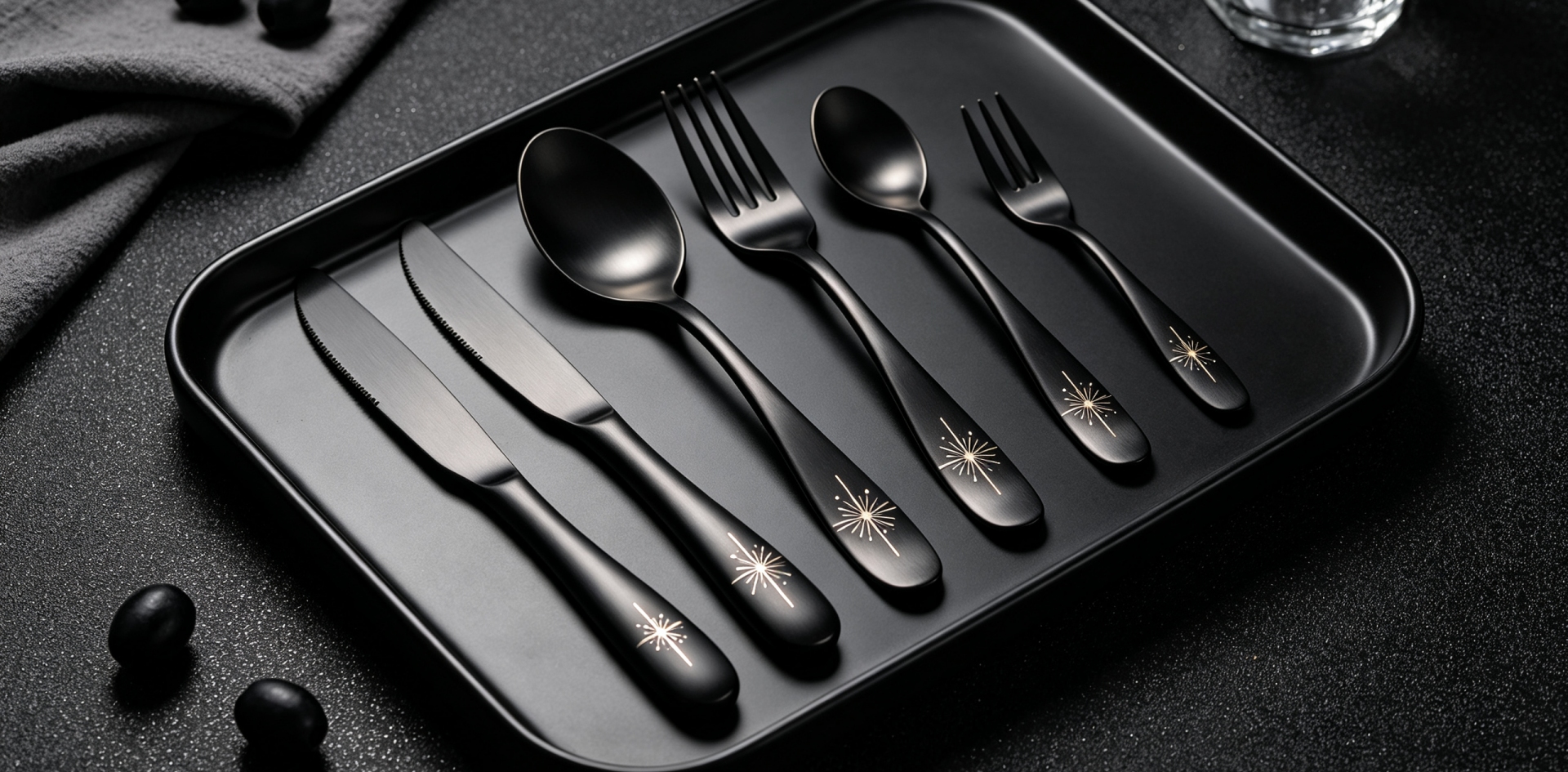
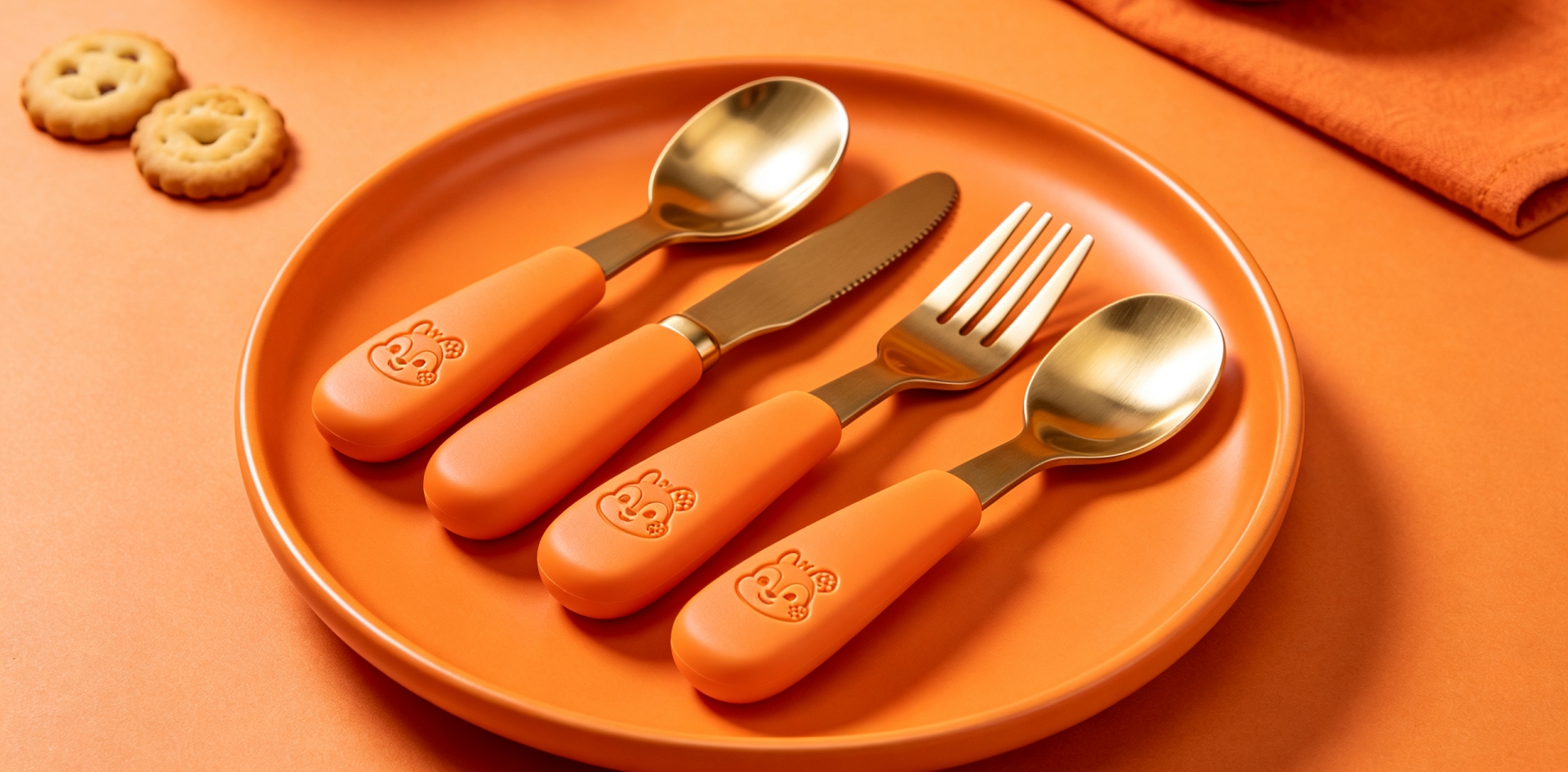
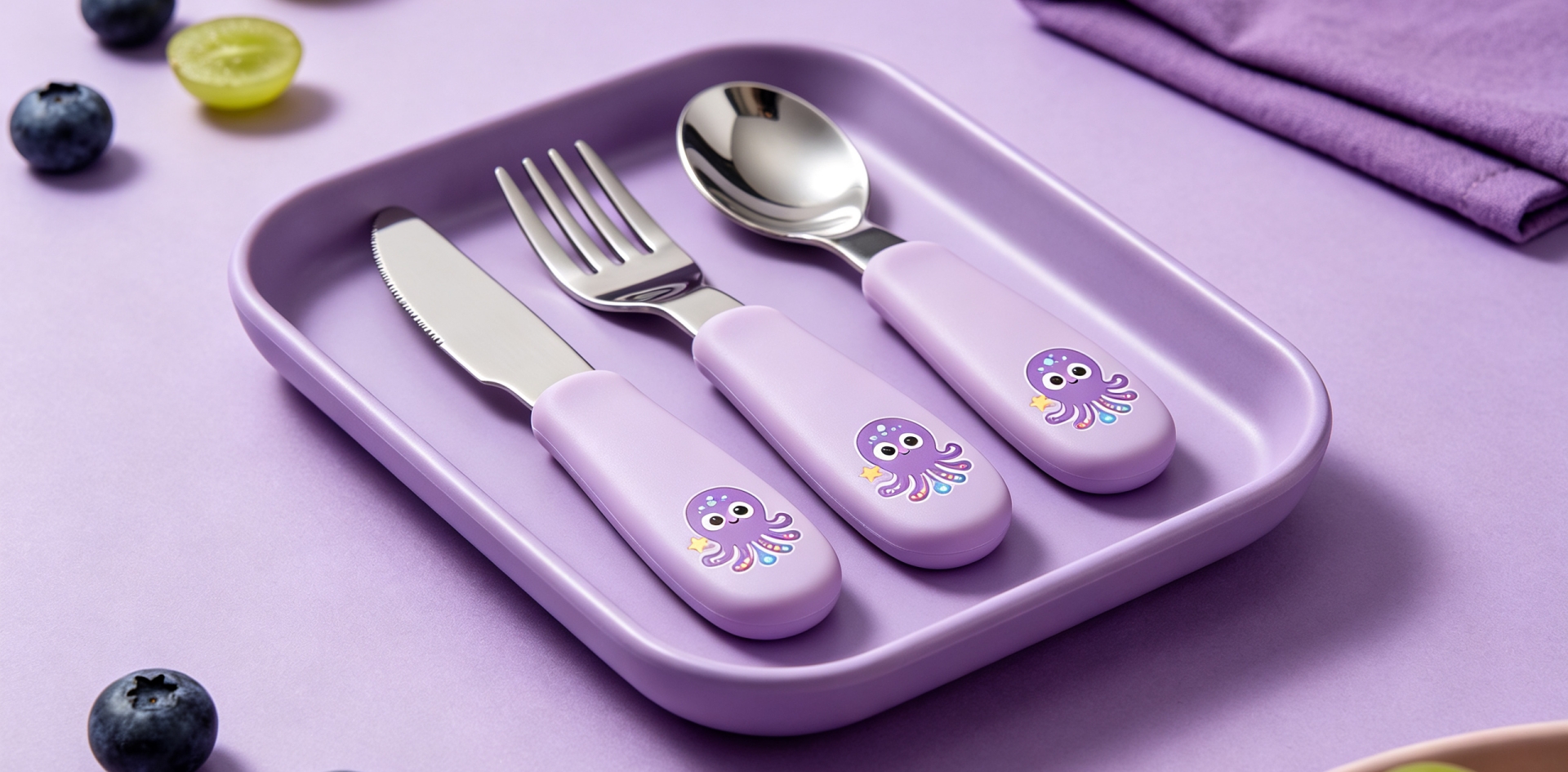
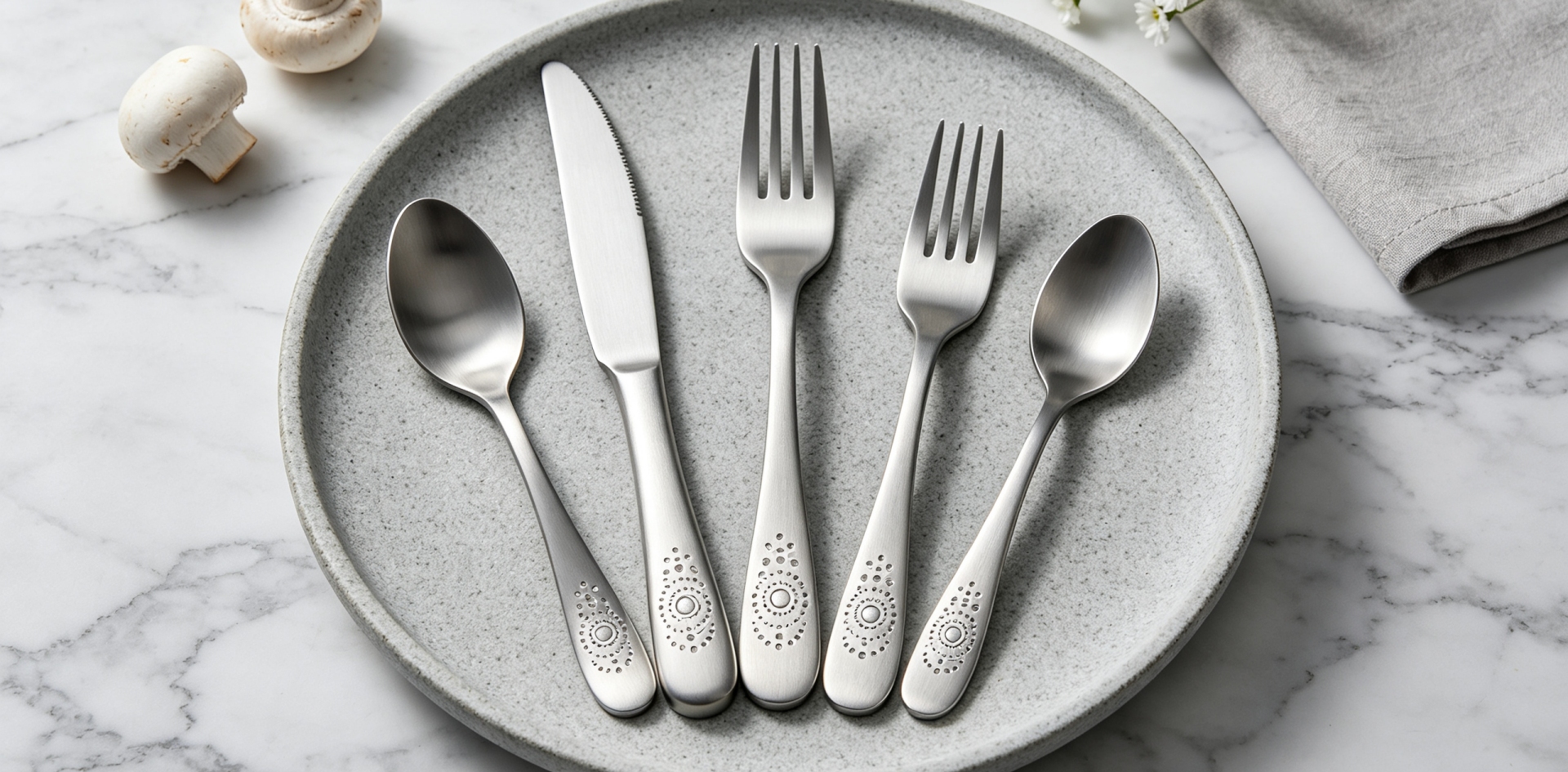
Images help buyers understand the appearance of stainless steel cutlery, but they can also create confusion if they do not represent the actual model. Use clear images of the product from useful angles, including the front, handle, working end, and relevant decorative details.
For a coordinated flatware set, show the individual pieces and the complete assortment. If the set includes several spoons, forks, and knives, provide a contents image or list so buyers can understand the configuration without guessing.
Images should accurately represent the approved finish and color. Highly reflective stainless steel can look different under various lighting conditions, while colored finishes may appear different on different screens. Buyers should be able to request physical samples when appearance needs to be evaluated more precisely.
If an image shows optional packaging, accessories, or a customized logo, state whether those features are included in the standard offer or require a separate specification. This avoids a mismatch between the visual presentation and the quoted product.
5. Explain Set Contents and Packaging Clearly
For complete cutlery sets, listing the number of pieces is not enough. Buyers should understand exactly which items are included and how the set is packed.
A set description may specify the number of spoons, forks, knives, and other included pieces, together with the number of place settings where applicable. If multiple set configurations share a similar appearance, provide a separate contents list for each SKU.
Packaging information should identify the relevant options, such as individual bags, inner boxes, retail cartons, gift boxes, or bulk packing. For B2B buyers, carton dimensions and packing quantities may also be needed when preparing warehouse and shipping plans.
Custom packaging should be described separately from standard packaging. Buyers using private-label boxes may need to confirm artwork, logo placement, inserts, barcode information, and final packaging dimensions before production.
Homefelt supports customized packaging and product coordination for B2B stainless steel cutlery projects. Sharing the intended sales channel and packaging requirements early helps the supplier assess the appropriate product and packing arrangement.
6. Present Material and Quality Information Responsibly
Buyers may use product listings to shortlist suppliers, but online descriptions should not replace technical documents or inspection evidence. Material grades, product testing, and certifications need to be described accurately and within their actual scope.
If a listing identifies a specific stainless steel grade, confirm that it corresponds to the product being offered. Do not assume that every product in a collection uses the same grade unless the specifications confirm it.
Likewise, claims about corrosion resistance, dishwasher suitability, food-contact compliance, or other performance characteristics should be supported by applicable product information or testing where required. A supplier’s management-system certification does not automatically establish that every listed product has passed every possible test.
For buyers serving regulated markets or supplying customers with particular compliance requirements, the relevant documents should be reviewed during the quotation and approval process. This keeps the product listing informative without promising more than the available evidence supports.
7. Show Customization Options Without Creating Confusion
B2B buyers may be interested in custom logos, handle designs, finishes, set configurations, or private-label packaging. Listings should distinguish available options from features already included in the standard product.
A simple customization section can explain which elements may be adjustable, which depend on production feasibility, and which require a separate quotation or sample approval.
For example, a buyer may be able to request a logo on a standard handle design, while a completely new handle shape may require additional development. A special finish or customized retail box may also affect production arrangements, pricing, and lead time.
Avoid presenting every possible option as automatically available for every SKU. Clear boundaries help buyers submit more realistic inquiries and allow the supplier to respond with a suitable proposal.
8. Keep Product Data Consistent Across Sales Materials
The product name, SKU, dimensions, material grade, images, packaging details, and quotation should refer to the same product version. If information differs between a website listing, PDF catalog, and quotation, buyers may not know which version is correct.
Maintain a central product information record and assign responsibility for updates. When a specification changes, review all relevant materials before publishing the revised information.
This is particularly important for OEM and private-label products. A customer may have approved a specific logo position, handle design, or retail box. The public listing should not accidentally replace those customer-specific requirements with a different standard version.
For distributors, consistent SKU references also help connect product listings with purchasing systems, warehouse records, and repeat-order documents.
9. Make the Inquiry Process Useful for B2B Buyers
A product listing should make it easy for a buyer to request the information needed for a purchasing decision. Instead of a general contact prompt alone, encourage inquiries that identify the product and intended order.
Useful information to request includes the SKU or reference image, estimated quantity, target market, required material specification, customization needs, and packaging preference. If the buyer is comparing several products, they can list the relevant models in one inquiry.
This information helps the supplier prepare a more relevant quotation and identify any missing details before the order moves forward. It also reduces repeated communication caused by unclear product references.
Homefelt is a stainless steel cutlery supplier serving B2B customers with wholesale, OEM/ODM, and bulk production options. Its one-stop service approach can coordinate product design, packaging, and transportation requirements for customized projects. Buyers can discuss stainless steel spoons, forks, knives, and complete flatware sets according to their product specifications and sales plans.
10. Review Listings Before Publishing or Updating Them
Before publishing a new product listing, confirm that the text, images, specifications, and packaging information match the actual product. Check units, spelling, SKU references, set contents, and any claims relating to material or performance.
For revised products, confirm whether the change affects existing images, documents, or customer approvals. Avoid leaving outdated specifications online when a product has been modified or discontinued.
A good listing does not need exaggerated language. It should answer the buyer’s practical questions, show the product accurately, and provide a clear route to the next step.
If you are sourcing stainless steel cutlery for wholesale distribution or developing a private-label range, prepare your preferred designs, estimated quantities, material requirements, and packaging details. Contact Homefelt at ingrid@homefelt.net to request product information, discuss OEM/ODM customization, or obtain a quotation for stainless steel spoons, forks, knives, and flatware sets.
You May Be Interested In
-
How to Simplify a Stainless Steel Cutlery Catalog for Wholesale Buyers
-
How Buyer Feedback Helps Improve Stainless Steel Cutlery Product Development
-
What B2B Buyers Should Check During a Stainless Steel Cutlery Factory Visit
-
How to Manage Customer-Specific Specifications for Stainless Steel Cutlery Orders
How to Plan Container Loading for Mixed-SKU Stainless Steel Cutlery Shipments
How to Simplify a Stainless Steel Cutlery Catalog for Wholesale Buyers
Related Article