How to Ensure Component Compatibility in Stainless Steel Cutlery Sets

How to Ensure Component Compatibility in Stainless Steel Cutlery Sets
A stainless steel cutlery set should work as a coordinated collection, not simply as a group of individual utensils. Spoons, forks, and knives may each meet their own product specifications, yet still look mismatched or fit poorly into the same retail box. For wholesalers, importers, hospitality suppliers, and private-label brands, these details can affect customer satisfaction and the perceived value of the complete set.
Component compatibility means checking whether every item works with the other pieces in terms of design, dimensions, function, finish, and packaging. Addressing these details before mass production helps buyers avoid expensive adjustments after a large order has already been manufactured.
1. Define the Role of Every Component
The first step is to create a complete list of the items included in the cutlery collection. A standard set may contain dinner spoons, teaspoons, dinner forks, and knives, while other collections may include dessert forks, serving utensils, or specialized pieces.
Each component should have its own product code, drawing, and specification. These records should clarify dimensions, material requirements, handle design, finish, and any functional characteristics that matter to the buyer.
The collection specification should also explain which items are expected to match visually. For example, a teaspoon and a dinner spoon may share the same handle pattern but have different bowl proportions. A knife may use a different blade construction while retaining the collection's overall design language.
Clear component definitions prevent teams from assuming that products with similar names or appearances are automatically interchangeable.
2. Check Proportions Across the Collection
A coordinated cutlery set should have balanced proportions. Handle width, overall length, decorative details, and the relationship between the handle and working end all influence how the pieces look together.
A dinner fork with an unusually wide handle may appear inconsistent beside a spoon with a narrow handle, even if both are individually well made. Likewise, a knife that is substantially longer than expected may disrupt the visual balance of the set.
During product development, buyers should review representative pieces side by side. Measurements can then be compared against drawings to identify unintended differences.
Proportion is partly a design decision, so not every piece needs identical dimensions. The goal is to make sure the differences are intentional and appropriate for the product range.
Homefelt supports customized stainless steel cutlery projects, allowing buyers to discuss coordinated product designs and specifications for collections intended for wholesale or private-label sales.
3. Confirm Handle Design Compatibility
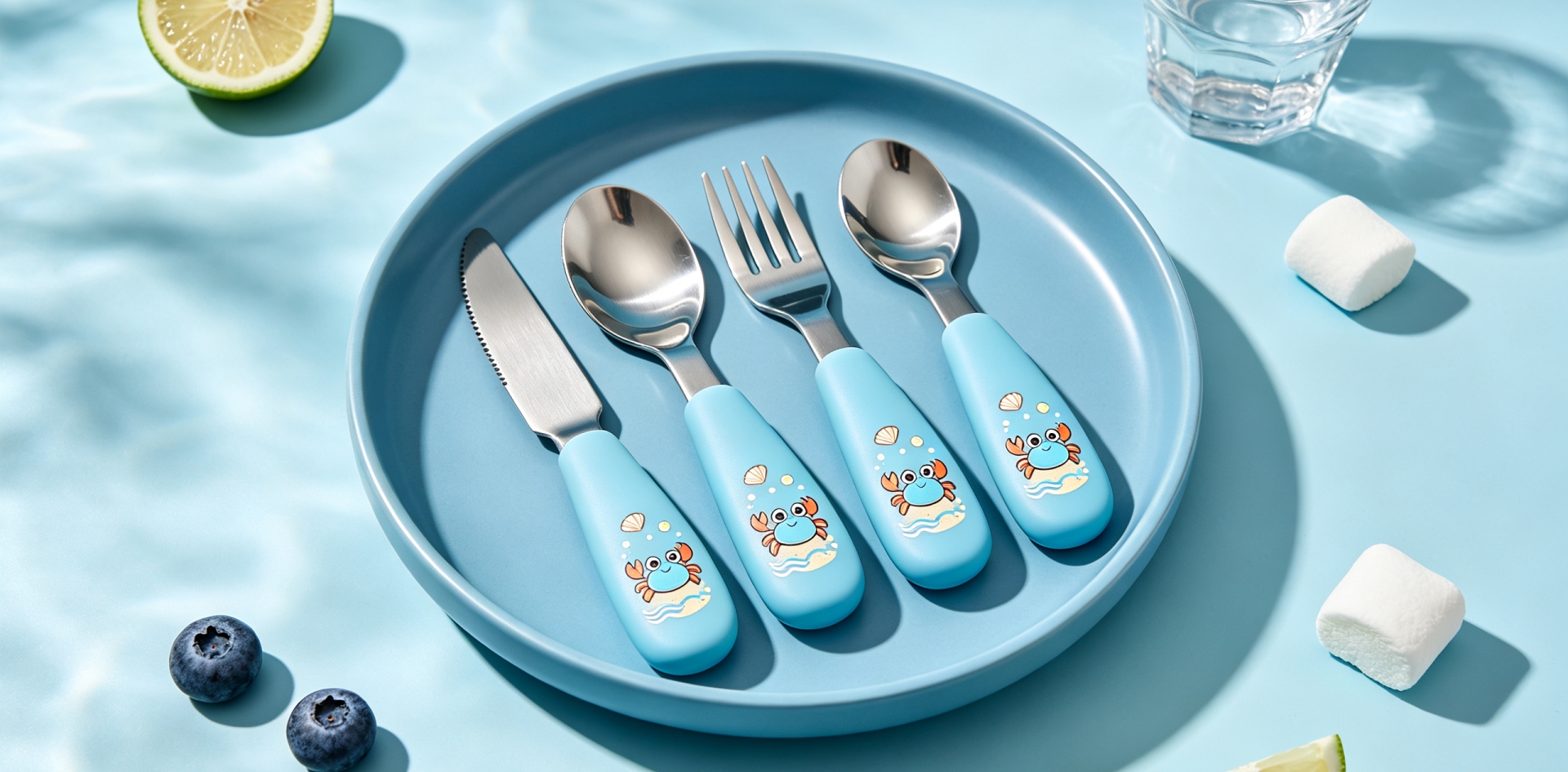
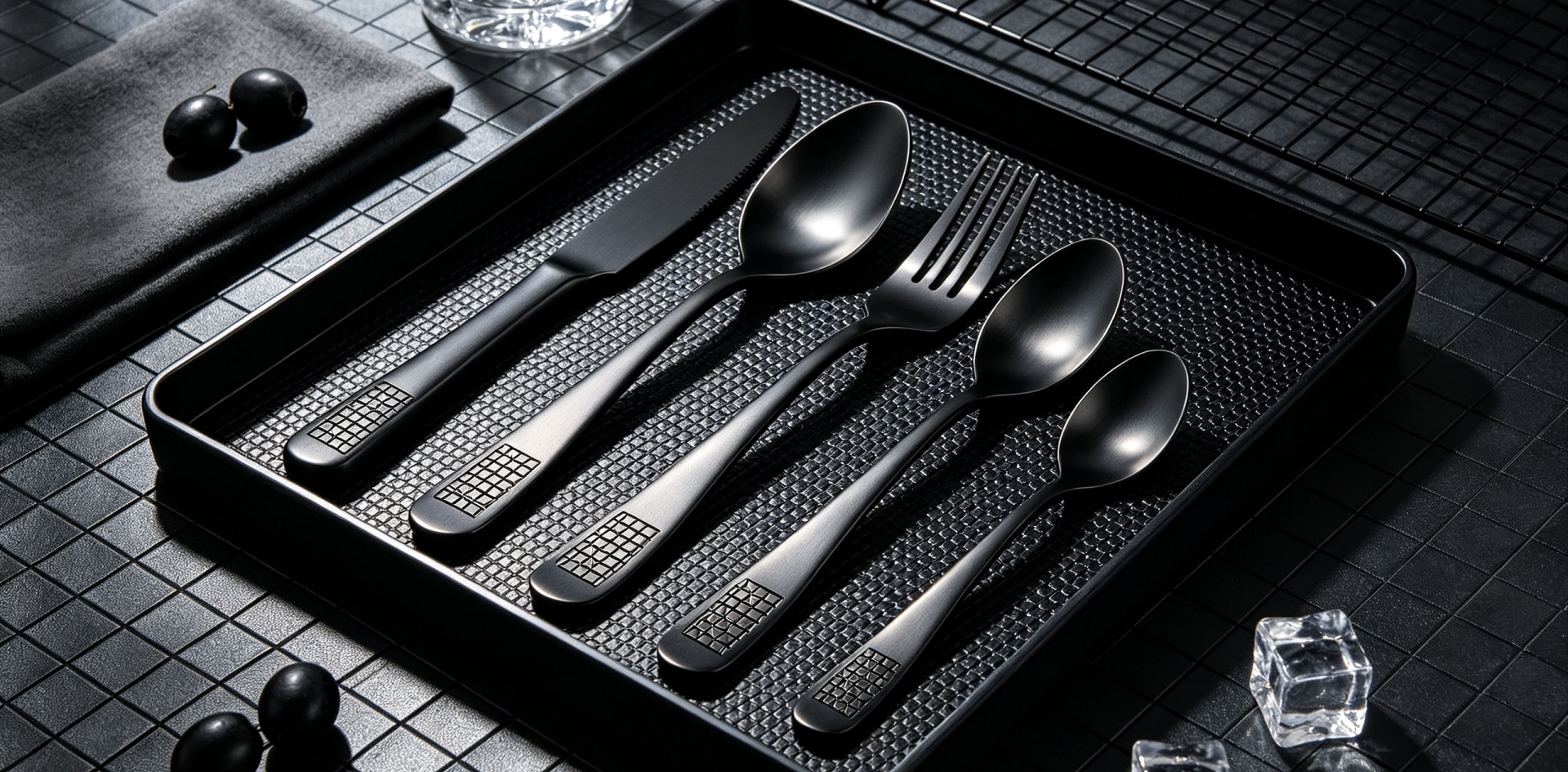
The handle is often the strongest visual connection between different pieces in a cutlery collection. Consistent handle contours, decorative patterns, proportions, and end details help the set look unified.
Compatibility becomes more complicated when a collection includes different handle materials or special decorative elements. Buyers should confirm which features must remain consistent and which may differ by product type.
For example, the handle design may be shared across a spoon and fork, while the knife requires a different construction to meet its functional requirements. In this case, the visible design should still be reviewed as part of the complete collection.
Drawings and approved samples should identify the important design features. If a handle profile changes during development, the team should check whether the revised piece still matches the other products.
4. Compare Finish and Color Under Consistent Conditions
Even when different cutlery pieces use the same specified finish, their surfaces may reflect light differently because of their shapes. A curved spoon bowl can appear brighter than a flat handle under the same lighting.
Buyers should compare the actual products together instead of judging each item separately. The review should consider polishing texture, visible color differences, decorative details, and the overall appearance of the complete set.
For colored or plated finishes, the buyer should approve representative samples for each relevant component. Photographs can help communicate expectations, but physical samples provide a more dependable basis for evaluating reflections and surface appearance.
If a product range is manufactured in separate batches, the factory should maintain suitable references and inspection procedures to help keep the collection visually consistent.
5. Verify Functional Compatibility
Visual coordination alone is not enough. Each piece must perform its intended function, and differences between components should not create usability problems.
Spoons should have a suitable bowl shape and handle balance for their intended use. Forks should have appropriately formed tines and a comfortable grip. Knives should meet the functional requirements associated with their intended design.
For a coordinated collection, buyers should also review how the pieces feel when handled together. Large differences in balance, handle thickness, or overall proportions may affect the user experience, even when the items technically fit the same design family.
Functional checks should be based on the product's intended application and agreed specifications. A set designed for everyday retail use may have different priorities from one intended for commercial food service or premium gifting.
6. Check Compatibility With Packaging and Inserts
A product collection must fit its packaging as designed. If spoons, forks, and knives have different lengths or handle widths from the approved specifications, they may not sit correctly in a molded tray or presentation box.
The result can include overlapping pieces, difficult removal, unnecessary movement during transit, or pressure on decorative surfaces. These problems may not become obvious until the actual products are placed inside the packaging.
Before bulk production, buyers and suppliers should verify the fit of all components in the intended retail box. The check should use the actual product dimensions and packaging insert rather than relying only on drawings.
If a component changes, the team should assess whether the insert, internal layout, protective materials, or printed product information also needs revision. Packaging approval should follow the final agreed product configuration.
7. Maintain Compatibility Across Repeat Orders
Compatibility is especially important when buyers reorder individual pieces or expand an existing collection. A new spoon model may be produced months after the original fork and knife were approved, potentially creating differences in proportions or finish.
To reduce this risk, buyers should retain the original drawings, sample approvals, product codes, and relevant specifications. The supplier should check new components against these references before production begins.
Any change to material, tooling, handle shape, or finishing process should be evaluated for its effect on the complete collection. If a revision changes the product's appearance or dimensions, the buyer should receive the updated information and approve it when required.
Maintaining controlled product records supports continuity across seasonal launches, replacement-piece orders, and long-term distribution programs.
8. Create a Compatibility Review Before Bulk Production
A practical compatibility review should bring together product design, manufacturing, quality control, and packaging requirements. Instead of checking each piece in isolation, the team should assess the collection as a complete system.
The review can cover:
-
Approved drawings and product codes for every component
-
Shared handle and decorative design requirements
-
Dimensions and proportions across matching items
-
Finish and color consistency
-
Functional suitability for the intended market
-
Fit within the final retail packaging
-
Version control for future orders and revisions
Buyers should confirm who approves the collection and how changes are recorded. This reduces the risk that one department accepts a revised component while another continues using an outdated specification.
For B2B procurement teams, this process provides a clearer basis for evaluating supplier capability and approving the final product assortment.
9. Work With a Supplier That Understands Complete Sets
A supplier that considers only individual pieces may overlook issues that emerge when the products are combined. A coordinated approach considers the complete cutlery set, including design relationships, dimensions, finish, packing configuration, and export requirements.
Homefelt offers stainless steel cutlery customization, OEM/ODM support, wholesale production, and coordination of product design, packaging, and transportation. Buyers can share reference products, technical drawings, target specifications, and planned quantities to discuss a collection that meets their market requirements.
Whether you are developing a retail flatware set, a private-label collection, or a large-volume commercial order, confirming component compatibility early helps reduce avoidable revisions and improves consistency.
For product details or a customized quotation for stainless steel spoons, forks, knives, and cutlery sets, contact ingrid@homefelt.net or visit //www.huabao-homecollection.com/.
You May Be Interested In
How to Prevent Polishing Defects in Stainless Steel Cutlery Manufacturing
How to Verify Material Thickness for Stainless Steel Cutlery Bulk Orders
Related Article