How to Prevent Piece-Count Errors in Stainless Steel Cutlery Sets

How to Prevent Piece-Count Errors in Stainless Steel Cutlery Sets
For importers, retailers, hospitality suppliers, and private-label brands, the accuracy of a stainless steel cutlery set is just as important as its appearance. A gift box may look attractive and contain polished spoons, forks, and knives, but one missing teaspoon or an extra dinner fork can create customer complaints, returns, and additional handling costs.
Piece-count accuracy requires more than a final visual check. It depends on clear product specifications, organized production planning, controlled packing procedures, and reliable inspection records. For B2B buyers placing wholesale or large-volume orders, these controls help ensure that every delivered set matches the approved assortment.
1. Define the Exact Contents of Every Cutlery Set
The first step is to establish a precise packing specification before production begins. Descriptions such as “24-piece stainless steel cutlery set” communicate the total quantity but may not explain the composition clearly enough for production staff.
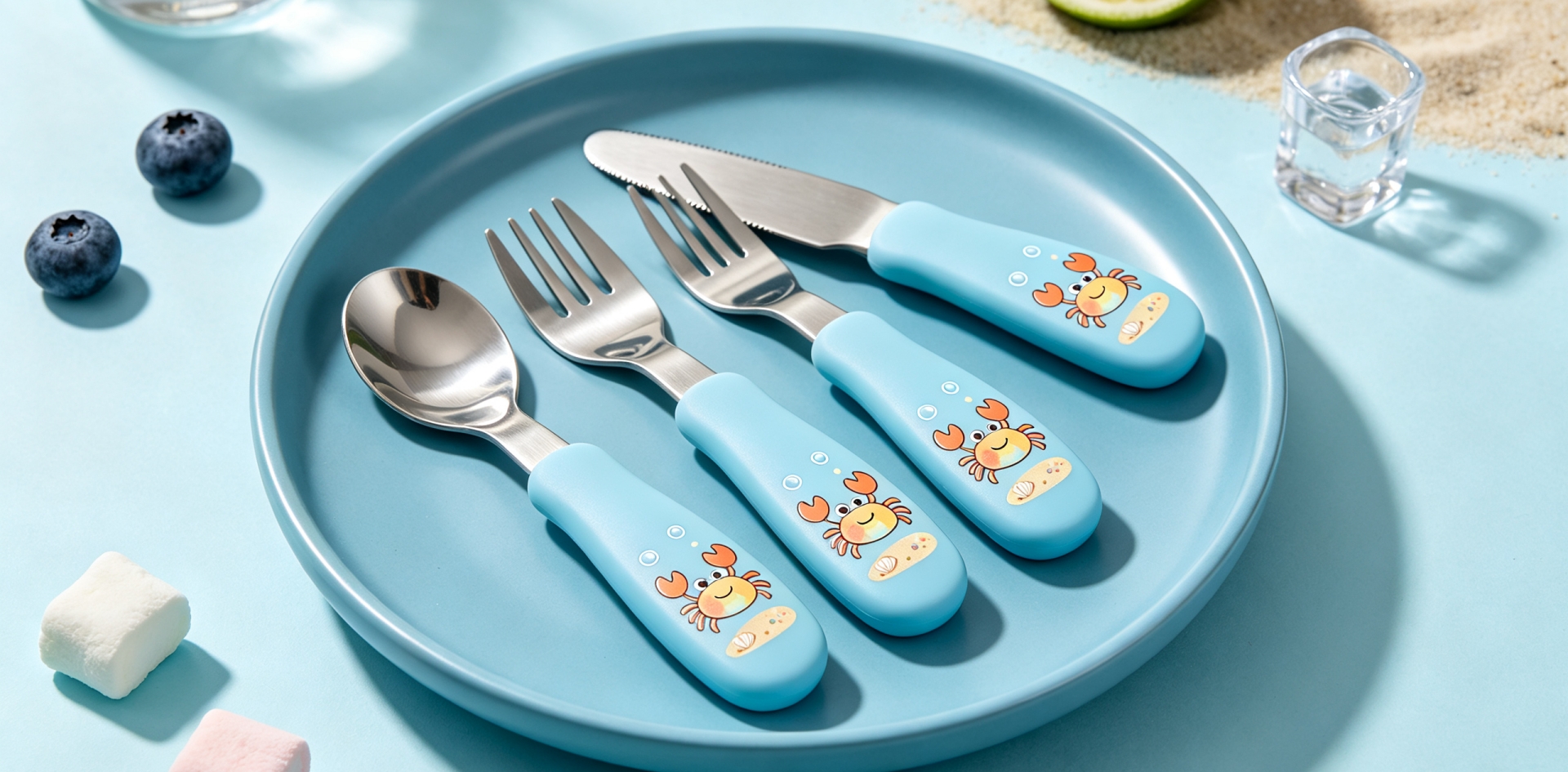
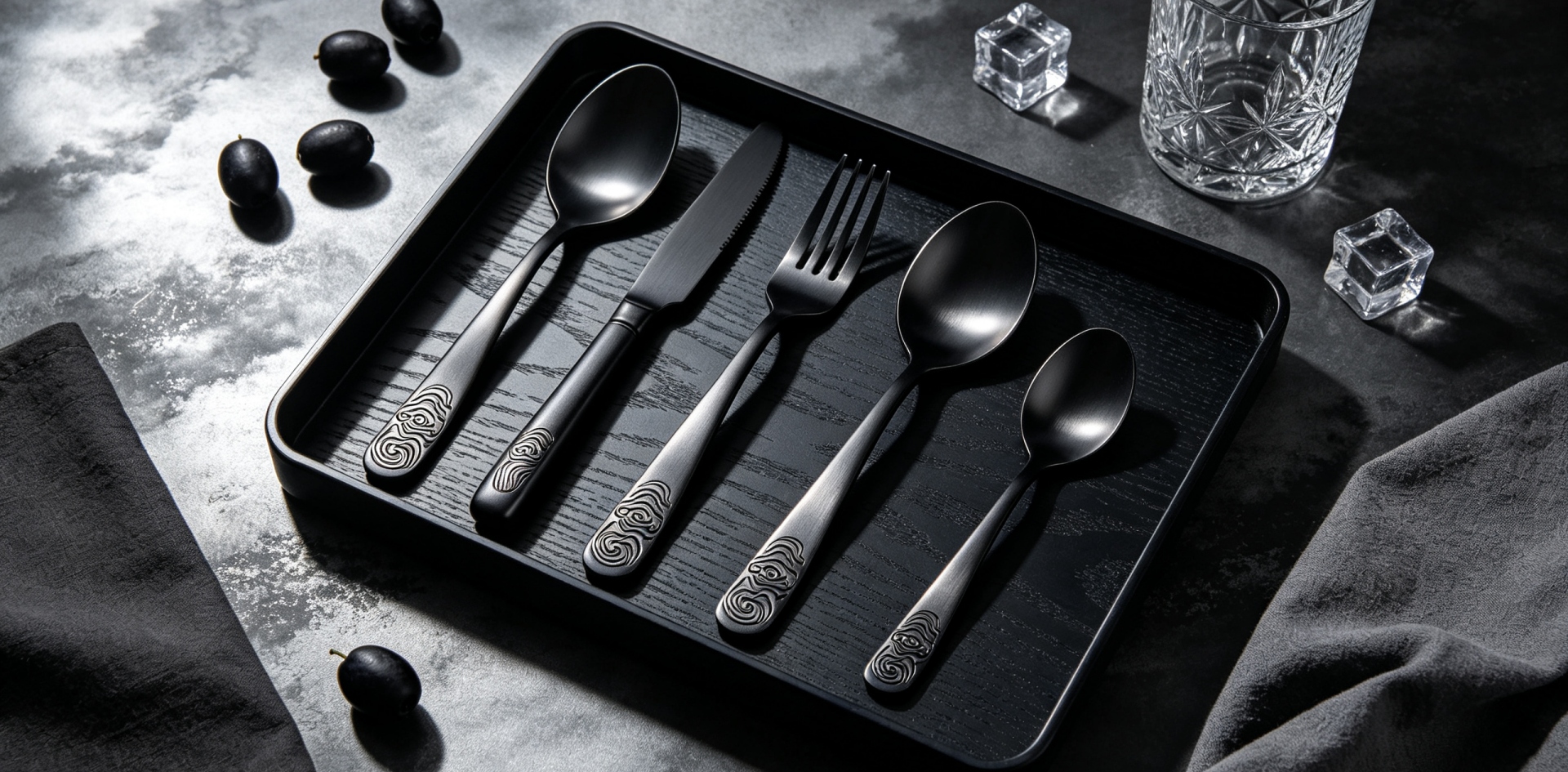
A detailed specification should identify each item, its quantity, and any relevant differences in size or design. For example, a 24-piece set might contain six dinner knives, six dinner forks, six dinner spoons, and six teaspoons. Another set with the same total count could include a different assortment.
The specification should also clarify whether serving spoons, steak knives, dessert forks, or other accessories are included. If a set contains multiple colors, finishes, or handle designs, these distinctions must be documented as well.
Homefelt works with B2B customers on stainless steel cutlery customization, including product selection and coordinated set configurations. Confirming the exact contents early helps align product development, quotation, packaging, and production planning.
2. Use a Standardized Packing List
A packing list for each retail unit should translate the product specification into a simple, repeatable instruction. Production and packing teams need to know not only the total number of pieces but also the required quantity of each item.
A practical set-level checklist can include:
-
Product code and approved set version
-
Required number of knives, forks, and spoons
-
Item size or model where multiple versions exist
-
Finish and handle requirements
-
Packaging type and insert configuration
-
Applicable barcode or label information
The packing list should be consistent with the approved sample, purchase order, and packaging artwork. If a buyer changes the assortment after sample approval, the packing instructions must be updated and the revised version clearly identified.
Using one controlled specification reduces the risk that production staff will rely on an outdated document or assume that two similar-looking sets contain identical pieces.
3. Separate Similar-Looking Cutlery Items
Stainless steel spoons and forks may look nearly identical when viewed quickly, especially when several models share a finish and handle design. However, a teaspoon and a dessert spoon are not interchangeable if the customer has specified different dimensions or functions.
Factories can reduce selection errors by assigning clear identifiers to each component. These may include product codes, labeled storage locations, reference photos, or separate trays for each item type.
For sets containing different knife styles, handle materials, or decorative details, visual references can be particularly useful. Packing staff should be able to distinguish the correct item without relying solely on memory.
For large wholesale orders, it is also helpful to organize components by set model and production batch. This makes it easier to replenish packing stations accurately and reduces the risk of mixing items from different customer orders.
4. Control the Packing Process Step by Step
A reliable packing process should follow a defined sequence rather than depend entirely on an operator's experience.
One approach is to prepare a designated compartment or counted group for each cutlery type. Staff can then verify each component before placing it into the retail box. For high-volume orders, weighing may provide an additional check, but it should not replace counting unless the method has been validated for the specific product and packaging configuration.
Weight-based checks have limitations because individual cutlery pieces can vary slightly in weight. Packaging materials, inserts, protective sleeves, and labels also affect the final package weight. A weight threshold should therefore be established from verified samples and tested under actual production conditions.
Where practical, a second verification step can be used for high-risk sets, promotional packs, or products with many different components. The objective is to catch mistakes before cartons are sealed.
5. Match Packaging Inserts to the Approved Assortment
Packaging design influences piece-count accuracy. A molded tray or compartmentalized insert can help keep knives, forks, and spoons in their designated positions. When each component has a defined location, missing items and incorrect substitutions are easier to identify.
Before mass production, the factory should confirm that the insert fits the actual cutlery dimensions and that all required pieces can be packed without excessive pressure or movement. If the insert is designed for one assortment but production uses another, operators may leave a compartment empty or place the wrong item in it.
For OEM and private-label projects, packaging artwork and insert specifications should be approved together with the product configuration. Changes to the set contents may require adjustments to the insert, printed contents list, retail label, or product photography.
Homefelt can coordinate product, packaging, and transportation requirements with customers so that the agreed set configuration is considered throughout order preparation.
6. Verify Set Accuracy Through Risk-Based Inspection
Final inspection should verify both the total piece count and the identity of each component. Counting only the total number of pieces is insufficient: a box containing two extra forks and two missing spoons could still meet the stated total.
Inspection plans should identify which cartons or retail units will be checked, how the sample will be selected, and what happens when an error is discovered. Buyers and factories should agree on the applicable sampling method and acceptance criteria before shipment.
For higher-risk orders, additional checks may be appropriate after a new packing line is introduced, a product configuration changes, or an initial production run reveals recurring errors. If an incorrect set is found, the factory should investigate whether the cause was an unclear instruction, mixed components, an ineffective counting method, or insufficient staff training.
Inspection results should be recorded by product code and production batch. These records help determine whether the issue is isolated or affects a larger quantity of goods.
7. Maintain Traceability When Correcting Errors
When a piece-count discrepancy occurs, corrective action should address the cause rather than simply repack the affected units. The team should identify the affected production period, review packing records, check component replenishment, and determine whether other cartons require inspection.
If a revised packing instruction is necessary, outdated copies should be withdrawn from the packing area. Staff should receive the updated instructions before production resumes, and the effectiveness of the correction should be checked.
For distributors and importers, clear batch references and inspection records make it easier to communicate with the factory and decide whether additional verification is needed before the goods enter the distribution network.
8. What B2B Buyers Should Confirm Before Ordering
When evaluating a stainless steel cutlery manufacturer, buyers should ask how the factory controls the contents of multi-piece sets. Useful questions include:
-
Is there an approved component list for every set model?
-
Are similar-looking cutlery items identified separately?
-
How are components counted and replenished during packing?
-
Are packaging inserts checked against the approved assortment?
-
What inspection records are available for piece-count accuracy?
-
How are packing errors investigated and prevented from recurring?
These questions are particularly valuable for gift sets, retail assortments, promotional bundles, and private-label products with multiple configurations. A clear process reduces avoidable errors and supports consistent delivery as order quantities grow.
Homefelt supports wholesale and bulk stainless steel cutlery projects with OEM/ODM options, product customization, packaging coordination, and export-oriented service. Buyers can discuss set composition, product dimensions, packaging requirements, and inspection expectations before confirming an order.
To request a quotation or review a customized cutlery set, contact ingrid@homefelt.net or visit the Homefelt website at //www.huabao-homecollection.com/.
You May Be Interested In
How to Control Product Weight Consistency in Stainless Steel Cutlery Orders
How Specification Changes Affect Stainless Steel Cutlery Bulk Orders
Related Article