How SKU Rationalization Improves Stainless Steel Cutlery Inventory Planning
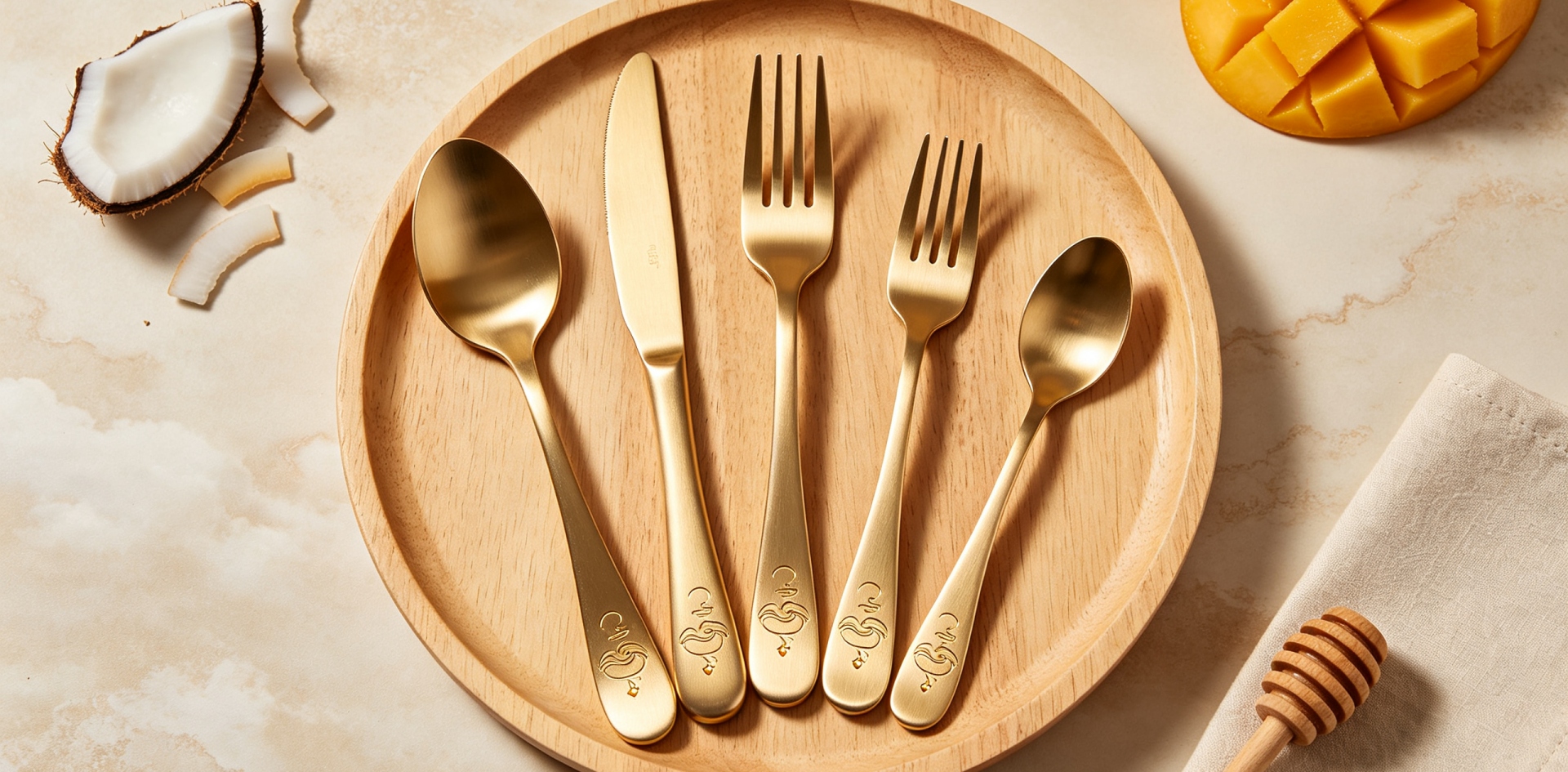
How SKU Rationalization Improves Stainless Steel Cutlery Inventory Planning
Stainless steel cutlery wholesalers often expand their product ranges to serve different customer groups, price levels, and retail channels. Over time, however, a catalog can become difficult to manage. Several spoon, fork, or knife designs may serve nearly identical purposes, while slow-moving variations consume warehouse space and purchasing budgets.
SKU rationalization is the process of reviewing individual product lines to decide which items should be retained, improved, combined, or discontinued. For B2B distributors and importers, a thoughtful review can simplify purchasing, improve stock availability, and make it easier for customers to select the right stainless steel flatware for their needs.
The objective is not simply to reduce the number of products. It is to create a more commercially effective assortment while preserving the designs, specifications, and price points that customers value.
Why Stainless Steel Cutlery Catalogs Become Complicated
Product ranges often grow gradually. A distributor may introduce a new handle pattern for a retail customer, add a different finish for a premium collection, or create several set configurations to meet different price targets. Each decision may make sense on its own, but the combined range can become unnecessarily complex.
Common signs include several SKUs with very similar dimensions and appearance, slow-moving sets that require separate packaging, frequent stock shortages across many small product lines, and purchasing teams placing multiple small orders instead of consolidating demand.
Complexity can also affect sales. When similar products have unclear differences, sales representatives may struggle to explain why a buyer should choose one item over another. Retail customers may find it difficult to distinguish the value of each collection, especially when photographs and product descriptions do not clearly communicate the differences.
Evaluate More Than Sales Volume
A SKU review should use several measures rather than removing products solely because their sales volume is low.
Sales and repeat demand
Review order frequency, quantities sold, customer reorder patterns, and seasonal fluctuations. A product with low annual volume may still be important if it serves a stable commercial customer or fills a specific market requirement.
Contribution and handling costs
Consider the contribution each SKU generates after relevant costs, including packaging, warehousing, picking, and special handling. A popular product may require substantial operational effort, while a lower-volume item may be relatively simple to manage.
Customer and channel importance
Some stainless steel cutlery designs may be linked to key accounts, private-label programs, or established retail collections. Removing them without a transition plan could damage customer relationships or disrupt a larger product range.
Product differentiation
Compare the actual differences between items. Handle shape, material grade, thickness, weight, finish, piece count, and packaging may justify separate SKUs. If two products are effectively interchangeable for the intended customer, the business may need to review whether both are necessary.
Build a Practical SKU Review Matrix
A useful first step is to organize products by their commercial role. For example, a distributor might group stainless steel spoons, forks, knives, and complete flatware sets by target price, customer type, finish, and order volume.
Then assign each SKU a proposed action:
-
Retain: The item has consistent demand, a clear customer purpose, or strong strategic value.
-
Improve: The product has potential, but its packaging, description, price positioning, or specifications need attention.
-
Consolidate: Similar items may be combined into a clearer assortment where customer requirements allow.
-
Discontinue: The item has limited commercial value and can be phased out without unacceptable customer or contractual impact.
These decisions should be supported by evidence. A SKU should not be discontinued merely because another product sells more units. The products may serve different markets or customer expectations.
Understand Product Cannibalization
Product cannibalization occurs when a new or existing item takes sales away from another product in the same catalog. In stainless steel flatware, two designs may compete because they have similar appearances, prices, and intended uses.
To assess this possibility, compare sales before and after a new SKU was introduced. Check whether the new product attracted additional customers or mainly shifted orders from an existing item. Review customer feedback, average order value, and sales by channel to understand whether the overlap is beneficial or unnecessary.
For example, adding a new stainless steel spoon design may expand the range if it offers a genuinely different bowl shape or target price. If the new spoon is nearly identical to an established model, the added SKU may increase inventory complexity without generating meaningful additional demand.
The analysis should also consider supply reliability. A replacement SKU may be useful if it offers a more suitable price or a clearer production plan, but changes should be communicated to customers before existing items are removed.
Coordinate SKU Decisions With the Factory
SKU rationalization can affect manufacturing, packaging, and replenishment. Before consolidating products, importers should confirm whether the proposed alternatives meet the original specifications and whether existing tooling, artwork, or packaging materials will remain usable.
For OEM and private-label products, buyers should also review customer approvals, barcode assignments, product codes, and packaging commitments. Two items that look similar may not be interchangeable if they have different material requirements, dimensions, branding, or market-specific documentation.
Homefelt supports B2B stainless steel cutlery projects that may involve product design, specification confirmation, packaging coordination, and bulk manufacturing. Sharing a planned assortment review with the factory can help buyers evaluate whether related items can be scheduled efficiently and what changes may be needed for future orders.
Plan Discontinuation Without Disrupting Customers
Once a product is selected for phase-out, create a transition plan instead of removing it immediately. Confirm outstanding purchase orders, existing stock, customer commitments, packaging inventory, and any agreed final-buy arrangements.
Where a replacement product is available, compare its specifications carefully and provide buyers with clear documentation. If no suitable replacement exists, communicate the discontinuation date and remaining availability early enough for customers to adjust their purchasing plans.
Inventory should be managed according to the actual demand and transition schedule. Excessive discounting may damage the positioning of a product that still has value, while holding obsolete stock for too long ties up working capital.
Review the Results After Each Assortment Change
SKU rationalization should be treated as an ongoing commercial process. After changes are implemented, monitor stock turnover, out-of-stock frequency, average order size, gross contribution, customer retention, and the number of emergency replenishment orders.
Also collect feedback from sales teams and customers. A smaller catalog is only an improvement if buyers can still find the products they need and the business can supply them reliably.
For stainless steel cutlery distributors, the strongest assortment is not necessarily the largest or the smallest. It is the range that balances customer choice, product differentiation, profitability, and manageable inventory.
Discuss Your Stainless Steel Cutlery Assortment With Homefelt
Homefelt works with importers, wholesalers, and private-label buyers looking for stainless steel spoons, forks, knives, and flatware sets for different market requirements. Whether you are developing a new collection or reviewing an existing range, clear product specifications and realistic order quantities help support better planning.
For assistance with product selection, OEM or ODM customization, packaging coordination, and bulk quotations, email ingrid@homefelt.net. Include your target market, product types, estimated quantities, material preferences, and packaging needs to help establish the scope of your project.
You May Be Interested In
-
How to Optimize Stainless Steel Cutlery Assortments for Wholesale Profitability
-
How to Build a Clear SKU Naming System for Stainless Steel Cutlery Collections
-
How to Manage Aging Inventory and Dead Stock in Stainless Steel Cutlery Distribution
-
How to Plan a Stainless Steel Cutlery Collection for Market Launch
How to Protect Stainless Steel Cutlery Order Data in Supplier Portals
How to Grade and Recover Returned Stainless Steel Cutlery Products
Related Article