Who Owns Custom Tooling in Stainless Steel Cutlery OEM Projects?
Who Owns Custom Tooling in Stainless Steel Cutlery OEM Projects?
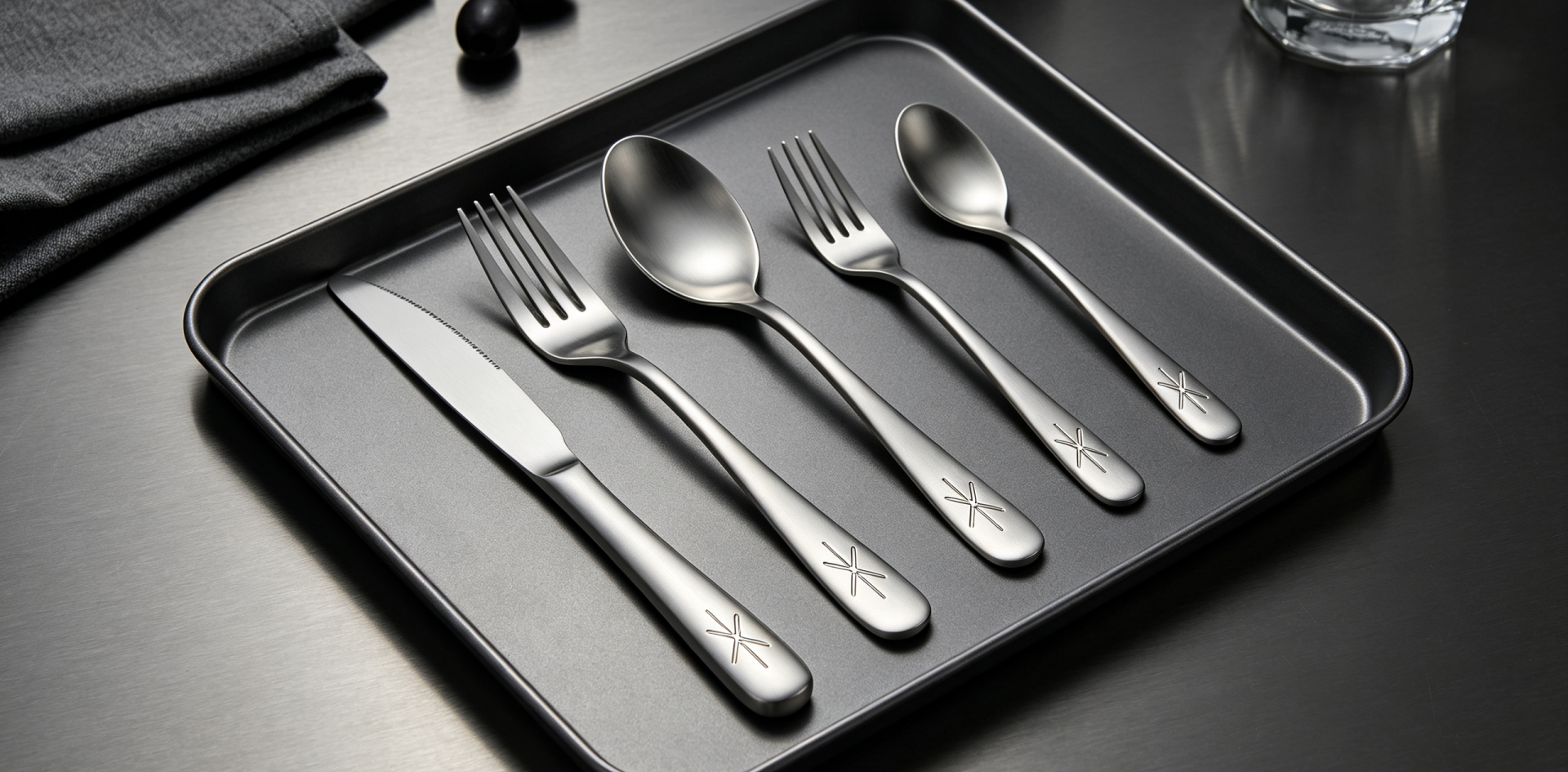
Custom stainless steel cutlery projects often require more than choosing a spoon, fork, or knife design. A buyer may request a distinctive handle shape, a branded pattern, a special outline, or a product dimension that differs from the factory’s standard range. These requirements can involve dedicated molds, dies, stamping tools, or other production fixtures.
Before a project enters mass production, buyers and manufacturers should clarify who owns the custom tooling, who may use it, and what happens when an order ends or production moves to another facility. Clear arrangements help protect investment, reduce misunderstandings, and support stable long-term supply.
Why Tooling Ownership Matters in Cutlery Manufacturing
Custom tooling can influence product appearance, dimensional consistency, production efficiency, and the feasibility of future orders. For example, a distributor developing an exclusive stainless steel spoon may pay for a customized handle pattern. If the ownership and permitted use of that tooling are not documented, both parties may later disagree about whether the design can be reused for other customers or transferred to another manufacturer.
The commercial arrangement should distinguish between existing factory tooling, newly developed project-specific tooling, and modifications made to an existing tool. These categories may have different costs and usage conditions.
For Homefelt factory projects, buyers can discuss the tooling arrangement alongside product drawings, sample approval, production quantities, and customization requirements. The goal is to establish practical expectations before the first bulk order, rather than trying to resolve ownership questions after production has started.
Identify the Tooling Covered by the Agreement
A tooling record should describe the relevant equipment clearly enough for both parties to identify it. Depending on the stainless steel cutlery design, this may include stamping dies, forming tools, molds for applicable components, logo-related tools, or dedicated fixtures.
Useful information includes:
-
Tooling name and internal identification number
-
Related product SKU, drawing number, and approved sample reference
-
Date of development and project or purchase order reference
-
Tooling cost and the party responsible for payment
-
Current storage location and responsible custodian
-
Any restrictions on use, modification, or transfer
Photographs and drawings can make the record easier to verify. For a cutlery set containing several different spoons, forks, and knives, each dedicated tool should be linked to the appropriate product or component rather than recorded under one general project name.
Separate Payment Responsibility from Ownership
Paying for custom tooling does not automatically settle every question about ownership or permitted use. The parties should agree in writing on the commercial terms that apply to the project, taking account of their contract and applicable law.
For example, a buyer may pay a tooling charge in full while the manufacturer retains physical custody at its factory. Alternatively, the parties may agree on shared development costs, specific usage rights, or other arrangements. These possibilities should not be treated as interchangeable.
The written terms should address at least four points:
-
Who owns the tooling or holds the agreed usage rights.
-
Which products, customers, territories, or projects it may be used for.
-
Who must approve changes, repairs, or further development.
-
What happens to the tooling after a project is discontinued or the commercial relationship ends.
OEM and private-label buyers should also clarify whether ownership arrangements cover the physical tool only or extend to associated drawings, artwork, digital design files, and other project materials. Those assets may require separate provisions.
Define Storage, Maintenance, and Tooling Condition
Even when ownership is clear, the tooling still needs to remain identifiable and usable. Storage conditions, routine inspection, repair responsibilities, and maintenance charges should be discussed according to the tooling type and production requirements.
A practical arrangement identifies the party responsible for routine care and the process for approving major repairs. It can also define how wear is assessed and when replacement tooling may be necessary. These details are important when a buyer expects repeat orders over several years.
For stainless steel cutlery, worn or damaged tooling may affect handle contours, stamped details, dimensions, or production consistency. Manufacturers should evaluate the actual condition of the tool before confirming whether it can support another large-volume order.
Buyers can request a tooling status record before a planned reorder. The record may include the latest inspection date, known repairs, current storage location, and any expected maintenance or replacement costs. This information helps purchasing teams distinguish between an ordinary repeat order and a project that may require additional investment.
Establish Rules for Reuse and Exclusive Designs
Not every custom detail requires exclusive tooling, and not every factory tool is dedicated to one buyer. Standard product shapes, common manufacturing equipment, and buyer-specific design elements should be distinguished in the project documentation.
If a distributor requires an exclusive handle pattern or a branded stainless steel flatware design, the agreement should describe the intended scope of exclusivity. It may specify the relevant drawings, SKUs, market restrictions, duration, and permitted exceptions. Avoid relying only on general phrases such as “exclusive design” without defining what is covered.
For a project involving several product variations, the parties should also clarify whether the same tooling may be used for different sizes, finishes, or set configurations. A minor appearance change may require new tooling, a modification, or only a production adjustment, depending on the design.
Homefelt can discuss OEM and ODM requirements with buyers during product development, including the relationship between approved specifications, custom tooling, and future production needs. The specific commercial terms should be confirmed before development expenses are committed.
Plan for Tooling Transfer or Project Closure
A long-term supply relationship may change because of a factory relocation, a discontinued product, a sourcing strategy change, or the end of a business agreement. Tooling transfer should therefore be considered before it becomes urgent.
The parties should agree on the conditions for requesting a transfer, the information required to identify the tooling, and responsibility for packing, transport, insurance, and related charges. They should also establish whether outstanding payments or contractual conditions must be resolved first.
A transfer checklist may include:
-
Written transfer authorization
-
Tooling inventory and identification records
-
Current condition report and relevant maintenance history
-
Associated drawings and approved product specifications
-
Confirmation of the receiving party and delivery arrangements
-
Agreement on any remaining charges or contractual restrictions
Physical transfer does not always mean another manufacturer can immediately use the tool. Compatibility with different machinery, production methods, and quality requirements may need to be assessed. A receiving factory may require technical review or trial production before confirming that the existing tooling is suitable.
Keep Tooling Records Connected to the Product Specification
Tooling records are most useful when they remain linked to the approved product specification. If the spoon handle changes, the fork dimensions are revised, or a logo is repositioned, the corresponding drawing and tooling record should be reviewed together.
For repeat stainless steel cutlery orders, purchasing teams can reference the product SKU, approved sample, drawing revision, and tooling identification in their order documentation. This reduces the risk of an outdated design being used after a specification change.
The same discipline supports OEM, ODM, wholesale, and bulk production. It helps the buyer and factory understand which design version is approved, what equipment is available, and whether a new development charge may be needed.
Discuss Tooling Terms Before Bulk Production
Tooling ownership is a commercial planning issue as much as a manufacturing issue. When buyers clarify payment responsibility, ownership, permitted use, maintenance, storage, confidentiality, and transfer conditions early, they can make better sourcing decisions and protect the continuity of their product lines.
Homefelt factory supports B2B stainless steel cutlery projects, including custom spoons, forks, knives, private-label flatware, and large-volume orders. Buyers can discuss product drawings, material and dimensional requirements, tooling arrangements, packaging, and transportation needs as part of a coordinated project plan.
For a quotation or an OEM/ODM discussion, send your product requirements, estimated order quantity, target specifications, and any tooling ownership expectations to ingrid@homefelt.net. Clear information at the beginning helps both sides assess development requirements and prepare a more reliable production plan.
You May Be Interested In
How to Define Tooling Ownership for Stainless Steel Cutlery OEM Projects
How to Run Effective Buyer-Supplier Meetings for Stainless Steel Cutlery Programs
Related Article