How to Evaluate a Trial Order Before Expanding a Stainless Steel Cutlery Supplier Partnership

How to Evaluate a Trial Order Before Expanding a Stainless Steel Cutlery Supplier Partnership
A trial order gives importers, wholesalers, distributors, and private-label brands an opportunity to evaluate a stainless steel cutlery supplier under real purchasing conditions. A product sample can demonstrate appearance and basic dimensions, but a trial order reveals additional details: whether production follows the approved specification, whether different SKUs arrive correctly, whether packaging meets warehouse requirements, and whether communication remains reliable throughout the order.
For B2B buyers, the purpose of a trial order is not simply to purchase a small quantity. It is to gather enough practical evidence to decide whether a supplier can support repeat orders and larger-volume business.
1. Define What the Trial Order Needs to Prove
Before placing an order, buyers should identify the main uncertainties they want to resolve. A trial order designed to test product consistency may require different checks from one intended to evaluate retail packaging or mixed-SKU fulfillment.
For stainless steel cutlery, the evaluation scope can include:
-
Material grade and agreed product specifications
-
Spoon bowl dimensions, fork tine shape, and knife construction
-
Handle design, weight, thickness, and surface finish
-
Logo execution and decorative details, where applicable
-
Individual packaging, inner boxes, master cartons, and labeling
-
Production communication, inspection records, and delivery coordination
The supplier and buyer should confirm the approved specifications before production begins. A clear reference helps both parties distinguish an actual deviation from an acceptable variation.
Homefelt works with B2B customers on stainless steel cutlery programs involving product customization, OEM/ODM development, and wholesale supply. Establishing evaluation criteria at the beginning makes a first order more useful for planning a longer-term partnership.
2. Compare Delivered Products With Approved References
A production sample and a delivered trial order should be compared against the same agreed reference. Buyers should not rely solely on photographs or a quick visual inspection of the first carton.
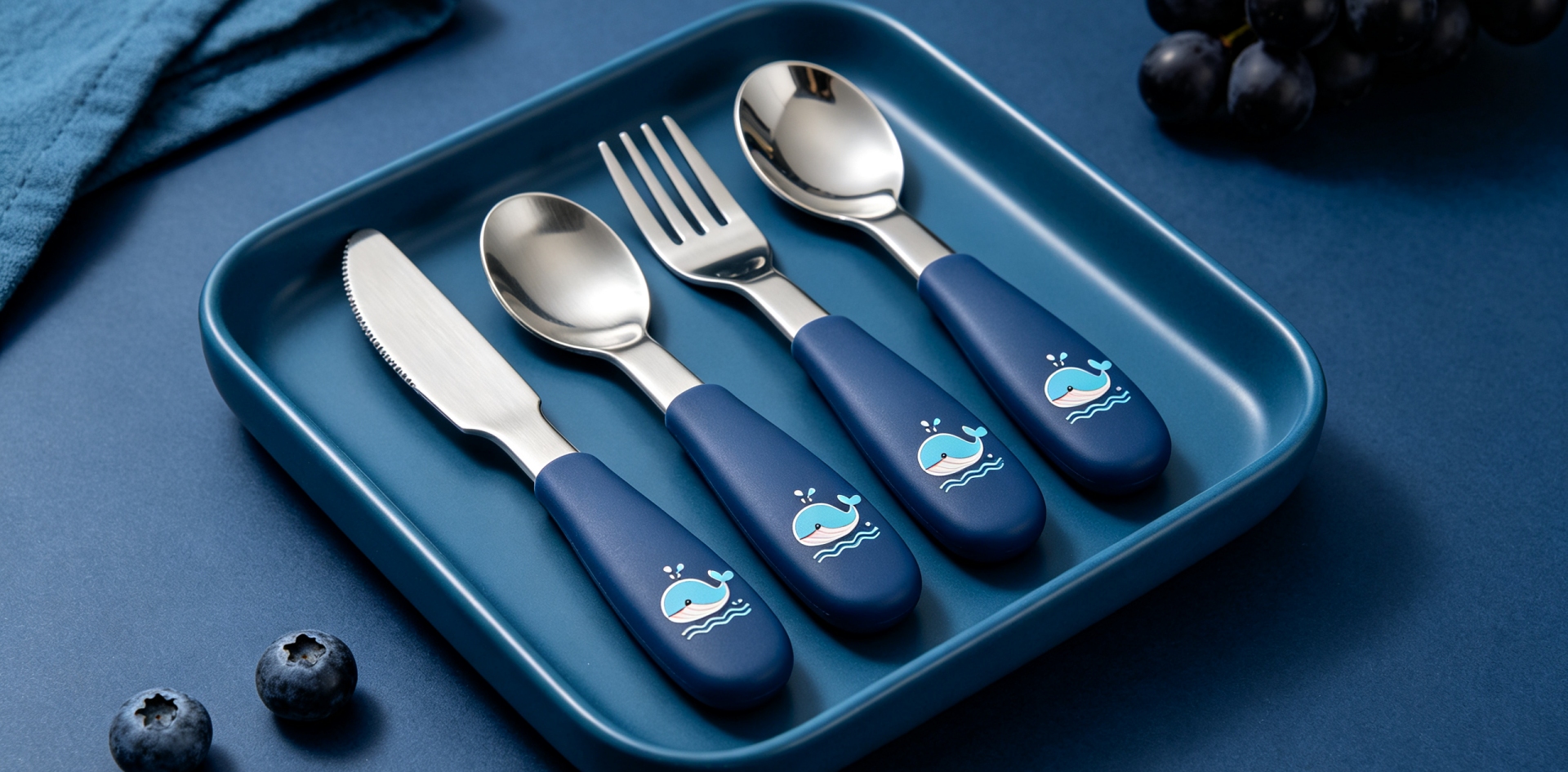
For spoons, inspect bowl shape, depth, rim smoothness, handle alignment, and overall balance. For forks, check tine alignment, spacing, symmetry, and the finish around the tips. For knives, confirm the agreed blade design, handle construction, dimensions, and intended function.
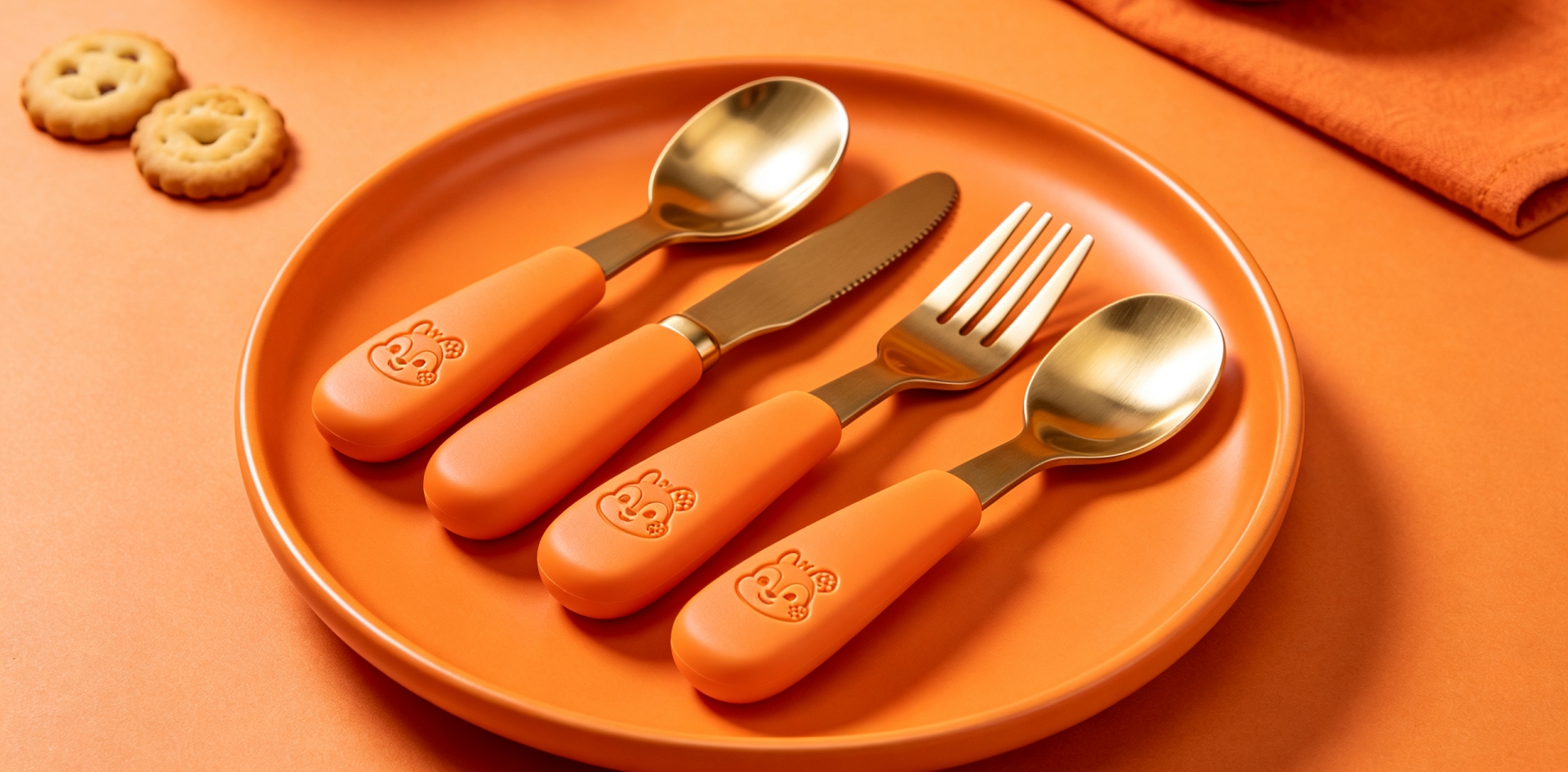
Across the collection, review material specifications, thickness, weight, surface appearance, and any customized features. If a set includes multiple pieces, check whether the components look consistent when displayed together.
A practical inspection record can include the SKU, approved reference, measured result where relevant, observed difference, photograph, and decision. This makes the results easier to share with purchasing teams, product managers, and quality personnel.
Where material composition or food-contact compliance must be verified, request the applicable documentation and test reports for the relevant products and intended market. Visual inspection alone cannot establish alloy composition or regulatory compliance.
3. Evaluate Consistency Across Multiple Cartons and SKUs
One well-finished piece does not necessarily represent the entire order. Buyers should inspect products from different cartons and, where practical, from different positions within the shipment.
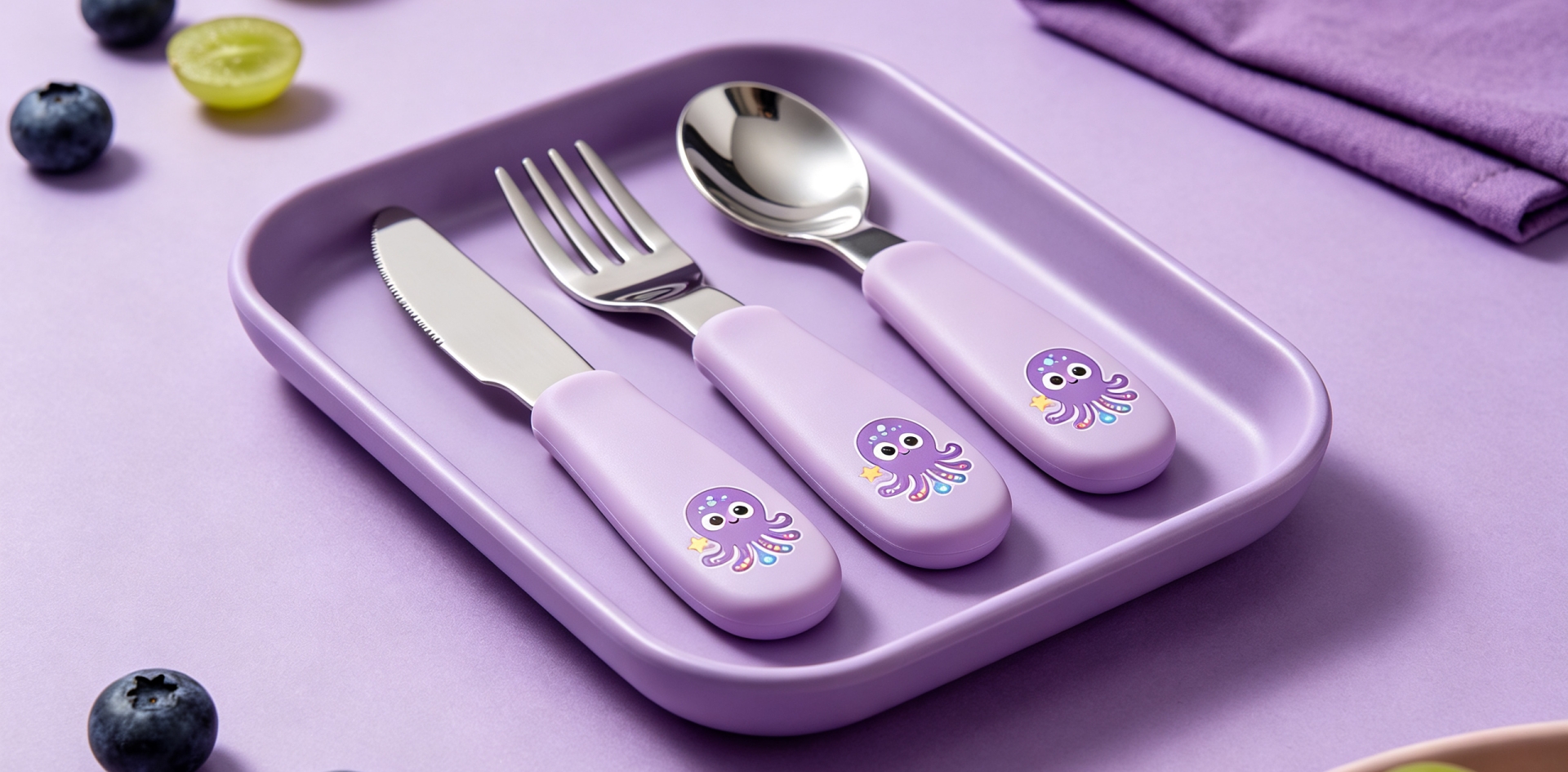
For a mixed stainless steel flatware order, check whether each SKU matches its approved specification and whether the correct quantities have been packed. Confirm that spoon, fork, and knife combinations correspond to the purchase order and agreed assortment.
Pay attention to repeated details such as polishing appearance, edge quality, logo placement, and decorative patterns. Differences should be recorded clearly rather than described only as “not good enough.”
The inspection approach should reflect order size and risk. A small trial may justify checking every piece for critical requirements, while a larger order may use an agreed sampling plan. Buyers and suppliers should decide in advance how defects are classified and what happens if the inspection result falls outside the acceptance criteria.
The goal is to understand whether the supplier has a repeatable process, not merely whether a few selected pieces look satisfactory.
4. Test Packaging Under Normal Handling Conditions
Packaging performance becomes apparent when goods move through actual receiving, storage, and distribution processes. A trial order is a useful opportunity to identify practical issues before they affect a larger shipment.
Inspect individual wraps, protective separators, retail boxes, inner cartons, and master cartons. Check whether pieces can move excessively during transport, whether polished surfaces are protected from contact scratches, and whether the packaging can withstand ordinary warehouse handling.
For retail-ready cutlery sets, confirm that the correct pieces are included and that printed information, barcodes, and SKU labels match the approved artwork. For bulk products, consider whether cartons are easy to identify, count, stack, and handle.
If problems occur, document where they appeared and whether they were caused by product arrangement, protective materials, carton strength, or handling. The resulting improvements should be incorporated into the packaging specification before the next production run.
5. Measure Communication and Order Management
A supplier partnership depends on more than product quality. During the trial order, buyers can assess how effectively the supplier manages questions, confirms decisions, and communicates unexpected changes.
Review whether the quotation, purchase order, specifications, packaging details, and shipment information remain consistent. When a question arises, assess whether the supplier provides a clear answer, identifies the responsible person, and confirms the next action.
Also evaluate how the supplier handles an issue discovered during production or inspection. Early communication and documented corrective actions are more useful than an unsupported promise that everything will be fine.
Buyers should track whether important milestones were met as agreed, including specification confirmation, production updates, inspection arrangements, packing completion, and shipping coordination. A delay should be assessed in context, including whether it was communicated promptly and whether a workable solution was provided.
These observations help distinguish a supplier that can support an organized purchasing process from one that performs well only when the order is straightforward.
6. Use a Consistent Scorecard Before Increasing Order Volume
After receiving the trial order, purchasing teams should summarize the findings instead of relying on general impressions. A simple scorecard can cover five areas:
-
Product conformity: compliance with approved material, dimensions, appearance, and function
-
Consistency: differences between pieces, cartons, and SKUs
-
Packaging: protection, labeling accuracy, and handling suitability
-
Documentation: completeness and consistency of agreed records
-
Cooperation: communication, problem resolution, and milestone management
Assign each area a rating using the company's own acceptance standards. Critical failures should not be offset by strong performance in unrelated categories. For example, attractive packaging cannot compensate for an unapproved material specification.
Classify findings as acceptable, requiring improvement, or unacceptable. If improvement is possible, agree on corrective actions, responsibilities, deadlines, and verification methods. The next order can then be used to confirm whether the changes have worked.
A supplier should be considered ready for expansion only when the results support the buyer's product, commercial, and operational requirements.
7. Plan the Transition From Trial to Repeat Orders
Once the trial order meets the required criteria, buyers can discuss the next stage of cooperation. This may involve increasing quantities, adding SKUs, developing a private-label range, or agreeing on a repeat-order schedule.
Before expanding, reconfirm the commercial quotation, production capacity for the planned assortment, packaging configuration, inspection requirements, and expected delivery arrangements. If the next order introduces a new finish, handle design, logo, or packaging format, treat those changes as items requiring confirmation rather than assuming the trial automatically validates them.
For long-term supply, retain the approved product references, inspection findings, packaging specifications, and corrective-action records. These documents create a shared basis for future orders and reduce the risk of inconsistent expectations between purchasing and production teams.
Homefelt supports B2B customers seeking stainless steel cutlery for wholesale distribution and customized product programs. Depending on project requirements, cooperation can cover product design, OEM/ODM development, packaging customization, and transportation coordination. Buyers can share their target specifications, expected quantities, destination market, and evaluation requirements to discuss a suitable supply plan.
A well-managed trial order turns an initial transaction into a structured decision. By checking the products, packaging, documentation, and working process against clear standards, buyers can make a more confident decision about whether to expand the partnership.
For a quotation or a discussion about stainless steel spoons, forks, knives, and complete flatware collections, contact Homefelt at ingrid@homefelt.net with your product requirements and expected order volume.
You May Be Interested In
-
How to Set Product Acceptance Criteria for Stainless Steel Cutlery Wholesale Orders
-
How to Organize Stainless Steel Flatware Specifications for Repeat Purchasing
-
How to Evaluate Packaging Performance for Stainless Steel Cutlery Shipments
-
How to Develop an OEM Stainless Steel Cutlery Collection With a Manufacturing Partner
How to Turn Stainless Steel Cutlery Trade Show Contacts Into B2B Orders
How Stainless Steel Cutlery Factories Can Prepare for B2B Buyer Audits
Related Article