
Stainless Steel Cutlery Weight & Balance Design for B2B Buyers
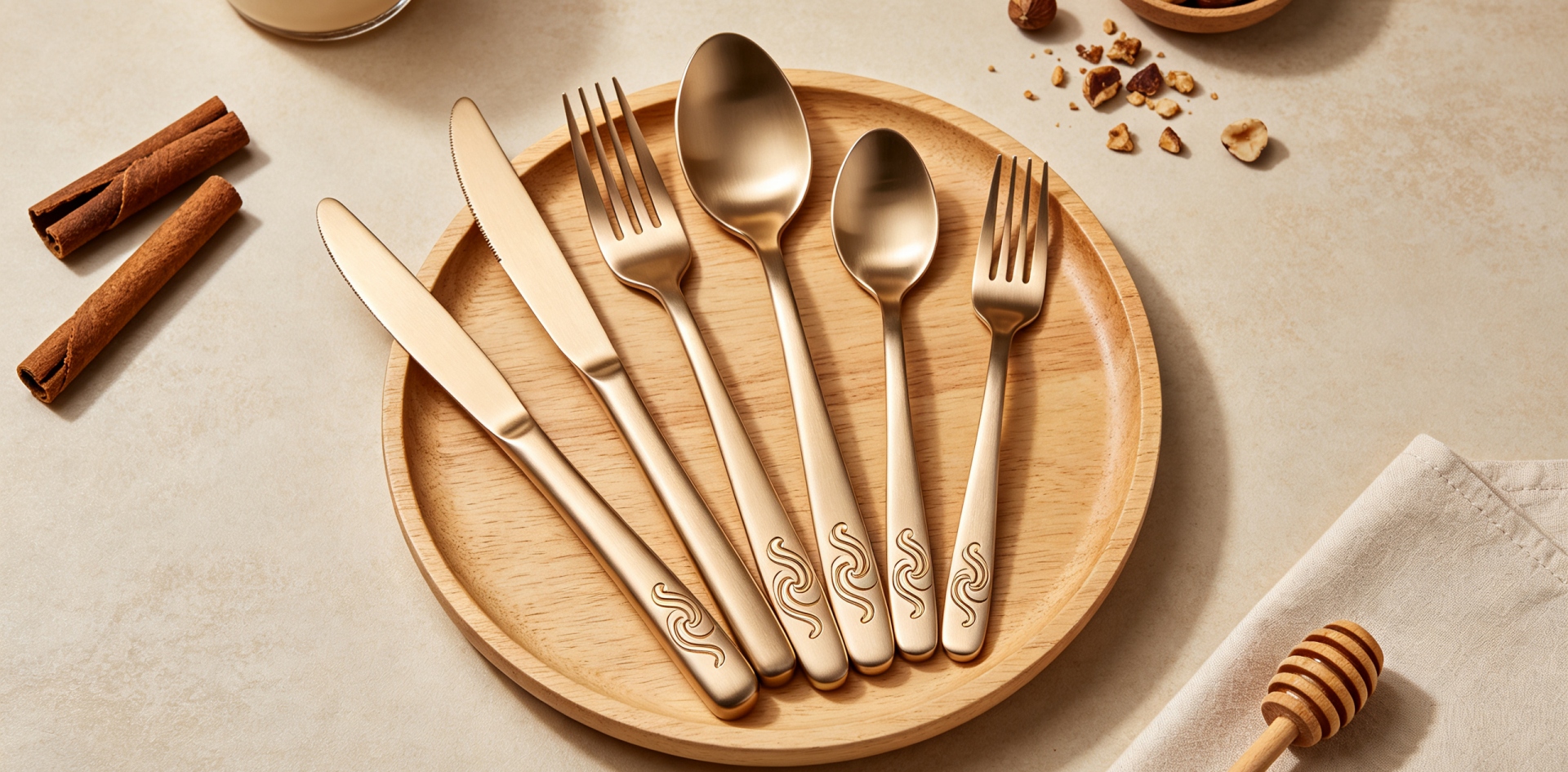
Stainless Steel Cutlery Weight & Balance Design for B2B Buyers
When buyers evaluate stainless steel cutlery for wholesale, foodservice or private label projects, appearance is usually one of the first considerations. However, the weight and balance of a spoon, fork or knife can have an equally important influence on how the product feels in actual use.
For B2B buyers, these details are particularly important when developing a complete stainless steel cutlery collection. Two products may have a similar appearance but provide a very different handling experience because of differences in material thickness, overall dimensions, handle construction and weight distribution.
A professional stainless steel cutlery manufacturer should therefore consider weight and balance as part of product development rather than treating them as simple production measurements.
Why Cutlery Weight Matters
The weight of stainless steel cutlery affects the overall feeling of the product in the hand.
A lightweight spoon can be suitable for certain everyday dining collections, catering applications or projects where transportation and packaging efficiency are important. A heavier spoon may create a more substantial feeling and can be suitable for premium tableware collections.
The same principle applies to forks and knives.
For B2B buyers, the target weight should be determined according to the product positioning, intended market and overall design rather than simply selecting the heaviest available option.
Important product parameters may include:
-
Overall product length
-
Stainless steel grade
-
Material thickness
-
Handle dimensions
-
Bowl dimensions for spoons
-
Tine dimensions for forks
-
Blade dimensions for knives
-
Individual product weight
-
Weight relationship between different pieces
These parameters can be confirmed during product development and sample approval.
Weight Distribution Is Different From Total Weight
Total weight alone does not determine how a piece of cutlery feels.
The distribution of that weight is also important.
For example, a spoon with a relatively heavy handle may feel different from another spoon with similar total weight but a different handle structure. A knife with a heavier blade section may also feel different from a knife where more weight is concentrated toward the handle.
This is why professional cutlery development should consider the relationship between:
-
Handle weight
-
Working-end weight
-
Product length
-
Handle width
-
Material thickness
-
Overall shape
For a complete knife, fork and spoon collection, these relationships should also be considered together.
A well-developed collection should provide a consistent feeling across the different pieces while allowing each product to maintain its own functional requirements.
Choosing Weight According to the Product Positioning
Different B2B projects may require different weight specifications.
For economy-oriented wholesale products, buyers may prefer practical designs with controlled material usage and efficient packaging.
For mid-range collections, buyers may look for a stronger balance between cost, weight and handling comfort.
For premium flatware, a more substantial weight and carefully developed handle proportions may support the desired market positioning.
There is therefore no single “best” weight for every stainless steel spoon, fork or knife.
The correct specification depends on the buyer's market, price positioning, sales channel and intended application.
An experienced stainless steel cutlery factory can discuss these factors with the buyer before finalizing the product specification.
How Buyers Can Compare Cutlery Samples
When evaluating samples from a stainless steel cutlery manufacturer, buyers should not only compare appearance.
A practical sample evaluation can include:
-
Compare the individual weight of each piece.
-
Check whether the handle feels comfortable in the hand.
-
Compare the balance between the handle and working end.
-
Check whether knives, forks and spoons have a consistent visual proportion.
-
Confirm the stainless steel material and thickness.
-
Compare the approved sample with the technical specification.
-
Evaluate the complete collection rather than only one product.
For large-volume projects, these measurements can become useful reference points for future production.
Once a sample has been approved, maintaining the agreed specifications can help improve consistency between production batches.
Stainless Steel Material and Product Parameters
Material selection also influences the final weight and performance of stainless steel cutlery.
Common stainless steel options used in cutlery include 18/10, 18/0 and 13/0 grades, depending on the specific product and application. Different grades have different material characteristics and cost considerations.
For example, knives normally require a material specification suitable for the required blade characteristics, while spoons and forks may have different material requirements.
Buyers should therefore confirm the material grade together with thickness, dimensions and weight instead of evaluating each parameter separately.
For customized projects, the factory can use the approved specifications as a reference for sample development and mass production.
Project Experience in Customized Cutlery
In B2B stainless steel cutlery projects, buyers often start with a general concept rather than a complete technical drawing.
A customer may know the desired style, target market, approximate price range and required quantity, while the manufacturer helps translate these requirements into practical product specifications.
For example, a customer developing a new flatware collection may need:
-
A specific spoon and fork proportion
-
A matching knife design
-
A defined product weight
-
A particular stainless steel grade
-
A selected surface treatment
-
Custom logo application
-
Retail or wholesale packaging
-
Large-volume production
The manufacturer can then coordinate the product requirements, develop samples and adjust the specifications according to customer feedback before mass production.
This type of project experience is valuable because product design decisions need to work together rather than being considered individually.
Quality and Certification Support
For B2B buyers, product specifications are only one part of supplier evaluation.
Factory qualifications, audit records and relevant certification information can also provide additional confidence when selecting a long-term manufacturing partner.
Homefelt's website presents its stainless steel cutlery manufacturing experience together with BSCI, SEDEX 4P, BRC and ISO 9001 audit information, as well as Disney audit experience and FAMA and FSC certification information. These materials can help international buyers evaluate the supplier's manufacturing and business capabilities.
For specific projects, buyers can also discuss the product specifications, quality requirements, sample approval and inspection arrangements before mass production.
One-Stop Service for Stainless Steel Cutlery Projects
A successful B2B cutlery project often involves more than manufacturing the spoon, fork and knife.
Different customers may have different requirements depending on their market and sales channels.
Homefelt can provide a one-stop service approach, allowing customers to discuss product design, material selection, product specifications, packaging and transportation within the same project.
Instead of using exactly the same solution for every customer, the service can be adjusted according to the customer's actual requirements.
For example, one customer may need a standard stainless steel cutlery set with customized packaging, while another may require a completely customized knife, fork and spoon collection with private label branding and large-volume production.
The goal is to create a service package that matches the customer's project rather than simply supplying a standard product.
Building Long-Term B2B Cooperation
For wholesalers, distributors, retailers and private label brands, a stainless steel cutlery project is often not limited to one shipment.
After the initial product is approved, future cooperation may involve repeat orders, new product development, packaging updates or expansion into additional cutlery designs.
Maintaining clear product specifications from the beginning can make these future projects easier to manage.
Homefelt focuses on B2B stainless steel cutlery manufacturing and supports OEM, ODM and private label projects for international customers. The company states that it has more than 40 years of experience in stainless steel cutlery manufacturing and has worked with well-known international brands.
For us, the goal is not simply to complete one order. We aim to build a long-term relationship with customers, provide practical manufacturing support and grow together through continued cooperation.
You May Be Interested In
We look forward to discussing your project and building a long-term partnership together.
Stainless Steel Cutlery Edge Design for Wholesale and OEM Projects
Stainless Steel Cutlery Measurement Control for Consistent B2B Production
Related Article



