
Stainless Steel Spoon Bowl Bottom for Custom B2B Cutlery
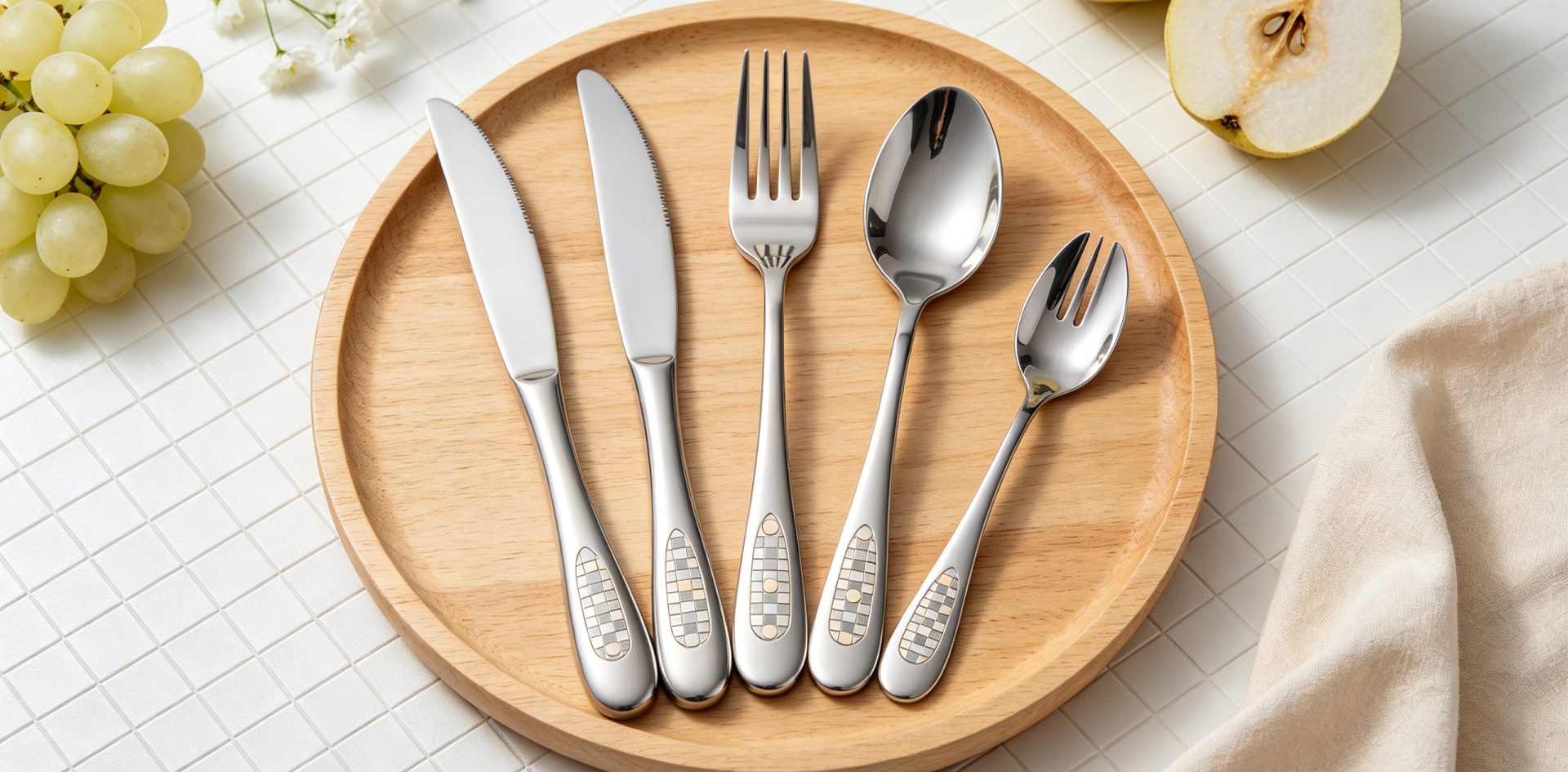
Stainless Steel Spoon Bowl Bottom for Custom B2B Cutlery
The bowl is the defining structure of a stainless steel spoon, but its shape is made up of several different surfaces. One important area is the bottom of the spoon bowl, where the inner surface reaches its deepest point before transitioning toward the surrounding edges.
The shape of this bottom area can influence the overall curvature, visual depth and proportion of the spoon. For B2B customers developing custom stainless steel spoons, understanding this detail can help create a more controlled product design.
A spoon bowl is not simply a flat surface with a raised edge. Its three-dimensional form determines how the product looks and feels when held and used.
What Is the Bottom of a Stainless Steel Spoon Bowl?
The bowl bottom refers to the deepest central area of the spoon bowl and the surrounding curved surface that leads toward the rim.
Depending on the design, this area can appear relatively rounded, elongated or smoothly continuous from one side of the bowl to the other.
The bowl bottom works together with the bowl length, width, depth and rim profile. Changing the bottom curvature can therefore influence the appearance of the complete spoon.
For custom stainless steel flatware, it is useful to define these elements together rather than treating the bowl bottom as an isolated feature.
Bowl Bottom and Spoon Depth
The relationship between the bowl bottom and overall bowl depth is particularly important.
A deeper bowl naturally creates a stronger three-dimensional form, while a shallower bowl produces a flatter appearance.
However, depth alone does not determine the final shape. The curvature leading from the bottom toward the rim also affects how that depth is perceived.
Two stainless steel spoons can have a similar maximum depth but different bowl-bottom profiles, resulting in noticeably different shapes.
For OEM and ODM spoon development, this provides another way to refine the product without changing the basic purpose of the spoon.
Bowl Bottom and Overall Bowl Shape
A stainless steel spoon bowl should have a coherent shape from the center to the edge.
If the bottom is strongly rounded while the outer bowl is relatively flat, the transition needs to be controlled so that the surface does not appear visually disconnected.
A gradual transition can create a smoother and more continuous bowl.
The desired shape depends on the intended product style. A traditional spoon may use a softer, more rounded bowl form, while a modern stainless steel flatware design may use a cleaner and more controlled profile.
The bowl bottom can contribute to either appearance.
Bowl Bottom and Spoon Capacity
The shape of the bowl naturally influences how much material or food the spoon can hold.
However, capacity is determined by the complete bowl geometry, including length, width, depth and curvature.
The bowl bottom is one part of this relationship.
For a custom stainless steel spoon, the desired bowl capacity should therefore be considered together with the complete three-dimensional shape rather than by changing depth alone.
A balanced bowl can maintain its intended capacity while still achieving the desired appearance and proportions.
The Relationship Between Bowl Bottom and Rim
The bottom of the bowl gradually rises toward the rim.
This transition determines the overall curvature of the inner spoon surface.
A smooth transition can create a continuous and refined appearance. A more pronounced change can give the bowl a stronger structural character.
The rim profile should also be coordinated with the bowl bottom. A very subtle rim may work naturally with a smooth bowl, while a more defined rim can emphasize the outer perimeter.
For custom stainless steel spoons, these elements can be reviewed together during sample development.
Bowl Bottom and Bowl Width
The width of the spoon bowl changes how the bottom curvature is perceived.
A relatively wide bowl provides more space for the curvature to spread across the surface. A narrower bowl creates a more compact transition.
This means that the same bowl-bottom design may look different when applied to spoons with different widths.
For this reason, bowl width and bottom shape should be considered together when developing a new stainless steel spoon.
The goal is to maintain a proportionate relationship between the central surface and outer edge.
Bowl Bottom and Bowl Length
Length is another important factor.
A short, rounded bowl can create a compact appearance, while a longer bowl may require a more elongated curvature.
The deepest point does not necessarily need to sit in exactly the same visual position for every spoon design. Its relationship with the front and rear sections of the bowl can be adjusted according to the overall product shape.
For B2B customers developing custom stainless steel cutlery, this allows the spoon bowl to be designed around a specific visual concept rather than a standard template.
How the Bowl Bottom Influences the Spoon's Appearance
The central curvature of the bowl can affect how light reflects from the stainless steel surface.
A smoothly rounded bowl can create continuous highlights across its curved surface. A different curvature can change the way the surface appears from various angles.
This can be particularly noticeable on polished stainless steel flatware.
The visual effect is not created by the bowl bottom alone. Surface finish, material condition, rim shape and the surrounding bowl geometry also contribute.
Nevertheless, the bowl bottom remains an important part of the spoon's three-dimensional form.
Bowl Bottom and User Feel
The shape of the spoon bowl contributes to how the spoon feels during use.
The relationship between the bowl bottom, side walls and rim determines the shape of the area that interacts with the user.
A smooth and controlled bowl can provide a more natural transition from the center toward the edge.
Other factors, such as material thickness and rim treatment, also influence the final feeling. For this reason, the actual spoon should be evaluated as a complete product.
A physical sample can make these differences much easier to identify.
Evaluating a Custom Spoon Sample
When reviewing a custom stainless steel spoon, it can be useful to inspect the bowl from several angles.
From above, the buyer can evaluate the overall outline and symmetry. From the side, the bowl depth and curvature become clearer. Viewing the inner surface from an angle can reveal how smoothly the bottom transitions toward the rim.
These checks help confirm whether the three-dimensional bowl matches the intended design.
For OEM and ODM stainless steel spoon projects, adjustments can then be made before the final product specification is approved.
Keeping Bowl Geometry Consistent
Once the bowl-bottom profile has been confirmed, consistency becomes important for repeated production.
If the curvature varies significantly between spoons, the products may appear different when placed together.
Consistent bowl geometry is especially important for simple stainless steel designs because subtle differences can be easy to see across multiple pieces.
An approved sample and clear product specifications can help maintain the intended bowl shape during future production.
Coordinating Spoon Bowl Design With Fork and Knife
A stainless steel spoon is often part of a larger cutlery collection.
The fork has tines and the knife has a blade, so their functional structures are naturally different. However, the spoon bowl can still be coordinated with the visual language of the complete collection.
Handle proportions, transition lines and overall product weight can be developed around a common design direction.
This allows the spoon to retain its own functional shape while fitting naturally beside the stainless steel fork and knife.
Homefelt Custom Stainless Steel Spoon Development
Homefelt provides stainless steel cutlery customization for B2B customers, including stainless steel spoons, forks, knives and complete flatware sets.
For custom spoon projects, customers can discuss bowl length, width, depth, curvature, bowl-bottom profile, rim design, neck transition and handle proportions.
Homefelt supports OEM and ODM development based on customer drawings, reference samples or product concepts. When a complete collection is required, matching stainless steel knives, forks and spoons can also be developed around the same product design direction.
According to the customer's requirements, Homefelt can provide a dedicated service package covering product design and customization, together with related packaging, transportation and other one-stop services.
For long-term cooperation, customers can continue developing additional stainless steel cutlery products while maintaining established designs. Homefelt can support ongoing product customization and development so both sides can grow together through continued cooperation.
The bottom of a stainless steel spoon bowl may not be the first detail a buyer notices, but it plays an important role in the bowl's three-dimensional form. When the bottom curvature is coordinated with depth, width, length and rim design, the finished spoon can achieve a more balanced and intentional shape.
Stainless Steel Knife Blade Width for Custom B2B Cutlery
Stainless Steel Fork Head Length for Custom B2B Cutlery
Related Article



