Stainless Steel Spoon Bowl Liquid Retention Design for Bulk Orders
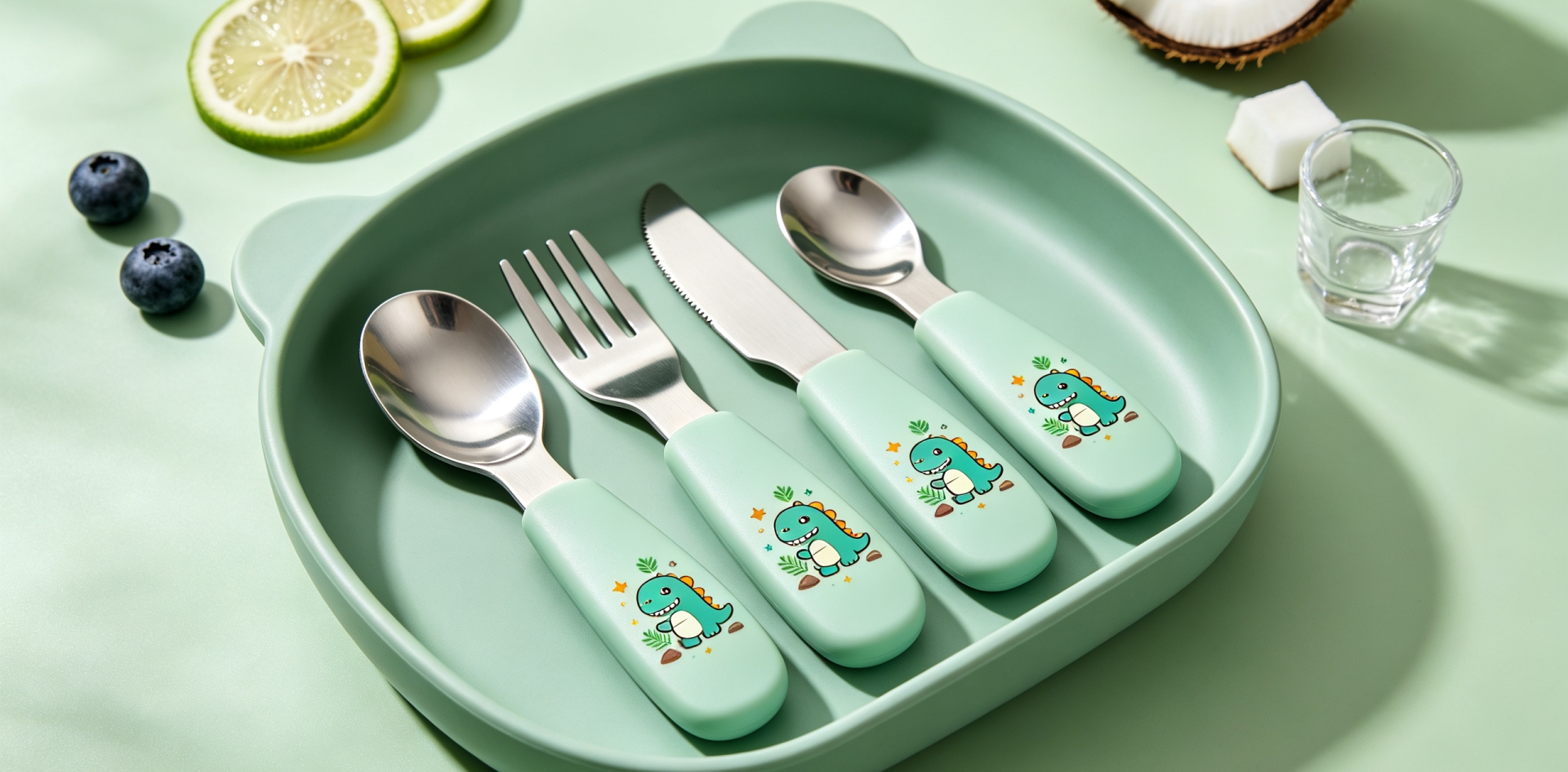
Stainless Steel Spoon Bowl Liquid Retention Design for Bulk Orders
When buyers develop a stainless steel spoon for retail, hospitality, or foodservice programs, bowl capacity is only one part of the design. The shape of the bowl and its transition toward the rim can also influence how liquid is held, moved, and released during normal use.
For importers, wholesalers, and private label brands, these details can be important when selecting spoons for soup, sauces, beverages, desserts, or general table use. A design that performs well for one application may not be the best choice for another. Evaluating liquid retention and release during product development helps buyers confirm whether the bowl shape matches the intended use.
Homefelt supports B2B stainless steel cutlery projects with product design coordination, technical specifications, sample approval, OEM and ODM customization, and bulk production planning.
How Bowl Geometry Influences Liquid Behavior
A spoon bowl forms a shallow or deep cavity that holds a portion of liquid. Its depth, curvature, width, and rim profile influence the shape of that cavity and the way liquid moves when the spoon is tilted.
A deeper bowl may hold more liquid under comparable conditions, but capacity alone does not determine how easily the contents are transferred. The curvature near the sides, the shape of the front edge, and the angle at which the spoon is tilted can all affect the result.
A broad, shallow bowl may behave differently from a narrow, deep one, even if both have similar measured capacity. Buyers should therefore evaluate the overall geometry rather than using one dimension as a substitute for practical performance.
The intended application should guide the design. A general-purpose table spoon has different requirements from a serving spoon intended to transfer larger portions of soup or sauce.
Key Design Features to Review
Bowl depth and curvature
Bowl depth determines how far the center sits below the rim reference. Curvature describes the transition from the center to the sides and outer edge.
These features should be reviewed together. A small change in the central depth may affect capacity, while a change in the side contour may influence how the liquid moves toward the rim.
Bowl width and length
Length and width define the opening of the bowl. Their relationship affects the overall proportions and the space available for holding liquid.
A wider opening may provide a different transfer experience from a narrow opening, but the outcome also depends on depth and curvature. Sample evaluation is useful when the buyer has a specific serving or portioning requirement.
Rim profile
The rim forms the boundary through which liquid leaves the bowl. Its contour should be considered as part of the complete design rather than as an isolated finishing feature.
Unintended irregularities in the rim may affect the consistency of the product's appearance and should be reviewed against the approved drawing and finishing criteria.
Bowl-to-handle relationship
The angle and alignment between the bowl and handle influence the position of the bowl during use. A handle that follows a particular profile may change the way a user naturally tilts the spoon.
For custom designs, buyers should evaluate the bowl and handle as one complete product instead of approving each component independently.
Define the Intended Use Before Selecting a Design
Before approving a stainless steel spoon, buyers should identify the primary application and expected user requirements.
For example, a soup spoon may prioritize a bowl profile suited to transferring liquid, while a dessert spoon may need proportions appropriate for smaller portions. A serving spoon may require a larger bowl and a handle that allows the user to move food from one container to another.
These examples are starting points rather than universal rules. Different markets and product categories may use different design conventions, so buyers should confirm the actual expectations of their customers.
If the spoon is part of a coordinated flatware range, the design should also maintain the collection's visual identity. Bowl proportions can vary between products while preserving shared design features.
Evaluating Liquid Retention and Release With Samples
Drawings and dimensions establish the intended geometry, but a physical sample helps buyers evaluate how the spoon behaves in practice.
A repeatable comparative evaluation can include the following steps:
-
Select representative samples of the proposed bowl designs.
-
Use the same liquid and a consistent filling method for each sample.
-
Define the fill level and starting position before testing.
-
Tilt each spoon at a consistent angle and under comparable conditions.
-
Observe the release pattern and any unexpected pooling or dripping.
-
Record the findings against the intended application and agreed acceptance criteria.
The test conditions should be documented because liquid viscosity, surface condition, temperature, and handling can affect the observations. A result obtained with water should not automatically be treated as proof of performance with thicker sauces or other liquids.
For a commercial buyer, the purpose of this exercise is to compare candidate designs under consistent conditions. If a formal performance claim is required, the test method and acceptance limits should be defined and supported by suitable evidence.
Avoiding Misleading Design Assumptions
A spoon that holds a larger volume is not necessarily better for every application. A deep bowl may suit one use, while a shallower profile may be preferred for another. Similarly, a particular rim shape should not be assumed to improve liquid release without evaluation.
Buyers should avoid approving a design solely because it looks deep or appears similar to an existing product. Perspective can distort the apparent dimensions in photographs, making a bowl seem larger or more curved than it is.
A technical drawing should record the important dimensions, and the physical sample should confirm the intended profile. Where liquid transfer is a key requirement, a defined comparative test provides additional information beyond dimensional inspection.
Controlling Bowl Geometry in Bulk Production
Once a bowl design is approved, the manufacturer needs clear requirements for reproducing it consistently.
The product specification may include bowl length, width, depth, relevant profile dimensions, rim characteristics, and the relationship between the bowl and handle. Measurement points should be defined so that inspectors evaluate the same locations across samples.
The buyer and factory should agree on tolerances according to the design and manufacturing feasibility. A dimensional inspection can confirm that specified measurements fall within the permitted range, but it cannot replace a functional evaluation when liquid behavior is a central requirement.
During production, inspection results should be compared with the approved drawing and acceptance criteria. If repeated deviations appear, the factory can review the relevant forming process, tooling, measurement method, or other potential causes.
For repeat orders, the current drawing revision and approved sample should remain the reference. Any change to the bowl profile should be reviewed before it is introduced into production.
Documentation for Buyers and Product Teams
Before confirming a bulk order, buyers should prepare a product specification containing:
-
Intended spoon category and application.
-
Bowl length, width, depth, and profile details.
-
Handle-to-bowl relationship.
-
Surface finish and rim requirements.
-
Approved drawing and physical sample.
-
Dimensional tolerances and inspection points.
-
Any required liquid-retention or release evaluation.
-
Packaging specifications and order quantity.
If the project requires market-specific compliance documents or product testing, those requirements should be confirmed in advance. Factory audit documents and management-system certifications can support supplier qualification, but they do not automatically verify every functional characteristic of the spoon.
Homefelt has experience in stainless steel cutlery manufacturing and offers OEM, ODM, private label, wholesale, and bulk production services. Its one-stop support can coordinate product design, packaging, and transportation according to each customer's project requirements.
Develop Your Stainless Steel Spoon With Homefelt
Choosing the right bowl profile requires a balance between dimensions, intended application, visual design, and practical performance. By evaluating samples under consistent conditions and documenting the important specifications, buyers can make more informed decisions before committing to large production quantities.
Homefelt works with importers, wholesalers, distributors, and brand owners developing stainless steel spoons and coordinated flatware collections. Share your reference sample, target dimensions, intended use, estimated order quantity, and any special performance requirements to begin a focused discussion.
For product customization, specification review, or a bulk quotation, contact ingrid@homefelt.net.
You May Be Interested In
Stainless Steel Spoon Quality Sampling Plans for Bulk Orders
Stainless Steel Spoon Bowl-to-Handle Alignment Inspection for Bulk Orders
Related Article