
Stainless Steel Spoon Bowl Rim for Custom B2B Cutlery
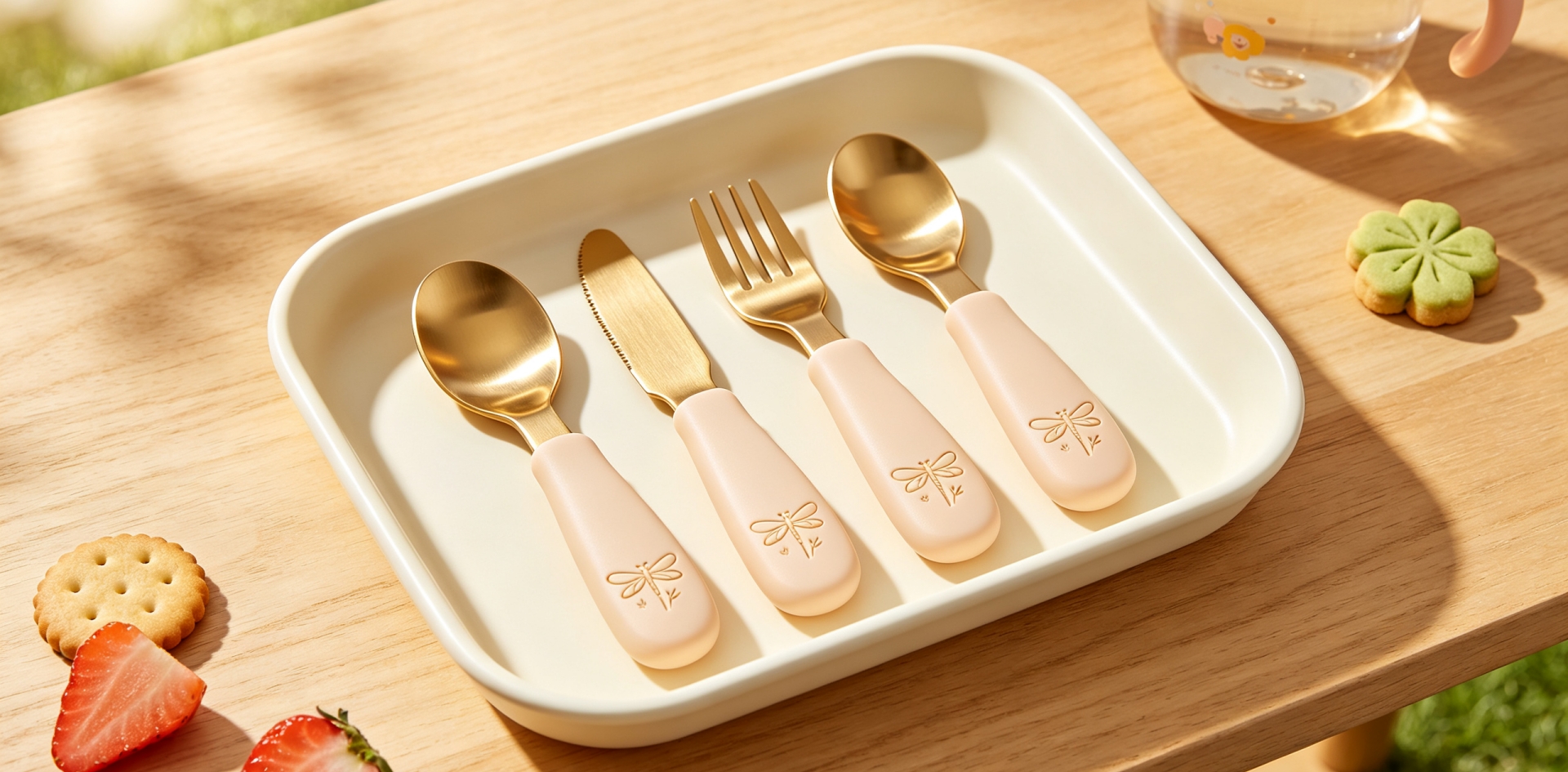
Stainless Steel Spoon Bowl Rim for Custom B2B Cutlery
The bowl is the defining feature of a stainless steel spoon, but the bowl itself contains several details that can influence the finished product. One of these is the rim around the edge of the spoon bowl.
The bowl rim forms the boundary between the inside surface of the spoon and the surrounding outer edge. Its shape, width and transition can affect the visual appearance of the spoon and the way the bowl connects with the rest of the product.
For B2B customers developing custom stainless steel spoons, the bowl rim is therefore another useful detail to consider when refining a product design.
What Is the Rim of a Stainless Steel Spoon Bowl?
The bowl rim is the outer edge surrounding the functional surface of a stainless steel spoon.
Although it may appear to be a simple boundary, the rim can have different visual profiles depending on how the bowl is formed.
A spoon may have a relatively subtle edge, a more defined perimeter or a softly rounded transition. These differences can change the overall appearance of the bowl.
The rim should also work together with the bowl length, width, depth and handle proportions. A change in one area can influence the visual balance of the entire stainless steel spoon.
Why Bowl Rim Design Matters
The edge of the spoon bowl is one of the areas that comes into direct contact with the user during normal use.
For this reason, the transition around the bowl should be controlled and consistent with the intended product design.
From a visual perspective, the rim also defines the outline of the spoon bowl. A clean and even edge can make the bowl appear more refined, while a stronger edge treatment can create a more distinctive appearance.
For custom stainless steel flatware, this small feature can contribute to the overall character of the spoon.
Bowl Rim and Spoon Bowl Shape
The rim cannot be considered separately from the bowl itself.
A wide, rounded bowl creates a different edge appearance from a narrow, elongated bowl. Similarly, a deeper bowl may require a different transition from a relatively shallow bowl.
The main elements can be considered together:
-
Bowl length
-
Bowl width
-
Bowl depth
-
Bowl curvature
-
Rim profile
-
Rim width
-
Neck transition
-
Handle proportion
When these dimensions are coordinated, the stainless steel spoon can achieve a more balanced overall appearance.
Rim Profile and Visual Style
Different rim profiles can support different design directions.
A subtle and smooth edge can complement a minimalist stainless steel spoon. A more defined perimeter can give the bowl a stronger visual outline.
For classic-looking flatware, a gently rounded transition may work naturally with curved handles. For contemporary collections, a cleaner bowl outline may be preferred.
These differences do not require a completely different spoon structure. Small changes to the edge profile can already create a different visual effect.
For B2B customers developing their own stainless steel cutlery collection, the bowl rim can therefore become part of the product's design language.
The Relationship Between Rim and Bowl Depth
Bowl depth affects how the rim is perceived.
A deeper bowl naturally creates a stronger transition from the edge toward the center. A shallower bowl can produce a flatter and more open appearance.
The rim needs to follow the bowl shape smoothly rather than appearing disconnected from the inner surface.
For a custom stainless steel spoon, the relationship between depth and rim profile can be reviewed during product development to ensure that the finished bowl has the intended shape.
This is particularly useful when a customer wants a spoon with a specific visual character rather than a standard market design.
Rim Width and Overall Spoon Proportion
The apparent width of the bowl rim can also influence the visual proportion of the spoon.
A more noticeable rim can make the outer perimeter appear stronger. A less pronounced edge can give the bowl a cleaner and lighter appearance.
The appropriate proportion depends on the size and shape of the spoon.
For example, a compact spoon may require a different rim treatment from a longer stainless steel spoon with a larger bowl.
The goal is to make the rim look like a natural part of the bowl rather than an additional element placed around it.
Bowl Rim and Handle Design
The bowl is connected to the handle through the neck, so the spoon should be viewed as one continuous product.
A rounded bowl rim can work well with a softly curved handle. A more structured bowl outline may complement a handle with straighter geometric lines.
This relationship becomes especially important when developing a complete stainless steel knife, fork and spoon collection.
The spoon does not need to copy the shape of the knife or fork, but its visual transitions can be coordinated with the rest of the collection.
This helps create a unified stainless steel flatware appearance.
Bowl Rim and the User Feel
The edge of a spoon bowl is part of the area that interacts with the user during eating.
A controlled, smooth transition can contribute to a comfortable feeling at the edge of the bowl. The final experience also depends on other factors, including material thickness, bowl shape, surface condition and overall geometry.
For this reason, the rim should be considered together with the complete bowl design.
When developing a custom stainless steel spoon, it is useful to evaluate the actual sample rather than relying entirely on a drawing.
Evaluating the Bowl Rim on a Physical Sample
A physical sample allows buyers to examine the bowl from several angles.
Looking directly at the spoon shows the overall bowl outline. Viewing it from the side reveals the relationship between the rim, bowl depth and handle. Holding the spoon allows the buyer to assess how the bowl edge feels during normal use.
This can reveal details that are difficult to judge from a two-dimensional product drawing.
For OEM and ODM stainless steel spoon development, sample review provides an opportunity to refine the rim profile together with the other bowl dimensions before the final product specification is confirmed.
Consistency of the Spoon Bowl Rim
Once the bowl rim has been approved, consistency becomes an important part of the stainless steel spoon design.
The edge should maintain the intended shape across the same product. Variations can become visible when many spoons are arranged together, especially when the products have a clean and simple design.
A confirmed sample and clear specifications can help maintain the same bowl rim profile during repeated production.
For customers developing long-term stainless steel flatware collections, preserving the original bowl design also helps maintain a consistent product appearance over time.
Creating a Coordinated Spoon Collection
The bowl rim can also be adjusted according to the type of spoon being developed.
A complete stainless steel cutlery range may include different spoon shapes, but the products can still share certain visual characteristics.
For example, similar rim treatment, handle proportions and transition lines can connect different spoon designs within the same collection.
This allows a product range to have variety while retaining a recognizable design identity.
For custom stainless steel cutlery, these relationships can be planned from the beginning of product development.
Homefelt Custom Stainless Steel Spoon Development
Homefelt provides custom stainless steel cutlery manufacturing for B2B customers, including stainless steel spoons, forks, knives and complete flatware sets.
For custom spoon projects, customers can discuss bowl length, width, depth, curvature, rim profile, neck transition, handle design and other product details. These elements can be developed together to create the intended finished spoon.
Homefelt supports OEM and ODM stainless steel cutlery projects based on customer drawings, reference samples or product concepts. When customers require a complete collection, matching stainless steel knives, forks and spoons can also be developed around a coordinated design direction.
According to the customer's requirements, Homefelt can provide a dedicated service package covering product design and customization, together with related packaging, transportation and other one-stop services.
For long-term cooperation, customers can continue developing new stainless steel cutlery products while maintaining established product designs. Homefelt aims to support ongoing customization and product development so both sides can grow together.
The bowl rim may be a small part of a stainless steel spoon, but it contributes to the bowl's outline, proportion and overall product character. When the rim is designed together with bowl depth, width, curvature and handle proportions, the finished spoon can achieve a more coherent and refined appearance.
Stainless Steel Fork Head Length for Custom B2B Cutlery
Stainless Steel Knife Edge Curve for Custom B2B Cutlery
Related Article



