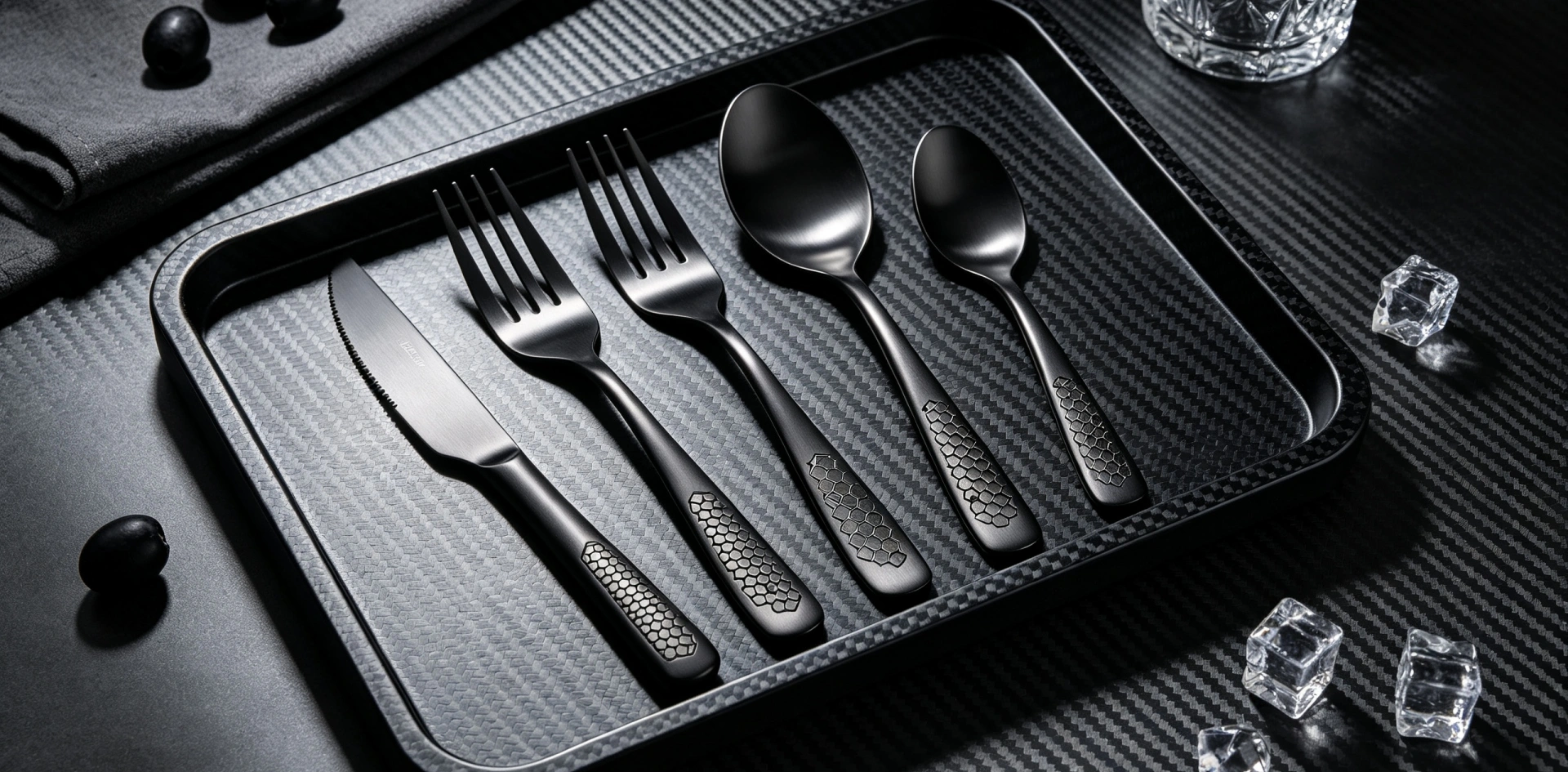
Stainless Steel Spoon Finishes: Polished, Satin, Brushed and More

Stainless Steel Spoon Finishes: Polished, Satin, Brushed and More
The surface finish of a stainless steel spoon can significantly influence its appearance, product positioning and suitability for different markets. The same spoon design can look traditional, modern, premium or industrial depending on how the surface is finished.
For B2B buyers, selecting a finish is not only a design decision. Surface appearance can also affect how scratches, fingerprints and production variations are perceived. Restaurants, hotels, distributors, retailers and private label brands should therefore define the required finish before sample approval and mass production.
A clear finish specification helps manufacturers understand the expected appearance and provides a reference for quality inspection.
Why Stainless Steel Spoon Finishes Matter
A surface finish can influence:
-
Product appearance
-
Light reflection
-
Visual texture
-
Perceived product positioning
-
Scratch visibility
-
Fingerprint visibility
-
Coordination with other flatware
The finish should be selected together with the spoon design, material and intended application.
Common Stainless Steel Spoon Finish Types
Common finish options include:
-
Polished finish
-
Mirror finish
-
Satin finish
-
Brushed finish
-
Matte finish
-
Decorative colored finishes
The exact appearance can vary according to the manufacturing process and product design.
For B2B sourcing, buyers should confirm the expected result with an actual sample rather than relying only on the finish name.
Polished Stainless Steel Spoon
A polished finish creates a bright and clean appearance.
It can reflect light and highlight the contours of the spoon.
Polished stainless steel spoons are often considered for:
-
Restaurants
-
Hotels
-
Traditional table settings
-
General retail collections
-
Formal dining
The final appearance depends on the level of polishing and the underlying product surface.
Mirror Finish Stainless Steel Spoon
A mirror finish is designed to create a highly reflective surface.
This type of finish can support a premium or formal tableware appearance.
Because the surface is highly reflective, visible scratches and handling marks may be easier to notice.
For this reason, packaging and product handling should receive particular attention.
A sample should be used to confirm the required reflection level.
Satin Finish Stainless Steel Spoon
A satin finish generally creates a softer appearance than a highly polished surface.
It can reduce strong reflections and provide a refined visual effect.
Satin finishes are often considered for:
-
Modern tableware
-
Contemporary restaurants
-
Minimalist product collections
-
Hospitality products
The exact texture should be confirmed with a sample because satin can describe different surface appearances.
Brushed Stainless Steel Spoon
A brushed finish creates visible directional surface texture.
The direction and consistency of the brush pattern can influence the final appearance.
For custom projects, buyers should specify:
-
Brushing direction
-
Surface texture
-
Visual consistency
-
Required reference sample
Brushed finishes can complement modern or industrial-style tableware collections.
Matte Stainless Steel Spoon
A matte finish has a lower-reflection appearance.
It can create a simple and understated product style.
Matte stainless steel spoons may be suitable for:
-
Contemporary restaurants
-
Design-focused retail products
-
Minimalist collections
-
Modern hospitality environments
The term matte should be supported by an approved sample because different production processes can produce different levels of surface reflection.
Polished vs Satin Stainless Steel Spoon
Polished and satin finishes create noticeably different appearances.
Polished Finish
A polished surface generally offers:
-
Brighter reflection
-
A traditional appearance
-
A more reflective surface
-
A visually clean presentation
Satin Finish
A satin surface generally offers:
-
Softer reflection
-
A more subdued appearance
-
A refined texture
-
A contemporary style
The choice depends on the intended product design and market positioning.
Satin vs Brushed Finish
Although satin and brushed finishes may appear similar in some applications, they are not necessarily the same.
A brushed surface generally has a visible directional pattern.
A satin surface may have a more uniform soft texture.
The exact distinction depends on the manufacturer's finishing process.
For this reason, B2B buyers should compare physical samples before approving the final specification.
Mirror vs Polished Finish
A mirror finish generally aims for higher reflectivity.
A standard polished finish may be bright but not have the same level of reflection.
The terminology can vary between suppliers.
The buyer should therefore define the finish through a physical sample or a clear visual reference.
Surface Finish and Scratch Visibility
Different finishes can show scratches differently.
Highly reflective surfaces may make certain scratches easier to notice.
Textured or lower-reflection finishes may reduce the visual prominence of some surface marks.
However, no finish should be selected solely because it may hide defects.
Manufacturing quality and suitable packaging remain important.
Surface Finish and Fingerprints
Fingerprints can be more noticeable on some highly reflective surfaces.
For products that are frequently handled before use, buyers may consider how the finish looks after normal contact.
This can be evaluated during sample review.
Surface Finish and Restaurant Use
Restaurants may choose finishes based on their table setting and brand image.
A polished finish can suit formal dining.
A satin or brushed finish can complement contemporary interiors.
The selected finish should also coordinate with:
-
Forks
-
Knives
-
Other spoons
-
Serving utensils
A complete flatware collection should maintain a consistent visual identity.
Surface Finish for Hotels
Hotels may use tableware across different service environments.
A polished collection may be used for banquet or formal dining, while another finish may suit a casual restaurant concept.
When ordering replacement quantities, the supplier should maintain the approved finish specification.
Finish consistency is important for long-term purchasing.
Surface Finish for Retail Products
Retail buyers may use surface finishes to differentiate product collections.
For example, a collection may be positioned around:
-
Bright polished appearance
-
Modern brushed texture
-
Soft satin surface
-
Minimalist matte finish
The packaging and product photography should represent the approved finish accurately.
Custom Stainless Steel Spoon Finishes
Custom projects can include finish requirements as part of the product specification.
Buyers may define:
-
Finish type
-
Reference sample
-
Surface appearance
-
Brushing direction
-
Acceptable variation
-
Packaging protection
The more specific the visual requirement, the more important sample approval becomes.
Decorative Colored Stainless Steel Spoon Finishes
Some stainless steel spoons use decorative colored surface treatments to create different visual styles.
Examples can include gold, black or other decorative colors.
For these projects, buyers should evaluate:
-
Color appearance
-
Surface consistency
-
Product handling requirements
-
Packaging protection
-
Visual match with the approved sample
The expected color should be confirmed before mass production.
Finish and Product Design
The same finish can appear different on different spoon shapes.
Curved surfaces reflect light differently from flat handle sections.
Engraved or decorative details can also affect the final visual appearance.
For this reason, a finish sample should ideally be evaluated on the actual product or a representative shape.
Finish and Material Preparation
Surface finishing begins with the quality of the underlying product surface.
Manufacturing marks, dents or other surface irregularities may affect the final result.
A good finish process should therefore be supported by consistent forming and surface preparation.
Finish Quality Inspection
Finished stainless steel spoons can be inspected for:
-
Consistency
-
Scratches
-
Dull areas
-
Uneven appearance
-
Visible processing marks
-
Surface contamination
-
Inconsistent texture
The inspection standard should be based on the approved sample and agreed quality requirements.
How to Specify a Stainless Steel Spoon Finish
A clear finish specification can include:
-
Finish name
-
Reference sample
-
Required appearance
-
Surface texture
-
Brushing direction if applicable
-
Areas to be finished
-
Quality requirements
For custom products, photographs alone may not provide enough detail.
A physical reference sample is often more reliable.
Surface Finish and Packaging
Packaging should protect the finished surface.
Highly polished and decorative products may require additional separation between individual pieces.
Packaging options can include:
-
Protective sleeves
-
Individual bags
-
Paper separators
-
Protective film
-
Inner packaging
The packaging should reduce unnecessary product-to-product contact during transportation.
Surface Finish and Export Shipping
During international transportation, products may experience repeated handling and vibration.
The packaging should help maintain the approved surface appearance until the goods reach the buyer.
For long-distance shipments, buyers should consider the complete packaging system rather than only the individual product wrapping.
Finish Consistency in Bulk Orders
A finish approved on one sample should be reproduced consistently across the production order.
The supplier should use the approved sample as a reference for:
-
Surface brightness
-
Texture
-
Brushing pattern
-
Overall appearance
Reasonable production variation should be discussed when the finish has highly specific visual requirements.
Finish Consistency for Repeat Orders
For repeat purchasing, the approved finish specification should be retained.
Useful records can include:
-
Approved sample
-
Finish description
-
Production reference
-
Quality requirements
-
Packaging requirements
This helps reduce variation between different production batches.
Common Mistakes When Choosing a Spoon Finish
Choosing From a Product Photo Only
Photographs can be affected by lighting and image processing.
A physical sample provides a more reliable reference.
Using an Unclear Finish Description
Terms such as polished or matte may be interpreted differently.
The buyer should provide a clear reference.
Ignoring Packaging
An excellent finish can be damaged by poor packaging during transportation.
Forgetting Repeat Order Consistency
Finish records should be retained for future production.
Selecting a Finish Independently From the Product
The finish should complement the spoon shape, material and complete flatware collection.
Working With an Experienced Stainless Steel Spoon Manufacturer
Homefelt has more than 30 years of stainless steel manufacturing experience and produces stainless steel cutlery together with kitchen and dining products, BBQ tools, pet bowls and children's tableware.
For international B2B customers, Homefelt supports standard and customized stainless steel products with different surface finish and packaging requirements.
Importers, distributors, restaurant suppliers, hospitality businesses, retailers and private label brands can discuss stainless steel spoon material, dimensions, thickness, weight, surface finish, logo, packaging and estimated quantities according to their project requirements.
For custom development and repeat orders, approved samples and documented finish specifications can help maintain consistency.
A Practical Finish Selection Process
B2B buyers can follow these steps:
-
Define the product style
-
Consider the intended application
-
Review available finish options
-
Compare physical samples
-
Select the preferred surface appearance
-
Confirm the finish on the actual spoon
-
Define inspection requirements
-
Confirm protective packaging
-
Approve the final sample
-
Record the specification for repeat orders
This process helps connect surface design with production and supply requirements.
Conclusion
Stainless steel spoon finishes can change the appearance and positioning of the same basic product. Polished, mirror, satin, brushed and matte surfaces each offer different visual characteristics.
For B2B buyers, the best approach is to select the finish according to the product design, target market and intended application. A clear physical reference sample is particularly important because finish terminology can vary between manufacturers.
Homefelt has more than 30 years of stainless steel manufacturing experience and works with international B2B customers on standard and customized stainless steel products.
By defining the surface appearance clearly, approving samples and using suitable packaging, importers, distributors, restaurant suppliers, hospitality businesses, retailers and private label brands can achieve more consistent stainless steel spoon finishes across bulk and repeat orders.
You May Be Interested In
Stainless Steel Spoon Sizes and Dimensions: A Practical B2B Buying Guide
Stainless Steel Spoon Materials and Grades: What B2B Buyers Should Know
Stainless Steel Spoon Quality Control and Inspection Guide for B2B Buyers
Stainless Steel Spoon Packaging and Shipping: A B2B Export Guide
Custom Stainless Steel Spoon Manufacturing for OEM and Private Label Buyers
Wholesale Stainless Steel Spoon Supplier: How to Choose the Right Factory


How Stainless Steel Spoons Are Made: Manufacturing Process Guide
Stainless Steel Spoon Sizes and Dimensions: A B2B Buying Guide
Related Article