Stainless Steel Spoon MOQ: How B2B Buyers Should Plan Bulk Orders
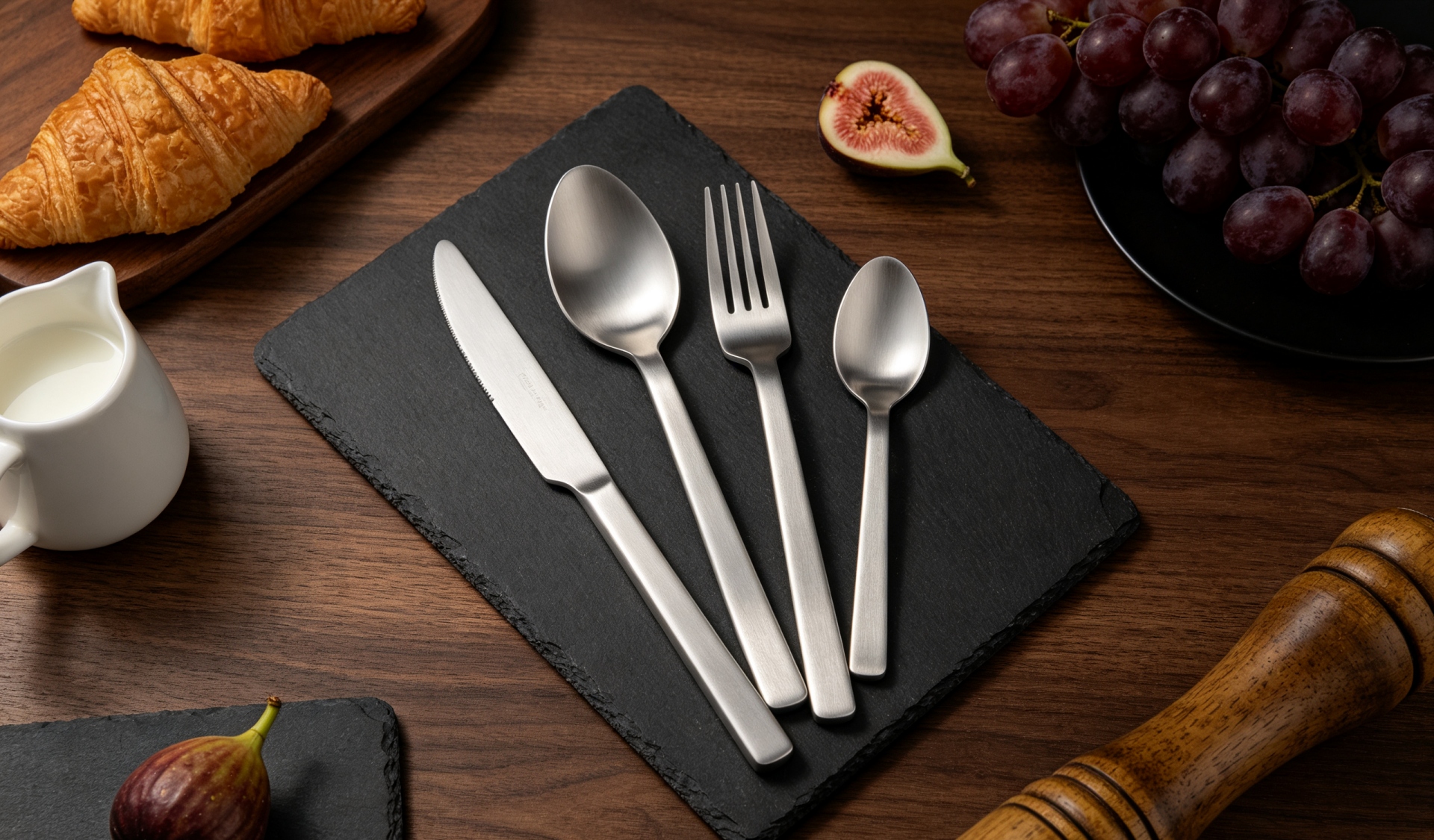
Stainless Steel Spoon MOQ: How B2B Buyers Should Plan Bulk Orders
Minimum order quantity is one of the first commercial considerations when sourcing stainless steel spoons from a manufacturer.
For importers, wholesalers, distributors, restaurant suppliers, retailers and private label brands, the right order quantity can influence product pricing, production efficiency, inventory investment and shipping arrangements.
However, MOQ should not be viewed simply as a number set by the supplier. It is often connected with product design, tooling, packaging, production scheduling and the economics of manufacturing.
Understanding these factors can help B2B buyers choose an order quantity that is practical for both sides.
What Does MOQ Mean?
MOQ stands for Minimum Order Quantity.
It refers to the smallest quantity a supplier is willing or able to produce or sell under specified commercial conditions.
For stainless steel spoons, MOQ may vary according to whether the buyer is purchasing:
-
Standard products
-
Customized products
-
OEM products
-
Private label products
-
Individual spoons
-
Complete cutlery sets
The applicable MOQ should therefore be confirmed for the specific project.
Why Manufacturers Set an MOQ
Manufacturing involves fixed and variable costs.
Even a relatively simple stainless steel spoon may require production preparation, material purchasing, forming, polishing, inspection and packaging.
For a small order, these costs are distributed across fewer units.
A larger quantity allows production resources to be used more efficiently.
This is one reason manufacturers may establish a minimum quantity for B2B orders.
MOQ for Standard Products
Standard stainless steel spoons generally offer greater flexibility than newly developed products.
Existing designs may already have:
-
Production tooling
-
Manufacturing procedures
-
Quality references
-
Packaging specifications
-
Production experience
As a result, the supplier may be able to discuss a more flexible quantity depending on the product and production schedule.
MOQ for Custom Products
Customized products can require a higher commercial commitment.
A custom spoon may involve:
-
New tooling
-
Product development
-
Sampling
-
Design adjustment
-
Special finishing
-
Customized packaging
The manufacturer needs to consider these additional costs when determining a practical order quantity.
MOQ for OEM Projects
OEM orders are based on the buyer's specifications.
The quantity may depend on the complexity of the design and the amount of production preparation required.
Before requesting an OEM quotation, buyers should provide as much information as possible about:
-
Product design
-
Material
-
Dimensions
-
Finish
-
Logo
-
Packaging
-
Estimated annual demand
This allows the supplier to evaluate the project more accurately.
MOQ for Private Label Orders
Private label products can require additional packaging and branding work.
Potential requirements include:
-
Custom logo
-
Retail box
-
Printed inserts
-
Product labels
-
Special carton markings
The quantity required for customized packaging may differ from the quantity needed for the physical spoon itself.
Buyers should ask the supplier whether product MOQ and packaging MOQ are separate.
How Product Design Affects MOQ
A simple standard design may be easier to produce in smaller quantities than a highly customized product.
Design complexity can affect:
-
Tooling
-
Production preparation
-
Finishing
-
Inspection
-
Packaging
For this reason, MOQ should be discussed after the supplier understands the complete product specification.
How Tooling Affects MOQ
Tooling is an important consideration for custom stainless steel spoons.
If a new mold or forming tool is required, the manufacturer may need to recover development and tooling costs through the production order.
The buyer should clarify:
-
Whether tooling is required
-
Tooling cost
-
Tool ownership
-
Tooling maintenance
-
Expected tooling life
-
Whether the tooling can be reused for repeat orders
These details can affect the commercial structure of the project.
MOQ and Product Price
Order quantity can influence the unit price.
Larger orders may allow production costs to be distributed more efficiently.
However, buyers should not assume that increasing quantity will always produce a significant price reduction.
The final quotation can also depend on:
-
Material
-
Product weight
-
Finish
-
Packaging
-
Customization
-
Production complexity
The best approach is to request quotations at several realistic quantity levels.
Requesting Multiple Quantity Tiers
A B2B buyer can ask for pricing at different quantities.
For example:
| Order Quantity | Unit Price | Tooling | Packaging | Estimated Lead Time |
|---|---|---|---|---|
| Small volume | ||||
| Medium volume | ||||
| Large volume |
This allows the buyer to understand how production volume affects the overall purchasing structure.
MOQ and Inventory
Ordering more products can reduce the unit cost but increase inventory investment.
Buyers should consider:
-
Expected monthly sales
-
Storage capacity
-
Product turnover
-
Cash flow
-
Reorder frequency
A low unit price does not necessarily mean the order is commercially optimal if the buyer cannot efficiently sell or store the additional inventory.
MOQ and Demand Forecasting
Demand forecasting can help determine an appropriate order quantity.
For example, a distributor with stable monthly sales may be comfortable with a larger production order.
A new retailer with uncertain demand may prefer a smaller initial quantity while testing the market.
The purchasing strategy should match the level of demand certainty.
Initial Order vs. Repeat Order
The first order can involve more development work than subsequent orders.
Once the product specification, tooling, packaging and quality requirements have been established, repeat production may become more straightforward.
B2B buyers should therefore discuss both initial and repeat-order conditions with the supplier.
Annual Purchasing Volume
Some buyers should consider total annual demand rather than only the first order.
For example, a buyer may initially need a smaller quantity but expect several replenishment orders during the year.
Sharing the expected annual volume can help the manufacturer understand the broader business opportunity.
MOQ and Production Scheduling
Production schedules can influence the supplier's ability to accept smaller orders.
A manufacturer may combine compatible production requirements or schedule smaller quantities around existing production plans.
The actual arrangement depends on the factory's production capacity and scheduling system.
MOQ and Packaging
Packaging requirements can create another minimum quantity.
For example, custom retail boxes may need a certain print quantity even if the physical product order is smaller.
The buyer should ask whether:
-
Product MOQ
-
Logo MOQ
-
Packaging MOQ
-
Carton MOQ
are separate requirements.
MOQ for Logo Customization
Logo application can be easier to manage when the product design is already established.
However, the minimum quantity can depend on the selected logo process and production arrangement.
Buyers should provide the logo file and intended position when requesting a customized quotation.
MOQ and Product Sets
A stainless steel spoon may be purchased individually or as part of a complete set.
A set can include:
-
Spoon
-
Fork
-
Knife
-
Teaspoon
-
Serving pieces
When purchasing a set, the quantity may need to be coordinated across all components.
This can affect production planning and packaging.
MOQ for New Product Development
New product development requires a different purchasing approach.
Before committing to a large quantity, buyers may want to complete:
-
Design review
-
Prototype development
-
Sample approval
-
Cost evaluation
-
Packaging development
-
Market testing
The final production quantity can then be based on better information.
Negotiating MOQ
MOQ is not always a fixed number that cannot be discussed.
A buyer with a clear project plan may be able to discuss alternative arrangements depending on:
-
Product standardization
-
Annual volume
-
Repeat orders
-
Packaging
-
Production schedule
The conversation should focus on the overall purchasing plan rather than simply asking the factory to reduce the MOQ.
How to Reduce the Commercial Impact of MOQ
Several approaches may help.
Use an Existing Product Design
An established product may require less development work than a completely new design.
Simplify Packaging
Standard packaging can reduce additional packaging requirements.
Share Annual Demand
Providing a realistic forecast helps the manufacturer understand future purchasing potential.
Consolidate Related Products
If several products use compatible production processes, combining purchasing requirements may improve production efficiency.
Start With a Market Test
A smaller initial order can help a new brand evaluate demand before committing to a larger inventory investment.
MOQ for Distributors
Distributors often need enough inventory to support multiple customers.
They should consider:
-
Customer demand
-
Reorder frequency
-
Warehouse capacity
-
Product turnover
-
Regional sales
A suitable order quantity should balance availability with inventory risk.
MOQ for Restaurants
Restaurant buyers generally focus on operational demand rather than retail inventory.
They may need sufficient spoons for:
-
Daily service
-
Peak periods
-
Replacement
-
Expansion
-
Multiple locations
Restaurant groups can potentially consolidate purchasing across locations to create more efficient order quantities.
MOQ for Hotels
Hotels may purchase large quantities for several departments or properties.
The buyer should calculate the total requirement across:
-
Guest restaurants
-
Banquet service
-
Events
-
Replacement stock
-
New property openings
A centralized purchasing plan may make larger production quantities more practical.
MOQ for Retail Brands
Retailers need to consider expected sales and shelf space.
A large initial order may reduce unit cost but increase inventory risk.
For a new product, buyers may therefore compare several quantity scenarios before selecting the initial production volume.
MOQ for Private Label Brands
Private label brands should calculate the quantity needed not only for the first launch but also for future replenishment.
Important considerations include:
-
Sales forecast
-
Packaging quantity
-
Promotional demand
-
Seasonal demand
-
Reorder lead time
This can help avoid both overstocking and frequent emergency orders.
Working With an Experienced Stainless Steel Manufacturer
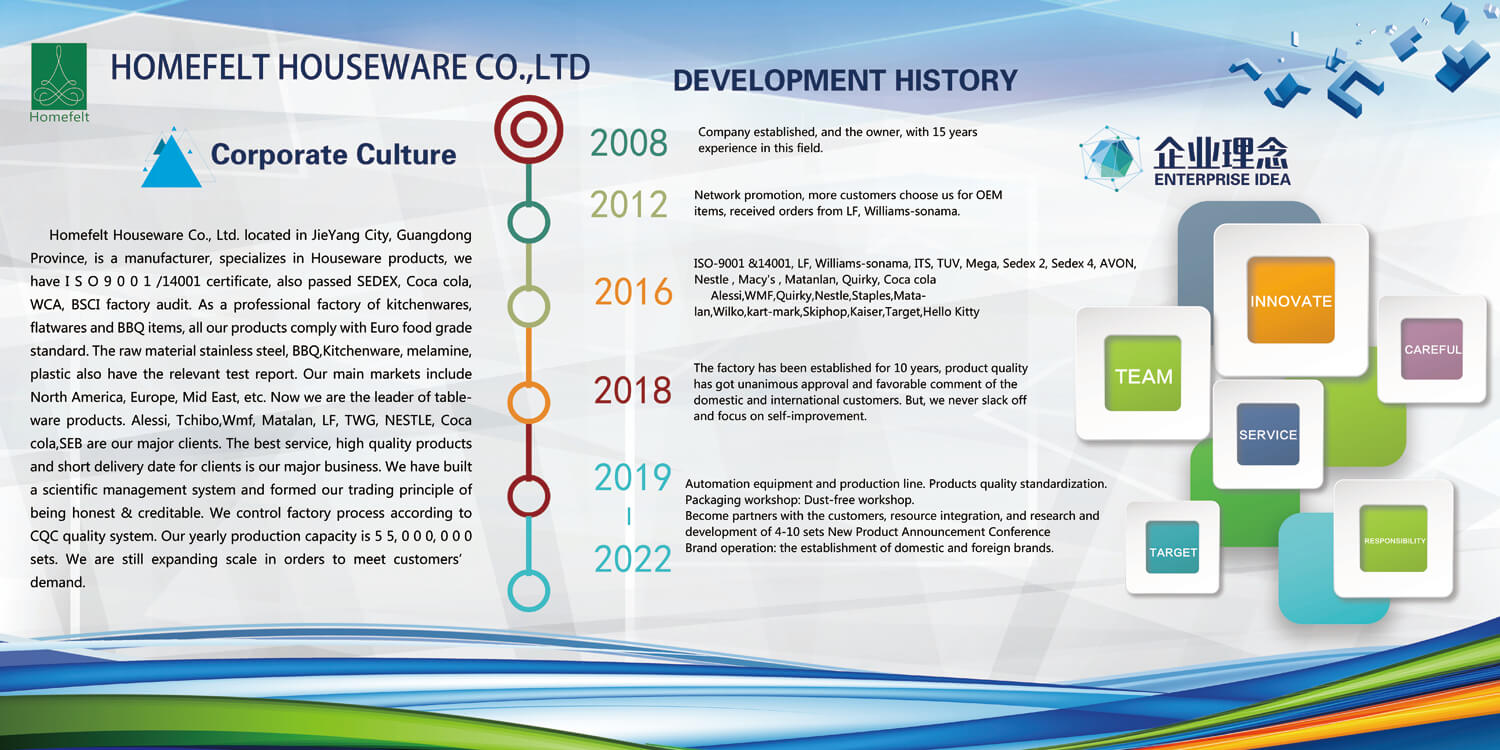
Homefelt has more than 30 years of stainless steel manufacturing experience and produces stainless steel cutlery together with kitchen and dining products, BBQ tools, pet bowls and children's tableware.
For international B2B customers, Homefelt supports standard stainless steel spoon orders as well as customized, OEM and private label projects.
Buyers can provide the product specification, estimated quantity, packaging requirements and expected purchasing frequency.
The manufacturer can then evaluate production requirements and provide a quotation based on the actual project.
A Practical MOQ Planning Process
B2B buyers can use the following process:
-
Define the product
-
Determine the intended market
-
Estimate initial demand
-
Estimate annual demand
-
Confirm whether the product is standard or customized
-
Identify tooling requirements
-
Define packaging requirements
-
Request several quantity quotations
-
Compare unit price and total investment
-
Calculate inventory requirements
-
Consider shipping efficiency
-
Discuss repeat-order arrangements
-
Select a practical initial quantity
-
Confirm the final commercial terms
Questions to Ask a Stainless Steel Spoon Manufacturer
Before placing an order, buyers can ask:
-
What is the MOQ for the standard product?
-
What is the MOQ for a customized design?
-
Is there a separate packaging MOQ?
-
Is there a separate logo MOQ?
-
Does tooling affect the minimum quantity?
-
Can different quantities receive different unit prices?
-
Can the manufacturer support repeat orders?
-
Can annual purchasing volume be considered?
-
What is the production lead time at different quantities?
-
Can a smaller trial order be discussed for a new product?
Common MOQ Mistakes
Choosing the Lowest Possible Quantity Without Checking Price
A smaller order may have a significantly higher unit cost.
Ordering Too Much to Obtain a Lower Price
Excess inventory can create storage and cash-flow problems.
Ignoring Packaging MOQ
Customized packaging can have its own minimum production quantity.
Focusing Only on the First Order
Future demand should be considered when establishing the purchasing strategy.
Not Sharing the Expected Annual Volume
A manufacturer may be able to provide a more useful commercial proposal when the broader purchasing plan is understood.
Conclusion
Stainless steel spoon MOQ is closely connected with manufacturing economics, product customization, tooling, packaging and production planning.
For B2B buyers, the right order quantity should balance unit price, inventory investment, expected demand, shipping efficiency and future purchasing requirements.
Standard products may offer greater flexibility, while OEM and private label projects can require more careful quantity planning because of tooling and packaging considerations.
Homefelt has more than 30 years of stainless steel manufacturing experience and works with international B2B customers on standard, customized, OEM and private label stainless steel products.
By discussing both the initial order and expected repeat demand with the manufacturer, buyers can establish a more practical purchasing plan and build a stronger long-term supply relationship.
You May Be Interested In
Stainless Steel Spoon Wholesale Pricing: Understanding the Main Factors Behind Factory Quotes
Stainless Steel Spoon Bulk Purchasing: How to Plan Inventory for International Distribution
Stainless Steel Spoon OEM Ordering: Key Commercial Points Before Production
Stainless Steel Spoon Private Label Costs: Planning Product and Packaging Investment
Stainless Steel Spoon Lead Time: How Production Scheduling Affects B2B Orders
Stainless Steel Spoon Repeat Orders: Building a Reliable Replenishment Strategy

Related Article