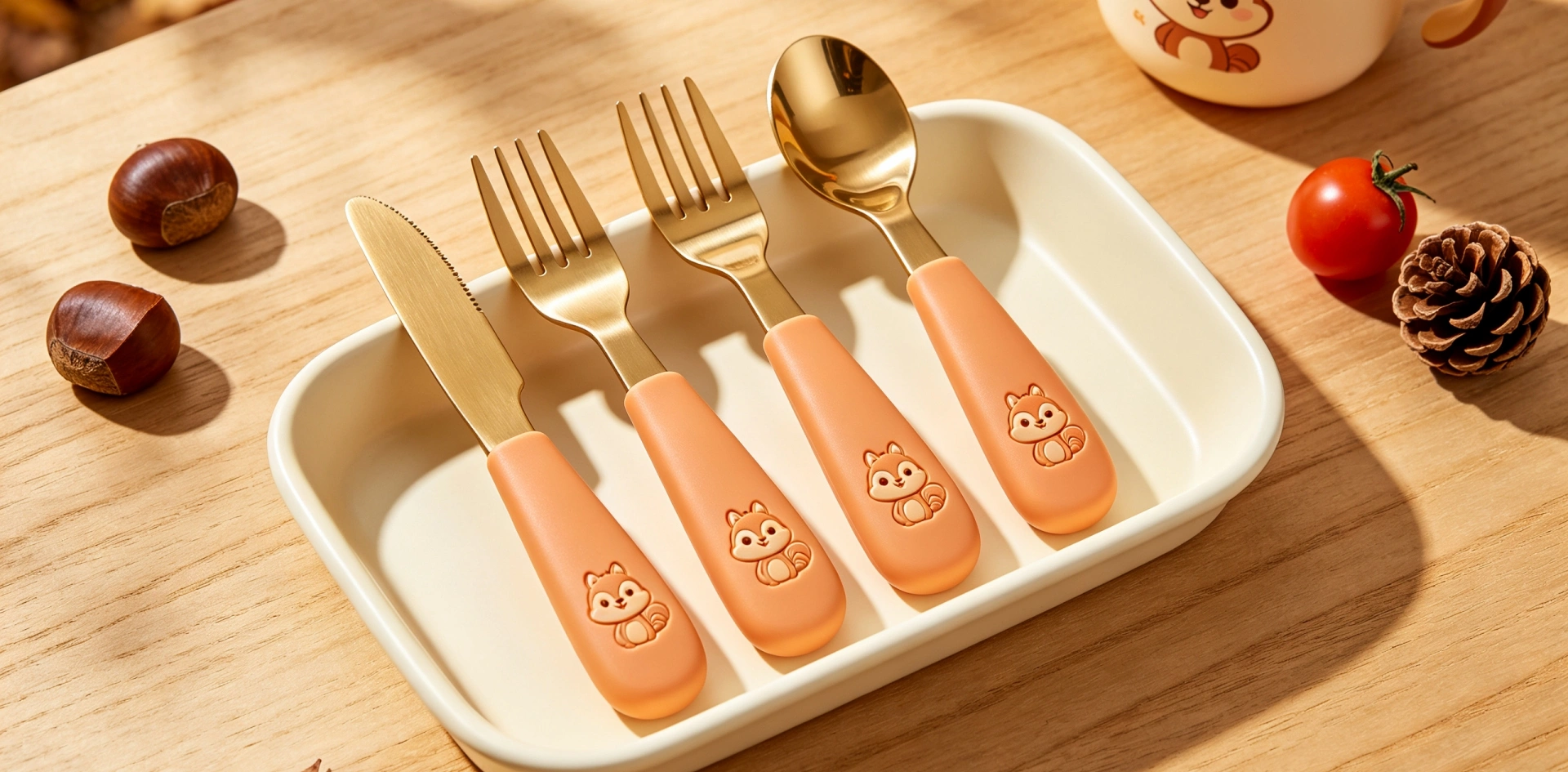
Wholesale Stainless Steel Flatware Supplier: B2B Buying Guide

How to Choose a Wholesale Stainless Steel Flatware Supplier for B2B Orders
Choosing the right wholesale stainless steel flatware supplier is an important decision for importers, distributors, restaurant suppliers, hotel groups and private label brands. The supplier affects not only the initial product price but also product consistency, customization capability, quality control, packaging and the reliability of future replenishment.
Stainless steel flatware is available in a wide range of materials, designs, thicknesses, finishes and price levels. Two suppliers may offer products that look similar in photographs but differ considerably in manufacturing capability, specifications and production consistency.
For B2B buyers, supplier selection should therefore go beyond comparing the lowest quotation. A more reliable approach is to evaluate factory experience, product specifications, sample quality, production capabilities, inspection procedures, communication and long-term supply potential.
What Is a Wholesale Stainless Steel Flatware Supplier?
A wholesale stainless steel flatware supplier provides forks, spoons, knives and related tableware products in quantities suitable for commercial purchasing.
Depending on the business model, the supplier may be a manufacturer, trading company or a combination of manufacturing and export services.
For buyers with recurring or customized requirements, working directly with an experienced manufacturer can provide greater visibility into product development and production.
Why Supplier Selection Matters
A flatware supplier is responsible for more than shipping finished products.
A B2B purchasing relationship can involve:
-
Product development
-
Material selection
-
Tooling
-
Sampling
-
Mass production
-
Quality control
-
Packaging
-
Export preparation
-
Repeat production
A weakness at any stage can affect the final order.
Manufacturer or Trading Company?
One of the first questions buyers should ask is whether they are dealing directly with a factory or through a trading company.
A manufacturer may have direct control over production, tooling and quality management.
A trading company may offer access to multiple factories and a wider product range.
Neither model is automatically suitable for every buyer. The important issue is whether the supplier can clearly explain how the products are produced and managed.
Check Manufacturing Experience
Experience matters when developing or producing stainless steel flatware at commercial volumes.
An experienced manufacturer is more likely to understand the relationship between material, forming, polishing, dimensions, weight and production efficiency.
This can be particularly valuable when a buyer wants a custom handle, unusual dimensions or a specific surface finish.
Review the Product Range
A supplier's product range can provide useful information about its capabilities.
Buyers may look for experience with:
-
Stainless steel forks
-
Stainless steel spoons
-
Stainless steel knives
-
Cutlery sets
-
Serving utensils
-
Kitchen products
-
Custom stainless steel products
A broader manufacturing capability can be useful when a buyer plans to expand the product range later.
Confirm Stainless Steel Material
Material should be clearly specified before ordering.
Depending on the product, buyers may consider specifications such as 18/10 or 18/0 stainless steel and other material requirements.
The material should be documented in the product specification rather than communicated only through informal messages.
Review Product Dimensions
Dimensions are essential when comparing products from different suppliers.
A buyer should confirm:
-
Overall length
-
Width
-
Thickness
-
Handle dimensions
-
Spoon bowl dimensions
-
Fork head dimensions
-
Knife dimensions
Products with different dimensions should not be compared only by weight or price.
Compare Weight and Thickness
Weight and thickness influence how flatware feels in the hand and how much material is used.
A supplier should be able to provide clear information according to the product specification.
For commercial purchasing, the buyer can establish an acceptable weight or thickness range when these characteristics are important.
Evaluate Surface Finish
The surface finish contributes strongly to the appearance of stainless steel flatware.
Common options include polished, satin and brushed finishes.
When comparing suppliers, buyers should request samples because photographs may not accurately communicate surface brightness, texture and consistency.
Request Physical Samples
Samples are one of the most useful tools in B2B flatware sourcing.
A buyer can use samples to evaluate:
-
Material appearance
-
Weight
-
Balance
-
Handle comfort
-
Dimensions
-
Surface finish
-
Workmanship
-
Overall product quality
A sample should be approved before large-scale production whenever possible.
Compare Samples With Quotations
Price comparisons are meaningful only when the products have equivalent specifications.
A quotation should be reviewed together with:
-
Material
-
Dimensions
-
Thickness
-
Weight
-
Finish
-
Packaging
-
Order quantity
-
Branding requirements
A lower quotation may represent a different specification rather than a better purchasing opportunity.
Ask About Minimum Order Quantity
Minimum order quantity can vary according to the product and supplier.
Standard products may have different requirements from custom-developed products.
B2B buyers should confirm MOQ before investing significant time in product development.
Consider Production Capacity
Production capacity becomes important when a buyer needs large quantities or a tight delivery schedule.
The supplier should be able to explain whether the requested volume is compatible with its production planning.
For growing brands, it is also useful to consider whether the supplier can support increased demand later.
Check Customization Capability
Custom products require more than simply changing a logo.
Customization may involve:
-
Handle design
-
Product dimensions
-
Material
-
Thickness
-
Weight
-
Surface finish
-
Packaging
-
Branding
A supplier with experience in custom stainless steel production can help evaluate whether the proposed design is practical for mass manufacturing.
Private Label Support
Private label buyers may require both product and packaging customization.
The supplier should be able to work from approved artwork and product specifications.
Clear communication during sampling can help ensure that the final product and packaging match the intended brand positioning.
Quality Control Capability
Quality control should be discussed before production rather than after a problem occurs.
Buyers can ask how the supplier manages:
-
Material verification
-
Dimensions
-
Weight
-
Surface finish
-
Product shape
-
Quantity
-
Packaging
-
Final inspection
The exact inspection requirements can then be included in the purchasing specification.
Approved Samples for Repeat Orders
An approved sample can become a reference for future production.
This is especially useful for hotels, restaurant groups and distributors that need replacement pieces or repeat shipments.
The supplier should retain the relevant product information so that future orders can follow the original specification.
Packaging Requirements
Packaging depends on the buyer's distribution model.
Wholesale products may require bulk packaging, while retail products may need individual boxes or customized presentation.
The buyer should communicate packaging requirements before production.
Export Experience
International B2B purchasing involves more than manufacturing.
The supplier should understand export documentation, packaging for transportation and shipment coordination.
For new importers, clear communication throughout the export process can reduce unnecessary delays.
Communication During Product Development
Communication quality can be an important indicator of supplier reliability.
A good supplier should be able to respond clearly to questions about:
-
Material
-
Dimensions
-
Samples
-
Tooling
-
Finish
-
Packaging
-
Production schedule
-
Quality requirements
Clear technical communication reduces the risk of misunderstandings.
Request a Detailed Quotation
A useful quotation should identify the relevant product specifications rather than providing only a unit price.
B2B buyers can request information about:
-
Product specification
-
Material
-
Unit price
-
MOQ
-
Sample cost
-
Tooling cost if applicable
-
Packaging
-
Production lead time
-
Payment terms
-
Shipping terms
This makes supplier comparisons more practical.
Evaluate Total Purchasing Cost
The lowest factory price does not necessarily create the lowest total cost.
Buyers should consider:
-
Product price
-
Packaging
-
Tooling
-
Inspection
-
Freight
-
Import-related costs
-
Product defects
-
Replacement requirements
-
Inventory efficiency
A reliable product with consistent quality can reduce hidden costs over the long term.
Supplier Selection for Restaurants
Restaurants often require practical products that can withstand frequent use.
When selecting a supplier, buyers can focus on material, construction, finish, replacement availability and long-term consistency.
For restaurant groups, standardized specifications can simplify purchasing across multiple locations.
Supplier Selection for Hotels
Hotels may require coordinated flatware collections across restaurants, banquets and other foodservice areas.
The supplier should be able to support consistent product specifications over multiple orders.
Long-term availability can be especially important when replacement pieces are required.
Supplier Selection for Distributors
Distributors generally need reliable supply, competitive pricing and consistent packaging.
A supplier with a broad product range can also help distributors expand their catalog.
Product documentation can make it easier to manage multiple collections and repeat orders.
Supplier Selection for Private Label Brands
Private label brands should evaluate both manufacturing capability and product development support.
A supplier should be able to translate the brand's design concept into a practical production specification.
Samples, packaging prototypes and final product inspections can all be part of the development process.
Why Factory Location Matters
The location of a supplier can influence logistics, production networks and access to raw materials.
For international buyers sourcing from China, evaluating the actual manufacturing base can provide additional insight into production capability.
However, location alone should not determine supplier selection. Manufacturing experience and product quality remain more important.
Working With Homefelt
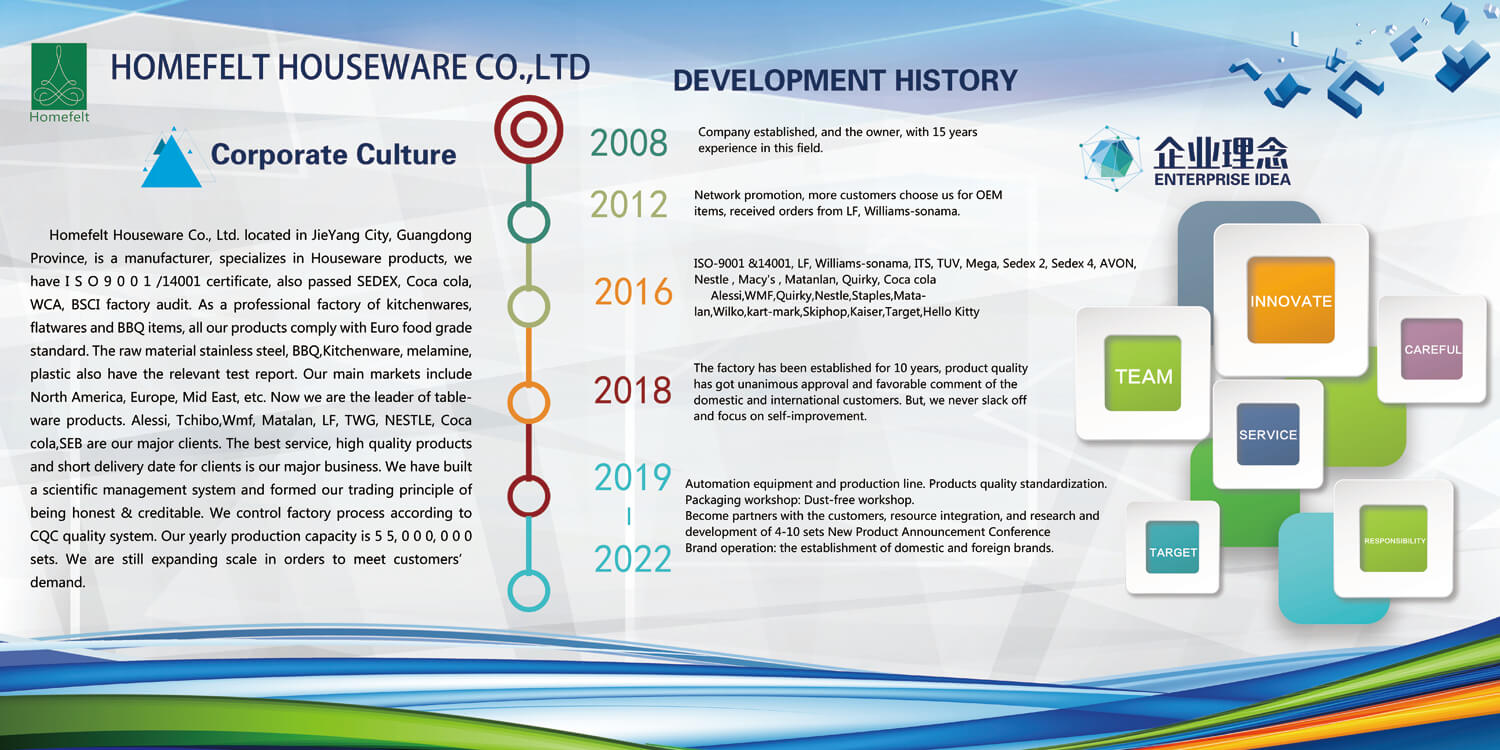
Homefelt has more than 30 years of stainless steel manufacturing experience and produces stainless steel cutlery together with kitchen and dining products, BBQ tools, pet bowls and children's tableware.
For international B2B customers, Homefelt supports standard and customized stainless steel products.
Importers, distributors, restaurant suppliers, hospitality companies and private label brands can discuss product design, material, dimensions, thickness, weight, surface finish, packaging, branding and estimated quantities according to their requirements.
For long-term supply programs, approved samples and documented specifications can provide a practical reference for repeat production.
What to Send a Supplier for a Faster Quotation
Before contacting a wholesale stainless steel flatware supplier, buyers can prepare:
-
Product name
-
Reference images
-
Product drawings if available
-
Material requirement
-
Dimensions
-
Thickness
-
Target weight
-
Surface finish
-
Quantity
-
Packaging requirements
-
Branding requirements
-
Target market
-
Expected annual demand
The more complete the information, the easier it is for the supplier to provide a relevant quotation.
Questions to Ask Before Placing an Order
B2B buyers can ask:
-
What stainless steel material is used?
-
Can the supplier provide physical samples?
-
What are the MOQ requirements?
-
Can the design be customized?
-
What surface finishes are available?
-
How is quality inspected?
-
What packaging options are available?
-
Can the product be reproduced for repeat orders?
-
What is the estimated production lead time?
-
Can the supplier support private label requirements?
These questions help establish whether the supplier is suitable for the intended purchasing program.
Build a Long-Term Supplier Relationship
A successful B2B supplier relationship should support more than one shipment.
As purchasing volume increases, buyers may need additional products, packaging changes, new finishes or customized designs.
A manufacturer that understands the buyer's specifications can become a valuable long-term production partner.
Conclusion
Choosing a wholesale stainless steel flatware supplier requires a broader evaluation than comparing unit prices.
B2B buyers should consider manufacturing experience, material specifications, product dimensions, surface finish, sample quality, customization capability, quality control, packaging, production capacity and long-term supply.
Physical samples and complete product specifications are particularly important when comparing different suppliers.
Homefelt has more than 30 years of stainless steel manufacturing experience and works with international B2B customers on standard and customized stainless steel products.
For importers, distributors, restaurants, hotels and private label brands, establishing clear requirements from the beginning can make supplier evaluation more efficient and create a stronger foundation for consistent wholesale stainless steel flatware sourcing.
You May Be Interested In
18/10 vs 18/0 Stainless Steel Flatware: A B2B Buying Guide
How Stainless Steel Flatware Is Made: A Complete Manufacturing Process Guide
Stainless Steel Cutlery Quality Control and Inspection Guide
Stainless Steel Cutlery Polishing and Surface Finish Process
Custom Stainless Steel Flatware Development From Sample to Production
How to Import Stainless Steel Flatware From China

Custom Stainless Steel Flatware: Design and Manufacturing Guide
How Stainless Steel Flatware Is Made: Manufacturing Process Guide
Related Article