Wholesale Stainless Steel Spoon Supplier: How to Choose the Right Factory

Wholesale Stainless Steel Spoon Supplier: How to Choose the Right Factory
Finding the right stainless steel spoon supplier is an important decision for importers, distributors, restaurant suppliers, retailers and private label brands. A suitable supplier should do more than offer a competitive quotation. The factory also needs to understand product specifications, maintain production consistency and support the buyer's long-term supply requirements.
When sourcing wholesale stainless steel spoons, buyers may compare multiple manufacturers. However, product photographs and unit prices do not always show the full difference between suppliers. Material, dimensions, thickness, weight, surface finish, production capability and quality control can all affect the final product.
A structured supplier evaluation process can help B2B buyers select a factory that matches their purchasing requirements.
What Does a Wholesale Stainless Steel Spoon Supplier Provide?
A wholesale supplier may provide standard products, customized products or complete private label solutions.
Depending on the factory's capability, available services may include:
-
Standard stainless steel spoon designs
-
Bulk production
-
Custom dimensions
-
Custom spoon shapes
-
Material options
-
Surface finishing
-
Logo customization
-
Private label packaging
-
Quality inspection
-
Export packaging
The available options should be confirmed according to the individual project.
Manufacturer, Supplier or Trading Company?
When sourcing stainless steel spoons, buyers may work with different types of businesses.
Stainless Steel Spoon Manufacturer
A manufacturer is directly involved in product production.
Working with a factory can provide buyers with direct access to discussions about:
-
Manufacturing processes
-
Material selection
-
Production capability
-
Tooling
-
Surface finishing
-
Quality control
Stainless Steel Spoon Trading Company
A trading company may source products from one or more factories.
This can provide access to a broader range of products, depending on the company's supplier network.
However, buyers should understand who is responsible for production specifications and quality requirements.
Integrated Supplier
Some companies combine manufacturing with broader sourcing or export support.
The appropriate sourcing model depends on the buyer's product requirements and purchasing process.
Start With Your Product Requirements
The best supplier cannot be selected without a clear understanding of the required product.
Before contacting factories, buyers should define:
-
Spoon type
-
Product design
-
Stainless steel material
-
Overall dimensions
-
Thickness
-
Target weight
-
Surface finish
-
Quantity
-
Packaging
-
Branding requirements
The more complete the specification, the easier it is to compare supplier quotations accurately.
Evaluate Stainless Steel Manufacturing Experience
Experience can be an important consideration when choosing a supplier.
Buyers can ask how long the company has worked with stainless steel products and what categories it manufactures.
Relevant experience may include:
-
Stainless steel cutlery
-
Tableware
-
Kitchen tools
-
Serving utensils
-
Custom stainless steel products
A factory familiar with similar products may better understand the manufacturing and finishing requirements.
Check Product Range
A broad product range can be useful for buyers who need more than one product type.
For example, a restaurant supplier may require matching:
-
Dinner spoons
-
Teaspoons
-
Dessert spoons
-
Soup spoons
-
Forks
-
Knives
-
Serving utensils
Working with one capable supplier may simplify product coordination.
However, product range should not replace a detailed evaluation of quality and production capability.
Evaluate Production Capability
Production capability affects whether a supplier can support the required quantity and product complexity.
Buyers can ask about:
-
Production equipment
-
Product forming capability
-
Surface finishing
-
Tooling development
-
Sample production
-
Production capacity
-
Quality control
The supplier should be able to explain how the requested product will be manufactured.
Ask About Customization Capability
Customization requirements vary between projects.
A buyer may only need a logo and custom packaging, while another may require a completely new spoon design.
Ask the supplier whether it can support:
-
Custom handle design
-
Custom bowl design
-
Custom dimensions
-
Material specifications
-
Surface finishes
-
Logo application
-
Custom colors
-
Private label packaging
-
New tooling development
A factory should evaluate the technical feasibility before promising production.
Review Material Options
Material should be confirmed as part of the product specification.
Buyers may discuss stainless steel grades such as 18/10 or 18/0 according to the intended product requirements.
The supplier should also understand related requirements such as:
-
Thickness
-
Product weight
-
Surface finish
-
Intended application
Comparing material specifications is essential when reviewing quotations from different suppliers.
Compare Product Samples
Product samples are one of the most useful tools for supplier evaluation.
A physical sample allows buyers to review:
-
Shape
-
Dimensions
-
Weight
-
Thickness
-
Hand feel
-
Surface finish
-
Edge quality
-
Overall appearance
Photographs cannot always show these details accurately.
For custom products, sample approval should occur before mass production.
Evaluate Surface Finishing
Surface finishing can strongly influence product appearance.
Ask the supplier about available finishes such as:
-
Polished
-
Mirror
-
Satin
-
Brushed
-
Matte
-
Decorative colored finishes
Buyers should compare actual samples rather than relying only on finish descriptions.
The factory should also be able to maintain reasonable finish consistency during bulk production.
Review Quality Control Procedures
A supplier's quality control process can be as important as its production capability.
Buyers can ask how the factory checks:
-
Material
-
Dimensions
-
Thickness
-
Weight
-
Product shape
-
Surface finish
-
Visual defects
-
Packaging
For large orders, clear inspection requirements can help reduce misunderstandings.
Evaluate Production Consistency
A good sample is only the beginning.
The supplier should also be able to reproduce the approved product across the complete production order.
Consistency is especially important for:
-
Large wholesale orders
-
Restaurant chains
-
Hotel groups
-
Retail collections
-
Repeat purchasing
The factory should retain approved specifications for future production.
Ask About Minimum Order Requirements
Minimum order requirements can affect supplier suitability.
Some manufacturers focus on large-volume production, while others may support smaller development quantities.
Buyers should discuss:
-
Minimum order quantity
-
Sample quantity
-
Custom development quantity
-
Packaging minimums
-
Private label requirements
The final requirement can depend on the level of customization.
Compare Quotations Carefully
Unit price alone is not enough for supplier comparison.
Two quotations may refer to different products.
Compare:
-
Material
-
Dimensions
-
Thickness
-
Weight
-
Surface finish
-
Quantity
-
Packaging
-
Customization
-
Quality requirements
A lower price may simply reflect a different product specification.
Understand Tooling Requirements
Custom spoon shapes may require new tooling.
Buyers should discuss:
-
Whether new tooling is required
-
Tooling cost
-
Development schedule
-
Tool ownership
-
Future use for repeat orders
These details should be clarified before product development begins.
Review Sample Development
For custom products, sample development is an important stage.
The process may include:
-
Design review
-
Manufacturing evaluation
-
Tooling preparation
-
Sample production
-
Product review
-
Sample revision
-
Final approval
Mass production should begin after the final sample is approved.
Evaluate Packaging Capability
Packaging requirements can vary significantly.
A supplier may need to provide:
-
Bulk packaging
-
Individual packaging
-
Retail boxes
-
Gift packaging
-
Private label packaging
-
Export cartons
The factory should understand how to protect finished surfaces during transportation.
For branded projects, packaging artwork should be approved before printing.
Ask About Export Experience
For international B2B buyers, export experience can be relevant.
The supplier may need to prepare products for international shipping and coordinate packaging requirements for the destination market.
Buyers can discuss:
-
Export packaging
-
Carton markings
-
Product quantities
-
Documentation requirements
-
Shipping coordination
Specific import requirements should be confirmed for the buyer's destination market.
Check Communication Quality
Clear communication can reduce problems during product development and production.
A supplier should be able to understand and confirm:
-
Product requirements
-
Technical specifications
-
Sample changes
-
Packaging requirements
-
Production schedule
-
Quality expectations
Written confirmation of important changes can help prevent misunderstandings.
Evaluate Repeat Order Support
Many B2B relationships involve repeat purchasing.
The supplier should be able to retain product records covering:
-
Material
-
Dimensions
-
Thickness
-
Weight
-
Surface finish
-
Logo
-
Packaging
This can make future orders easier to reproduce.
Common Mistakes When Choosing a Supplier
Choosing Only the Lowest Price
The lowest quotation may not represent the same material or specification.
Ignoring Product Samples
A sample provides important information about the finished product.
Using an Incomplete Specification
Unclear requirements can result in inaccurate quotations and production differences.
Not Checking Customization Capability
A supplier may offer standard products but not have the equipment or tooling capability for a custom project.
Ignoring Packaging
Poor packaging can damage finished surfaces during transportation.
Not Planning for Repeat Orders
Product records should be retained for future replenishment.
Questions to Ask a Wholesale Stainless Steel Spoon Supplier
Before placing an order, buyers can ask:
-
Are you a manufacturer or trading company?
-
What stainless steel products do you produce?
-
What material options are available?
-
Can you provide different thickness and weight specifications?
-
What surface finishes can you produce?
-
Can you develop custom spoon designs?
-
Is new tooling required?
-
Can you provide samples?
-
How is quality controlled?
-
What packaging options are available?
-
Can you support private label projects?
-
Can the same specification be reproduced for repeat orders?
The answers can help buyers compare suppliers on more than price.
Working With an Experienced Stainless Steel Spoon Manufacturer
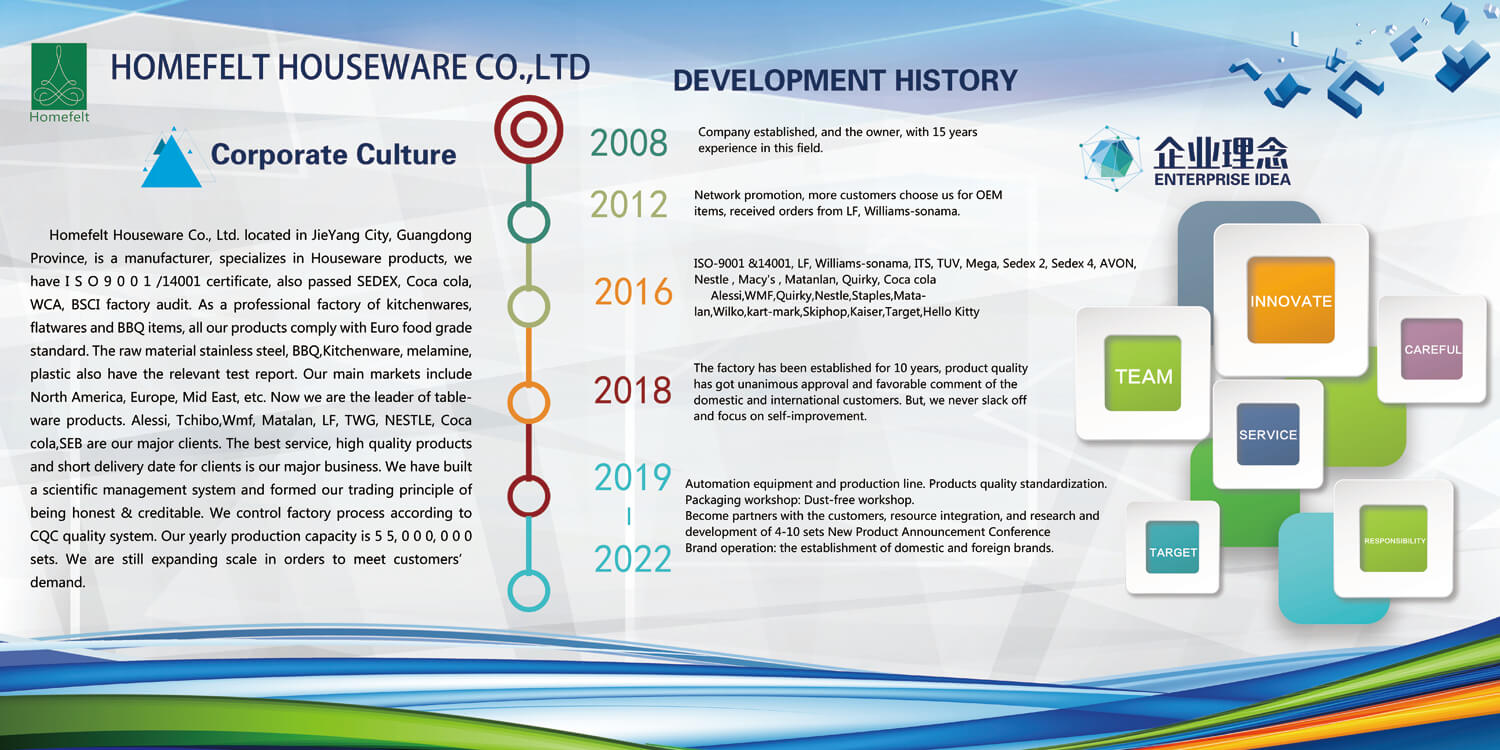
Homefelt has more than 30 years of stainless steel manufacturing experience and produces stainless steel cutlery together with kitchen and dining products, BBQ tools, pet bowls and children's tableware.
For international B2B customers, Homefelt supports standard and customized stainless steel products.
Importers, distributors, restaurant suppliers, hospitality businesses, retailers and private label brands can discuss stainless steel spoon design, material, dimensions, thickness, weight, surface finish, branding, packaging and estimated quantities according to their project requirements.
For custom development and repeat orders, approved samples and documented specifications can help maintain product consistency.
A Practical Supplier Selection Process
B2B buyers can follow these steps:
-
Define the product requirements
-
Identify suitable suppliers
-
Compare manufacturing capability
-
Review product samples
-
Confirm material and specifications
-
Evaluate customization options
-
Review quality control procedures
-
Compare equivalent quotations
-
Confirm packaging
-
Approve the final sample
-
Begin bulk production
-
Complete final inspection
This process can help reduce sourcing uncertainty.
Choosing the Right Stainless Steel Spoon Supplier
The right supplier should match the buyer's complete requirements.
For a standard restaurant spoon, reliable bulk production may be the priority.
For a retail brand, product appearance and packaging may be more important.
For a private label project, customization and sample development may be essential.
For long-term purchasing, repeat production capability and specification control can become critical.
The supplier should therefore be evaluated according to the actual commercial project.
Conclusion
Choosing a wholesale stainless steel spoon supplier requires more than comparing unit prices. Manufacturing experience, product capability, material options, customization, quality control, packaging and repeat-order support all contribute to a successful sourcing relationship.
B2B buyers can reduce uncertainty by preparing a clear product specification, comparing physical samples and evaluating suppliers according to the same requirements.
Homefelt has more than 30 years of stainless steel manufacturing experience and works with international B2B customers on standard and customized stainless steel products.
By selecting a supplier with suitable production capability and establishing clear product requirements, importers, distributors, restaurant suppliers, hospitality businesses, retailers and private label brands can build a more reliable wholesale stainless steel spoon supply program.
You May Be Interested In
Stainless Steel Spoon Manufacturing Process: How Spoons Are Made
Stainless Steel Spoon Materials and Grades: What B2B Buyers Should Know
Stainless Steel Spoon Quality Control and Inspection Guide for B2B Buyers
Stainless Steel Spoon Packaging and Shipping: A B2B Export Guide
Custom Stainless Steel Spoon Manufacturing for OEM and Private Label Buyers
Stainless Steel Flatware Supplier: How to Choose a Reliable Manufacturer

Stainless Steel Spoon Sizes and Dimensions: A B2B Buying Guide
Custom Stainless Steel Spoon Manufacturer for OEM and Private Label
Related Article